I’m not a big fan of manufactured holidays that are all about overpriced flowers, chocolate, restaurant meals, and other so-called expressions of devotion.
Instead, may I propose a few alternatives:
Pizza Day: Celebrating one of the great food inventions of the century
Good Hair Day: Get out and about, knowing you look amazing
Junk Food Day: Pick your poison and indulge without judgement
Trashy Novel Day: Curl up with something absolutely superficial
I-Found-My-Keys Day: (Includes those reading glasses located atop one’s head). Celebrate by going somewhere you’d otherwise have to walk to
Favorite Movie Day: In our house, this is a multi-month tradition, with Dear Husband insisting we watch Four Weddings and a Funeral, Casablanca, or North by Northwest every time he spies them
New Socks Day: Does anyone know why socks always wear out at the heel, even expensive ones? Argh.
I’m-Really-Not-Sick-Sick Day: ‘Nuff said.
Manicurist Day: Doesn’t he or she deserve special recognition for keeping us presentable?
Purge Day: Clean your closets, toss or donate your crap, and then buy something new and fabulous
A woman I know, owner of her own business, single mother of two, and a kind, cheerful, truly good person, has just had her heart broken. And it makes me really angry.
“Lynn”, who hadn’t dated anyone for five years, met the man in question online. Normally, this could be a red flag in itself, but one of her clients vetted him through her own company, and Lynn proceeded to get to know “Ted” over the course of nine months, discovering a lot in common, making plans, and developing a deep connection.
Ted apparently worked for a shipping company and was posted overseas. The couple FaceTimed daily from his location, which seems to be legitimate. It all fell apart a week ago when he was due to return to the US and visit her, at which point he suddenly stopped returning calls and text messages.
Is Ted married? One would think so: someone away from home who thought an innocent flirtation would help pass the time? Or is he a sociopath who constructed an elaborate web of lies, replete with fake background images? It doesn’t matter.
I’m sad that this lovely woman is hurt, embarrassed, and feels humiliated. She says, “At 50, I should know better.” I tried to assure her that trusting someone and assuming the best doesn’t make you a fool, it makes you normal. How would we navigate life if we were always suspicious and cynical? Easier said than done, though, right?
I told Lynn a bit of my own story: an ex-husband who lied, stole, cheated, and stole some more, all without one bit of regret. Luckily, one divorce and four years later at age 58, I finally connected with the right person. Being trustworthy is, in my opinion, the single most attractive characteristic a partner can have. The rest is gravy.
A: The average cumulus cloud weighs 1.1 million pounds. Wow!
They look so soft and fluffy up there. But we all know both air and water have weight, so they must weigh SOMETHING, right?
If clouds are made up of particles, then they must have weight and density (the weight for a chosen volume, such as a cubic inch or meter).
To calculate weight, scientists evaluate the weight of the water droplets in the cloud, plus the weight of the air (mostly above the cloud, pressing down). One estimate of cumulus cloud density is given at https://www.sciencealert.com/this-is-how-much-a-cloud-weighs, as a density of about 0.5 gram per cubic meter. A 1-cubic kilometer (km3) cloud contains 1 billion cubic meters.
Doing the math: 1,000,000,000 x 0.5 = 500,000,000 grams of water droplets in our cloud. That is about 500,000 kilograms or 1.1 million pounds (about 551 tons), or roughly 100 elephants. But, just as oil floats on water because it’s less dense, that “heavy” cloud is floating over your head because the air below it is even heavier— the lesser density of the cloud allows it to float on the dryer and more-dense air.
This article caught my eye and I thought it worth sharing. While not entirely selfless, kudos to Ralph Lauren for this initiative. Good for us and good for the planet!
Who Will Take Your Old Cashmere?
Ralph Lauren is underwriting a new recycling program as it ramps up its sustainability efforts. Will consumers use it?
What happens to a cashmere sweater that can’t be worn any longer? It probably will be thrown out, making it — and you — a contributor to fashion’s colossal waste problem.
Ralph Lauren has just unveiled an alternative option: a new cashmere recycling program. Starting Jan. 24, consumers in the United States, Britain and the European Union can request a printable, paid postage label from the Ralph Lauren website to send unwanted, 100 percent cashmere items from any brand to be recycled. Those clothes will go to Re-Verso in Tuscany, Italy, a facility that produces regenerated yarns and fabrics used by fashion companies, including Stella McCartney, Eileen Fisher and Patagonia.
While some fast fashion giants offer textile recycling, questions persist over where these clothes are going. And although luxury fashion rental and repair initiatives are ramping up, alongside the increased use of recycled materials in product lines, few luxury companies have embraced large-scale recycling efforts.
“One of the biggest overall blockers to textile recycling is that the current infrastructure for getting products back in the system is not strong, partly because mixed material products are often all bundled together,” said Claire Bergkamp, chief executive of Textile Exchange, an industry group that helps to develop fiber and materials standards that fashion and textile brands can use in efforts to reduce their overall environmental footprint.
What makes this initiative interesting, she added, is the focus on a single material collection — in this case, cashmere — and the involvement of a recycler who knows what to do with it.
“This means that there is a much higher likelihood that the cashmere here will actually be recycled into something of a high quality and value and given a new life,” she said.
Consumers in the United States, Britain and the European Union can now send cashmere to Ralph Lauren to be recycled. Credit…Ralph Lauren
The motivations driving the Ralph Lauren program aren’t completely altruistic. It is the latest installment of the company’s circularity strategy rollout, which included the unveiling of a new Cradle to Cradle, or C2C Certified, $995 Purple Label cashmere crew neck sweater in November. The certification, which is issued by the Cradle to Cradle Products Innovation Institute, uses a strict science-based methodology to assess products across five categories: material health, product circularity, clean air and climate protection, water and soil stewardship and social fairness.
Some changes will be visible to consumers. The brand’s Purple Label — the signifier of the very top tier of Ralph Lauren products since 1994 — will now have to be white, in order to comply with the dye requirements of the certification. The C2C cashmere sweater is the first of five core products that Ralph Lauren aims to be C2C certified by 2025. Across its Purple Label and Collection lines, the company added, C2C products will soon amount to roughly 20 percent of overall cashmere sales, which have grown by nearly 30 percent since the start of the pandemic. But to reach gold status, Ralph Lauren needed to find a more sustainable way for consumers to get rid of their old clothes too.
“To meet C2C gold level standards for the new cashmere sweater, there was a requirement in place that meant a program had to be in place that would enable the recycling of that product,” said Devon Leahy, the corporate head of sustainability at Ralph Lauren.
The fashion supply chain is very complicated, and the origin of most clothing is opaque. The C2C certification is significant because it means that Ralph Lauren, and its partners, can account for every step of its production, from farm to finished product. So far, only small brands like Alabama Chanin or Mother of Pearl, or extremely expensive ones (like Bamford or Loro Piana, whose cashmere sweaters retail for closer to $3000) have publicly said that they are up to such a task. Ralph Lauren, one of the biggest names in global fashion, earned annual revenues of $6.2 billion last year.
Re-Verso has been recycling “pre-consumer” cashmere, or waste material collected from garment factories, for almost a decade, but this program will be the first to be directly sourced from a brand’s consumers, explained Marco Signorini, the company’s head of marketing. Currently, Re-Verso recycles around 600 tons of cashmere a year, a figure he hopes will now rise.
At a time when more luxury brands are investing directly in — and monopolizing — suppliers, Ralph Lauren will not have exclusivity rights or ownership of any of the regenerated materials that are produced from the cashmere sourced from the program. The brand will also not be selling recycled cashmere pieces as part of its luxury collections.
To what extent customers will buy into the program, however, remains to be seen. Ultimately, without their participation, the program can’t work.
Katie Ioanilli, chief global impact and communications officer at Ralph Lauren, said the C2C certification lets consumers know the fabric “will biodegrade in a non-disruptive way. And those with old cashmere items have a new option on how they might do that responsibly and with minimal hassle. It might not be perfect. But to us, it feels like a start.”
Elizabeth Paton is a reporter for the Styles section, covering the fashion and luxury sectors in Europe. Before joining The Times in 2015, she was a reporter at the Financial Times both in London and New York. @LizziePaton
I love reading people’s Rants and Raves. Here are a few of mine this week.
THUMBS DOWN to a local (not inexpensive!) restaurant that adds a 3.5% service charge for paying with a credit card without noting this on their menu or website, or posting it prominently at the entrance, as the law requires. We’d all been enjoying dinner until this unpleasant surprise, compounded by the server telling us “everyone does it”, which is simply not the case.
Unfortunately, we won’t be going back.
THUMBS UP to another nice restaurant in the area that doesn’t charge customers who use credit cards, telling us they consider it one of their business costs. (On a related note, I wish restaurants in the US would pay their staff more and price “service” into their bottom line, as is common in Europe.)
THUMBS UP to whoever invented pre-washed vegetables and salad. And a hearty THUMBS DOWN to whoever invented those horrible, non-biodegradable, stick-to-everything, packing “peanuts”.
THUMBS DOWN to ink cartridges with the lifespan of a mayfly.
THUMBS DOWN to whoever cancelled our upgraded seats for an upcoming trip. (The airline blames the cruise company and the cruise company faults the airline. Hmm.) THUMBS UP to the airline agent who spent 45 minutes on the phone sorting out the issue and reinstating our seats. They’re not nearly as good as the original ones, since almost nothing is available now, but she worked wonders.
January is the time for resolutions, so these are my fashion promises to myself, inspired by the ever-delightful Lady Sarah’s blog:
I will not save my “good” stuff for special occasions; I will create opportunities to use and enjoy them
I will purge my wardrobe of items I don’t wear, except for things I will wear when I:
Lose those pesky pandemic pounds
I will avoid sale temptation, unless it’s something I truly need and would buy at full price
I will not kid myself that something that looks fabulous on a 20-year-old model or “influencer” will look the same on a septuagenarian
Abruptly changing topics:
Recently, friends got rid of their massage chair because it made “weird” noises. I immediately wondered: “Weird, how? Did it moan, or what?!” And can we expect similar commentary from other home items, e.g., a burping refrigerator, a computer that shrieks when it reveals our bank balance, a coffee machine that gets progressively louder if one drinks too much caffeine??
Happy Christmas/Boxing Day/Hanukkah/Sunday, depending on where you are and what (if anything) you celebrate. It’s been a hectic week here, what with my daughter visiting from California (a good thing), and the garage door suddenly deciding to break down (a very-not-good thing), though with a happy ending since I was miraculously able to find a mechanic to fix it.
Hope you are all enjoying some time off from work and some time doing whatever’s meaningful. To that end, I have to share this amazing video celebrating Hanukkah, xxAlisa
Travel is a wonderful way to broaden our horizons… and our waistlines, n’est-ce pas?
Dear Husband and I have just returned from two weeks in France, a trip that was slightly more ambitious (a.k.a., complicated) than might have been ideal. Since many of you have been to Paris I won’t go into detail here, other than to note that the city seemed to have especially poor air quality versus previous visits, not helped by the ubiquitous smokers everywhere. (How is this still a ‘thing’ ?!) And for the love of all that’s holy do NOT arrive for one day in Bordeaux on Nov. 1 which is a holiday, and then return for another day on a Monday when the museums are closed. Oh well, the Intercontinental hotel is still a great place to hang out.
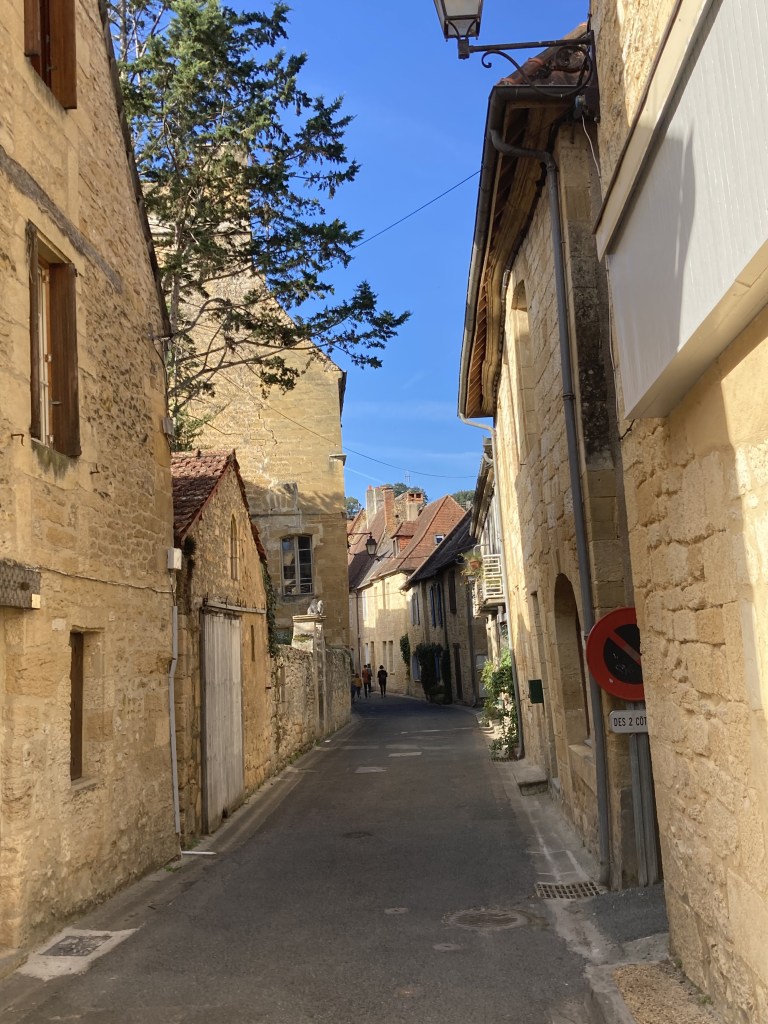
We’d both been eager to visit the Dordogne (inspired by our love of Martin Walker‘s delightful Bruno, Chief of Police novels) and planned the trip based on our schedules, which proved rather an error: Once the tourist season ends (Oct. 31) it REALLY ends, and not only attractions but most shops and restaurants are closed. Note to future travelers: you can avoid the worst of the craziness by traveling in late Sept/early October when the weather is still warm. We also did not realize we had chosen a school holiday period (cue hand smacking head), which also meant crowded trains and limited seating for the Paris/Bordeaux connection. (Bordeaux is well worth visiting but otherwise I suggest flying/taking the train directly to Bergerac rather than renting a car in Bordeaux, as we did, at the rather harrowing 4th-level and hard-to-find train station location.)
Most important — since the Sarlat tourist office had not clued me in when I’d contacted them weeks before — you still need to prearrange tickets for the caves and other points of interest.
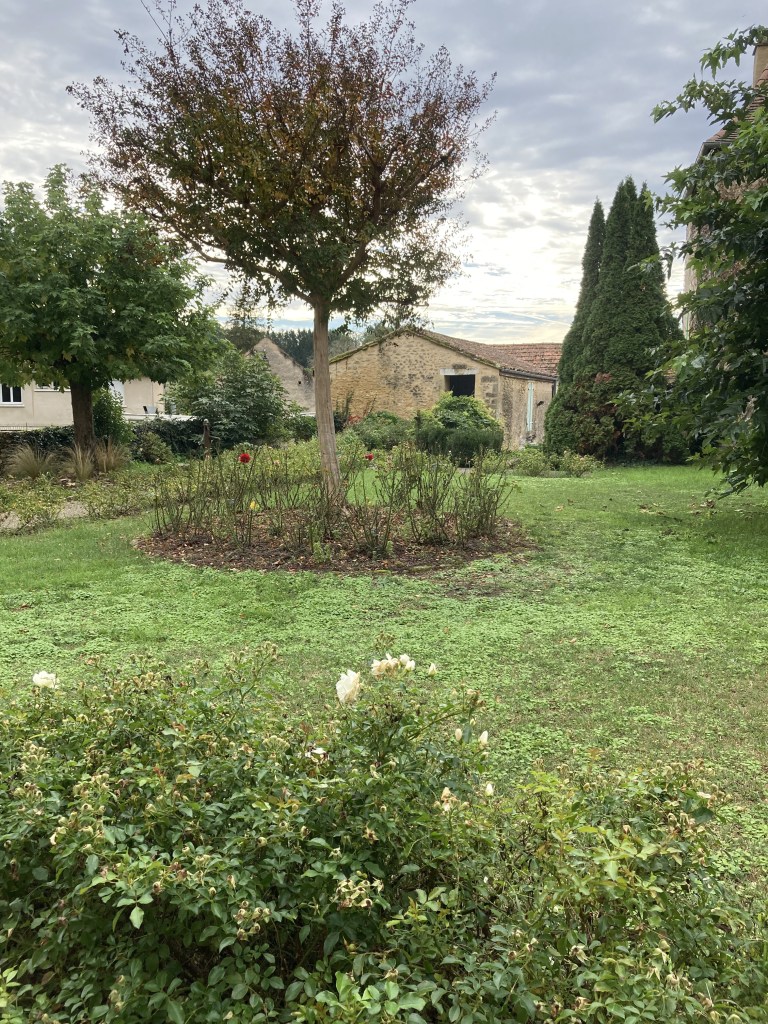
Let the photos begin! First up, Montignac, and our home base at the gorgeous Hôtel de Bouilhac.
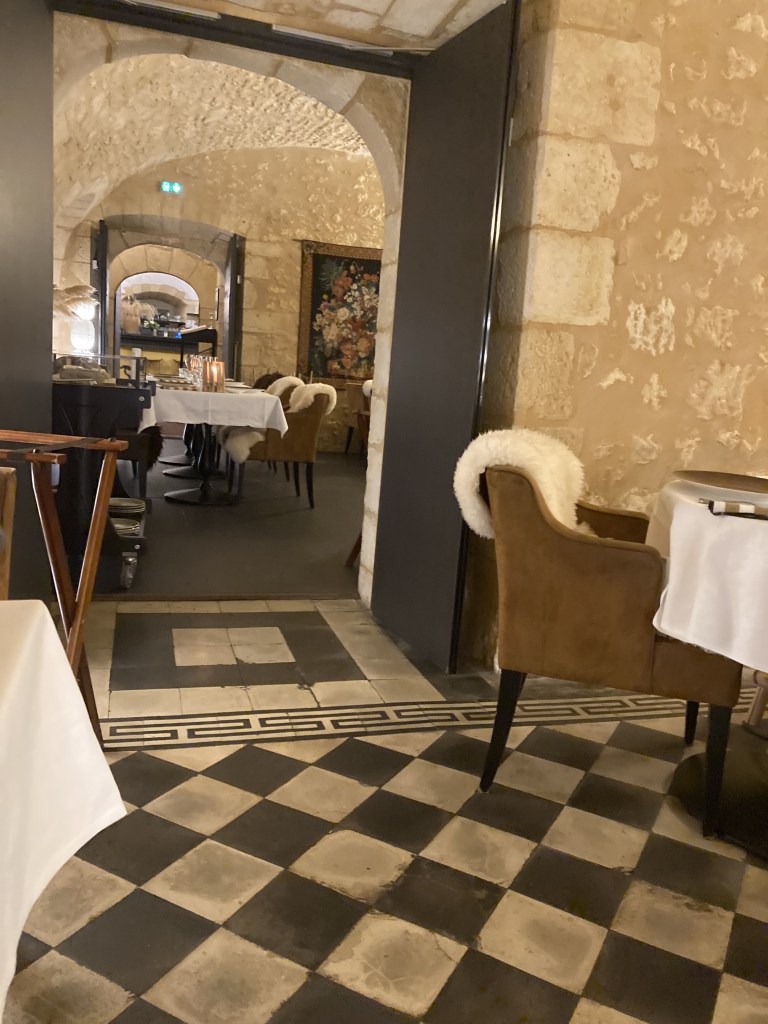
A partial view of our private terrace at the delightful Hôtel de BouilhacA hint of the expansive terrace view And its wonderful restaurant
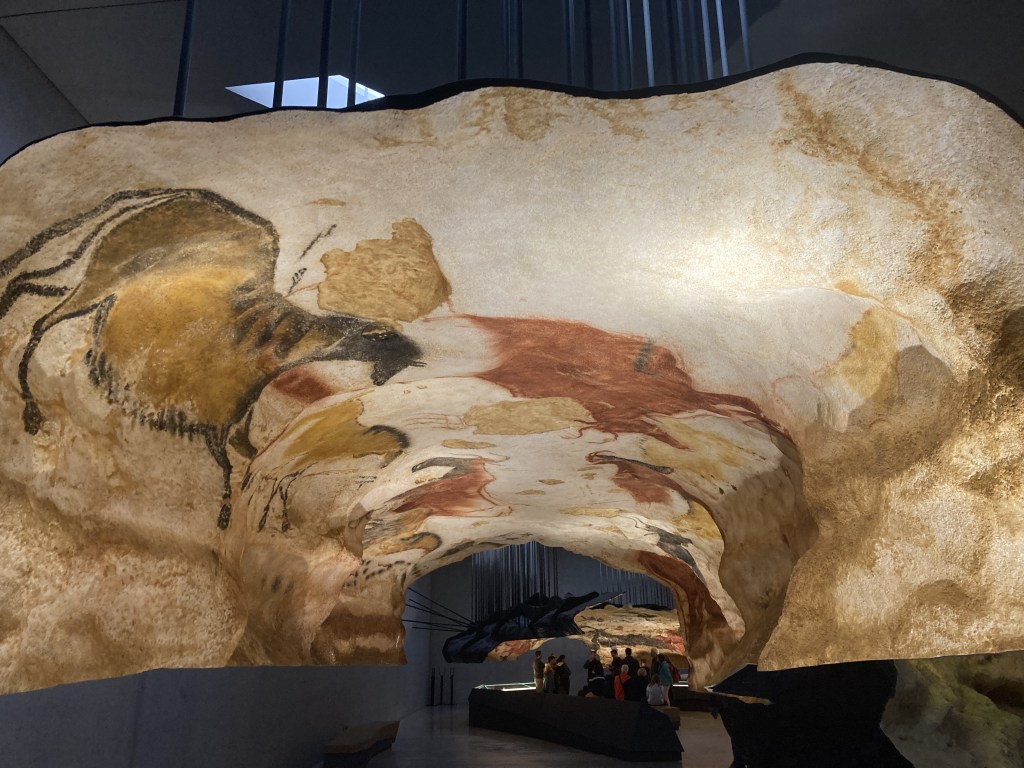
Of course, we have to visit Lascaux IV, which is an exact replica of the original cave. I was lucky enough to visit the real one as a child in 1960 before it was closed to the public due to threats of deterioration.
This exhibit shows how the replica was painstakingly created. It’s huge!
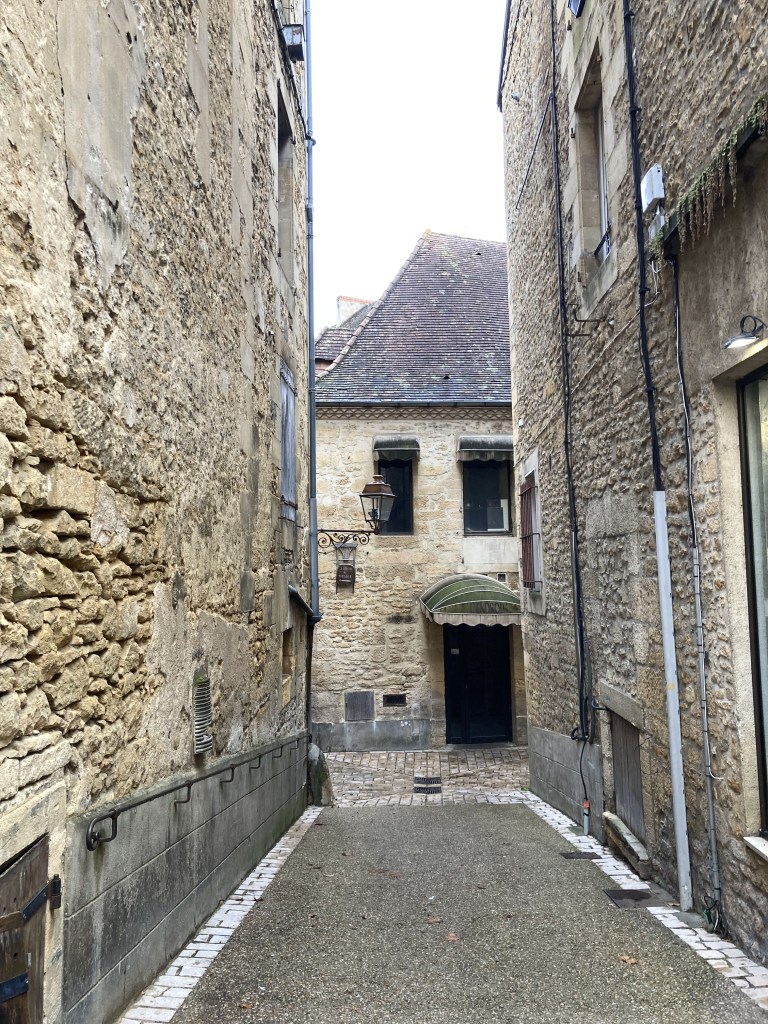
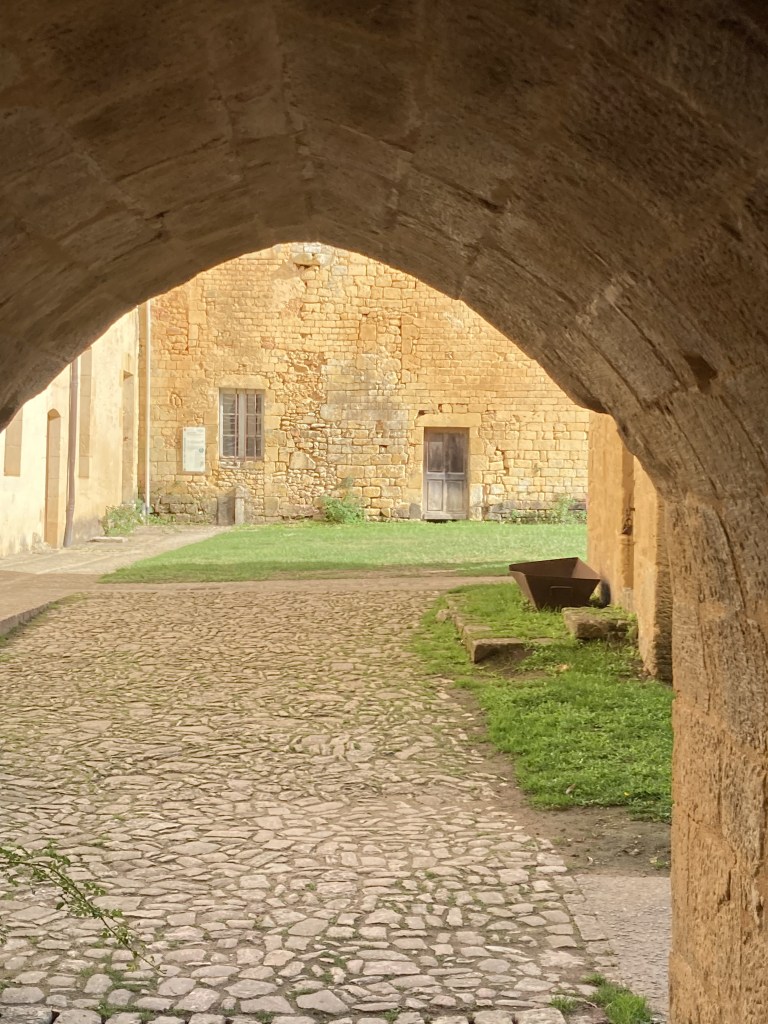
On to Saint-Léon-sur-Vézère, one of many beautiful villages in the area.
The Romanesque 12th century church was originally a Benedictine priory. Its limestone slate roof is typical of Périgord, with flat stones wedged between chestnut wood slats.Driving has its challenges (but offers views of sheep and cows along the way)Imagine building a house up there
Next up, Sarlat-la-Canéda, after which we head to Château de Beynac.
SarlatBeynac castle, built in the 12th century, was a key fortification during the Hundred Years’ WarA commanding view of the surrounding countryside, and below
Above is La Roque-Gageac, a lovely town but too far up the cliff to explore when rain is threatening.
A pretty church in Carsac-Aillac:
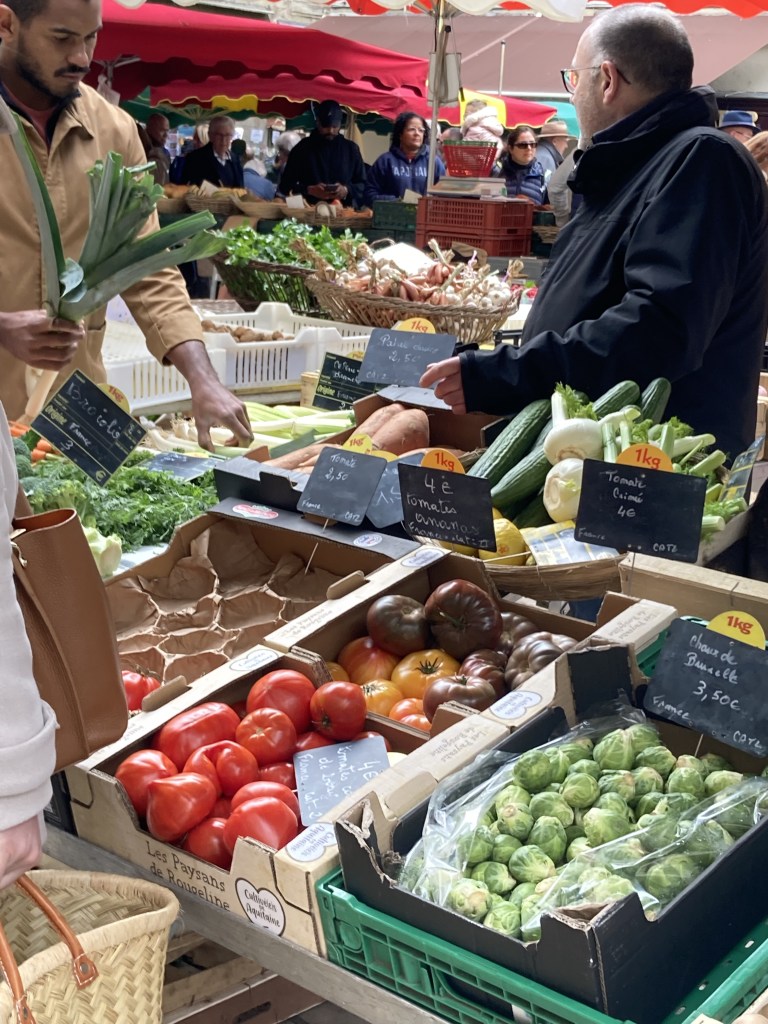
Another day, we head to the farmers’ market in Périgueux, which is a lively spot at the base of the cathedral.
Which makes us hungry, so we stroll around looking for lunch, and stumble onto a terrific Michelin-starred restaurant, L’Epicurien, quite by accident.
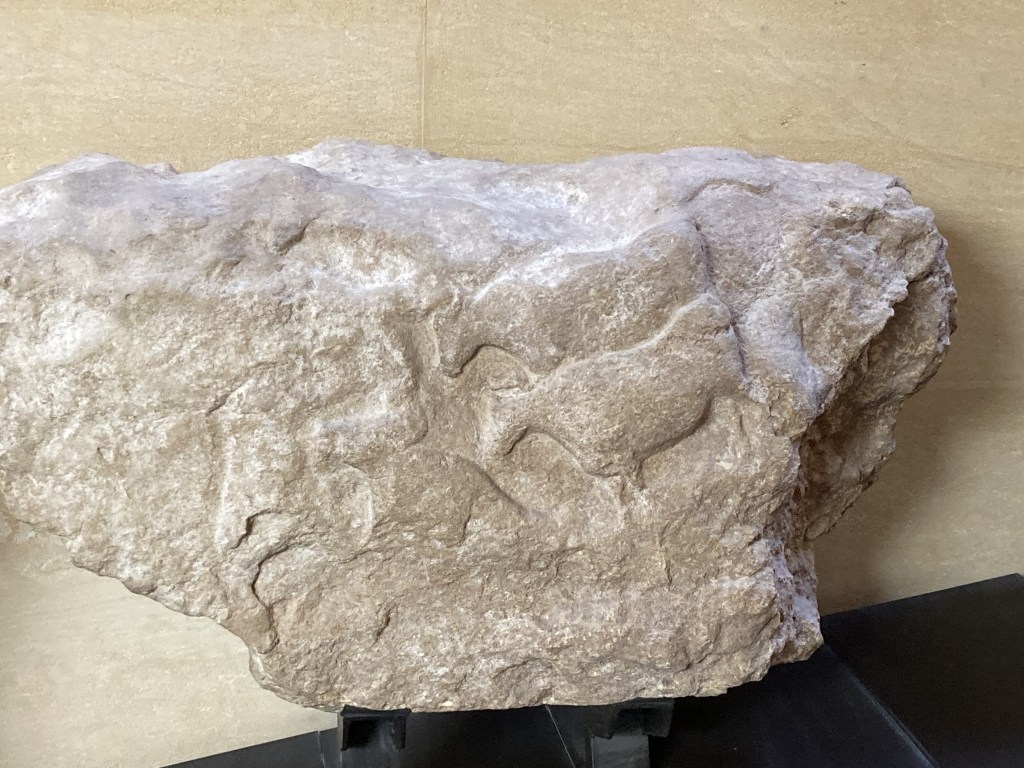
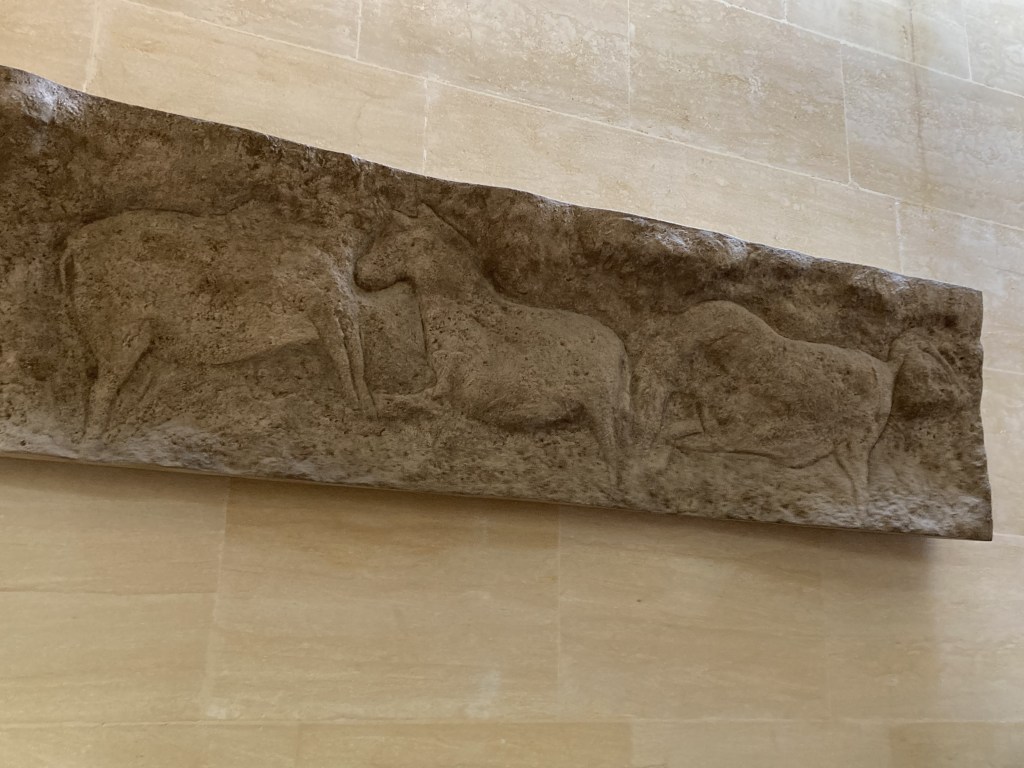
The next day, we discover the fascinating museum of prehistory in Les Eyzies, a must if you visit the region. It is a stunning reminder that prehistoric people living 15,000-20,000 years ago were creative, practical, family-oriented, and artistic.
And, it’s built into the cliff (pretty amazing in and of itself), with more spectacular views.
The lovely towns of Trémolat, Cadouin, and Limeuil are also worth a visit.
TrémolatAbbaye de Cadouin (and below)
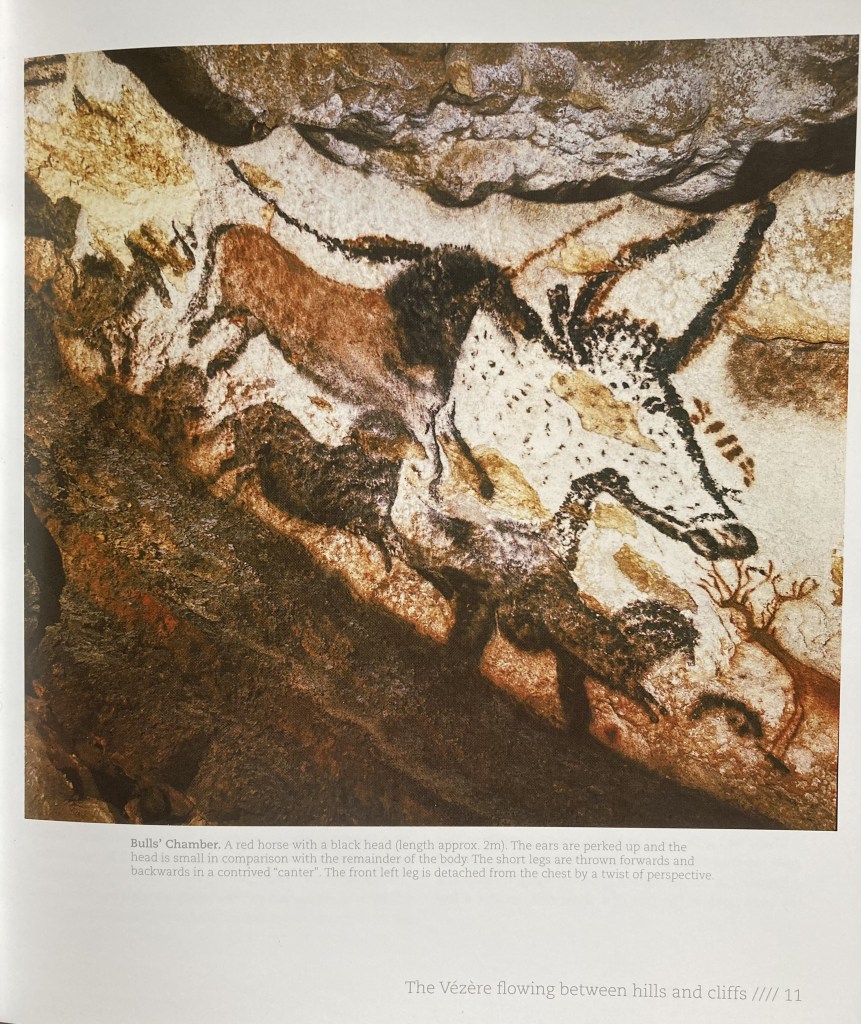
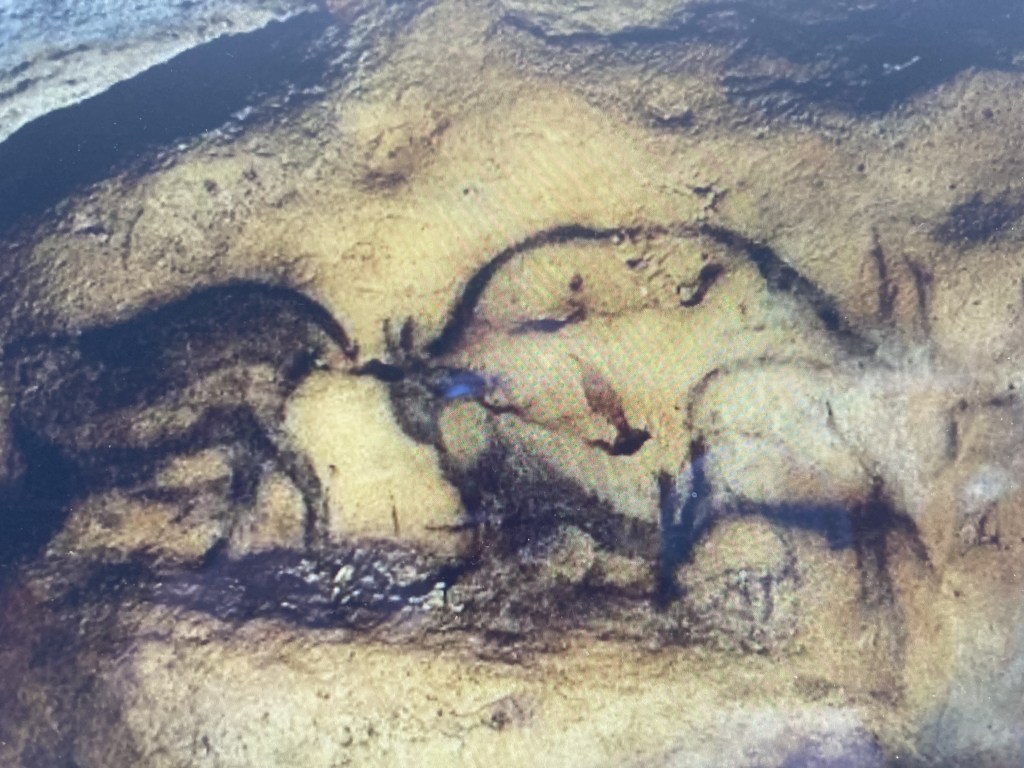
A major highlight of the trip: the cave at Font-de-Gaume, which unlike Lascaux is the real deal. We are a group of four (joining us, a couple from Paris who’ve never been here before) with a guide who explains the drawings in both French and English. After climbing the steep hill to the cave’s entrance, it’s a dramatic conclusion to our time in Périgord.
Photo from the website, as cameras are forbidden
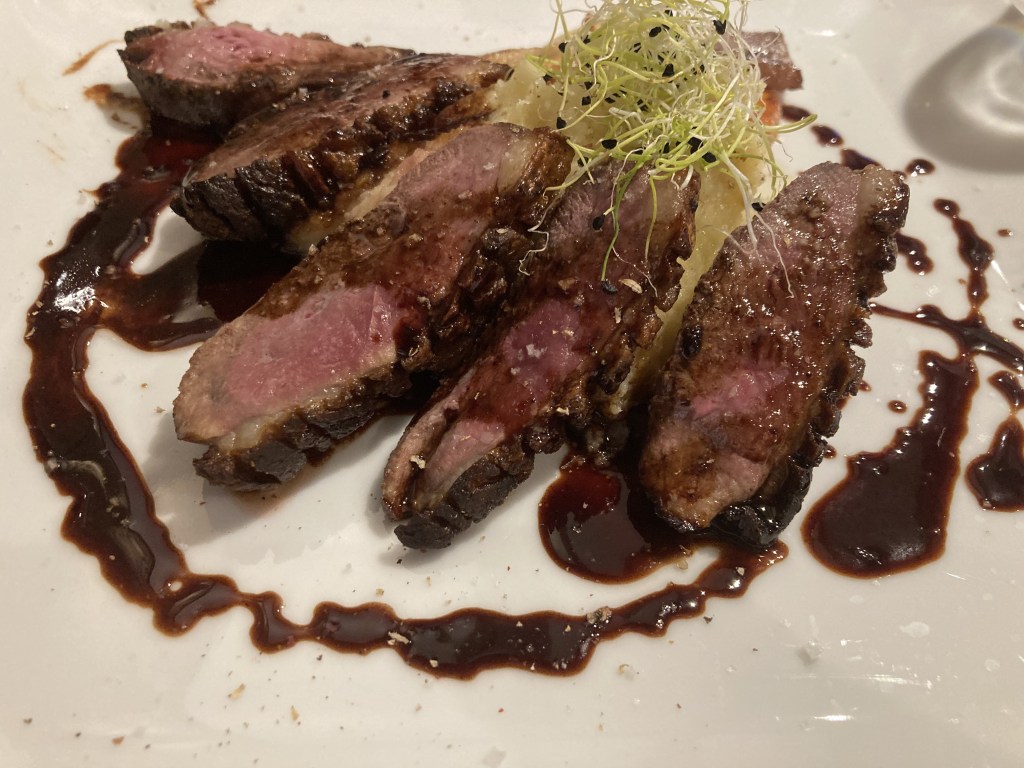
And, finally, the food. I don’t think we had a bad meal anywhere, and so much of it was as gorgeous as it was delicious.
Foie gras and poached pearVenisonOnly the French can make vegetables look this splendid
Liz Truss, the UK prime minister, has resigned after only 45 days. While she’s been roundly criticized for her policies, I believe she should be applauded for reminding us of something important: Cutting Your Losses.
Would that more politicians would quit once they’ve passed their sell-by dates, rather than clinging barnacle-like to constituencies they barely serve.
And what about those everyday jobs employing people who are totally unqualified? (I’m looking at you, nameless installer of bathroom cabinets with unevenly-spaced handles that have to be replaced.) Or truly bad cooks. Or the talentless actors who survive on bit parts hoping for the big break that never comes. Surely, those folks have other talents and would be happier and better-suited to other positions.
This also goes for bad relationships. Admit failure — or even chronic dissatisfaction — , CYL and walk away.
Planning ahead can pay serious dividends in many areas of life. Now, new research out of China suggests a little bit of forward thinking when it comes to bone health can help stave off osteoporosis years down the line. Researchers report taking calcium supplements between ages 20 and 35 can help improve bone mass at peak bone mass age.
Study authors believe this work points to a new, easy way adults can proactively protect their bones from a young age, setting the stage for more robust bone health during old age. On an even more general level, researchers add young adults should pay more attention to their bone health.
“Osteoporosis and fractures are important global public health problems, particularly in elderly women,” explains lead study author Yupeng Liu, a researcher at Wenzhou Medical University’s School of Public Health and Management, in a media release. “However, although calcium supplementation has been widely used in older age to increase bone mass, a number of studies suggest that it is unlikely to translate into clinically meaningful reductions in fractures.”
“On the other hand, intervention before young adults reach peak bone density might have a greater impact on bone health and prevent osteoporosis later. There has been considerable debate about whether calcium supplementation has effects on bone health among young people, so we conducted a comprehensive review of the evidence for calcium supplement effectiveness in people under the age of 35.”
Are supplements better than the real thing? The research team made use of previously conducted randomized controlled trials — seen as the gold standard for clinical research — to compile these findings. More specifically, they searched for trials comparing calcium or calcium plus vitamin D with a placebo or no treatment in participants under the age of 35. They also focused on results reported for bone mineral density (BMD) or bone mineral content (BMC).
In total, this project ended up encompassing 43 prior studies involving over 7,300 people. Among those 43 studies, 20 looked at dietary calcium while the other 23 focused on calcium supplementation. The team then combined all of the data to search for changes in BMD and BMC in the lumbar spine, femoral neck, total hip, and total body.
That investigation led to the conclusion that calcium supplements taken by people under 35 have significant potential to improve the BMD levels of both the total body and femoral neck. They also appear to slightly increase the BMC of the femoral neck, total body, and lumbar spine. In comparison to individuals younger than 20 (the pre–peak bone mass age), these benefits were more prominent among participants between 20 and 35 years-old (the peri–peak bone mass age when bone mass plateaus).
Importantly, both dietary sources of calcium and calcium supplements had a positive effect on femoral neck and total body BMD. However, BMC measurements of the femoral neck and lumbar spine only improved following calcium supplementation.
Vitamin D, meanwhile, was a bit of a mixed bag. A combination of calcium and vitamin D did prove more beneficial for the femoral neck bone mineral density and content, but researchers did not see the same robust benefits for BMCs of lumbar spine and total body, or total body BMD.
Moving up the ‘intervention window’ In summation, study authors believe calcium supplements have serious potential to improve both bone mineral density and content, especially in the neck, in a major way. Taking calcium supplements during peri–peak bone mass age (ages 20-35) appears to foster the strongest benefits in comparison to earlier or later in life.
“Although further trials will be needed to verify these findings, our review provides a new train of thought regarding calcium supplementation and the optimal timing of its effects,” concludes senior study author Shuran Wang, a professor at Wenzhou Medical University. “In terms of bone health and an individual’s full life cycle, the intervention window of calcium supplementation should be advanced to the age around the plateau of peak bone mass – namely at 20–35 years of age.”



































 olderfatterhappierdotcom