I see the Oscars are coming up next month, and I’m baffled: Did anyone actually make any movies in 2020? I know I didn’t set foot in a theater all year.
Well, hats off to whichever intrepid souls did any filming. Here’s my list of nominees:
Home Alone: 19
The Loneliness of the Long Distance Runner
Toilet Paper Story
Apocalypse 2020
The Unsocial Network
The Adventures of Han, Solo
The Do-Over
CasaVacia (The Empty House)
Big Night In
12 Billion Angry Men
Sleepless in Seattle, London, Paris, and Barcelona
BERLIN (AP) — The scientist who won the race to deliver the first widely used coronavirus vaccine says people can rest assured the shots are safe, and the technology behind it will soon be used to fight another global scourge — cancer.
Ozlem Tureci, who co-founded the German company BioNTech with her husband, was working on a way to harness the body’s immune system to tackle tumors when they learned last year of an unknown virus infecting people in China.
Over breakfast, the couple decided to apply the technology they’d been researching for two decades to the new threat, dubbing the effort “Project Lightspeed.”
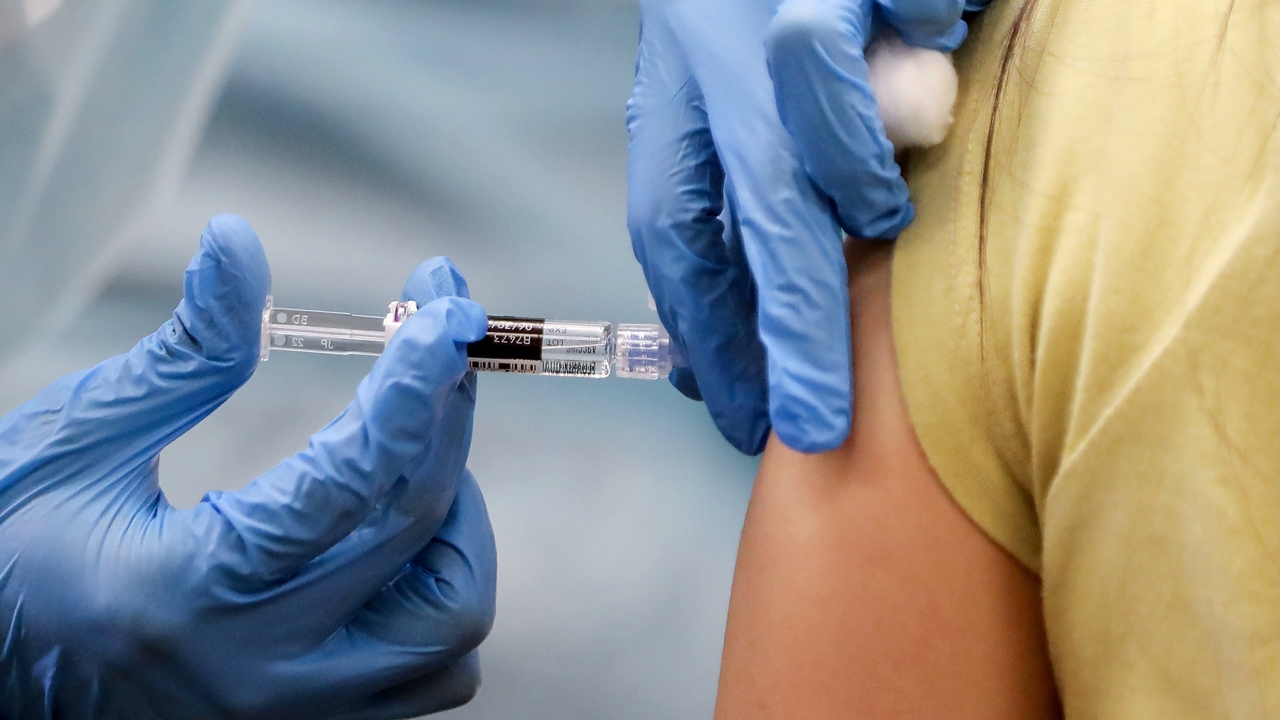
Within 11 months, Britain had authorized the use of the mRNA vaccine BioNTech developed with U.S. pharmaceutical giant Pfizer, followed a week later by the United States. Tens of millions of people worldwide have received the shot since December.
“It pays off to make bold decisions and to trust that if you have an extraordinary team, you will be able to solve any problem and obstacle which comes your way in real time,” Tureci told The Associated Press in an interview.
Among the biggest challenges for the small, Mainz-based company that had yet to get a product to market was how to conduct large-scale clinical trials across different regions and how to scale up the manufacturing process to meet global demand.
Along with Pfizer, the company enlisted the help of Fosun Pharma in China “to get assets, capabilities and geographical footprint on board, which we did not have,” Tureci said.
Among the lessons she and her husband, BioNTech chief executive Ugur Sahin, learned along with their colleagues was “how important cooperation and collaboration is internationally.”
Tureci, who was born in Germany to Turkish immigrants, said the company, which has staff members from 60 countries, reached out to medical oversight bodies from the start, to ensure that the new type of vaccine would pass the rigorous scrutiny of regulators.
“The process of getting a medicine or a vaccine approved is one where many questions are asked, many experts are involved and there is external peer review of all the data and scientific discourse,” she said.
Amid a scare in Europe this week over the coronavirus shot made by British-Swedish rival AstraZeneca, Tureci dismissed the idea that any corners were cut by those racing to develop a vaccine.
“There is a very rigid process in place and the process does not stop after a vaccine has been approved,” she said. “It is, in fact, continuing now all around the world, where regulators have used reporting systems to screen and to assess any observations made with our or other vaccines.”
Tureci and her colleagues have all received the BioNTech vaccine themselves, she told the AP. “Yes, we have been vaccinated,” she said.
As BioNTech’s profile has grown during the pandemic, so has its value, providing funds the company can use to pursue its original goal of developing a new tool against cancer.
The vaccines made by BioNTech-Pfizer and U.S. rival Moderna uses messenger RNA, or mRNA, to carry instructions into the human body for making proteins that prime it to attack a specific virus. The same principle can be applied to get the immune system to take on tumors.
“We have several different cancer vaccines based on mRNA,” said Tureci, who is BioNTech’s chief medical officer.
Asked when such a therapy might be available, Tureci said “that’s very difficult to predict in innovative development. But we expect that within only a couple of years, we will also have our vaccines (against) cancer at a place where we can offer them to people.”
For now, Tureci and Sahin are trying to ensure the vaccines governments have ordered are delivered and that the shots respond effectively to any new mutation in the virus.
On Friday, German President Frank-Walter Steinmeier awarded the wife and husband one of the country’s highest decorations, the Order of Merit, during a ceremony attended by Chancellor Angela Merkel, a trained scientist herself.
“You began with a drug to treat cancer in a single individual,” Steinmeier told the couple. “And today we have a vaccine for all of humanity.”
Tureci said ahead of the ceremony that getting the award was “indeed an honor.”
But she insisted developing the vaccine was the work of many.
“It’s about the effort of many: our team at BioNTech, all the partners who were involved, also governments, regulatory authorities, which worked together with a sense of urgency,” Tureci said. “The way we see it, this is an acknowledgement of this effort and also a celebration of science.”
Ah, dear sun… you were so hot. In my misspent youth, how I burned for your touch. And oh, how I am paying for this as an adult!
Those of you who are blessed with darker complexions will never know the true agony of raw, red, sunburned skin. Or the “cute” freckles that eventually become age spots. Or the ever-present threat of skin cancer lurking below the surface, waiting to pounce years later.
But who thought about this while spending long, sunsoaked days at the beach with my friends during the endless summers of my teens and early twenties?
For decades since, I have been diligent about sunblock, avoiding the sun, and wearing a hat. But I have displeased the sun by my inattention, and now I am being punished. A biopsy here, a patch of squamous carcinoma there (on my wrist a few years ago), and lately a nasty little basal cell uprising on the tip of my nose. On my damn face, for heavens sake — you couldn’t wreak your revenge somewhere else?!?!
Last Monday I trekked to a specialist an hour away for Mohs surgery. The technique was developed in the 1940s by Dr. Frederick Mohs at the University of Wisconsin, and has subsequently been refined.
Unlike other forms of treatment, Mohs is generally reserved for cosmetic areas or types of skin cancer that are at risk of recurring. It permits immediate and complete microscopic examination of affected tissue to make sure all “roots” are removed. And it is said to leave the least noticable scar.
Well.
We arrived at a very nice office and the very nice doctor (both physician and surgeon) immediately told me I looked much younger than my age, so we were off to a good start.
A little numbing, a little scraping, a little cauterizing, and then a long wait to see if he’d gotten everything. Which he hadn’t, so then it was time for Round Two, which did.
I emerged three hours later feeling ok only because the numbing hadn’t worn off yet and my nose was covered with a pressure bandage.
Naturally, I did not know what I looked like, which was a good thing. Although the cancer was fairly superficial and about the size of a pencil eraser, I have a row of stitches all the way up the side of my nose. And OMG do they itch!
The bandage came off two days later and I could assess the full effect. Luckily, I’ve had to keep the area covered with petroleum jelly and regular bandages so nobody has to see it, including me. To add to the loveliness are several areas of bruising, which are now in the process of fading from bright red to purple to yellow.
I’ll see the derm again on Tuesday to get the outer stitches removed, but I have been “assured” that the dissolving stitches will render my nose a little lumpy for months until they dissolve. Not to mention the scar. Woo hoo.
So, dear readers, be warned: If you have fair skin that is prone to burning or freckling, and especially if you are young enough, it is time to end your love affair with the sun for once and for all.
Oh, and meanwhile, ask your dermatologist about nicotinamide and HelioCare, just to improve the odds.
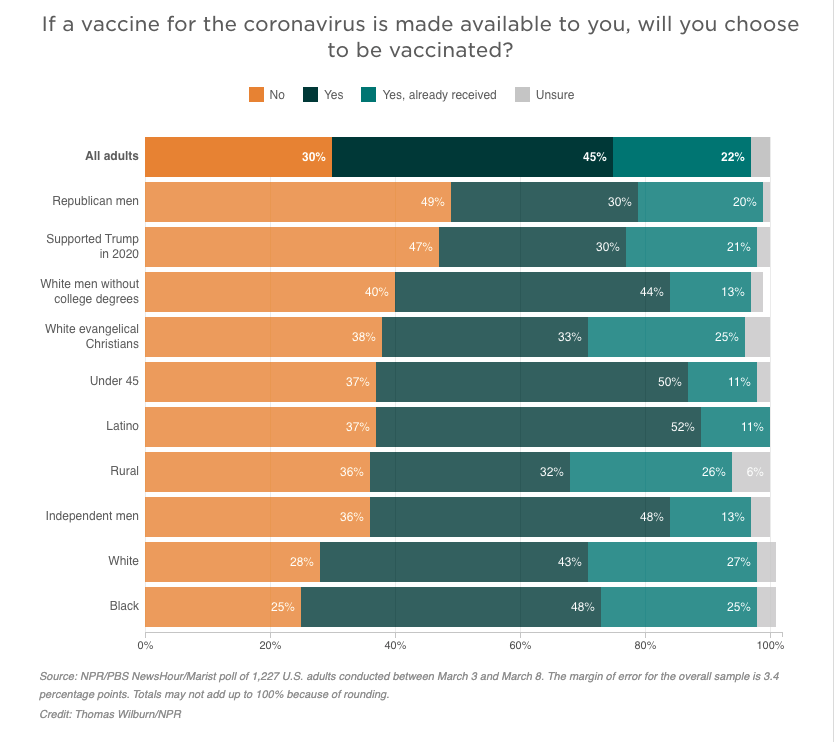
Almost half of Republican men say they will not choose to be vaccinated if given the chance, according to a new NPR/PBS NewsHour/Marist poll.
According to a survey taken March 3 through March 8, when asked whether they would choose to be vaccinated “if a vaccine for the coronavirus is made available to you,” 49% of Republican men said they will not get the vaccine. More than one-third of Republican women (34%) also said they will not get vaccinated, along with 36% of Independent men.
Nearly half of Trump supporters – 47% – said they would not take the vaccine.
While Republican men and Trump supporters are the biggest group that would refuse a vaccine, 37% of Latinos also said they will not get vaccinated; similarly, 37% of people younger than 45 would also not get the shot.
The poll also measured approval of President Joe Biden’s handling of the pandemic, which currently stands at 62% approval, and 30% disapproval. Thirty percent of Republicans and 22% of Trump supporters are among those who approve of Biden’s actions on the pandemic so far.
According to the survey, two-thirds of Americans say have either gotten the vaccine or will get it, and overall, only 30% say they won’t, down from 44% who said they would not get it when asked the same question in September 2020.
While the CDC hasn’t yet determined how many people need to be vaccinated in order to reach herd immunity in the U.S., Dr. Anthony Fauci recently said the number might need to be 75 to 85 percent of the population, up from earlier estimates of 60 to 70 percent, according to a New York Times report.
Great apes at the San Diego Zoo receive a Covid-19 vaccine for animals
By Stella Chan and Scottie Andrew, CNN
Updated 4:10 PM ET, Fri March 5, 2021Members of the San Diego Zoo’s orangutan and bonobo tribes have received a Covid-19 vaccine designated for non-human use, zoo officials said.
(CNN) Several great apes at the San Diego Zoo have been vaccinated against Covid-19 a few weeks after the zoo’s gorillas tested positive for the virus. Members of the zoo’s bonobo and orangutan troops were vaccinated using doses from a supply intended strictly for non-human use, the San Diego Zoo Wildlife Alliance (SDZWA) said in statement to CNN. Veterinarians identified members of the bonobo and orangutan troops most at risk who could be easily vaccinated, the organization said.
Vaccinations began in January and have continued up to this month, and the animals received their second dose after three weeks. “The animals are doing well and we have seen no adverse reactions from the vaccine. The wildlife in our care is closely monitored throughout their lives,” said Darla Davis, a SDZWA spokeswoman.
In January, eight of the San Diego Zoo Safari Park’s gorillas caught the virus, though their symptoms were mild and limited to coughing, congestion and fatigue. The troop has since fully recovered.
For years, the recommendations have been vague and confusing. (What actually constitutes a “serving”?) But this clarifies the “what”, if not the “how much”.
Sadly, potatoes and corn don’t make the list. However, I remain convinced that the pleasure inherent in eating french fries (“chips” to you in the UK) absolutely prolongs life.
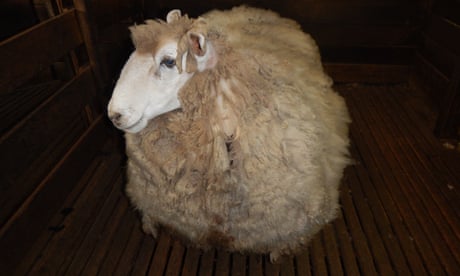
Escaped merino ram found on the lam in regional Australia.
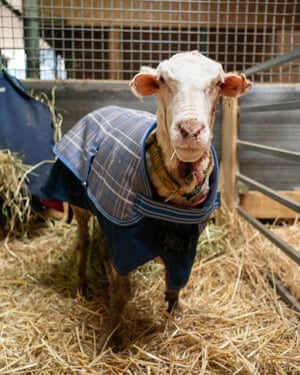
A rogue overgrown sheep found roaming through regional Australia has been shorn of his 35kg fleece – a weight even greater than that of the famous New Zealand sheep Shrek, who was captured in 2005 after six years on the loose. The merino ram, dubbed Baarack by rescuers, was discovered wandering alone with an extraordinarily overgrown wool coat, and was promptly shorn to save his life.
Kyle Behrend, from the Edgar’s Mission farm sanctuary, told Reuters that it appeared Baarack was “once an owned sheep” who had escaped. Merino sheep do not shed their fleece and need to be shorn at least annually, as their wool continues to grow.
The hirsute ovine was found near Lancefield in Victoria, and rescuers said he had “eked out an existence” eating small shoots of grass.
“He had at one time been ear-tagged, however these appear to have been torn out by the thick, matted fleece around his face,” Behrend said. “He was in a bit of a bad way. He was underweight and, due to all of the wool around his face, he could barely see.”
Baarack is the latest in a long line of very large and woolly sheep to make international headlines.
And last year in Australia an escaped ewe – eventually dubbed Ewenice – was relieved of her 20kg fleece after she was discovered in central Victoria.
But all sheep, Baarack included, still pale in comparison to Chris, a Canberran ram who was found in 2005 with a world record 41kg fleece – twice his body weight.
Chris’s fleece was donated to the National Museum of Australia, where it sits in a large display case. The relieved sheep was adopted to live comfortably on a sanctuary until he died in 2019.
Behrend said Baarack had adapted well to his new weight and was settling in with other sheep on the farm.
Do you ever get to the point that life has gotten so far away from you that you don’t even know how to begin to make excuses?
That’s how blogging has been for me these past couple of weeks. A combination of factors that I rationally know are out of my control but are nonetheless stressful, plus long lists of specific things that need to be done, overlaid with general anxiety about world issues such as the weather and that damn impeachment trial. (Seriously — how could any sentient being think 45’s behavior was anything but inexcusable?!) But that one, at least, is in the rearview mirror for now.
I know this is a first world problem, so I apologize in advance.
Dear Husband (DH) and I are in the midst of renovating our soon-to-be-one-and-only-house, which is rapidly being gutted. This is all good news, though it means we are renting a townhome/apartment in another location and need to drive out periodically to pick up mail and make sure there are no contractors lying insensate under a random beam.
Meanwhile, we are trying with no success to date to get on a Covid vaccination schedule. We have signed up in both of the counties where our house and rental are and neither has resulted in an appointment since the state has nowhere near enough supplies for everyone who wants to get it.
On the good news front, our Texas house went under contract within a day of our lovely realtor — who is DH’s oldest daughter — notifying a few agents that we were preparing to sell it. Everything would be proceeding smoothly if it weren’t for, oh, deadly ice storms, massive amounts of snow, power outages, etc. We’re thankful not to be living there but worry about friends and family who are coping with this.
Selling the house also means having someone else pack and ship it. Anxiety-producing because a) we have a lot of things we hope to sell or donate and can’t manage this ourselves, and b) we have to relinquish all fantasies of control over the specifics of the process. I’m trying to adopt the attitude that “stuff is just stuff” and if something gets lost or broken we will replace it. But this is not helping me sleep at night… I’m not counting sheep, I’m counting boxes.
I guess, like all of us, I have to put my faith in whatever powers-that-be may exist, know that we will eventually be on the other side of pandemic-related stress, and just hunker down while managing the few small aspects that are within my control.
If anyone has any good tips for patience after this year of endless upheaval, please share!



 Members of the San Diego Zoo’s orangutan and bonobo tribes have received a Covid-19 vaccine designated for non-human use, zoo officials said.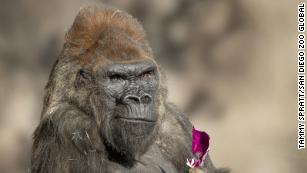





 olderfatterhappierdotcom