Tag Archives: optimism

Good News Monday: Game of Drones

If the word “drone” conjures negative thoughts of spying and remote warfare, here’s something cheerful to contemplate.

Drones and digital tags are helping scientists study humpback whales in remote areas of the Antarctic, where in-person access is limited.

A partnership among Duke University Marine Robotics and Remote Sensing Lab (MaRRS), Friedlaender Lab, California Ocean Alliance, and the World Wildlife Fund is using drone photography to study how the whales feed, how healthy they are, and how they’re being affected by climate change.  Drone images are also used to count local populations.

Game-changing technology, at its best.

brown dolphin figurine

Photo by Magda Ehlers on Pexels.com

Good News Monday: Software for Tough Times

13-year old techie Amanda Southworth had suffered from anxiety, depression and suicidal thoughts for most of her young life.  When she couldn’t find an easy, affordable alternative to traditional modes of therapy, this brilliant coder invented it.

Three years later, her app AnxietyHelper has helped more than 68,000 people. The app provides information on mental health conditions, links to hotlines, and tools such as a stress relieving game to help its users cope with daily challenges.

Southworth hasn’t stopped there.  She’s created a safety app for the LGBTQ+ community, an app to help psychosis patients manage their hallucinations, and a social media platform for protest groups so they can mobilize more safely and efficiently.

Who knew downloading could be so uplifting!

birds flying over body of water during golden hour

Photo by Johannes Plenio on Pexels.com


Independence Day

Happy 4th of July to all in the US! This really, though, should be an international holiday.

Let’s declare July 4th to be Independence Day Worldwide. With independence from:

  • Bullying
  • Bigotry
  • Pettiness
  • Negativity
  • Intolerance
  • Humorlessness
  • Bad pizza
  • Bad hair days
  • Bad skin
  • Our exes
  • Know-It-Alls
  • Money worries
  • Indifference
  • Climate change denial
  • Holocaust denial
  • Bad grammar
  • Lack of imagination
  • Fear
  • Garden pests
  • Overpriced anything
  • Lousy service

I could go on and on…. what would you add?

Happy #IDW!

abstract bay boats bright

Photo by Pixabay on Pexels.com

Good News Monday: Tropical Topics

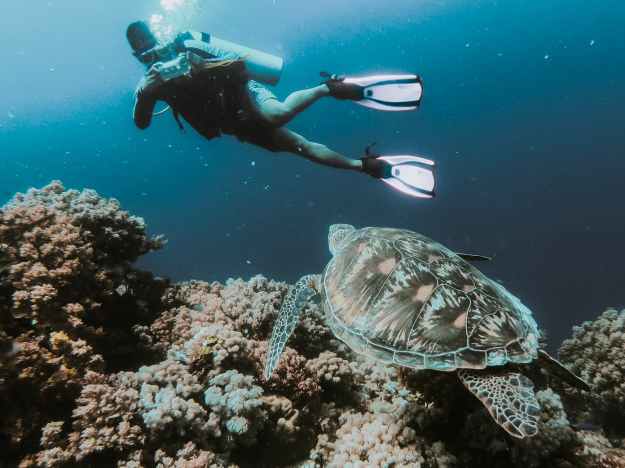
person swimming under water taking photo of turtle

Photo by Jondave Libiran on Pexels.com

The Nature Conservancy recently reported survey results indicating that Hawaiian coral reefs are showing signs of growth and stabilization after devastating bleaching occurred in 2015. The healthier reefs were generally further away from excessive exposure to “human influences”, but even the most vulnerable species are starting to recover.

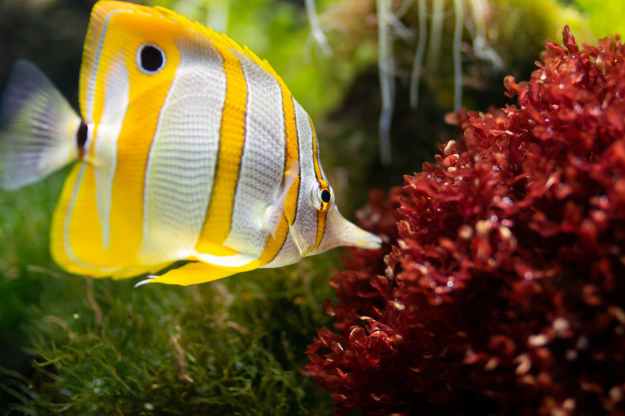
What’s more, there’s good news for fish living on coral reefs impacted by climate change*.  A new study suggests that these reefs can still be productive, as the fish get most of their food from the currents which flow past them.

Celebratory piña coladas, anyone?

yellow and white fish

Photo by Vural Yavas on Pexels.com

(*Isn’t it “reassuring” that so many politicians deny the existence of climate change?! ARRGHHH!)


Good News Monday: Encouraging Research on Climate Change

Yes, the first hurdle is getting people to actually admit there is such a thing, and that it poses a major threat.

But here’s reason for guarded optimism: According to recent reports, a new technique can convert carbon dioxide back into coal. In theory, this could make huge inroads into eliminating the global dangers of greenhouse gases. 

Of course, a massive undertaking would be enormously expensive. But where there’s money to be made, there’s a way. 

That alone might convert some skeptics.

black close up coal dark

Coal: It’s not just for barbecues anymore! Photo by Pixabay on Pexels.com


Good News Monday: A Bus That Drives Down Pollution

It’s only a prototype, but the future of city air is looking a lot brighter. The bus is equipped with an air filter that absorbs over 99% of pollution particles and emits purified air as it travels.

The jury’s still out on how many buses a city could afford to buy in order to make a dent, but solving both traffic congestion and nasal congestion? That’s a clean sweep!

Good News Monday: Random Animal Facts

OK, none of these qualifies as “news” exactly, but they’re cool enough to brighten my day, and hopefully yours.

  • The heart of a shrimp is located in its head.
  • A snail can sleep for three years.
  • The fingerprints of a koala are so indistinguishable from humans that they have on occasion been confused at a crime scene.
  • Slugs have four noses.
  • Elephants are the only animal that can’t jump.
  • A rhinoceros’ horn is made of hair.

Question: What could possibly be so compelling to a slug that it would need four noses to smell it?!

Good News Monday: Plastic Fantastic

beige algae on brown rock formation near body of water

Photo by Saad Bouzaid on Pexels.com

Two Dutch scientists have developed a bioplastic made from algae– vegetation that takes in carbon and releases oxygen through the same photosynthesis as other plants.

So far, they’ve been able to turn the dried material into something that 3D printers can use to create items such as bottles, tableware and trash cans!


Good News Monday: 11 Medical Breakthroughs

Look for these promising new initiatives to become more widely used in the next couple of years.

lab-217041_640

1. Tecnic Symfony, a newly approved, first-in-class lens replacement for cataracts, can now provide an extended depth of focus.  We’ll no longer have to choose between optimal close-up or distance vision, and a tiny stent is now available to treat people with glaucoma.

 2. Drones are distributing medicine to isolated areas. In 2016, a start-up company used drones to deliver medicine to Rwanda. This practice has since become routine and it’s estimated that even more areas will benefit.

3. Gene editing is helping prevent disease. A new technique to “edit” embryos (CRISPR Technology) may help future generations avoid retinal degenerative disease and inherited  diseases such as cystic fibrosis and hemophilia.

4. ALS patients will soon be able to communicate with their thoughts. New technology may help decode the thoughts of people with functional brain activity who have a completely paralyzed body resulting from a stroke, traumatic injury or amyotrophic lateral sclerosis (ALS).

5. Diabetics can be helped by an artificial pancreas. Diabetes is caused when the pancreas produces insufficient insulin. In May 2017, it was reported that the first artificial pancreas systems (the Hybrid Close-Loop Insulin Delivery System) were beginning to be distributed, helping diabetics regulate their insulin levels.

6. Reduction of LDL cholesterol. When powerful cholesterol drugs — known as PCSK9 inhibitors — were approved by the FDA in 2015, experts hailed it as a huge breakthrough, but more studies were needed to see whether this would result in medications with fewer side effects than statins.

Since then, new studies have reported good news – earlier in 2017, a 20% reduction in LDL was reported in a study group of 25,982 patients. These new cholesterol meds should become increasingly available.

7. Enhanced post-surgery recovery. Traditional surgery protocol involves no eating or drinking beforehand, feeling nauseous or groggy afterwards, and being prescribed pain medication to help with recovery, which can lead to opioid dependence.

New research has been evaluating the Enhanced Recovery After Surgery (ERAS) protocol, which recommends various methods including post-operative nutrition plans and alternatives to pain medication, to speed up the recovery process.

8. More targeted and precise breast cancer therapies. Treatments such as chemotherapy fight cancer cells but don’t always have the desired outcome. In the near future, according to Breastcancer.org, expect to see treatments for breast cancer that are designed to target specific cancer cell characteristics, such as the protein that allows cells to grow in a malignant way, .

9. Improved treatments for sleep apnea. Treatment for moderate to severe sleep apnea is often invasive and uncomfortable, involving the Continuous Positive Airway Pressure machine (CPAP). This machine blows air into your nose via a nose mask, keeping the airway open and unobstructed.

But a less invasive method was approved by the FDA in October, 2017. The Remede sleep system is an implanted device that treats central sleep apnea by activating a nerve that sends signals to the diaphragm to stimulate breathing.

Following successful trial studies, this may become the treatment of choice.

10. Next-generation vaccines. New techniques include freeze-drying, which allows vaccinations to be transported to remote areas. Companies are also investigating faster ways to manufacture vaccinations to make them more readily available.

11. The first human head transplant! Italian scientist Sergio Canavero and Chinese surgeon Xiaoping Ren are developing a plan to transplant a human head — and yes, it involves neck bolts and electricity! The goal is to help patients with spinal cord injuries and paralysis.

The surgeons have already performed the procedure on mice, rats and a dog, all of which survived surgery and even regained some motor function. Is that cool or what?!

Have a GOOD week! xx

Good News Monday: People Still Read Books

It’s not just about digital devices, TV and movies.  A recent survey of reader habits revealed some interesting stats:

  • Women are major mystery fans (37% citing as their preferred genre)
  • 2% of men admit that romance is a preferred genre
  • 70% of respondents prefer print over e-books
  • Women prefer reading in bed, and 13% of people read while they commute (hopefully not while driving)
  • Men and women were equally likely to read in the tub

beach-1866992_640Another cool thing: international literacy is on the rise. And although books are in short supply in developing nations, most people have access to cellphones, which broadens opportunities to read. In a UNESCO survey of more than 4,000 in Ethiopia, Kenya, Nigeria, India, Pakistan, Ghana and Zimbabwe, 62% of respondents reported that they were reading more — by using their phone.