Tag Archives: healthy

Good News Monday: How to Live Longer

[from the New York Times]

An illustration of a person standing in a yoga pose with leaves emanating from different parts of the body; on either side of the person is an infinity loop with various vignettes; the vignettes are a couple on a couch, a person sleeping, a bowl of fruit and a person running.
Credit…Cristina Spanò

By Dana G. Smith

Humans have searched for the secret to immortality for thousands of years. For some people today, that quest includes things like sleeping in a hyperbaric chamber, experimenting with cryotherapy or blasting oneself with infrared light.

Most aging experts are skeptical that these actions will meaningfully extend the upper limits of the human life span. What they do believe is that by practicing a few simple behaviors, many people can live healthier for longer, reaching 80, 90 and even 100 in good physical and mental shape. The interventions just aren’t as exotic as transfusing yourself with a young person’s blood.

“People are looking for the magic pill,” said Dr. Luigi Ferrucci, the scientific director of the National Institute on Aging, “and the magic pill is already here.”

Below are seven tips from geriatricians on how to add more good years to your life.

The number one thing experts recommended was to keep your body active. That’s because study after study has shown that exercise reduces the risk of premature death.

Physical activity keeps the heart and circulatory system healthy and provides protection against numerous chronic diseases that affect the body and mind. It also strengthens muscles, which can reduce older people’s risk of falls.

“If we spend some of our adult years building up our muscle mass, our strength, our balance, our cardiovascular endurance, then as the body ages, you’re starting from a stronger place for whatever is to come,” said Dr. Anna Chang, a professor of medicine specializing in geriatrics at the University of California, San Francisco.

The best exercise is any activity you enjoy doing and will stick with. You don’t have to do a lot, either — the American Heart Association recommends 150 minutes of moderate-intensity exercise per week, meaning just walking a little more than 20 minutes a day is beneficial.

The experts didn’t recommend one specific diet over another, but they generally advised eating in moderation and aiming for more fruits and vegetables and fewer processed foods. The Mediterranean diet — which prioritizes fresh produce in addition to whole grains, legumes, nuts, fish and olive oil — is a good model for healthy eating, and it’s been shown to lower the risk of heart disease, cancer, diabetes and dementia.

Some experts say that maintaining a healthy weight is important for longevity, but to Dr. John Rowe, a professor of health policy and aging at Columbia University, that’s less of a concern, especially as people enter old age. “I was always more worried about my patients who lost weight than my patients who gained weight,” Dr. Rowe said.

Sleep is sometimes overlooked, but it plays a major role in healthy aging. Research has found that the amount of sleep a person averages each night is correlated with their risk of death from any cause, and that consistently getting good quality sleep can add several years to a person’s life. Sleep appears to be especially important for brain health: A 2021 study found that people who slept less than five hours a night had double the risk of developing dementia.

“As people get older, they need more sleep rather than less,” said Dr. Alison Moore, a professor of medicine and the chief of geriatrics, gerontology and palliative care at the University of California, San Diego. Seven to nine hours is generally recommended, she added.

This goes without saying, but smoking cigarettes raises your risk for all kinds of deadly diseases. “There is no dose of cigarette smoke that is good for you,” Dr. Rowe said.

We’re starting to understand how bad excessive alcohol use is, too. More than one drink per day for women and two for men — and possibly even less than that — raises the risk for heart disease and atrial fibrillation, liver disease, and seven types of cancer.

Nearly half of American adults have hypertension, 40 percent have high cholesterol and more than one-third have pre-diabetes. All the healthy behaviors mentioned above will help manage these conditions and prevent them from developing into even more serious diseases, but sometimes lifestyle interventions aren’t enough. That’s why experts say it’s critical to follow your doctor’s advice to keep things under control.

“It’s not fun to take the medications; it’s not fun to check your blood pressure and check your blood sugar,” Dr. Chang said. “But when we optimize all those things in a whole package, they also help us live longer, healthier, better lives.”

Psychological health often takes a back seat to physical health, but Dr. Chang said it’s just as important. “Isolation and loneliness is as big a detriment to our health as smoking,” she said, adding that it puts us “at a higher risk of dementia, heart disease, stroke.”

Relationships are key to not only living healthier, but also happier. According to the Harvard Study of Adult Development, strong relationships are the biggest predictor of well-being.

Dr. Rowe tells the medical students he teaches that one of the best indicators of how well an elderly patient will be faring in six months is to ask him “how many friends or family he’s seen in the last week.”

Even thinking positively can help you live longer. Several studies have found that optimism is associated with a lower risk of heart disease, and people who score highly on tests of optimism live 5 to 15 percent longer than people who are more pessimistic. That may be because optimists tend to have healthier habits and lower rates of some chronic diseases, but even when accounting for those factors, the research shows that people who think positively still live longer.

If you had to pick one healthy practice for longevity, “do some version of physical activity,” Dr. Moore said. “If you can’t do that, then focus on being positive.”


All in Your Head?

Photo by Nathan Cowley on Pexels.com

Hypochondriacs still wind up living shorter lives than the rest of us

— The Conversation

People who worry excessively about their health tend to die earlier than those who don’t, a recent study from Sweden has found. It seems strange that hypochondriacs who, by definition, worry yet have nothing wrong with them, should enjoy shorter lifespans than the rest of us. Let’s find out more.

First, a word about terminology. The term “hypochondriac” is fast becoming pejorative. Instead, we medical professionals are encouraged to use the term illness anxiety disorder (IAD). So, to avoid triggering our more sensitive readership, we ought to use this term.

We can define IAD as a mental health condition characterized by excessive worry about health, often with an unfounded belief that a serious medical condition is present. It may be associated with frequent visits to a doctor, or it may involve avoiding them altogether on the grounds that a real and quite possibly fatal condition might be diagnosed.

The latter variant strikes me as quite rational. A hospital is a dangerous place and you can die in a place like that.

IAD can be quite debilitating. A person with the condition will spend a lot of time worrying and visiting clinics and hospitals. It is costly to health systems because of time and diagnostic resources used and is quite stigmatizing.

Busy healthcare professionals would much rather spend time treating people with “real conditions” and can often be quite dismissive. So can the public.

Now, about that study

The Swedish researchers tracked around 42,000 people (of whom 1,000 had IAD) over two decades. During that period, people with the disorder had an increased risk of death. (On average, worriers died five years younger than those who worried less.) Furthermore, the risk of death was increased from both natural and unnatural causes. Perhaps people with IAD have something wrong with them after all.

People with IAD dying of natural causes had increased mortality from cardiovascular causes, respiratory causes and unknown causes. Interestingly, they did not have an increased mortality from cancer. This seems odd because cancer anxiety is rife in this population.
The principal cause of unnatural death in the IAD cohort was from suicide, with at least a fourfold increase over those without IAD.

So how do we explain these curious findings?

IAD is known to have a strong association with psychiatric disorders. As suicide risk is increased by psychiatric illness, then this finding seems quite reasonable. If we add in the fact that people with IAD may feel stigmatized and dismissed, then it follows that this may contribute to anxiety and depression, leading ultimately to suicide in some cases.

The increased risk of death from natural causes seems less easy to explain. There may be lifestyle factors. Alcohol, smoking and drug use are more common in anxious people and those with a psychiatric disorder. It is known that such vices can limit one’s longevity and so they may contribute to the increased mortality from IAD.

IAD is known to be more common in those who have had a family member with a serious illness. Since many serious illnesses have a genetic component, there may be good constitutional causes for this increase in mortality: lifespan is shortened by “faulty” genes.

What can we learn?

Doctors need to be alert to the underlying health problems of patients and must listen with greater care. When we are dismissive of our patients, we can often be badly caught out. People with IAD may well have a hidden underlying disorder – an unpopular conclusion, I accept.

Perhaps we can illustrate this point with the case of the French novelist, Marcel Proust. Proust is often described by his biographers as a hypochondriac, yet he died in 1922 at the age of 51 at a time when the life expectancy of a Frenchman was 63.

During his life, he complained of numerous gastrointestinal symptoms such as fullness, bloating and vomiting, yet his medical attendants could find little wrong. In fact, what he described is consistent with gastroparesis.

This is a condition in which motility of the stomach is reduced and it empties more slowly than it should, causing it to overfill. This can lead to vomiting and with that comes a risk of inhaling vomit, leading to aspiration pneumonia and Proust is known to have died of complications of pneumonia.

Finally, a word of caution: writing about IAD can be quite risky. The French playwright Molière wrote Le Malade Imaginaire (The Imaginary Invalid), a play about a hypochondriac called Argan who tries to get his daughter to marry a doctor in order to reduce his medical bills. As for Molière, he died at the fourth performance of his work.

Mock hypochondriacs at your peril.

Stephen Hughes, Senior Lecturer in Medicine, Anglia Ruskin University

The Bleeping Truth

This article brightened my freakin’ morning; enjoy!

Why swearing is a sign of intelligence, helps manage pain and more

By Sandee LaMotte, CNN

Swearing can be associated with social intelligence, some experts say.

Max Pepper/CNN

Polite society considers swearing to be a vulgar sign of low intelligence and education, for why would one rely on rude language when blessed with a rich vocabulary?

That perception, as it turns out, is full of, uh … baloney. In fact, swearing may be a sign of verbal superiority, studies have shown, and may provide other possible rewards as well.

“The advantages of swearing are many,” said Timothy Jay, professor emeritus of psychology at the Massachusetts College of Liberal Arts, who has studied swearing for more than 40 years.

“The benefits of swearing have just emerged in the last two decades as a result of a lot of research on brain and emotion, along with much better technology to study brain anatomy.”

1. Cursing may be a sign of intelligence

Well-educated people with plenty of words at their disposal, a 2015 study found, were better at coming up with curse words than those who were less verbally fluent.

Participants were asked to list as many words that start with F, A or S in one minute. Another minute was devoted to coming up with curse words that start with those three letters. The study found those who came up with the most F, A and S words also produced the most swear words.

That’s a sign of intelligence “to the degree that language is correlated with intelligence,” said Jay, who authored the study. “People that are good at language are good at generating a swearing vocabulary.”

Swearing can also be associated with social intelligence, Jay added.

“Having the strategies to know where and when it’s appropriate to swear, and when it’s not,” Jay said, “is a social cognitive skill like picking the right clothes for the right occasion. That’s a pretty sophisticated social tool.”

2. Swearing may be a sign of honesty

Science has also found a positive link between profanity and honesty. People who cursed lied less on an interpersonal level, and had higher levels of integrity overall, a series of three studies published in 2017 found.

“When you’re honestly expressing your emotions with powerful words, then you’re going to come across as more honest,” said Jay, who was not involved in the studies.

While a higher rate of profanity use was associated with more honesty, the study authors cautioned that “the findings should not be interpreted to mean that the more a person uses profanity, the less likely he or she would engage in more serious unethical or immoral behaviors.”

3. Profanity improves pain tolerance

And swearing doesn’t just help your endurance: If you pinch your finger in the car door, you may well feel less pain if you say ‘s**t” instead of “shoot.”

People on bikes who swore while pedaling against resistance had more power and strength than people who used “neutral” words, studies have shown.

Research also found that people who cursed while squeezing a hand vice were able to squeeze harder and longer.

Spouting obscenities doesn’t just help your endurance: If you pinch your finger in the car door, you may well feel less pain if you say “sh*t” instead of “shoot.”

Another study found people who cursed as they plunged their hand into icy water felt less pain and were able to keep their hands in the water longer than those who said a neutral word.

“The headline message is that swearing helps you cope with pain,” said psychologist Richard Stephens, the lead author of the three studies. Stephens researches swearing at the Psychobiology Research Laboratory at Keele University in Staffordshire, England.

Stephens says it works like this: swearing produces a stress response that initiates the body’s ancient defensive reflex. A flush of adrenaline increases heart rate and breathing, prepping muscles for fight or flight.

Simultaneously, there is another physiological reaction called an analgesic response, which makes the body more impervious to pain.

“That would make evolutionary sense because you’re going to be a better fighter and better runner if you’re not being slowed down by concerns about pain,” Stephens said.

“So it seems like by swearing you’re triggering an emotional response in yourself, which triggers a mild stress response, which carries with it a stress-induced reduction in pain,” he added.

Careful, however, the next time you decide to extend your workout by swearing. Curse words lose their power over pain when they are used too much, research has also discovered.

Some of us get more out of swearing than others. Take people who are more afraid of pain, called “catastrophizers.”

“The research found men who were lower catastrophizers seemed to get a benefit from swearing, whereas men who are higher catastrophizers didn’t,” Stephens said. “Whereas with women there wasn’t any difference.”

4. Cussing is a sign of creativity

Swearing appears to be centered in the right side of the brain, the part people often call the “creative brain.”

“We do know patients who have strokes on the right side tend to become less emotional, less able to understand and tell jokes, and they tend to just stop swearing even if they swore quite a lot before,” said Emma Byrne, author of “Swearing Is Good for You.”

Research on swearing dates back to Victorian times, when physicians discovered that patients who lost their ability to speak could still curse.

“They swore incredibly fluently,” Byrne said. “Childhood reprimands, swear words and terms of endearment — words with strong emotional content learned early on tend to be preserved in the brain even when all the rest of our language is lost.”

5. Throwing expletives instead of punches

Why do we choose to swear? Perhaps because profanity provides an evolutionary advantage that can protect us from physical harm, Jay said.

“A dog or a cat will scratch you, bite you when they’re scared or angry,” he said. “Swearing allows us to express our emotions symbolically without doing it tooth and nail.

“In other words, I can give somebody the finger or say f**k you across the street. I don’t have to get up into their face.”

Cursing then becomes a remote form of aggression, Jay said, offering the chance to express feelings quickly while hopefully avoiding repercussions.

“The purpose of swearing is to vent my emotion, and there’s an advantage in that it allows me to cope,” he said. “And then it communicates very readily to bystanders what my emotional state is. It has that advantage of emotional efficiency — it’s very quick and clear.”

A universal language

What makes the use of naughty words so powerful? The power of the taboo, of course. That reality is universally recognized: Just about every language in the world contains curse words.

“It seems that as soon as you have a taboo word, and the emotional insight that the word is going to cause discomfort for other people, the rest seems to follow naturally,” Byrne said.

It’s not just people who swear. Even primates curse when given the chance.

“Chimpanzees in the wild tend to use their excrement as a social signal, one that’s designed to keep people away,” Byrne said.

Hand-raised chimps who were potty-trained learned sign language for “poo” so they could tell their handlers when they needed the toilet.

“Chimpanzees in the wild tend to use their excrement as a social signal, one that’s designed to keep people away,” Byrne said. “And as soon as they learned the poo sign they began using it like we do the word s**t.”

Does that mean that we should curse whenever we feel like it, regardless of our environment or the feelings of others? Of course not. But at least you can cut yourself some slack the next time you inadvertently let an f-bomb slip.

After all, you’re just being human.

Adding Injury to Insult

Oh what a month it’s been.

Less than a week after returning home from our “trip that wasn’t”, my husband fell and broke his wrist as well as sustaining a small but painful crack in one of his vertebrae. It’s been nonstop hospital stays, physical therapy, doc appointments, shopping for various meds and home care equipment, etc.

Hence, the lack of posts.

It’s a vivid reminder that our health is everything. And that caregivers, whether professional or family, have a really difficult job to do. Hats off to those who work in nursing and healthcare, or anyone caring for a parent or partner.

Dear older readers: Get those bone scans, keep up with annual screenings, stay active mentally and physically, and remain motivated by always having something you’re looking forward to doing in the future.

And you youngsters: Don’t be too smug; you’ll get older too, if you’re lucky!

Photo by Madison Inouye on Pexels.com

Good News Monday: Easy Weight Loss

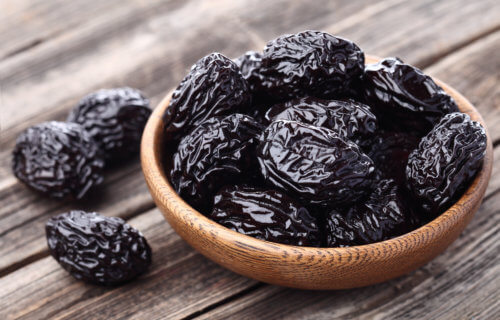
Prunes: they’re not just for old folks anymore! I’m giving this a try ASAP.

Prunes

(© Dionisvera – stock.adobe.com)

[Reprinted from studyfinds.com]

Prunes may be the secret weapon to prevent holiday weight gain

LIVERPOOL, United Kingdom — Has Thanksgiving already sent your diet spiraling off a cliff? You’re probably not alone. With holiday weight gain a major issue for many, a new study has found the one snack that may keep your holiday appetite (and your waistline) in check — prunes.

Researchers from the University of Liverpool discovered that eating more prunes helped a group of dieters control their appetite better, consume fewer calories, and even lose slightly more weight than people choosing others snacks during a 12-week test.

“These studies demonstrate that dried fruit can both produce satiety and be incorporated into the diet during weight management,” says Professor Jason C. G. Halford, President of the European Association for the Study of Obesity (EASO), in a media release.

Researchers examined the impact of eating prunes in two phases. The first compared the reactions of participants who either ate prunes, raisins, or jelly bean-like candies during the experiment. The team found that people eating prunes generally consumed the fewest number of calories during their next meal. The prune snackers also reported feeling less hungry throughout the day, feeling fuller after eating, and feeling as though they couldn’t eat as much later on.

Prunes make it ‘easier’ to lose weight

In the second part, study authors examined the amount of weight each person lost after completing a 12-week weight loss program. They split the volunteers into two groups, one eating prunes as their daily snack and one who only received guidance on healthy snacking but could choose whatever snack they wanted.

Although researchers say the weight loss difference between the two groups was not significant in terms of total pounds lost, results show the prune group participants lost slightly more weight on average (4.4 pounds vs. 3.4 pounds). People eating prunes also told the team they felt it was easier to lose the weight than those eating other snacks.

“This study reveals that nutrient-dense prunes can provide an advantage over other snack choices due to their favorable effects on satiety and appetite control,” adds Andrea N. Giancoli, MPH, RD Nutrition Advisor for the California Prune Board.

“These are the first data to demonstrate both weight loss and no negative side effects when consuming prunes as part of a weight management diet,” Halford concludes.

A recent poll found that Americans expect to gain eight pounds during the holiday season. Although prunes have a reputation of being a snack people only choose to relieve constipation, researchers say putting out a bowl at your next holiday party may cure you of festive overeating.

The findings appear in the journal Nutrition Bulletin.

Good News Monday: Chocolate Is Good For You

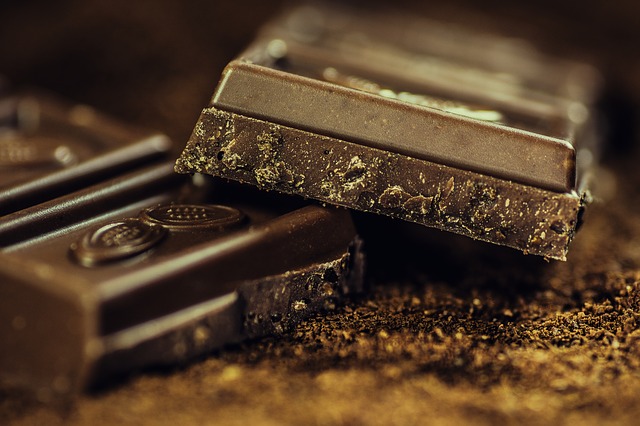
chocolate-183543_640

This might be the best news ever!  Caveat: it needs to be the super-dark stuff, not super-sugary junk.  And we shouldn’t be eating TONS of it. Still…

7 Proven Health Benefits of Dark Chocolate

  • Highly nutritious, containing lots of fiber and minerals
  • Powerful source of antioxidants
  • May improve blood flow and lower blood pressure
  • Cholesterol benefits: raises HDL and protects LDL from oxidation
  • May reduce heart disease
  • May protect your skin from the sun
  • Could improve brain function

Click the link for the full article.