Tag Archives: bloggers 50+

Good News Monday: How to Live Longer

[from the New York Times]

An illustration of a person standing in a yoga pose with leaves emanating from different parts of the body; on either side of the person is an infinity loop with various vignettes; the vignettes are a couple on a couch, a person sleeping, a bowl of fruit and a person running.
Credit…Cristina Spanò

By Dana G. Smith

Humans have searched for the secret to immortality for thousands of years. For some people today, that quest includes things like sleeping in a hyperbaric chamber, experimenting with cryotherapy or blasting oneself with infrared light.

Most aging experts are skeptical that these actions will meaningfully extend the upper limits of the human life span. What they do believe is that by practicing a few simple behaviors, many people can live healthier for longer, reaching 80, 90 and even 100 in good physical and mental shape. The interventions just aren’t as exotic as transfusing yourself with a young person’s blood.

“People are looking for the magic pill,” said Dr. Luigi Ferrucci, the scientific director of the National Institute on Aging, “and the magic pill is already here.”

Below are seven tips from geriatricians on how to add more good years to your life.

The number one thing experts recommended was to keep your body active. That’s because study after study has shown that exercise reduces the risk of premature death.

Physical activity keeps the heart and circulatory system healthy and provides protection against numerous chronic diseases that affect the body and mind. It also strengthens muscles, which can reduce older people’s risk of falls.

“If we spend some of our adult years building up our muscle mass, our strength, our balance, our cardiovascular endurance, then as the body ages, you’re starting from a stronger place for whatever is to come,” said Dr. Anna Chang, a professor of medicine specializing in geriatrics at the University of California, San Francisco.

The best exercise is any activity you enjoy doing and will stick with. You don’t have to do a lot, either — the American Heart Association recommends 150 minutes of moderate-intensity exercise per week, meaning just walking a little more than 20 minutes a day is beneficial.

The experts didn’t recommend one specific diet over another, but they generally advised eating in moderation and aiming for more fruits and vegetables and fewer processed foods. The Mediterranean diet — which prioritizes fresh produce in addition to whole grains, legumes, nuts, fish and olive oil — is a good model for healthy eating, and it’s been shown to lower the risk of heart disease, cancer, diabetes and dementia.

Some experts say that maintaining a healthy weight is important for longevity, but to Dr. John Rowe, a professor of health policy and aging at Columbia University, that’s less of a concern, especially as people enter old age. “I was always more worried about my patients who lost weight than my patients who gained weight,” Dr. Rowe said.

Sleep is sometimes overlooked, but it plays a major role in healthy aging. Research has found that the amount of sleep a person averages each night is correlated with their risk of death from any cause, and that consistently getting good quality sleep can add several years to a person’s life. Sleep appears to be especially important for brain health: A 2021 study found that people who slept less than five hours a night had double the risk of developing dementia.

“As people get older, they need more sleep rather than less,” said Dr. Alison Moore, a professor of medicine and the chief of geriatrics, gerontology and palliative care at the University of California, San Diego. Seven to nine hours is generally recommended, she added.

This goes without saying, but smoking cigarettes raises your risk for all kinds of deadly diseases. “There is no dose of cigarette smoke that is good for you,” Dr. Rowe said.

We’re starting to understand how bad excessive alcohol use is, too. More than one drink per day for women and two for men — and possibly even less than that — raises the risk for heart disease and atrial fibrillation, liver disease, and seven types of cancer.

Nearly half of American adults have hypertension, 40 percent have high cholesterol and more than one-third have pre-diabetes. All the healthy behaviors mentioned above will help manage these conditions and prevent them from developing into even more serious diseases, but sometimes lifestyle interventions aren’t enough. That’s why experts say it’s critical to follow your doctor’s advice to keep things under control.

“It’s not fun to take the medications; it’s not fun to check your blood pressure and check your blood sugar,” Dr. Chang said. “But when we optimize all those things in a whole package, they also help us live longer, healthier, better lives.”

Psychological health often takes a back seat to physical health, but Dr. Chang said it’s just as important. “Isolation and loneliness is as big a detriment to our health as smoking,” she said, adding that it puts us “at a higher risk of dementia, heart disease, stroke.”

Relationships are key to not only living healthier, but also happier. According to the Harvard Study of Adult Development, strong relationships are the biggest predictor of well-being.

Dr. Rowe tells the medical students he teaches that one of the best indicators of how well an elderly patient will be faring in six months is to ask him “how many friends or family he’s seen in the last week.”

Even thinking positively can help you live longer. Several studies have found that optimism is associated with a lower risk of heart disease, and people who score highly on tests of optimism live 5 to 15 percent longer than people who are more pessimistic. That may be because optimists tend to have healthier habits and lower rates of some chronic diseases, but even when accounting for those factors, the research shows that people who think positively still live longer.

If you had to pick one healthy practice for longevity, “do some version of physical activity,” Dr. Moore said. “If you can’t do that, then focus on being positive.”

Planet Non Sequitur

I recently purchased a necklace online that I didn’t like and immediately returned.

Here was their emailed reply:

Your recent return gave us some ideas

Sorry this wasn't the one!

Returned: Link Chain Collar Necklace

Our picks for the perfect jewelry 

MAISON FRANC Baccarat Rouge 540 Eau de Parfum $325

KIEHL’S INC. Creamy Eye Treatment with Avocado $60

CONVERSE Chuck Taylor® All Star® Lift High $75

LANCÔME Définicils Defining & Lengthening $34

WTF? If I’d purchased a necklace, wouldn’t even the most rudimentary autogenerated response recommend a different necklace? WHY would I be looking for perfume or mascara?!

The mind boggles (again).

Photo by Anna Shvets on Pexels.com

Love Bandits

AI helps scammers steal thousands from those looking for love online

[from StudyFinds.com]

Photo by ThisIsEngineering on Pexels.com

Artificial intelligence could be targeting you on texts, social media and dating apps.

Some victims lost thousands of dollars to people they thought were real women but turned out to be fakes. The people behind the scheme were stealing their cash and hearts.

“Hey, hey honey, you’re the best,” says a woman who may look real to some, but two security experts say the video is heavily filtered, with unnatural eyes and the chin blending into a neck.

Jim, who asked us to not use his last name, had recently been talking to a woman who convinced him to make an investment.

“And then one day she’s like, ‘Honey, I love you’, and I’m like ‘What?’ and she goes, ‘I have fallen in love with you’. And I said, ‘Well, I’m old enough to be your dad.’ And she said, ‘Well, that doesn’t matter. We have a lot in common,'” he said.

She also sent photos and what appears to be a sketch of herself and Jim together.

Jim initially met her after getting a mysterious text message. He thought they had a friend in common. He said he wasn’t looking to date.

“She goes, ‘I’ve never met anybody to be my equal. You and I have a super lot in common.’ And she’s had an uncle who was on the board for the stock exchange in Hong Kong,” said Jim.

He was convinced to send $60,000 to invest in the stock exchange. He said he lost most of it because the investment tanked. Then, the woman opened up an overseas crypto account in his name, but when Jim tried to take that money out, he was going to be charged thousands in upfront tax fees. Experts say it’s a scam.

“I figured, ‘What the heck, I’ll try somebody online. It couldn’t hurt’. I was wrong, it could,” Jim said.

Another suburban man, also named Jim, was duped by fake photos as well. He asked us not to show his face.

“I’m asked literally everyday by two or three women online, for money,” he said.

He was looking for love online and instead lost thousands of dollars sending gift cards to the people behind these fake and altered photos. He thought the women holding up love messages to him were interested.

“I would say she probably got about $2,000. One day, she got $300 for air fare, $250 for babysitter and $50 for her kids’ game cards or maybe even $100,” he said.

Security and technology experts at Bitdefender and NordVPN studied all of the pictures and videos. They say behind this filtered face could be anyone.

“We miss micro emotions or movements in in the face, so it does, does not feel exactly right,” said Adrianus Warmenhoven of NordVPN.

They confirmed that the pictures and videos are all fake or altered in some way.

“You usually see that hair is not natural. Either it has this halo effect, or it blends into a different color. There are artifacts where the hair meets the background the hair looks little thick,” said Bogdan Botezatu of BitDefender.

Experts also spotted generated faces on bodies and different shaped hands, like the hands holding up those signs saying “I love you, Jim.”

“Those pictures and that handwritten notes which actually were not handwritten,” said Warmenhoven.

The words are likely computer generated. Experts say you should also look for uneven tooth shapes or earrings that look unusual.

“But AI cannot render them symmetrically in a good enough manner. So one of the earrings will be missing, or will have a different size,” Botezatu added.

Dating experts say another red flag is a romance that moves too fast.

“You go from one text to three weeks later or three random texts that they love you, or they want to know more about your family, so they’re taking all your information and kind of calculating how much money you have,” said Lisa Galos of Matchmake Chicago.

Scammers may also be use texting apps instead of a real phone number, so if you meet someone online, try meet in a safe, public place soon after.

“If you really are sincere about dating that person, go from that to let’s meet for coffee, offer three times they can meet, they’re gonna pick one and they’ll show up,” Galos said.

Both men say they’ve learned to never trust strangers with their finances no matter how convincing the stories or pictures may be.

“I’m much smarter than this. And it’s just my desire to have somebody in my life, finally, that made me really do something that was stupid and let somebody take advantage of me, I’ve never done that before,” Jim admitted.

AI scammers may also use endearing terms like “babe” and “honey” instead of your real name, because they are using the same messages for multiple people.

Unfortunately these types of romance scams, with or without AI, have gotten worse. Recent numbers from the Federal Trade Commission shows $1.3 billion was lost in 2022.


All in Your Head?

Photo by Nathan Cowley on Pexels.com

Hypochondriacs still wind up living shorter lives than the rest of us

— The Conversation

People who worry excessively about their health tend to die earlier than those who don’t, a recent study from Sweden has found. It seems strange that hypochondriacs who, by definition, worry yet have nothing wrong with them, should enjoy shorter lifespans than the rest of us. Let’s find out more.

First, a word about terminology. The term “hypochondriac” is fast becoming pejorative. Instead, we medical professionals are encouraged to use the term illness anxiety disorder (IAD). So, to avoid triggering our more sensitive readership, we ought to use this term.

We can define IAD as a mental health condition characterized by excessive worry about health, often with an unfounded belief that a serious medical condition is present. It may be associated with frequent visits to a doctor, or it may involve avoiding them altogether on the grounds that a real and quite possibly fatal condition might be diagnosed.

The latter variant strikes me as quite rational. A hospital is a dangerous place and you can die in a place like that.

IAD can be quite debilitating. A person with the condition will spend a lot of time worrying and visiting clinics and hospitals. It is costly to health systems because of time and diagnostic resources used and is quite stigmatizing.

Busy healthcare professionals would much rather spend time treating people with “real conditions” and can often be quite dismissive. So can the public.

Now, about that study

The Swedish researchers tracked around 42,000 people (of whom 1,000 had IAD) over two decades. During that period, people with the disorder had an increased risk of death. (On average, worriers died five years younger than those who worried less.) Furthermore, the risk of death was increased from both natural and unnatural causes. Perhaps people with IAD have something wrong with them after all.

People with IAD dying of natural causes had increased mortality from cardiovascular causes, respiratory causes and unknown causes. Interestingly, they did not have an increased mortality from cancer. This seems odd because cancer anxiety is rife in this population.
The principal cause of unnatural death in the IAD cohort was from suicide, with at least a fourfold increase over those without IAD.

So how do we explain these curious findings?

IAD is known to have a strong association with psychiatric disorders. As suicide risk is increased by psychiatric illness, then this finding seems quite reasonable. If we add in the fact that people with IAD may feel stigmatized and dismissed, then it follows that this may contribute to anxiety and depression, leading ultimately to suicide in some cases.

The increased risk of death from natural causes seems less easy to explain. There may be lifestyle factors. Alcohol, smoking and drug use are more common in anxious people and those with a psychiatric disorder. It is known that such vices can limit one’s longevity and so they may contribute to the increased mortality from IAD.

IAD is known to be more common in those who have had a family member with a serious illness. Since many serious illnesses have a genetic component, there may be good constitutional causes for this increase in mortality: lifespan is shortened by “faulty” genes.

What can we learn?

Doctors need to be alert to the underlying health problems of patients and must listen with greater care. When we are dismissive of our patients, we can often be badly caught out. People with IAD may well have a hidden underlying disorder – an unpopular conclusion, I accept.

Perhaps we can illustrate this point with the case of the French novelist, Marcel Proust. Proust is often described by his biographers as a hypochondriac, yet he died in 1922 at the age of 51 at a time when the life expectancy of a Frenchman was 63.

During his life, he complained of numerous gastrointestinal symptoms such as fullness, bloating and vomiting, yet his medical attendants could find little wrong. In fact, what he described is consistent with gastroparesis.

This is a condition in which motility of the stomach is reduced and it empties more slowly than it should, causing it to overfill. This can lead to vomiting and with that comes a risk of inhaling vomit, leading to aspiration pneumonia and Proust is known to have died of complications of pneumonia.

Finally, a word of caution: writing about IAD can be quite risky. The French playwright Molière wrote Le Malade Imaginaire (The Imaginary Invalid), a play about a hypochondriac called Argan who tries to get his daughter to marry a doctor in order to reduce his medical bills. As for Molière, he died at the fourth performance of his work.

Mock hypochondriacs at your peril.

Stephen Hughes, Senior Lecturer in Medicine, Anglia Ruskin University

Happy Boxing Day

You may not know that Boxing Day celebrates the age-old custom of returning unwanted gifts.

I believe it originated in Victorian England, after Queen Victoria received one too many antimacassars, taxidermy birds, and snuff boxes.

In modern times, it is mainly observed by Amazon.

Many happy returns!

Photo by Karolina Grabowska on Pexels.com

Happy Holidays!

Happy Christmas Eve/Christmas/Boxing Day/Kwanzaa/Weekend/New Year to all!

And thank you for taking time out of your busy lives to read this blog. May you all look forward to a happy, healthy, and peaceful year filled with friends, family, adventures and laughter.

Alisa xx

Photo by Aakash Sethi on Pexels.com

A Food Rant

With apologies to Francois Villon (who was already nostalgic on his 30th birthday–?!), “Where are the fortune cookies of yesteryear”?

When we were growing up, fortune cookies contained actual fortunes. My favorite, which I saved for years, was “You will inherit money and jewelry.” The cookie was not to know that in my mother’s declining years her caregiver helped herself to all the jewelry that was in the house: our mother, in the “wisdom” of her 90s, having long since removed everything from her safe deposit box. 

Admittedly, it wasn’t my taste and for various reasons I doubt I’d have seen so much as a lone earring, but still….

I digress. Today’s cookies are not only generally flavorless, the messages are either personal assessments (“You are the life of the party!”) or advice (“Do not hide your feelings. Let others know where you stand.”). To add insult to injury, when my husband and I ordered in Chinese food a couple of weeks ago, we both got the SAME fortune! Is that lazy or what?!? Who writes these things?!

Has this happened to you? Is it a national/regional/local phenomenon? Inquiring minds need to know.

Photo by RDNE Stock project on Pexels.com

The Reluctant Activist

I’ve considered myself a liberal all my life. I demonstrated for civil rights and against the Vietnam war. I believe that love is love, science is real, Black lives matter, and that a woman should make her own choices about her own body. (Don’t believe in abortion? Don’t have one!)

I deplore the meaningless loss of life that happens all too often: school shootings, attacks on young Black men who “dare” to venture into certain neighborhoods, and yes, Palestinian civilians too.

However, I’m disgusted and horrified by people on the New Left attempting to cloak their antisemitism as “concern” for Palestinians. And their refusal to acknowledge Hamas as the murderers and oppressors they’ve been since they started governing Gaza in 2007.

Where was all this “concern” when Hamas dug up water pipes in Gaza to make rockets, and diverted construction materials meant for Palestinian building projects to create tunnels for launching weapons into Israel?

Where was the outrage when Hamas began building terror units in/around/under civilian buildings such as hospitals, schools, mosques, and homes, knowing full well that this put Palestinian civilians at risk?

Where is the condemnation of Hamas when LGBT Palestinians face extreme ostracism, are sometimes forced to flee as refugees, and risk being kidnapped and beheaded?

Hamas authorities also ban the activities of LGBT rights groups. And it isn’t just LGBT Palestinians who are oppressed by Hamas in Gaza. The oppression of women is an intrinsic feature of Sharia law. Human rights researchers rank the Palestinian territories among the worst places in the world to be a woman.

Where are the pro-Palestinian voices protesting Lebanon (where Palestinians actually DO live under apartheid in segregated, impoverished refugee camps)?

And where were the voices protesting Syria, where Palestinians were forced to flee in 2011 from the Yarmouk refugee camps? Or when Iraq invaded Kuwait and Palestinians were targeted because Arafat sided with Hussein and many thousands of Palestinians were expelled from the region, resulting in a population decrease of about 95%?

If someone is only protesting against the Jews and Israel, do they really give a damn about Palestinians? Or only care when they get to blame the Jews instead?

Hamas commander Mahmoud Al-Zahar is quoted as saying, “Israel is only the first target. The entire planet will be under our rule.”

You don’t have to be Jewish to take that threat seriously. Remember 9/11?

So yes, let’s free Palestine. From Hamas.

Photo by Artem Podrez on Pexels.com

Relationships: Fight Right

A photo illustration of a couple standing on one of the cards in a pyramid; a white speech bubble is substituted in for one of the cards.
Credit…Illustration by Nicolás Ortega; Photograph by Getty Images
Jancee Dunn

By Jancee Dunn, New York Times

8 Things You Should Never Say to Your Partner, According to Therapists

Having a fight? “You’re overreacting” will only make it worse.

A friend of mine, a couples counselor, stopped by to see me after a long week. She sank into my couch, closed her eyes and said: “You know what phrase I wish I could ban couples from saying? ‘I never said that.’”

It was a sentence, my friend told me, that she heard almost every week. And once someone said it, the whole session would usually devolve into an argument about what the person did or did not say.

This made me wonder about other phrases therapists wished couples would stop saying during conflicts.

Here are their candidates, why we should avoid them and what to say instead.

“You always …” and “You never …” These terms are often exaggerations, and they don’t acknowledge any efforts your partner is trying to make, said Kier Gaines, a licensed therapist who works with individuals and couples in Washington, D.C.

And your partner might get defensive, he added: “So you’re not even having a problem-solving conversation anymore. You’re just going into full-blown argument mode.”

Instead of delving into the past, make an effort to stay in the present. “When you go back into history, it turns the conversation into a different thing,” Gaines said. Focus on the problem at hand, he added. (You might say, I’m noticing that you’re not helping to pick up after the kids; here’s why it’s bothering me.)

“Yes, but …” Alexandra Solomon, a psychologist at the Family Institute at Northwestern University and the author of “Love Every Day,” said she hears this phrase all the time. One person will voice a concern, and the other will agree — then add a caveat. (“You were 10 minutes late,” one person might say. The other might respond: “Yes, but you were late last week.”)

Using the word “but” implies that “‘it was kind of perfunctory for me to honor your concern, but really, I don’t understand it or validate it,’” Dr. Solomon said.

Instead of mounting a defense, she said, reflect your partner’s words and feelings. Try saying something like, “What I’m hearing from you is …”

“You should be more like _____.” Comparing your partner with someone else is “never, ever a great strategy,” Gaines said.

“I see it a lot: ‘Well, Danny takes his wife on a date three times a month,’” he continued. “Danny is a different person. His partner is a different person. You can only be who you are.”

Playing the comparison game can lead to jealousy, Gaines said, and “breed a lot of issues with self-image and self-confidence and self-esteem within a relationship.”

“This was never an issue in my other relationships.” This verbal bomb “really chips away the trust and security that you have with your partner,” said Wonbin Jung, a therapist in Silicon Valley who specializes in treating L.G.B.T.Q. couples. “The hidden message that I hear as a therapist is, ‘The problem that we have in this relationship is because of you.’”

Keep other people out of it, Gaines said, and concentrate on talking about your own needs. This can make you feel more vulnerable, but it’s much more productive.

“You’re overreacting.” No one person is “the actuary of emotional responses,” Dr. Solomon said. One person does not get to determine which reactions are appropriate, she said, adding that this phrase is often used to bypass accountability.

Instead of judging, said Dr. Solomon, you can say, “‘OK, I’m listening. Tell me more. Help me understand what you’re having a hard time with.’”

“Calm down.” Urging your partner to take it easy almost always has the opposite effect, Dr. Jung said. “It’s like oil in a fire. So is, ‘You’re crazy.’”

If one partner is agitated, or both are, Dr. Jung usually advises them to take a short break and cool down.

Or, Dr. Jung said, you can ask your partner, “What do you need right now?” (Maybe it’s to be helped, heard or hugged.)

“It’s not that big a deal.” When you say that one of your partner’s concerns is not serious, it’s belittling and inaccurate, Gaines said. “You can’t measure how something feels to someone else,” he added. “You have no frame of reference. You can’t make that call.”

Instead, Gaines said, respectfully acknowledge that you have different perspectives. Then ask your partner to help you understand why an issue is important, and offer whatever support you can give.

Gaines told me that his wife, Noémie, is neat and organized, while he is not. Once, he said, he left a crusty bowl of oatmeal in her freshly cleaned sink; she jokingly accused him of “trying to destroy” her.

My husband and I have a similar dynamic. After I heard Noémie’s line, I used it on my husband when he left a pungent pile of his cycling gear on the floor.

“You always make me laugh,” he said. (That’s the good kind of “you always.”)

Good News Monday: “Processed” Isn’t Always Bad

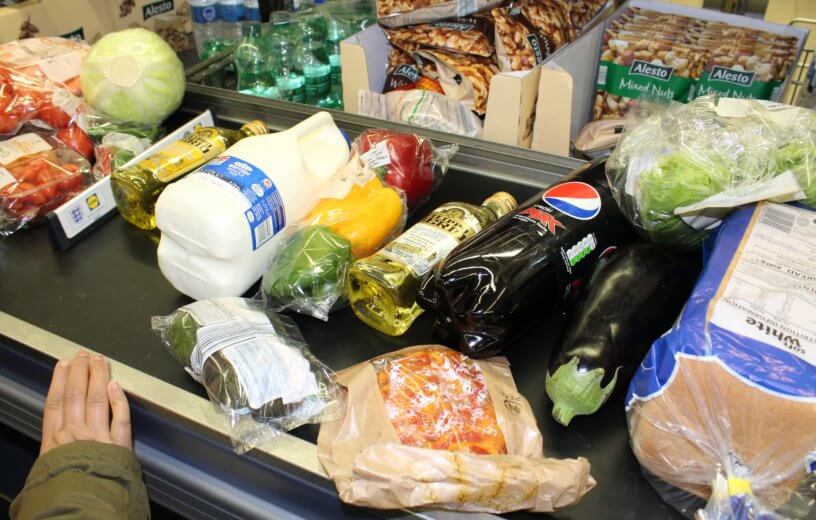
groceries on a checkout line
Groceries on a checkout line

From StudyFinds.com

Believe it or not, lots of processed foods are highly nutritious

by Shyla Cadogan, RD

“Stop eating processed food!” Have you heard that before from your favorite wellness guru? Usually in the next video, that same person is eating Greek yogurt with honey on top. However, did you know these are two processed foods?

Don’t be misled by people who view all processed foods as the same thing. Although they might mean well, the oversimplification can be dangerous. Not all processed foods are the same, and some are much healthier than a can of Pringles or TV dinners.

What is processed food?

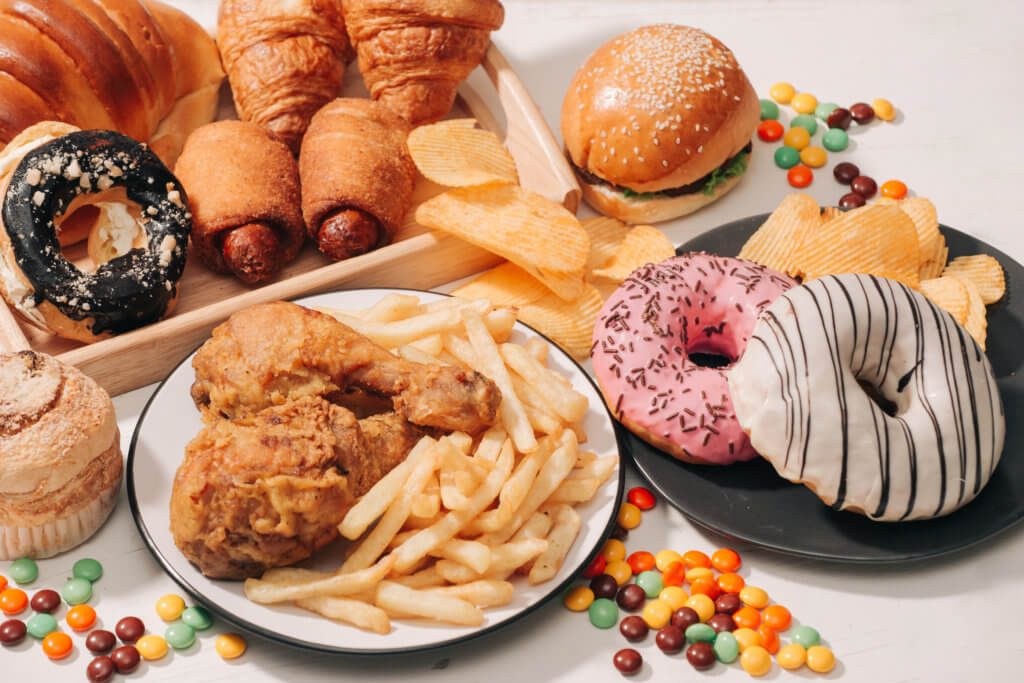
By definition, this describes any food that has been altered in some manner. It could be as simple as freezing vegetables. This is not to be mixed up with the societal definition of “processed food,” which is more so referring to stuff like chips, cakes, and pies.

Junk food and processed food
(© makistock – stock.adobe.com)

Levels of Processing

We tend to lump all processed food together as one thing, but in reality, there are levels of processing that are put in place in order to accurately distinguish between a vegetable and a slice of chocolate cake. The NOVA classification system is the most popular way to classify processed foods.

Group 1: Unprocessed and minimally processed foods

Unprocessed foods are the edible parts of fruits, vegetables, and other plant foods as well as animal foods like eggs. Minimally processed food describes the removal of inedible or undesirable parts of natural foods through means of crushing, roasting, filtering, boiling, pasteurizing (think about milk), etc.

Group 2: Processed culinary ingredients

This includes ingredients like oils, butter, lard, sugar, and salt. All are derived from group 1 foods and made into processed ingredients.

Group 3: Processed foods 

Canned beans and vegetables, sardines in oil, fresh breads, bacon, and other similar meats are included in this category.

Group 4: Ultra-processed foods

Ultra-processed foods undergo the heaviest levels of processing. These are foods like sodas, high-fat snack foods, and desserts that we are all familiar with when we hear the phrase “processed food.” Colors, flavors, emulsifiers, and other food additives are typically used to make the final product tasty and keep you coming back for more.

Woman eating snacks and junk food while working at desk
(© Juliaap – stock.adobe.com)

So which processed foods are good for you?

After breaking down the classifications, it’s clear that even the milk in your fridge and the black beans in your pantry are considered “processed.” This does not negate their nutrition and so the assumption that all processed foods are unhealthy is flawed.

“Stop eating processed food,” being the most common thing pushed by health and wellness gurus also just isn’t realistic for the average person. It is barely realistic for the person saying it. Canned fish, neatly packaged cuts of meat, rolled oats, and chopped vegetables are all processed foods that are not only highly nutritious but convenient for people to include in their diets because they are processed. Who has the time and energy to go find and gut their own salmon for dinner? Not most people.

People with low incomes and living in food deserts may also struggle to buy anything else except for canned vegetables and fruits for their families. Are we to tell them that it all needs to be fresh and from the highest quality source even if it comes at a great expense?

Let’s change our language

Instead, it’s more appropriate to specify that limiting ultra-processed snacks, fast food, desserts, and sodas is what is important. Even still, “limit” is the keyword here. It is not within everybody’s social or financial means to completely cut out TV dinners if they have no time to feed their kids anything else. It is also not necessary nor realistic to tell people to never eat a donut again in their lives. Striking a healthy balance that prioritizes whole fruits, vegetables, proteins, and carb sources is what matters most.

Bottom Line

Not all processed food is the same. Processed food being called unhealthy and being demonized isn’t warranted considering nutritious foods like frozen blueberries are processed. There are different levels of processing. Foods like sweets, salty snacks, and meals are ultra-processed. By lumping all processed foods as one, it removes the necessary nuance and ignores the needs of vulnerable populations, such as those who live in food deserts and struggle with food insecurity.