I was happy to read that the Mediterranean diet, newly repurposed as the MIND diet, is said to help prevent dementia. To no one’s surprise, it emphasizes fresh fruit and veggies, whole grains, olive oil, fish, etc.
I can’t help wondering, though, why no one is touting the MINDLESS diet, which has been proven to help prevent depression.
This classic meal plan, first discovered during those critical, formative teenage years, is equally helpful in attaining mindless hedonism in adulthood. Its key components are:
1 bag of chips per day
1 pint of ice cream twice weekly (do not substitute ice milk or frozen yogurt); extra benefit from additions such as chocolate chips, fudge, and salted caramel
2 cocktails per evening
1 bottle of wine per dinner (serves 2)
French fries (actually, fried anything)
Include plenty of fresh bread, cookies, pies, cakes and pastries
Level up to vegetable stir fry or tempura – so much more festive than raw or steamed veggies
Remember the 3 P’s: Pasta, Potatoes, Pizza
At least monthly: savor an ample cheese board with brie, goat cheese, Stilton, cheddar (may substitute grilled cheese on buttered bread as desired)
Dessert twice daily, preferably with whipped cream
I don’t know about you, but I could use a little extra good news these days. This story comes from Georgia, so it may be a little biased. (Georgia produces one-third of the pecan harvest in the US: nearly 88 million pounds of pecans from over six thousand pecan trees.) Still food for thought.
ATHENS, Ga. — Adding more pecans to your diet can dramatically improve cholesterol and fat levels, leading to better heart health, a new study finds.
Researchers from the University of Georgia find people at risk for heart disease who ate pecans during an eight-week trial displayed “significant” improvements in total cholesterol, low-density lipoprotein (LDL) or “bad” cholesterol, and triglycerides — which are fats the body stores in cells.
The team saw an average drop of five percent in total cholesterol and between six and nine percent in LDL among participants who ate the nuts as part of their daily diet.
“This dietary intervention, when put in the context of different intervention studies, was extremely successful,” says study co-author Professor Jamie Cooper in a university release. “We had some people who actually went from having high cholesterol at the start of the study to no longer being in that category after the intervention.”
The research team finds these nuts beat out 51 exercise plans designed to lower cholesterol, which reported an average drop of one percent in total cholesterol and five percent in LDL cholesterol.
“The addition of pecans to the diet not only produced a greater and more consistent reduction in total cholesterol and LDL compared to many other lifestyle interventions, but may also be a more sustainable approach for long-term health,” Dr. Cooper adds. “Some research shows that even a 1% reduction in LDL is associated with a small reduction of coronary artery disease risk, so these reductions are definitely clinically meaningful.”
Adding pecans (any way you can) improves health
For the study, researchers assigned 52 adults between the ages of 30 and 75 who were at higher risk for cardiovascular disease to one of three groups. One group consumed 68 grams (about 470 calories) of pecans a day as part of their regular diet. The second group did not add the nuts on top of their normal diet, but replaced other things they ate with the same number of calories in pecans. The third control group did not eat any pecans at all.
At the eight-week mark, participants ate a high-fat meal which allowed researchers to detect changes in the fats and sugars in their blood. Results revealed improvements in the levels of fat in blood among the two pecan groups, while post-meal triglycerides dropped in the group that added pecans. Blood sugar levels were also lower in the group that replaced parts of their usual diet with pecans.
“Whether people added them or substituted other foods in the diet for them, we still saw improvements and pretty similar responses in total cholesterol and LDL cholesterol in particular,” Dr. Cooper explains.
The team says their findings back up previous research which revealed bioactive properties of pecans for possible mechanisms driving the improvements. They added that pecans are high in healthy fatty acids and fiber, both of which contribute to lower cholesterol.
Have you ever made a simple cooking mistake that rendered your masterpiece totally inedible? I did this yesterday.
I’d decided to make a mixed-grain bread using bread flour, whole wheat, and rye, adding caraway, chia and hemp seeds for texture and interest.
Except I grabbed fennel seeds instead of caraway, which is almost as bad as mixing up salt and sugar. YUCK.
Which got me thinking… wouldn’t it be great to have Universal Autocorrect every time we were about to do something dumb? Like a booming voice from above yelling “Stop!” when we’re walking down the aisle towards the wrong person. (TMI? Am I the only one who’s done this??) Or a quick rewind after we inadvertently send “reply all” bitching about a colleague. How about a time freeze before we sign the contract for a house that will prove to be a money pit?
Unlike my iPhone autocorrect, which turns typos into gibberish, our Life Autocorrect would be unfailingly wise and judicious, knowing what we meant to do, not what we actually did, and fixing it pronto.
Sigh. Back to the drawing board, a.k.a bread board. And like love, the results were lovelier — and tastier — the second time around.
Live long enough, cook long enough, and you’re bound to make a few mistakes along the way. Last week I may have surpassed myself.
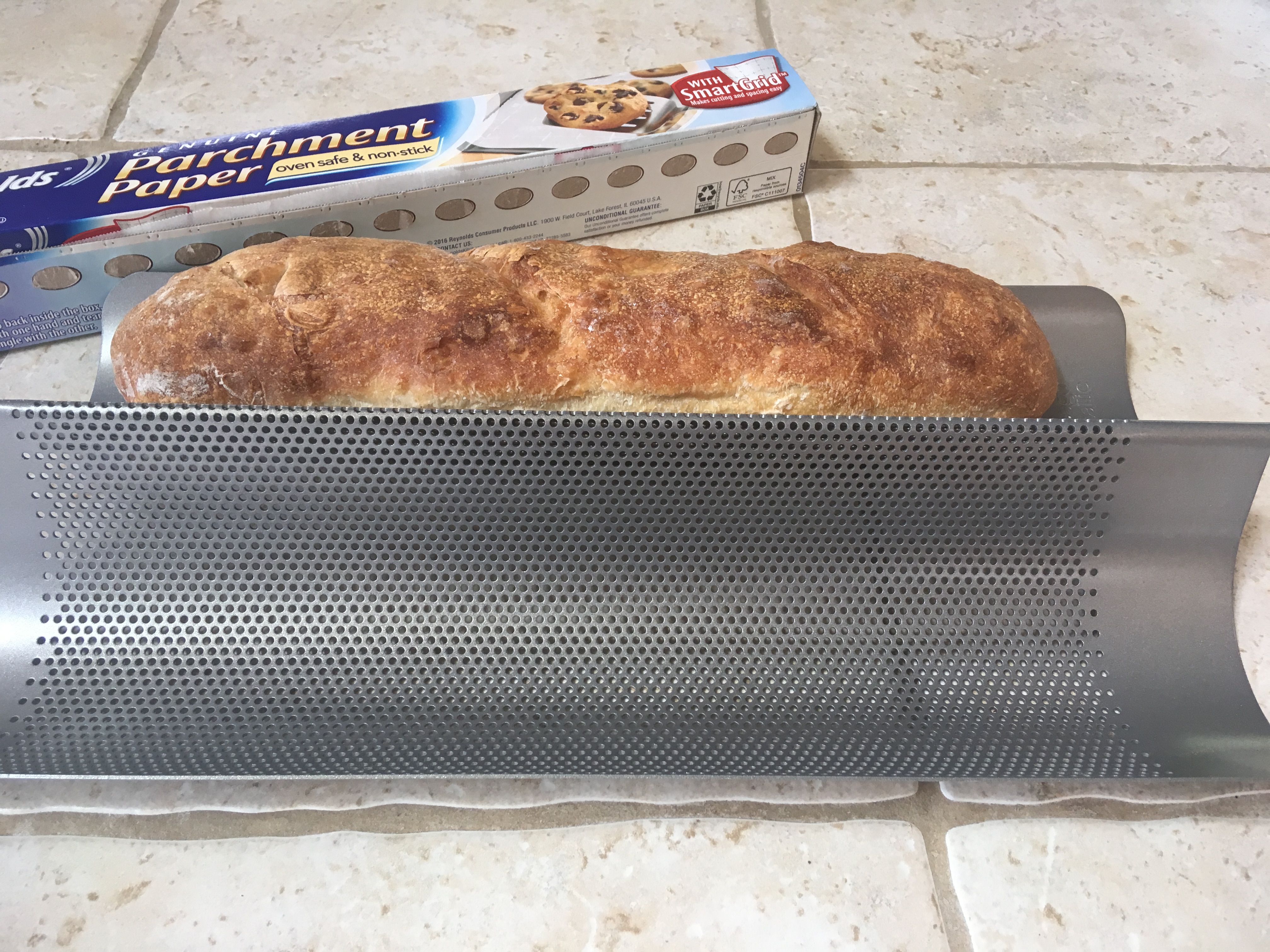
Lately, I’ve been baking bread using a perforated double loaf pan. They can be hard to clean, so instead of putting the dough directly on the pan I first place a sheet of parchment paper on top. The paper tends to slide around, so I weigh each side down with something to keep it in place until the dough goes on it.
For last week’s French bread, I weight one side with an apple and the other side with a paring knife until I’m ready to put my dough down on the paper-covered pan. I let them rise and bake as usual.
Both loaves of bread look good, although I do notice a groove on the bottom of one loaf when I take them off the paper to cool.
Cue the music: “Dumb, da dumb dumb”….
I remove the paper and discover my paring knife… not in the bread, but under the paper, melted directly onto the loaf pan where it is stuck for all eternity! Of course, my loaf pan/knife combo has to be thrown away and both items replaced ASAP.
We return from Wales to our cramped and clammy cottage. Neither of us wants to be the first to state the obvious: Devon is not all it was cracked up to be. (Or maybe it is and we just weren’t listening.) In any event, we don’t want to spend another full week here.
What to do? After briefly considering other UK options, we decide: What the hell, let’s go somewhere neither of us have visited and probably won’t otherwise. Brainwave: Copenhagen! We’ll drop off the rental car early at Heathrow, zip over for a few days, and fly back on the day we were supposed to arrive in London.
Much happier now, with travel plans set, we use our next few days for final explorations of the countryside, including nearby Westward Ho! and the beautiful Lanhydrock estate.
First up, Westward Ho! (yes, that is its actual punctuation).
Creepy haunted-looking house at Westward Ho! parking lot is decorated for Halloween.
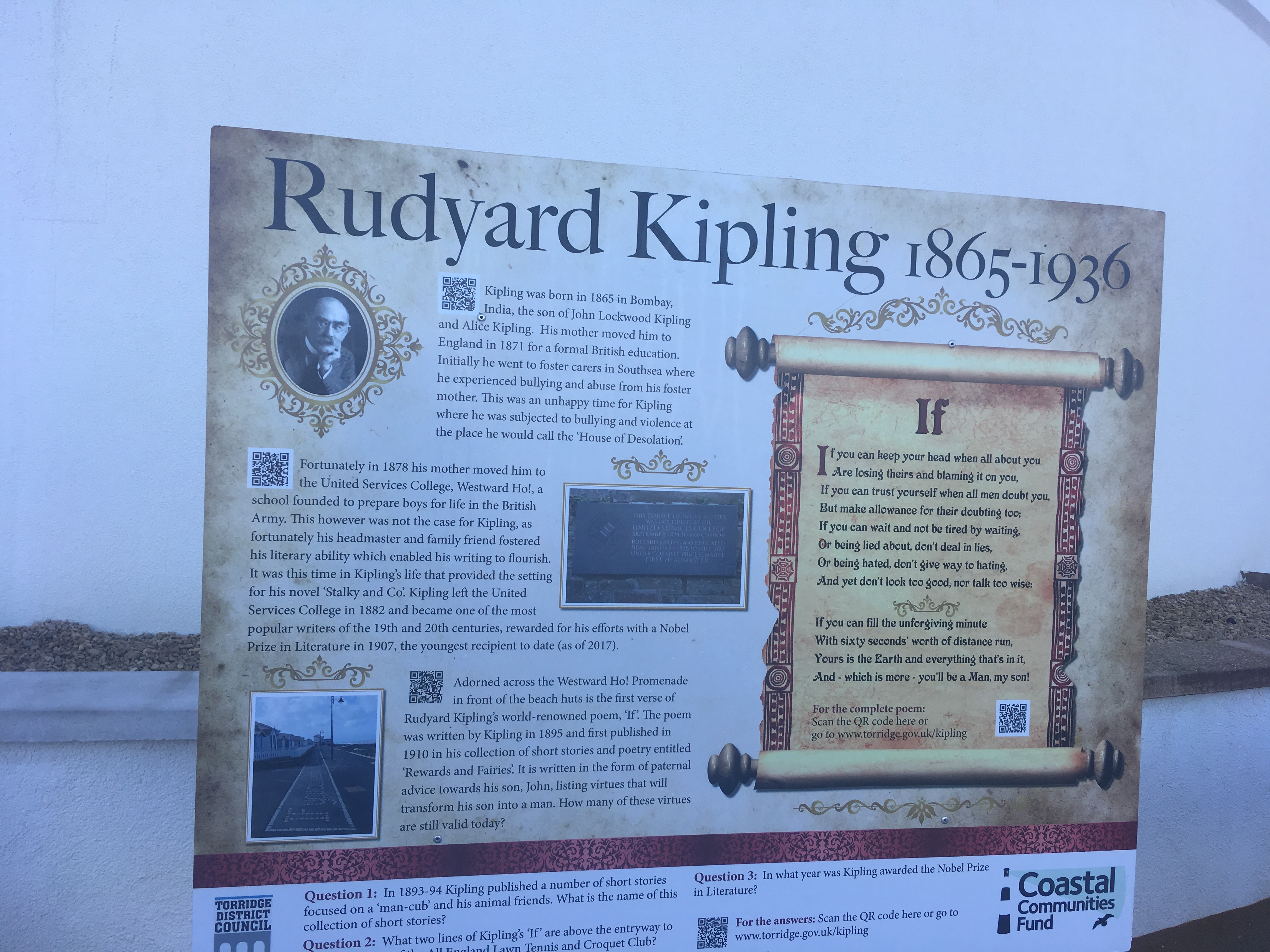
Westward Ho! is a beach town whose most notable resident was writer Rudyard Kipling. He attended United Services College here in 1878 and the first verse of “If” is inscribed on the promenade.
The town features a large sandy beach and beautifully-painted beach huts.
Eat your heart out, Bermuda!
Another day, we tour Lanhydrock, a magnificent late Victorian property.
It’s well worth seeing for the stunning kitchens alone: individual rooms for cheese, game, cleanup etc. Very Downton Abbey. I covet the copper pans — and of course a room dedicated to making bread and pastry.
The house encompasses many other rooms…
…and extensive grounds.
Best part: lawn care is provided by free-grazing cows and sheep!
A plate provides a useful recipe tip:
And back to reality: our own little National Trust cottage.
Lanhydrock is so much more my speed. Maybe in another life….
My friend T turned me on to this Paris bakery via a New York Times recipe, which Dorie Greenspan adapted from their unusual rye-cranberry-chocolate chunk cookie.
I made these yesterday and agree with the raves. T wrote about them this morning in her entertaining blog and I couldn’t wait to share the recipe with you. My only caveat is that the directions say that the dough makes 15 cookies, which seemed enormous. So I made 18 (roughly 2.5″ diameter) instead, and next time might go even smaller, perhaps 20 cookies, as they are quite hearty and filling. Enjoy, and let me know if you try them!
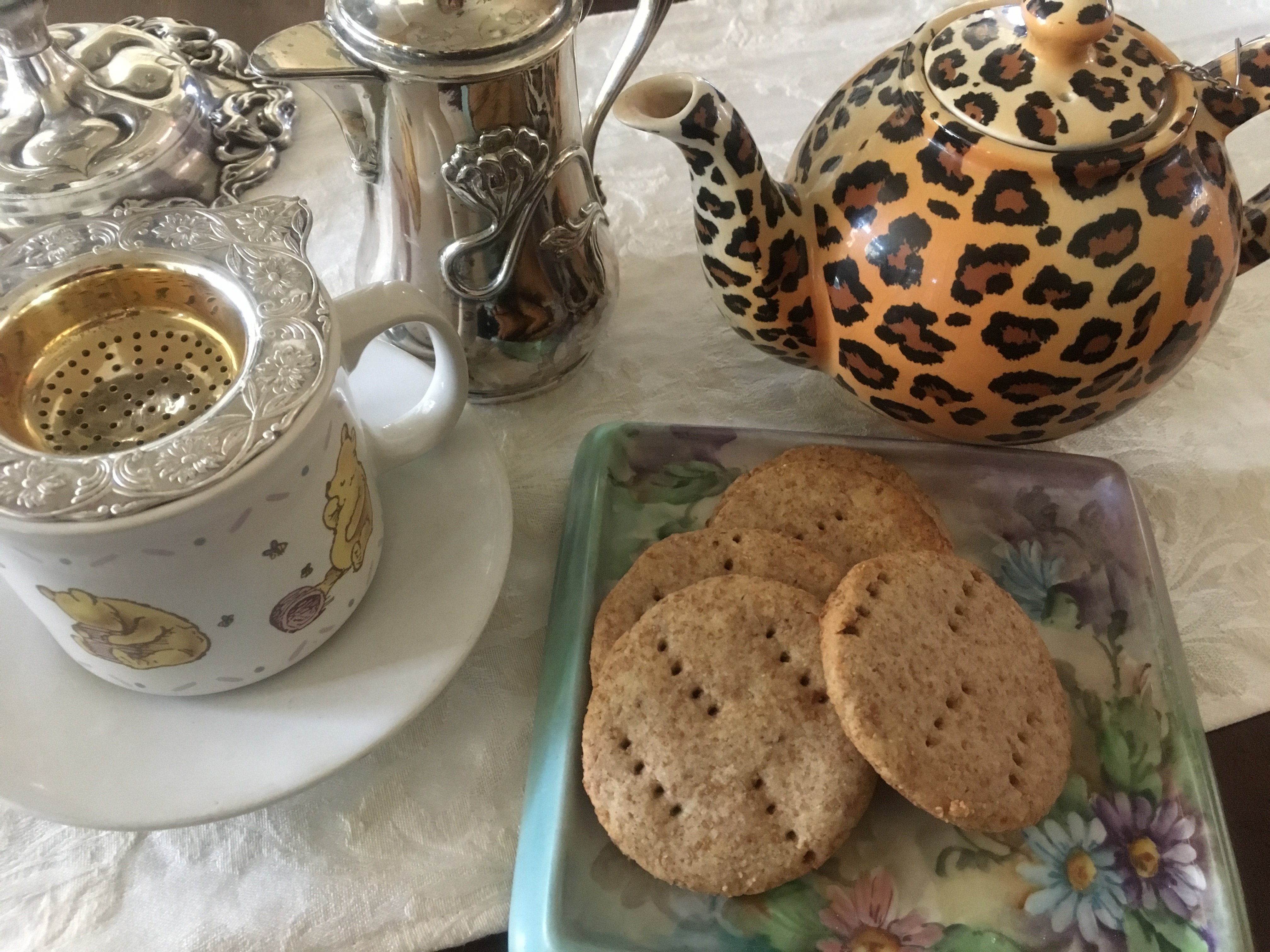
This week, I was inspired to bake up some digestive biscuits – probably because I’d been watching “Victoria” on TV. They turned out beautifully and I became curious about their origins.
The first digestive biscuit (“cookie” in American English) was the McVitie’s Digestive, created in 1892 by Alexander Grant, a young new company employee. The biscuit was given its name because it was thought that its high baking soda content served as an aid to food digestion.
I was skeptical – and wondering how many you’d have to eat to get any benefit – but according to LiveStrong.com, “ Baking soda (sodium bicarbonate*) helps to break down fatty substances and food particles, making them easier to digest and calming the turmoil in your stomach.”
In any case, digestives are a delicious, light cookie made with mostly whole-wheat flour for a nice fiber content. I wouldn’t call them health food but when your sweet tooth is calling they probably stack up pretty well compared with other cookies. (I’m talking to you, chocolate chips!)
It’s easy to make your own, and the butter tastes better than the palm oil in commercial products.
1/2 cup (8 tablespoons) unsalted butter, at room temperature
3/4 cup confectioners’ sugar
1/4 cup cold milk
Instructions
Preheat your oven to 350°F. Lightly grease a couple of baking sheets, or line them with parchment paper.
There are two options for blending ingredients: Hand method: Measure the flour and baking powder into a mixing bowl. Using a pastry blender, two knives, or your fingertips, rub the butter into the flour mixture. Add the sugar, (salt) and enough milk to make a stiff dough. Gently and briefly knead this mixture on a floured surface until smooth. Food Processor: Pulse the flour, (salt,) sugar, butter and baking powder in a food processor just long enough to create pea-sized bits of butter. Add milk and pulse briefly, just until mixture comes together. Be careful not to over blend.
Roll out the dough to approximately 1/8″ thick, and cut into circles. Traditionally, the biscuits are about 2 1/2″ in diameter (a slightly smaller cookie cutter is the perfect size since they will not spread out much).
Place the cutout cookies on the prepared baking sheets. Prick them all over with a fork, and bake until pale gold, about 15 minutes.
Remove the cookies from the oven, and cool right in the pan. Store airtight at room temperature for up to a week or refrigerate if you like them extra crispy; freeze for longer storage.
YIELD: about 3 dozen cookies. Particularly delicious with a pot of freshly-brewed tea.
*In case you’re wondering: Baking soda has only one ingredient, sodium bicarbonate. Sodium bicarbonate is a base that reacts when it comes into contact with acids, like buttermilk, yogurt or vinegar. Baking powder also contains two acids.
To celebrate this season of giving and sharing, I’m passing along an old favorite. May your holiday and New Year be filled with health, happiness, good cheer and everything you find meaningful. xo, Alisa
This recipe was inspired by one from olive oil expert Lidia Colavita. You can make a meal around the bread by offering it as an accompaniment to bean soup.
Serves 8.
Ingredients
2 cups warm water (105°F; to 115°F;)
2 teaspoons dry yeast
4 1/2 cups (about) all purpose flour
2 teaspoon salt
3 tablespoons olive oil
24 black or green brine-cured olives (such as Kalamata or Greek),
pitted, halved
1 tablespoon chopped fresh rosemary or 1 1/2 teaspoons dried
Preparation
Place 2 cups warm water in large bowl. Sprinkle dry yeast over; stir with fork. Let stand until yeast dissolves, about 10 minutes.Add 4 1/4 cups flour and salt to yeast mixture and stir to blend well (dough will be sticky). Knead dough on floured surface until smooth and elastic, adding more flour by tablespoonfuls if dough is sticky, about 10 minutes. Form dough into ball. Oil large bowl; add dough, turning to coat. Cover with plastic wrap and let rise in warm area until doubled, about 1 1/2 hours. Punch down dough; knead into ball and return to same bowl. Cover with plastic wrap and let rise in warm area until doubled, about 45 minutes or less
Coat 15×10-inch baking sheet with 1 tablespoon oil. Punch down dough. Transfer to prepared sheet. Using fingertips, press out dough to 13×10-inch rectangle. Let dough rest 10 minutes. Drizzle 2 tablespoons oil over dough. Sprinkle olives and chopped rosemary evenly over. Let dough rise uncovered in warm area until puffy, about 25 minutes.
Preheat oven to 475°F. Press fingertips all over dough, forming indentations. Bake bread until brown and crusty, about 20 minutes. Serve bread warm or at room temperature.
Leftovers! Why does that word have such an unfortunate connotation — “sad”, “dreary”, “unwanted”? For example: Last to be chosen for softball (that would be me in 6th grade). Late to losing one’s virginity (also me… age 20). Third tier invitee to a wedding or party (not me I hope, although I’ve never found out if I was on the C list.)
But in fact you can make amazing things out of leftovers because they invoke your creativity. Only downside… you’ll never make that dish the same way twice.
I refuse to take credit when a recipe I’ve read in a book turns out ok. All I had to do was read and follow instructions. (On second thought, maybe credit IS due because I suck at following instructions; just ask my Long Suffering Husband.)
Still, isn’t it much more fun to wing it without a net and make something up? That’s what we’re faced with at this point in the season, when we’re close to shutting down the summer house and have to invent recipes based on what’s in the fridge/freezer that needs to be used because I have some weird Puritanical Streak or Jewish Guilt telling me it’s a SIN TO WASTE FOOD!!!!
Last night, the LSH combined basic rice with leftover salsa, leftover cheddar and mozzarella, turmeric, salt and pepper, paprika, chili powder and moribund sliced jalapenos to create Mexican rice. Probably not authentic, but definitely tasty and it hit all the points for Using Up Crap In the Fridge.
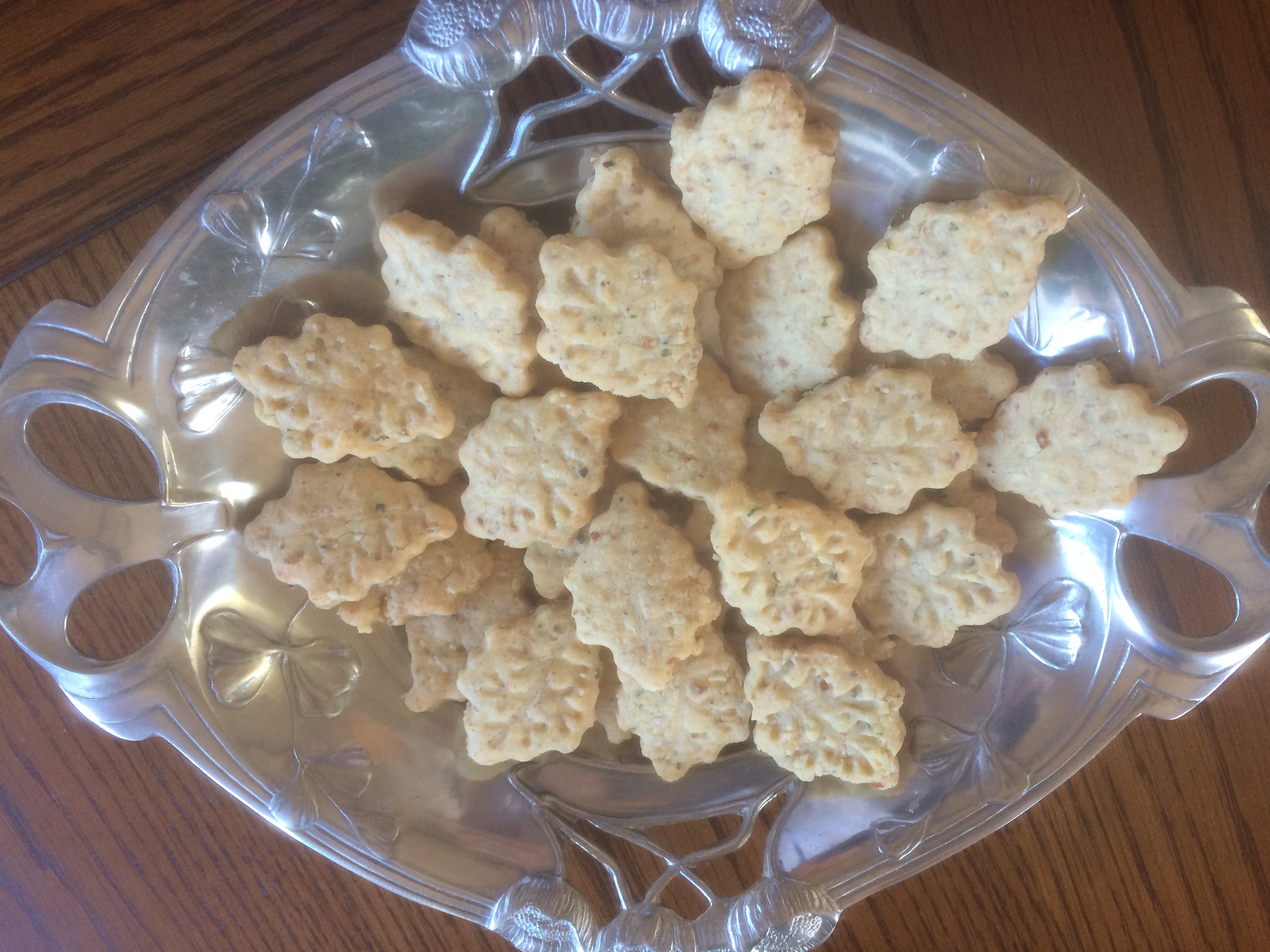
Below is an adaptation of a favorite recipe, tweaked to use up various bits of excellent cheese that were malingering in the fridge. Feel free to substitute other nuts and adjust based on your own leftovers; there’s pretty much no wrong way to make this.
Cheesy Shortbread Leaves
Ingredients
3.5 ounces crumbled cheese (about ½ cup), e.g. gruyère/cheddar/conté
3 tablespoons unsalted butter, room temperature
1 teaspoon Dijon mustard
½ cup all purpose flour
¼ cup cornstarch
¼ teaspoon coarse salt
1/8 teaspoon ground black pepper
1 teaspoon minced fresh tarragon
1/3 cup almonds, finely chopped
Preparation
Blend cheese and butter in food processor until creamy.
Add flour, cornstarch, mustard, tarragon, salt and pepper. Pulse until mixture resembles coarse meal.
Add nuts and process just until it forms moist clumps.
Gather dough into a ball. Flatten into a disk and wrap in plastic. Refrigerate until firm, about 1 hour.
Preheat oven to 325° F. Line 2 baking sheets with parchment paper.
Roll out dough between sheets of plastic wrap to 1/8″-1/4” thickness. Remove the top sheet of plastic and using a 2” x 1” leaf-shaped cookie cutter, cut out leaves. Note: if you don’t have a cookie cutter, you can roll the dough into a log, chill until firm enough to cut but not super-cold, and then cut slices instead. Gather dough scraps and re-roll to make additional leaves.
Transfer leaves to baking sheets and bake until golden brown, about 20 minutes.
Makes about 4 dozen, depending on thickness of dough and size of cookie cutter.
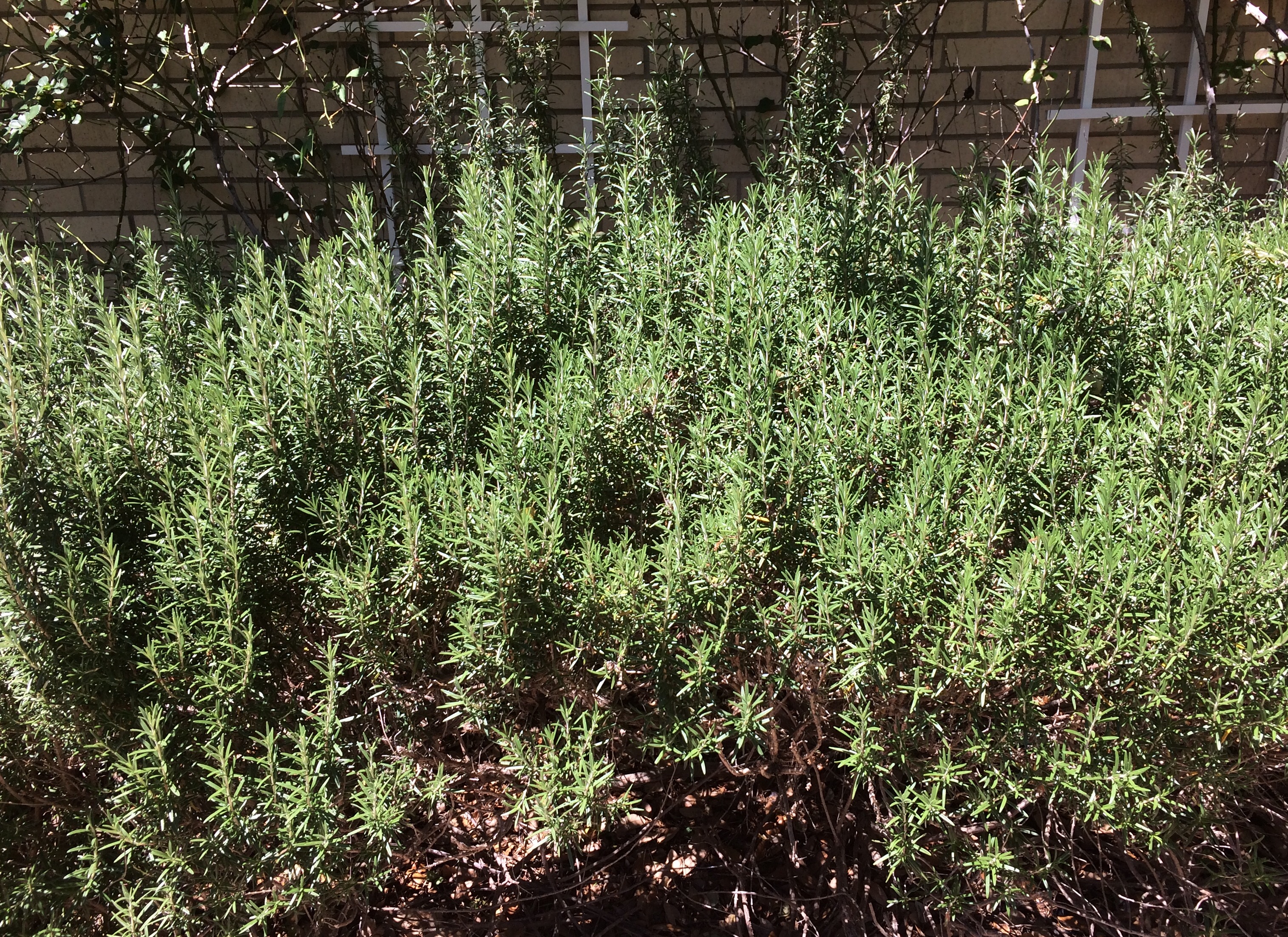
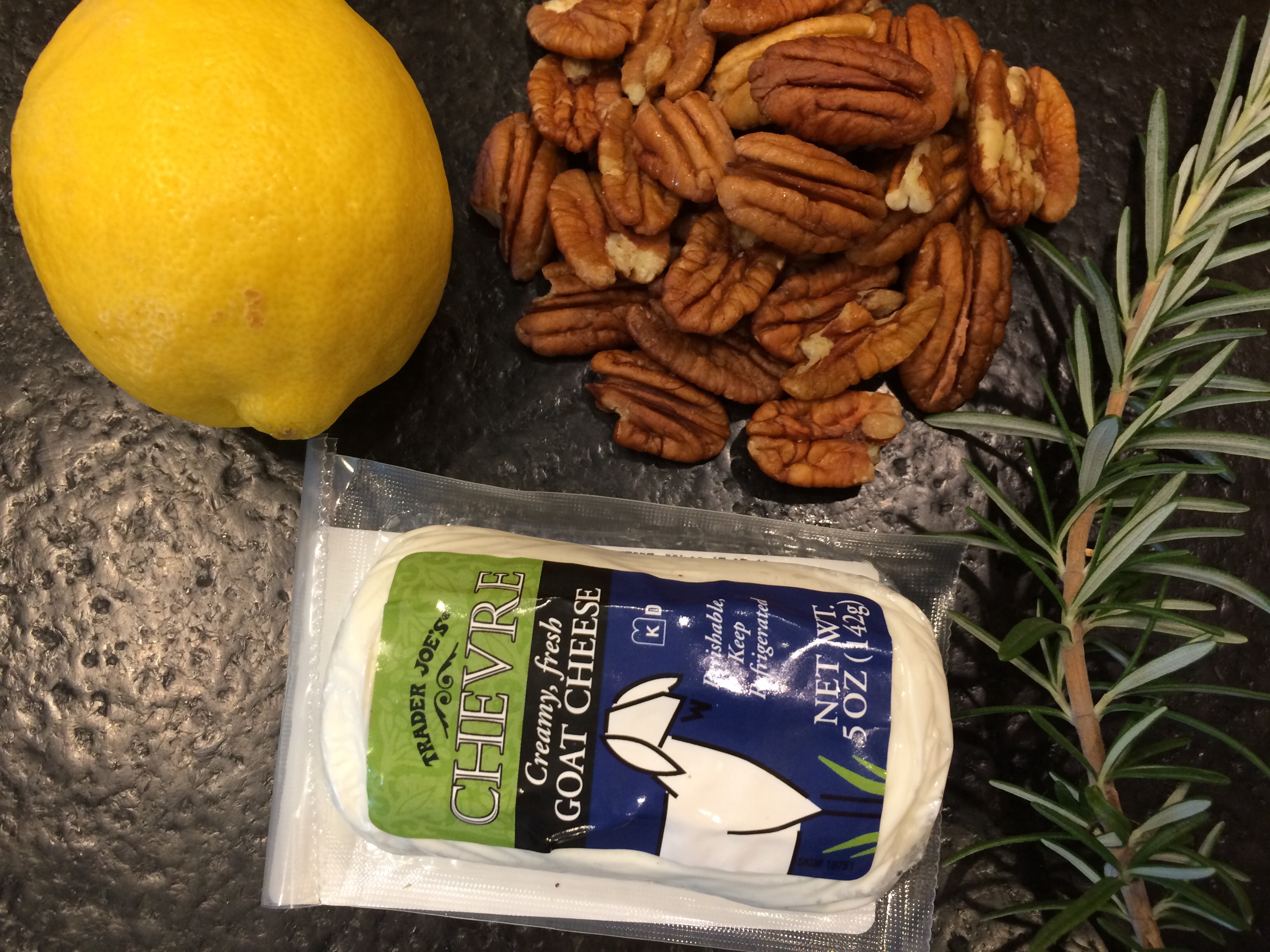
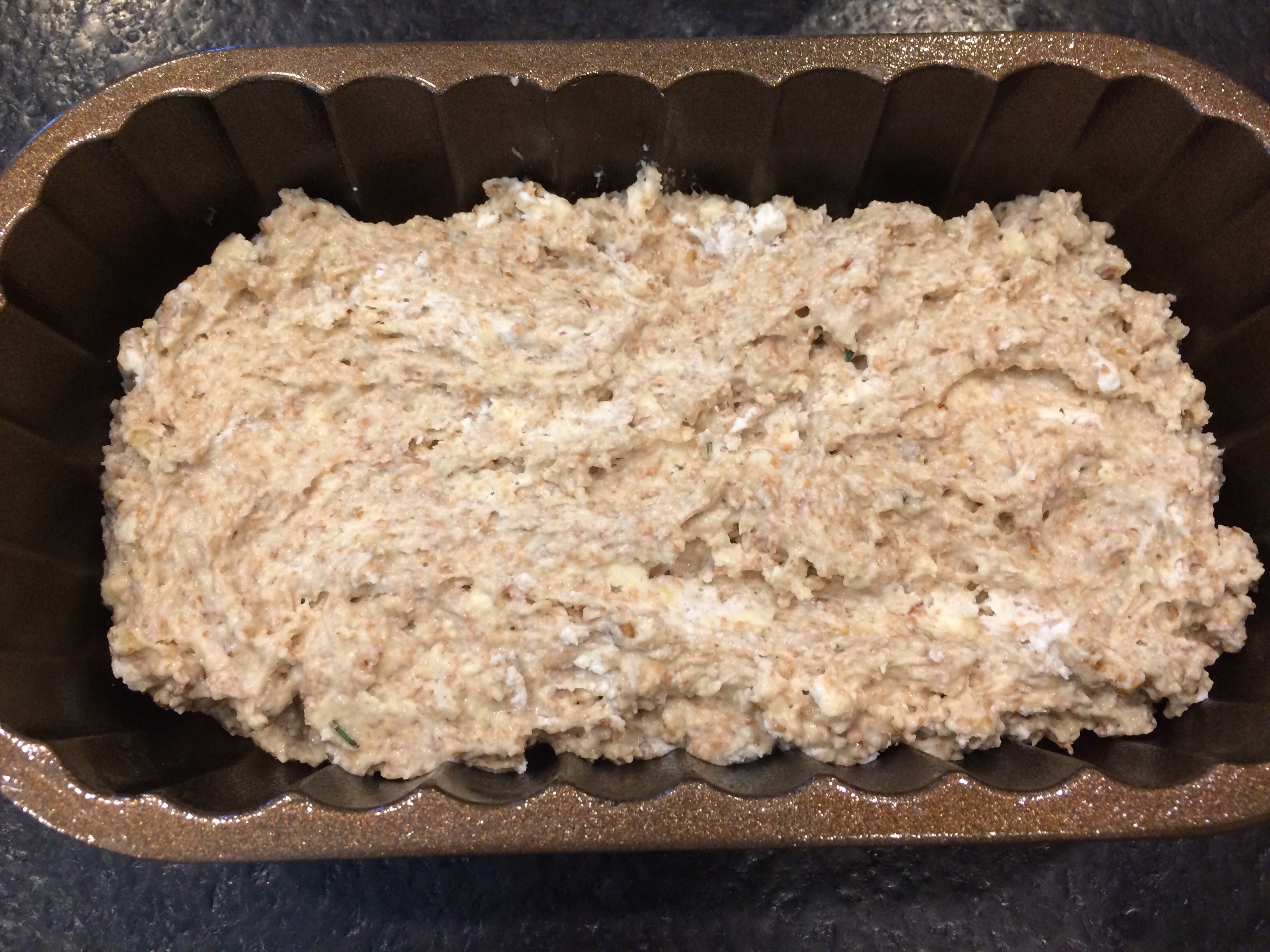
“There’s rosemary, that’s for remembrance” wrote Shakespeare in Hamlet. Unfortunately I don’t remember where I first saw the original recipe and I’ve made a few changes to it along the way.
Being blessed (or cursed, as the case may be) with abundantly-growing rosemary in our hot climate, I’m always looking for a new way to use it. This tangy, crunchy, slightly sweet loaf is super-easy to make. It’s also very versatile. Substitute any of your favorite herbs or nuts, or add raisins, chopped figs or kalamata olives for a different flavor.







 What to do? After briefly considering other UK options, we decide: What the hell, let’s go somewhere neither of us have visited and probably won’t otherwise. Brainwave: Copenhagen! We’ll drop off the rental car early at Heathrow, zip over for a few days, and fly back on the day we were supposed to arrive in London.






 It’s well worth seeing for the stunning kitchens alone: individual rooms for cheese, game, cleanup etc. Very Downton Abbey. I covet the copper pans — and of course a room dedicated to making bread and pastry.


 Best part: lawn care is provided by free-grazing cows and sheep!
 A plate provides a useful recipe tip: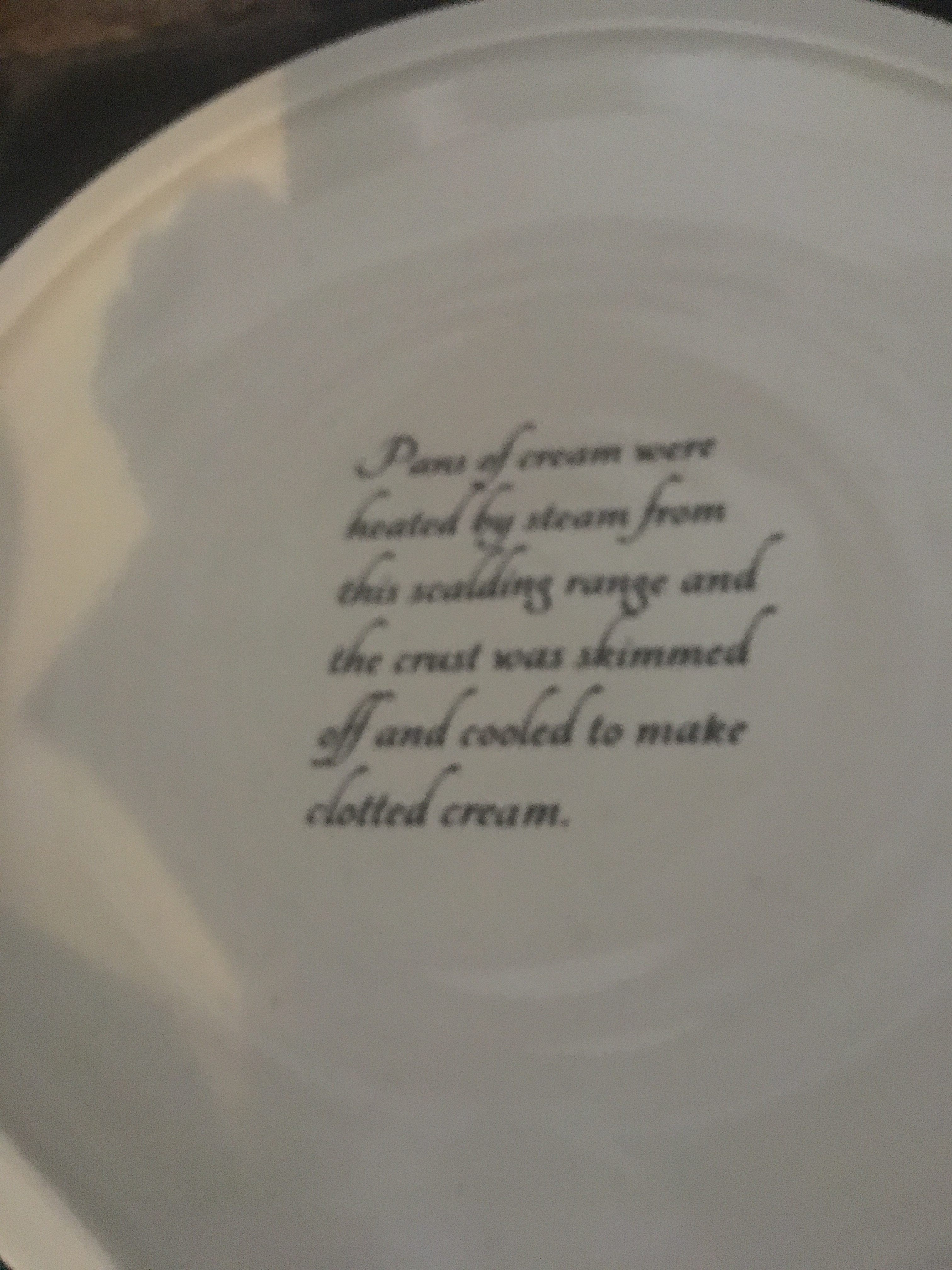
 Lanhydrock is so much more my speed. Maybe in another life….


 This week, I was inspired to bake up some digestive biscuits – probably because I’d been watching “Victoria” on TV. They turned out beautifully and I became curious about their origins.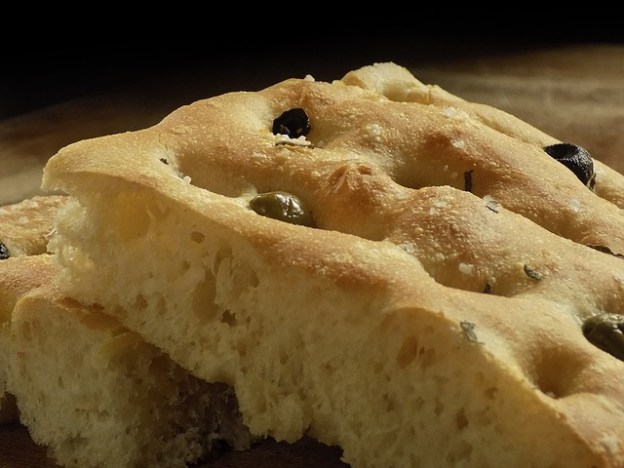





 olderfatterhappierdotcom