Good News Monday: Tales from the Dark Side

They say laughter is the best medicine. (And possibly our only one until we get a reliable vaccine.) Luckily, this pandemic has some upsides. Let’s call them “coronadvantages”:

  1. Crime deterrent:  Only a fool would break into a house without knowing if its inhabitants were infected. Plus, they’re probably home
  2. Ivanka’s shoes (made in China) might finally go out of business
  3. You now have the perfect excuse to avoid just about anything
  4. West Coasters have something to take our minds off worrying about The Big One
  5. There’s no shame in being a hypochodriac
  6. Terrorists may think twice:  No large gatherings = no large targets
  7. Your neighbors will stop hosting loud parties
  8. Working in pajamas
  9. Alcohol kills germs; ergo, vodka surely has medicinal properties
  10. A new appreciation for canned goods
  11. It’s far less likely your significant other will cheat on you
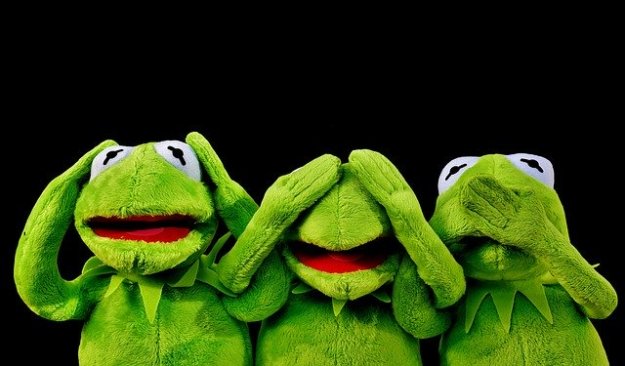
not-hear-2687975_640

Pandemic Chic

March is usually a wonderful time of year for those of us who love fashion. The magazines and runway reports are bursting with inspiration, and we’re ready to do a little shopping and look forward to wearing our new acquisitions.

Not these days, though.  Where are we going to wear a dazzling dress or sexy shoes?

For anyone still craving that undeniable lift, why not order a new pair of sensual silk pajamas in which to lounge around all Nick-and-Nora-Charles and pretend it’s a simpler time while sipping your Quarantini*?

Post image
 (per Reddit.com)    *Shout out to Betsy xoxo.

Toss in some maribou-trimmed slippers, while you’re at it.

Since we’ve had to cancel our trip to London — so disappointing — I’m consoling myself with possibly the world’s most glamourous lipstick.  Admittedly pricey for a lipstick, but pretty reasonable for Hermès and totally fabulous.

The refillable case, designed by Pierre Hardy, is lacquered, polished, brushed metal that closes with the solid click of a luxury automobile.

I’m determined to wear this, even if it’s only for my own sanity.

And if all else fails …

Post image

Today’s COVID-19 Practical Tip: Greetings

Rather than elbow-bumping, which still puts you in closer contact than the recommended 6′ distance from another person, some folks now greet each other with the namaste bow: hands together and a slight dip forward.

Personally, I’m adopting the “queen’s wave”.

namaste-3899976_640


Today’s COVID-19 Practical Tip: Hands

Have your local stores run out of hand sanitizer? Make your own.

Mix one-third cup aloe vera gel with two-thirds cup rubbing alcohol in a bowl until it’s well blended.  Add a few drops of an essential oil such as lavender to help calm the nerves and make it smell more luxurious.

soap-38136_640


Today’s COVID-19 Practical Tip

Cellphones are a germ magnet and it’s not easy to keep them truly clean.

A tip I read: When going out, put your phone in a sandwich-sized Ziploc bag. You’ll still be able to use the touch screen and when you get home, simply take the phone out of the bag.

Keep calm and text on.

apple apple device blur cell phone

Photo by Terje Sollie on Pexels.com


Good News Monday: Stemming the Tide

Amid concerns about the spread of COVID-19, here’s a practical and uplifting guide to managing our anxieties.

As the author writes in today’s New York Times, the good news is that “even in the face of fear, we do have the capacity to act in ways that would help limit contagion during an epidemic.  (If link doesn’t work, here is the article.)

(NY Times)

Are you fearful about catching the coronavirus? Are you anxious about whether you’re properly prepared for its arrival? You’re in good company.

In the past few days, I’ve had more than a few patients call or email to ask me to double or even triple the dosage of their prescription antidepressant or anti-anxiety medication so that they could have a bigger supply on hand “just in case.”

Throughout the country, people are stockpiling food in anticipation of a shortage or a quarantine. Supplies of Purell hand sanitizer flew off the shelves in local pharmacies and are now hard to find or even unavailable online.

I understand the impulse to secure one’s safety in the face of a threat. But the fact is that if I increase the supply of medication for my patients, I could well deprive other patients of needed medication, so I reluctantly declined those requests.

As a psychiatrist, I frequently tell my patients that their anxieties and fears are out of proportion to reality, something that is often true and comforting for them to realize. But when the object of fear is a looming pandemic, all bets are off.

In this case, there is reason for alarm. The coronavirus is an uncertain and unpredictable danger. This really grabs our attention, because we have been hard-wired by evolution to respond aggressively to new threats. After all, it’s safer to overact to the unknown than to do too little.

Unfortunately, that means we tend to overestimate the risk of novel dangers. I can cite you statistics until I am blue in the face demonstrating that your risk of dying from the coronavirus is minuscule compared with your risk of dying from everyday threats, but I doubt you’ll be reassured. For example, 169,000 Americans died by accident and 648,000 died of heart disease in 2017, according to the Centers for Disease Control and Prevention. As of Sunday morning 19 Americans had died from the coronavirus.

The reason this probably doesn’t make you feel better is simple: Just as we tend to assume the worst about novel threats — the safest, if not the most statistically justifiable, strategy — we tend to underestimate the danger of familiar risks because we are habituated to them. We are not very rational when it comes to assessing risk.

The good news is that even in the face of fear, we do have the capacity to act in ways that would help limit contagion during an epidemic. Specifically, we can behave altruistically, which benefits everyone.

For example, research shows that when people are told that it is possible — but not certain — that going to work while sick would infect a co-worker, people are less willing to stay home than when they are reminded of the certainty that going to work sick would expose vulnerable co-workers to a serious chance of illness. Stressing the certainty of risk, in other words, more effectively motivates altruism than stressing the possibility of harm.

The lesson for the real world is that health officials should be explicit in telling the public that selfish responses to an epidemic, such as going to work while sick or failing to wash your hands, threaten the health of the community.

There are other ways to encourage selfless behavior. For example, another study examined the neural activity of people while they played a game in which they made either generous or selfish choices to award or withhold money. The researchers found that when subjects made selfish decisions, the brain’s reward center was activated, whereas when they made generous decisions, a region of the brain implicated in empathy lit up. This suggests that people are more likely to be altruistic if they are primed to think of others and to imagine how their behavior might benefit them.

There is no question that we can all be encouraged to act in the interest of our fellow humans during perilous times. Specifically, public figures need to convey loudly and clearly that we should not go to work or travel when we’re sick and that we should not hoard food and medical supplies beyond our current need — not just give us health statistics or advise about how to wash our hands.

But that will require morally authoritative leaders who can inspire the better angels of our nature by reminding us that we are all in this epidemic together.

Richard A. Friedman is a professor of clinical psychiatry and the director of the psychopharmacology clinic at the Weill Cornell Medical College, and a contributing opinion writer. 

Why Lies Spread Faster Than the Truth

It’s not your imagination. Misinformation travels faster than a speeding bullet — or a potentially deadly virus — , making this video worth a look.

Thanks to the EnlightenedMind blog for the timely reminder.

white plane on the sky

Photo by Immortal shots on Pexels.com

Priorities

In the midst of gloom, doom and general mayhem, I read something yesterday that provided a glimmer of humor.

Apparently observed amidst the panicky consumers laying siege to groceries, pharmacies and big box stores: a man stocking up on 16 boxes of condoms and a large tub of coconut oil.

When the apocalypse comes?

silhouette photo of man leaning on heart shaped tree

Photo by Rakicevic Nenad on Pexels.com

Good News Monday: Rotten Luck

Garbage: it’s not just for landfills anymore! A company in New York City has created an all-purpose cleaner made from 97% food waste plus 3% sustainably sourced natural fragrance. Lab tests indicate that it’s 99% effective at cleaning tough dirt from multiple surfaces.

Rather than adding water — which accounts for as much as 90% in most household cleaners — all the liquid in this product is directly derived from the recycled food waste.

And instead of a plastic spray bottle that might or might not get recycled, the product comes in a refillable aluminum bottle.

How’s that for cleaning up a mess?

woman standing holding chopping board

Photo by mentatdgt on Pexels.com