Category Archives: Aging

Good News Monday: How to Live Longer

[from the New York Times]

An illustration of a person standing in a yoga pose with leaves emanating from different parts of the body; on either side of the person is an infinity loop with various vignettes; the vignettes are a couple on a couch, a person sleeping, a bowl of fruit and a person running.
Credit…Cristina Spanò

By Dana G. Smith

Humans have searched for the secret to immortality for thousands of years. For some people today, that quest includes things like sleeping in a hyperbaric chamber, experimenting with cryotherapy or blasting oneself with infrared light.

Most aging experts are skeptical that these actions will meaningfully extend the upper limits of the human life span. What they do believe is that by practicing a few simple behaviors, many people can live healthier for longer, reaching 80, 90 and even 100 in good physical and mental shape. The interventions just aren’t as exotic as transfusing yourself with a young person’s blood.

“People are looking for the magic pill,” said Dr. Luigi Ferrucci, the scientific director of the National Institute on Aging, “and the magic pill is already here.”

Below are seven tips from geriatricians on how to add more good years to your life.

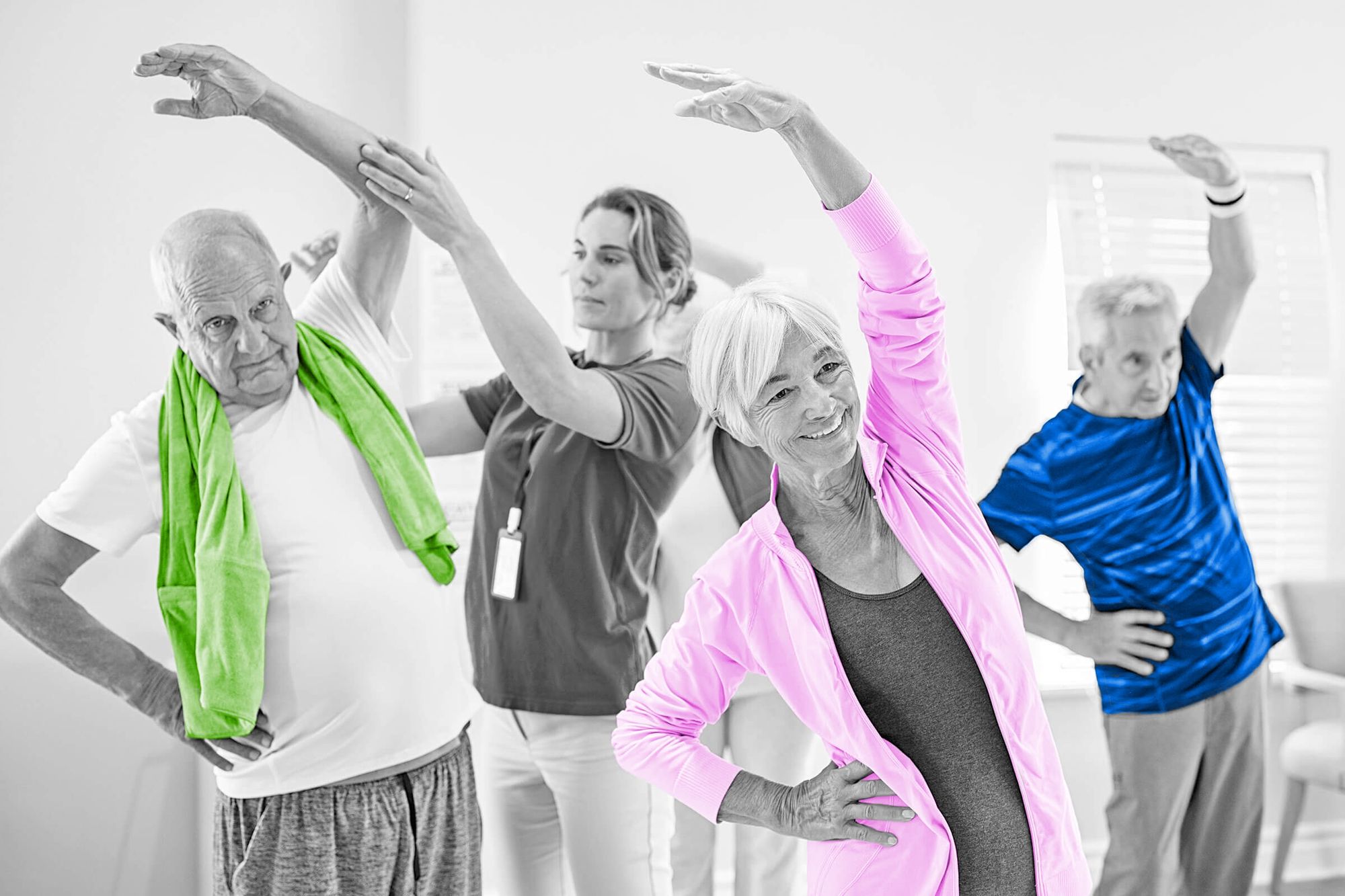
The number one thing experts recommended was to keep your body active. That’s because study after study has shown that exercise reduces the risk of premature death.

Physical activity keeps the heart and circulatory system healthy and provides protection against numerous chronic diseases that affect the body and mind. It also strengthens muscles, which can reduce older people’s risk of falls.

“If we spend some of our adult years building up our muscle mass, our strength, our balance, our cardiovascular endurance, then as the body ages, you’re starting from a stronger place for whatever is to come,” said Dr. Anna Chang, a professor of medicine specializing in geriatrics at the University of California, San Francisco.

The best exercise is any activity you enjoy doing and will stick with. You don’t have to do a lot, either — the American Heart Association recommends 150 minutes of moderate-intensity exercise per week, meaning just walking a little more than 20 minutes a day is beneficial.

The experts didn’t recommend one specific diet over another, but they generally advised eating in moderation and aiming for more fruits and vegetables and fewer processed foods. The Mediterranean diet — which prioritizes fresh produce in addition to whole grains, legumes, nuts, fish and olive oil — is a good model for healthy eating, and it’s been shown to lower the risk of heart disease, cancer, diabetes and dementia.

Some experts say that maintaining a healthy weight is important for longevity, but to Dr. John Rowe, a professor of health policy and aging at Columbia University, that’s less of a concern, especially as people enter old age. “I was always more worried about my patients who lost weight than my patients who gained weight,” Dr. Rowe said.

Sleep is sometimes overlooked, but it plays a major role in healthy aging. Research has found that the amount of sleep a person averages each night is correlated with their risk of death from any cause, and that consistently getting good quality sleep can add several years to a person’s life. Sleep appears to be especially important for brain health: A 2021 study found that people who slept less than five hours a night had double the risk of developing dementia.

“As people get older, they need more sleep rather than less,” said Dr. Alison Moore, a professor of medicine and the chief of geriatrics, gerontology and palliative care at the University of California, San Diego. Seven to nine hours is generally recommended, she added.

This goes without saying, but smoking cigarettes raises your risk for all kinds of deadly diseases. “There is no dose of cigarette smoke that is good for you,” Dr. Rowe said.

We’re starting to understand how bad excessive alcohol use is, too. More than one drink per day for women and two for men — and possibly even less than that — raises the risk for heart disease and atrial fibrillation, liver disease, and seven types of cancer.

Nearly half of American adults have hypertension, 40 percent have high cholesterol and more than one-third have pre-diabetes. All the healthy behaviors mentioned above will help manage these conditions and prevent them from developing into even more serious diseases, but sometimes lifestyle interventions aren’t enough. That’s why experts say it’s critical to follow your doctor’s advice to keep things under control.

“It’s not fun to take the medications; it’s not fun to check your blood pressure and check your blood sugar,” Dr. Chang said. “But when we optimize all those things in a whole package, they also help us live longer, healthier, better lives.”

Psychological health often takes a back seat to physical health, but Dr. Chang said it’s just as important. “Isolation and loneliness is as big a detriment to our health as smoking,” she said, adding that it puts us “at a higher risk of dementia, heart disease, stroke.”

Relationships are key to not only living healthier, but also happier. According to the Harvard Study of Adult Development, strong relationships are the biggest predictor of well-being.

Dr. Rowe tells the medical students he teaches that one of the best indicators of how well an elderly patient will be faring in six months is to ask him “how many friends or family he’s seen in the last week.”

Even thinking positively can help you live longer. Several studies have found that optimism is associated with a lower risk of heart disease, and people who score highly on tests of optimism live 5 to 15 percent longer than people who are more pessimistic. That may be because optimists tend to have healthier habits and lower rates of some chronic diseases, but even when accounting for those factors, the research shows that people who think positively still live longer.

If you had to pick one healthy practice for longevity, “do some version of physical activity,” Dr. Moore said. “If you can’t do that, then focus on being positive.”

Six Fascinating Facts about Aging

Article image
Credit: Ridofranz/ iStock

Unless you die young, you’re likely to grow old. And although this is not without challenges, there are numerous upsides including financial security, learning to say “no” to people, experiences or activities you simply don’t enjoy, and the resultant contentment that comes from being true to yourself.

I found the following facts interesting, and hope you do too.

Old Age Isn’t (Just) a Modern Phenomenon

Roman mosaic filled with old people.
Credit: Heritage Images/ Hulton Fine Art Collection via Getty Images

A common misconception is that our predecessors lived brutish lives cut short by disease and war. While modern medicine has certainly expanded life expectancy, many people in the past lived as long as people live today. For example, some ancient Roman offices sought by politically ambitious men couldn’t even be held until someone was 30

When scientists analyzed the pelvis joints (a reliable indicator of age) in skeletons from ancient civilizations, they found that many people lived long lives. One study of skeletons from Cholula, Mexico, between 900 and 1531 CE found that a majority of specimens lived beyond the age of 50. Low life expectancy in ancient times was more the result of high infant mortality rates than of people living unusually short lives. Modern science has helped more humans survive our vulnerable childhood years and life expectancy averages have risen as a result.

It’s a Myth that Older People Require Less Sleep

Senior couple lying down in bed, their feet come out from under the sheets.
Credit: FilippoBacci/ iStock

The amount of sleep each of us needs is only altered during childhood and adolescence as our bodies require more energy to do the tough work of growing. Once we’re in our 20s, humans require the same amount of sleep per night for the rest of our lives (though the exact number of hours differs from person to person). In fact, the elderly are more likely to be sleep-deprived because they receive lower-quality sleep caused by sickness, pain, medications, or a trip or two to the bathroom. This can be why napping during the day becomes more common as we grow older.

Some of Our Bones Never Stop Growing

A doctor adjusting an elderly woman's shouldfer in an office.
Credit: ljubaphoto/ iStock

While we’re likely to get shorter as we age, some bones keep growing. A 2008 study for Duke University revealed that skull bones continue to grow, with the forehead moving forward and cheek bones moving backward. Unfortunately, this imperceptible bit of facial movement exacerbates wrinkles, because as the skull shifts forward, the overlying skin sags.

The pelvis also keeps growing throughout our lives. Scientists analyzing the pelvic width of 20-year-olds compared to 79-year-olds found a 1-inch difference in width, which adds an additional 3 inches to your waistband. That means our widening in the middle as we age isn’t our imagination — or about a slower metabolism.

Pupils Get Smaller As We Age

Senior woman having her eyes examined at the optician.
Credit: gilaxia/ iStock

While our hips get bigger, our pupils get smaller. The human pupil is controlled by the circumferential sphincter and iris dilator muscles, which weaken as we get older. Because of this loss of muscle function, pupils get smaller as we age, and are also less responsive to light. Smaller pupils make it harder to see at night (hello, reading a menu in a dark restaurant?!), so people in their 60s need three times as much light to read comfortably as people in their 20s.

Other eye changes include an increased likeliness of presbyopia, or farsightedness (often be resolved with readers), and cataracts, a clouding of the eye’s lens. In fact, half of people over the age of 80 will have experienced a cataract of some kind.

Older People Have a Stronger “Immune Memory”

Muslim nurse taking care of a senior patient in a wheelchair.
Credit: andresr/ iStock

Although the body experiences some slowing down as we age, growing old isn’t all bad news. Researchers from the University of Queensland found that older people had stronger immunities than people in their 20s, as the body keeps a repository of illnesses that can stretch back decades. This extra line of defense begins to drop off in our 70s and 80s, but until then, our bodies generally just get better and better at fighting off disease due to biological experience. Additionally, as we age we experience fewer migraines, the severity of allergies declines, and we produce less sweat. Older people also exhibit higher levels of “crystalized intelligence” (or what some might call “wisdom”) than any other age group.

https://ec33c981f5004cc04b33a951176ed671.safeframe.googlesyndication.com/safeframe/1-0-40/html/container.html

6of 6

The Atoms That Make Up All of Us Are Already Billions of Years Old

Scientist examining a molecule model.
Credit: Tom Merton/ iStock

If age is just a number, in the cosmic view human age is rather insignificant. The atoms that make up the human body are already billions of years old. For example, hydrogen — one of the key components of our bodies — formed in the Big Bang 13.7 billion years ago. Likewise, carbon, the primary component of all known life, formed in the fiery cauldron of stars at least 7 billion years ago.

Which, comparatively speaking, makes us all universally young. I find that strangely comforting!

Adding Injury to Insult

Oh what a month it’s been.

Less than a week after returning home from our “trip that wasn’t”, my husband fell and broke his wrist as well as sustaining a small but painful crack in one of his vertebrae. It’s been nonstop hospital stays, physical therapy, doc appointments, shopping for various meds and home care equipment, etc.

Hence, the lack of posts.

It’s a vivid reminder that our health is everything. And that caregivers, whether professional or family, have a really difficult job to do. Hats off to those who work in nursing and healthcare, or anyone caring for a parent or partner.

Dear older readers: Get those bone scans, keep up with annual screenings, stay active mentally and physically, and remain motivated by always having something you’re looking forward to doing in the future.

And you youngsters: Don’t be too smug; you’ll get older too, if you’re lucky!

Photo by Madison Inouye on Pexels.com

Is Your Style Dragging You Down?

TGIF! This piece from WhoWhatWear is a good reminder.

While appearance may not be our #1 priority in our personal lives, looking older* can be a problem in the workplace, leading us to be unfairly marginalized. Your bosses and colleagues might not even know why they think you aren’t “current”, but what you wear influences their perceptions on a deep subliminal level.

*NOTE: Being perceived as too young can also hurt your career. Dress professionally, and leave the sneakers, baseball shirts etc. at home.

3 Things That Are Secretly Aging You, According to a Celeb Stylist

You often hear the phrase age is but a number. Yet, if you ask a room of adults if they’d like to know how to look younger, we bet most would raise their hands. If you’re among the set that would have their arm up high (myself included), this post is for you. If you could care less, we’ve got a ton of other great content—may we direct you to some winter outfit ideas or a piece on bag trends?

We’re not aiming to cast aging in a negative light (hey, it’s literally part of being a human), but there are simply some style habits that can make you look older and some that can make you look more youthful. Do with this information what you will, but to make sure it’s the best intel we could gather, we tapped a most excellent expert. Read on for the wisdom of Dani Michelle, one of the most in-demand celebrity stylists who works with a range of ages.


1. Worn shoes and bags.

PHOTO: THE STYLE STALKER


“When your accessories look tired, so do you. Make sure your best pieces are well cared for by taking them to a repair shop or doing some DIY care at home with shoe and bag polish. Accessories can really polish and demolish an outfit.” — Dani Michelle


2. Wearing retro pieces without modern styling.

PHOTO: THE STYLE STALKER


“I’m a huge fan of vintage pieces and incorporating them into everyday outfits. That being said, don’t be afraid to alter, chop, or re-invent pieces so they are relevant and reference current trends and you aren’t just in old looks.” — Dani Michelle


3. Your style has been the same… forever.


“You aren’t the same throughout your life, so why should your style stay stagnant? There’s a difference between re-buying your aesthetic season after season and evolving it with current trends. It’s certainly important to dress for your body type, but in turn, don’t be afraid to try new styles that work on you. You’ll feel like yourself and still be in style.” — Dani Michelle


Vain Hopes: DIY Eyelash Tinting

After my recent beauty misadventure, I currently find myself in Beauty Purgatory, aka the Oregon Coast, where the only day spa that did eyelash tinting has suddenly gone out of business.

I mean, is it me? WTF?!

Determined to find a solution, I order a lash tinting kit online after perusing some reviews.

unnamed.jpg

The Godefroy “28 Day Mascara” comes with a tube of color and a tube of developer, plus an applicator and under-eye pads, which I quickly discover are a bit too thick and awkward.

The process is simple:

  1. First, wash and dry your lashes to remove any oils, creams and moisturizers.
  2. Apply petroleum jelly around the eye area, making sure not to get it on your lashes.
  3. Apply color, doing one eye at a time. I suggest using a disposable mascara wand.
  4. Apply developer and leave it on for one minute. Disposable wand for this, too.
  5. Wipe down eye with damp tissue and do the other eye.

Results: Meh, even though I do them twice.  I suspect I’d get better results if a) my lashes were longer, 2) my eyelids weren’t as droopy, 3) I didn’t blink 80,000 times while attempting this.

The search continues…. Oh, and in case you were wondering, I still haven’t heard anything from my erstwhile eyebrow guru.  I really hope she is ok.


Good News Monday: DGAS, a Benefit of Aging

There may not be a scientific study (yet) but I’m convinced there’s a provable curve between increased age and the condition DGAS (Don’t Give a S***).

entrepreneur-1340649_640

When we’re younger, we obsess over how we’re perceived at work and in our social lives. Do people like us, respect us, take us seriously, etc.? Is that compliment sincere, or does he/she just want to get into our pants? (And are said pants a size or two larger than they ought to be?)

The beauty of getting older is that, frankly, there are very few people whose opinions actually matter to us.  Yeah, we go through the motions and attempt to interact with people we basically can’t stand, but our universe of those we care about is subject to more important criteria than “What can you do for me?” or “Are you hot?”

For those of us who are shy about making new acquaintances, this might translate as: You seem nice and it might be fun to have lunch or share an activity and see if there’s more of a connection, so I’ll proffer an invite.

If you respond, great. If you don’t, well, life will go on and a year from now I won’t remember your name because, frankly, I can barely remember where I left my car keys.

person using smartphone

Photo by rawpixel.com on Pexels.com

By this age, I have no patience for anyone who is faking it, on the make, or desperately lonely.  But I’m really excited to make friends with people with whom I share common interests, philosophies, or enthusiasm for 1) good food, 2) good wine, or 3) nice handbags.

Do we become more intolerant as we get older? Or do we become more discerning? I’d like to think it’s the latter. Or maybe it’s the same thing.

What do YOU think, dear readers?

ask blackboard chalk board chalkboard

Photo by Pixabay on Pexels.com

Hump Day Hacks: Looking Younger

I know, I know.  These days, it’s politically correct to look “rested”, “relaxed” or “fresher”. But if someone said you looked much younger than your chronological age, would you really be insulted?

Herewith, some easy hacks from a recent beauty round-up:

  1. Keep skin care products in the fridge. They’ll work faster and keep fresh longer.
  2. Boost your brows.  Thicker eyebrows signal youthfulness. Fill in with pencil while they’re growing in.
  3. Wear a double-duty sunscreen. An antioxidant formula will reduce the effects of skin-damaging free radicals. I love the La Roche-Posay Anthelios line.
  4. Check your eyesight.  Squinting deepens frown lines, so you might need a stronger prescription, not Botox.
  5. Pick lighter lipstick.  Our lips get thinner with age, and dark colors make your lips look smaller, as well as emphasizing any vertical lines. Stick with rosier shades and avoid orange or peach tones, which make teeth look yellower.
  6. Blush higher.  Swirl your blush at the highest point of your cheekbones, and choose a warm pink, apricot or bronze shade that’s close to your skin tone.
  7. Choose camouflage vs. concealer. Regular concealer is oilier, so it tends to “pool” in fine lines. Concealers labeled “camouflage” cover dark spots better, too.
  8. Speaking of dark spots: Sunblock, retinoid, and gloves will keep your hands looking younger.  Applying a dot of diluted lemon juice before bedtime may help too. Note that acids can irritate skin so gradually build up to twice a day.
  9. Best foot forward. Dry, scaly feet wreck the effect of even the most gorgeous shoes. Before bedtime or working out, apply a layer of over-the-counter salicylic acid to rough areas, cover with a small amount of Vaseline or thick moisturizer, and put on socks. The combo will soften your feet and help protect against blisters and calluses.
  10. Accessorize wisely. A small investment in a broad-brimmed hat, larger sunglasses and a scarf can protect against wrinkles, sun spots and pricey treatments.

And if someone asks to see ID the next time you buy alcohol, don’t say I didn’t warn you!

oval brown wooden framed hanging mirror

Photo by Nadine Wuchenauer on Pexels.com

The Ballad of a Thousand Boxes

IMG-1053Do you remember moving into your first apartment? Mine was a dark, tiny, one-bedroom in Springfield, Missouri – notable for its cheap rent and even cheaper-looking olive green shag carpeting on the walls as well as the floor. (Even for the 70’s this was mind-bendingly ugly.)

But it was my first post-college job and I was thrilled to be on my own.

Moving in those days was much easier.

  • We had friends to haul stuff and we paid them in beer or cheap wine — not the price of a European vacation.
  • I had more energy than possessions.
  • An old orange crate made a perfectly acceptable coffee table.

bottles inside boxes

Photo by Craig Adderley on Pexels.com

Having just moved again for the umpteenth – and hopefully, last – time, I’ve noticed:

  • It costs more to move across town than it used to cost moving across the country.
  • I have way too much crap, even after endless trips to Goodwill.
  • I have way less ability to carry said crap, especially up a flight of stairs.
  • Young people don’t seem to accumulate china and crystal.
  • The more stuff we have, the more storage we need.
  • One TV used to be sufficient. Now we all have multiple TVs, each with complicated hookups and several remotes that have to be housed somewhere. Not to mention computers.
  • Sunnier rooms reveal flaws and dings in furniture that used to look pretty decent.
  • Change is good, even when it’s painful. And it’s better to share that pain.
  • Rugs and wood floors look a lot better than shag carpet.


Thanks to Laura S. for suggesting this topic!

Good News Monday: 11 Medical Breakthroughs

Look for these promising new initiatives to become more widely used in the next couple of years.

lab-217041_640

1. Tecnic Symfony, a newly approved, first-in-class lens replacement for cataracts, can now provide an extended depth of focus.  We’ll no longer have to choose between optimal close-up or distance vision, and a tiny stent is now available to treat people with glaucoma.

 2. Drones are distributing medicine to isolated areas. In 2016, a start-up company used drones to deliver medicine to Rwanda. This practice has since become routine and it’s estimated that even more areas will benefit.

3. Gene editing is helping prevent disease. A new technique to “edit” embryos (CRISPR Technology) may help future generations avoid retinal degenerative disease and inherited  diseases such as cystic fibrosis and hemophilia.

4. ALS patients will soon be able to communicate with their thoughts. New technology may help decode the thoughts of people with functional brain activity who have a completely paralyzed body resulting from a stroke, traumatic injury or amyotrophic lateral sclerosis (ALS).

5. Diabetics can be helped by an artificial pancreas. Diabetes is caused when the pancreas produces insufficient insulin. In May 2017, it was reported that the first artificial pancreas systems (the Hybrid Close-Loop Insulin Delivery System) were beginning to be distributed, helping diabetics regulate their insulin levels.

6. Reduction of LDL cholesterol. When powerful cholesterol drugs — known as PCSK9 inhibitors — were approved by the FDA in 2015, experts hailed it as a huge breakthrough, but more studies were needed to see whether this would result in medications with fewer side effects than statins.

Since then, new studies have reported good news – earlier in 2017, a 20% reduction in LDL was reported in a study group of 25,982 patients. These new cholesterol meds should become increasingly available.

7. Enhanced post-surgery recovery. Traditional surgery protocol involves no eating or drinking beforehand, feeling nauseous or groggy afterwards, and being prescribed pain medication to help with recovery, which can lead to opioid dependence.

New research has been evaluating the Enhanced Recovery After Surgery (ERAS) protocol, which recommends various methods including post-operative nutrition plans and alternatives to pain medication, to speed up the recovery process.

8. More targeted and precise breast cancer therapies. Treatments such as chemotherapy fight cancer cells but don’t always have the desired outcome. In the near future, according to Breastcancer.org, expect to see treatments for breast cancer that are designed to target specific cancer cell characteristics, such as the protein that allows cells to grow in a malignant way, .

9. Improved treatments for sleep apnea. Treatment for moderate to severe sleep apnea is often invasive and uncomfortable, involving the Continuous Positive Airway Pressure machine (CPAP). This machine blows air into your nose via a nose mask, keeping the airway open and unobstructed.

But a less invasive method was approved by the FDA in October, 2017. The Remede sleep system is an implanted device that treats central sleep apnea by activating a nerve that sends signals to the diaphragm to stimulate breathing.

Following successful trial studies, this may become the treatment of choice.

10. Next-generation vaccines. New techniques include freeze-drying, which allows vaccinations to be transported to remote areas. Companies are also investigating faster ways to manufacture vaccinations to make them more readily available.

11. The first human head transplant! Italian scientist Sergio Canavero and Chinese surgeon Xiaoping Ren are developing a plan to transplant a human head — and yes, it involves neck bolts and electricity! The goal is to help patients with spinal cord injuries and paralysis.

The surgeons have already performed the procedure on mice, rats and a dog, all of which survived surgery and even regained some motor function. Is that cool or what?!

Have a GOOD week! xx

Scenes From a Derm Convention

Much as I dislike having my yearly skin check, I always enjoy chatting with my dermatologist, especially about the crazy things women (it’s mostly women) will do in our mostly futile attempts to defeat the march of time.

She had me laughing during my otherwise unpleasant squamous surgery with the following report.

Dr. D had recently attended a dermatology conference.  She said you could tell at a glance what everyone’s specialties were.  The cosmetic derms all had the age-indeterminate, inflated look you get when you have unlimited access to fillers, Botox and multiple procedures. Designer clothes, Jimmy Choos and Birkins were de rigueur. She observed a lot of air kisses with this group; a vigorous hug could potentially squash an implant or two.

Dr. D says about cosmetic work, “Never make the critical mistake of only looking at the mirror straight on.” We need to know how we look from all angles, lest we resemble a blowfish in heat.

In contrast, the doctors involved with serious medicine such as reconstruction for burn victims had the slightly distracted look of people who wished they were somewhere else.  They greeted each other with firm handshakes; no frivolous air kisses for these folks.

One of the lectures dealt with a client whose complaint was that her labia were uneven. (One wonders how she knew that.)  In any event, she’d had cosmetic surgery to repair the issue — I forgot to ask whether one side was inflated or the other side deflated. Next visit! But as Dr. D says, “If you’re with a man who loses interest at the point he can tell that your labia are uneven, you have much bigger problems!”

Finally, here is one of my favorite anecdotes:

One of Dr. D’s clients tried Botox and complained that it “didn’t work” and that she didn’t look any different. Her husband told Dr. D in confidence, “You’ve saved our marriage.”

Apparently, every time the poor man offered a suggestion about where to have dinner or something equally benign, his wife would scowl at him. To avoid an argument, he’d usually change the subject.

Now that she doesn’t scowl, he continues talking and is amazed how often she will be receptive or even agree with him!