Not to encourage bad behavior, but wouldn’t this be a better-than-average time to be a bank robber? “I dunno, officer, he looked like everyone else.”
Just sayin’.
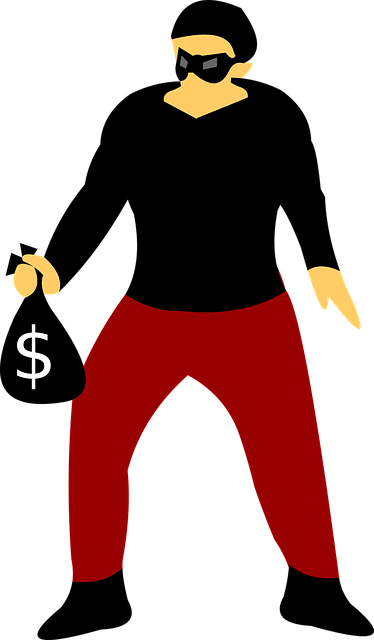

Not to encourage bad behavior, but wouldn’t this be a better-than-average time to be a bank robber? “I dunno, officer, he looked like everyone else.”
Just sayin’.
Armed with gloves, Purell and facemasks, we sallied forth this morning to explore the dangerous terrain of a grocery store. Terra incognita for over a month, we’d finally caved to the need for items beyond Amazon’s ability to deliver.
First, a great deal of strategy was required. The store needed to be overpriced and inconveniently located, so as to attract the fewest customers. The shopping list needed to be air tight, with no room for impulse buys or backtracking through aisles already traveled. All equipment needed to be checked in advance for pinholes through which sneaky microbes might invade. Sanitizer needed to be at the ready. Ditto, credit card… no fumbling for cash.
Upon arrival, we spotted a few other intrepid souls, all great distances apart and moving cautiously. We carefully stalked the produce section, standing well back to furtively scan the available items before plunging into the fray. While no one seemed interested in artichokes, we did note a mysterious convergence in the imported cheese section. Pasta was also dangerously populated and best avoided.
For approximately the price of a skydiving session, we completed our daring expedition and emerged triumphant with empty wallets and a full cart. I, for one, am exhausted by all this exertion and plan to take to my couch with the vapors.
As the famous Earl Nightingale quote has it: “Wherever there is danger, there lurks opportunity; whenever there is opportunity, there lurks danger.” Hopefully, the crisis will be resolved soon. There’s only so much excitement I can tolerate.

Photo by Juliano Ferreira on Pexels.com

Ever wished your partner would spend more time with you? How quaint! This is the universe’s way of testing our relationships. And if the data from China is any indication, we’ll be seeing a wave of divorces once people can get to their lawyers.
Not me, though; one nasty divorce was enough for a lifetime. But since 24-hour togetherness can strain any partnership, I’m trying to follow a few rules.
My mantra: “Whatever doesn’t make you want to kill your partner makes you stronger.”

Photo by freestocks.org on Pexels.com

My friend M says,
“We’re about three weeks away from knowing everyone’s true hair color.”

Photo by Polina Tankilevitch on Pexels.com

OCD: Washing your hands more often than every 5 minutes. Every 6 minutes is normal.
Paranoia: Believing that COVID-19 was caused by aliens, when everyone knows it’s Obama’s fault.
Restaurant: A place to get take-out.
Intimacy: When people are within 4-6 feet of each other.
Books: The new version of movies.
Toilet paper: The protective layer between you and the known universe.
Kindergarten: When two or more politicians get together.
Vacation: Your alone time in the bathroom.
Fast Food: Getting in and out of the supermarket as quickly as possible.
Reality: Fantasy.

Photo by BROTE studio on Pexels.com

March is usually a wonderful time of year for those of us who love fashion. The magazines and runway reports are bursting with inspiration, and we’re ready to do a little shopping and look forward to wearing our new acquisitions.
Not these days, though. Where are we going to wear a dazzling dress or sexy shoes?
For anyone still craving that undeniable lift, why not order a new pair of sensual silk pajamas in which to lounge around all Nick-and-Nora-Charles and pretend it’s a simpler time while sipping your Quarantini*?
Toss in some maribou-trimmed slippers, while you’re at it.
Since we’ve had to cancel our trip to London — so disappointing — I’m consoling myself with possibly the world’s most glamourous lipstick. Admittedly pricey for a lipstick, but pretty reasonable for Hermès and totally fabulous.
The refillable case, designed by Pierre Hardy, is lacquered, polished, brushed metal that closes with the solid click of a luxury automobile.


I’m determined to wear this, even if it’s only for my own sanity.
And if all else fails …

In the midst of gloom, doom and general mayhem, I read something yesterday that provided a glimmer of humor.
Apparently observed amidst the panicky consumers laying siege to groceries, pharmacies and big box stores: a man stocking up on 16 boxes of condoms and a large tub of coconut oil.
When the apocalypse comes?
Photo by Rakicevic Nenad on Pexels.com
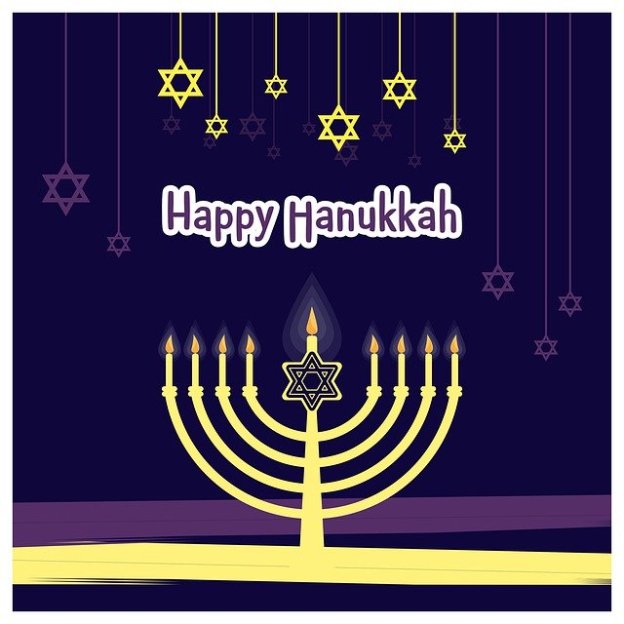

Photo by Element5 Digital on Pexels.com
Last night, R and I watched a silly Food Network competition called the Ultimate Hanukkah Challenge, in which contestants reinvented traditional recipes with varied success.
This prompts me to address some of the misconceptions around the holiday, as well as its true meaning.
So what is it?
Hanukkah (or Chanukah) celebrates the triumph of freedom over oppression. Specifically, it commemorates a miracle that occurred during the rededication of the synagogue following decades of persecution and war.
When the fortress which guarded the Temple was finally captured by the Jewish rebellion, the soldiers found only a small amount of the pure oil that could be used to re-light the Temple menorah (branched candlestick). Although there was only enough to burn for one day, the oil lasted for eight days, long enough for new oil to be prepared.
The history (per JewishHistory.org)
In the wake of Alexander’s appearance in and departure from Jerusalem, relations between Jews and Greeks were so good that an exchange of cultures took place. Each influenced the other. For the Jewish minority, however, what began as a small undertow of assimilation — such as giving children Greek names and speaking the Greek language — became a surprisingly powerful, high-speed rip current threatening to drag the caught-off-guard Jews out to the sea of complete assimilation.
Jews who embraced Greek culture at the expense of Judaism became known as Misyavnim, or Hellenists. Estimates are that a third or more of the Jewish population was Hellenist, including those who reversed their circumcision, ate pork, bowed to idols and even became self-hating enough to side with the enemies of Israel. Hellenism threatened to annihilate the Jewish world through assimilation in ways tyrants tried but could not do by force.
Had the situation continued as it was, the Greeks would perhaps have won the battle by default. However, they overstepped themselves.
At the beginning of the year 190 BCE, the situation between the two great post-Alexandrian empires, the Seleucid and the Ptolemaic, deteriorated badly. The Seleucids mounted an invasion that took their army through the Land of Israel, which was sandwiched in-between.
Whenever a foreign army comes into a country it changes the view of the populace. Instead of an attractive culture, the Greeks were now an occupying enemy. Instead of something to be imitated, now they became something to be resisted.
The Jewish people are very stubborn. The same person who is so stubborn that he will not observe the Torah in freedom will observe it with passion if forbidden from observing it. He becomes stubborn the other way.
A good case could be made that if the Communists in Russia had left the Jews alone they would have completely assimilated. However, once told that they could not be Jewish a certain percentage of Jews decided to be Jewish at great risk. That happened with the Greeks as well.
The Greek army exerted a very heavy hand against the Jews. First, they forced Jews to finance their war through collection of taxes. Then they forced them to quarter their soldiers in Jewish homes. Finally, the Greeks were determined to crush the Jewish religion.
First, they took the statue of Zeus and mounted it in the courtyard of the Temple. Next, the Greeks banned the observance of the Sabbath on the pain of death. Then, the Talmud (Kesubos 3b) records, there was a period of time which lasted a number of decades when the Greek officer in town had the right to “live” with a woman on her wedding night before her husband-to-be.
The Greeks also banned circumcision. Whoever circumcised his child was put to death; both child and father were killed. Then the Greeks demanded that altars to the Greek idols be established and that sacrifices be offered on a regular basis in every Jewish town. Finally, the Jewish educational system was entirely interrupted.
About the year 166 BCE, a group finally stood up to the Greeks: Matisyahu (Mattathias) and his family, known as the Hasmoneans. We do not know much about them except that they were of noble descent from the priestly class (Kohanim), including those who had served as High Priests.
They lived in a small town called Modin, which was about 12 miles northwest from Jerusalem. (The town exists today, and is about 20 miles west of modern Jerusalem.) One day, a Greek contingent marched in, set up an altar, gathered all the Jews and forced them to sacrifice a pig to Zeus.
They then asked for a Jewish volunteer to perform the sacrifice. One stepped forward. As he approached the altar Matisyahu stabbed him to death.
Chaos broke out. The Greek army attempted to subdue the crowd, but the Jews were armed and slaughtered the entire Greek patrol. There was no turning back now.
Matisyahu had five sons, all of whom were people of great organizational leadership as well as pious, committed Jews: Johanan (Yochanan), Simon (Shimon), Jonathan (Yonason), Judah (Yehudah) and Eleazar.
They ran to the caves and organized an army – not to fight an open war, but a guerilla war. Originally they organized of force of about 3,000 men. Eventually it grew to 6,000 and never reached more than 12,000 men.
The General of the Army was the great Judah, known to the world as Judah the Maccabee (or Judas Maccabaeus as he was called in Shakespeare’s Love’s Labor’s Lost). “Maccabaeus” is the Greek word for hammer, but the Jews took it, as Jews are wont to do, and made it Jewish by declaring that “Maccabee” stood for the first four letters in Exodus 15:11, meaning, “Who is like You, God?” — which was said by Moses and the people after the miraculous drowning of the Egyptians at the Sea of Reeds.
An enormous Syrian-Greek army, numbering almost 50,000 men, marched into Judea. Judah the Maccabee marshaled his forces and with guile and courage outmaneuvered the far larger Greek army, forced it to divide and then destroyed its various components, killing many thousands and forcing the survivors to flee north to Syria.
It took many years, but their hit-and-run tactics wore down three great Greek armies. However, the Jews paid a very heavy price in terms of blood. Matisyahu died in the early going. Judah Maccabee was killed in the third great battle. Eleazar died while attacking an elephant. Johanan and Jonathan were killed as well. The only Maccabee brother who survived was Simon.
The last famous battle was for the fortress of Antonius, which guarded the Temple. When Antonius fell, the Jews came back to the Temple. They shattered the statue of Zeus and cleaned the Temple to the extent that they could. Any priests who worked for the Greeks were sent away or executed.
They only found one small flask of uncontaminated oil with the seal of the High Priest. By Torah law, the flame of the Menorah (Candelabrum) in the Temple could only be lit with specially prepared pure olive oil. The amount of oil remaining in the one uncontaminated flask was only enough to burn for one day, and it would take eight days to produce a new batch of pure oil.
What could they do?
They lit it — and it miraculously burned for eight days. That is why Chanukah lasts eight nights (the festival was established a year later by the Rabbis).
The Talmud does not say much about Chanukah. There are perhaps forty lines spread out in different volumes, whereas almost all the other holidays have an entire Talmudic volume about them. In addition, the few words the Talmud has to say about Chanukah are cryptic. Perhaps that is why Chanukah has been subject to reinterpretation, as it has been in our time. People make whatever they want to make out of it. However, that is a mistake, a tragedy.
In the Western world, it has the misfortune of falling in December. Therefore, in the homes of many Jewish people it has sadly became the Jewish version of the December holidays, a mixture of commercialism and non-Jewish traditions and ideas.
What the Talmud does say is that the important thing is to “advertise the miracle.” People have to recognize that a miracle took place. It is vital to keep the wonder in Chanukah. That is why the rabbis gave more emphasis to the miracle of the lights than the military victory.
Wars come and go. Even the glow of miraculous victory can fade. Young people today do not think that Israel’s War for Independence in 1948 was such a miracle. In 1967, Jews expected a second Holocaust. Now people brush the miraculous Six Day War off as nothing special.
History provides numerous examples of outnumbered forces defeating a superpower using guerilla tactics. Was the Maccabean victory so miraculous? That was the question Jews at the time must have asked themselves.
However, when the small flask of pure oil that could only last one day lasted eight days it proved that there was a miracle that happened there. The little flask of oil shed light on the big military campaign. “Not by the army, not by power, but through My Spirit, says God” (Zechariah 4:6). Chanukah is about the little light that sheds a great light.
There is an indefinable, spiritual, electric charge that binds the generations together that cannot be found in any book. It can only be had when parents and grandparents do things like sitting together with their children around the Chanukah lights celebrating, discussing and advertising the miracle; experientially getting in touch with the wonder of the past, the wonder of the present, the wonder of life.
Chanukah is a very popular, emotional and beautiful holiday. However, the necessity for Chanukah begins with the story of the invasion of Greek culture and the weakness of the Jews in responding to it. It originates from the growth of an enormous sect of Hellenists within the Jews, who even supported the Greeks during the war.
What happened to the Hellenists? Their influence all but collapsed in the wake of the defeat. They would never return again as Hellenists, because the war brought out their true colors as traitors and they lost whatever appeal they could have had to the Jewish people.
Most of them retreated to the city of Caesarea, which remained a Greek city (and later would become a Roman city). They were just not part of the Jewish people any longer.
Their demise punctuated the fact that more than a military victory, the miracle of the oil signified that Chanukah was a victory of the spirit of the Jewish people, a victory that granted them the right to observe the Torah. That is why its memory and the people who observe it have endured.

While you’ve been agonizing over finding the perfect gifts, this post is sure to inspire a giggle or two. It kinda gives new meaning to the phrase “insanely rich”. Enjoy!
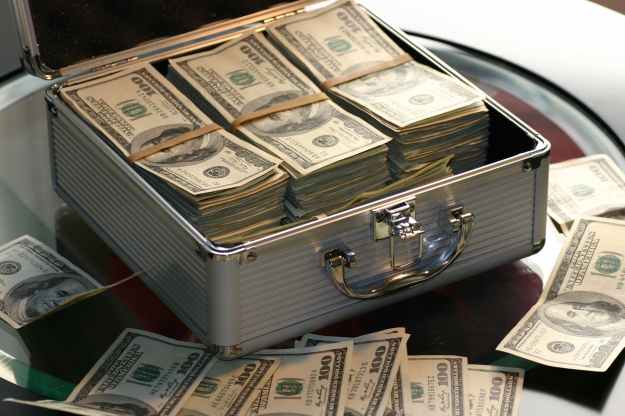
Photo by Pixabay on Pexels.com

It’s a subtle change.
One minute, our dream partner is rich/brilliant/gorgeous/could make a porn star blush. A few decades later, and our idea of what’s hot has undergone a seismic shift.
Must be nature’s way of ensuring we don’t all throw ourselves under a bus after age 40.
SEXY THEN SEXY NOW
A full head of hair Any hair
All night sex All night sleep
Hot car Hot chauffeur
Six-pack abs Puts six pack in recycling bin
Good listener Selective hearing
Valuable possessions Values
Nice smile Has most of his original teeth
Great in bed Makes the bed
Smart Wise
Erotic talk Knows when to shut up
Heavy breathing Still breathing
Here’s to the imperfectly perfect people we love! xx, Alisa

London living with lady Sarah
Tales of Mystery and the Supernatural
aka operasandcycling.com
Mit Wohnmobil und Kamera auf den Spuren der Natur
Tale of Net Cancer
Exploring the History and Beauty of the Iconic Carré: Interesting Facts, History, Photos and Shop.
Whatever That May Be
by Cherie White, Author and Anti-Bullying Advocate
Travel and Lifestyle Blog
Traveling to experience places not just visit them!
Rachel McAlpine writes, blogs, draws and podcasts here
Ramblings of a retiree in France
A personal blog that shares writing & positivity
For when France seems too far away. Shop for inspiring images of France and discover travel tips, packing advice, recipes, book reviews and more.
Raku pottery, vases, and gifts
Where shall we go today?
Random musings on style and substance
Life in islamic point of view
 olderfatterhappierdotcom