Ukraine. Omicron. Climate change. Can we ever catch a break from the sad, the sordid, the violent, the vain, the completely unnecessary and utterly preventable death and destruction?
Amid all the serious issues to worry and obsess about, I’ve found a few bright spots in my weekly perusal of the news, courtesy of The Week:
An English bulldog, missing for five years, turned up in a Tennessee shelter, a thousand miles from her home in New York. She was identified by a microchip and happily reunited with her grateful and astonished owner.
A young woman in Denver, CO, was watching some children playing on a frozen pond when she saw the ice crack. She dashed out of her apartment to pull the kids out. Then the ice broke, plunging her into the frigid depths. Treading water, the heroic 23-year-old held an unconscious six-year old girl above the water until help arrived, and all survived.
And from the sublime to the ridiculous: It seems that a man in New York has filed a $6 billion class-action suit against the New York Giants and Jets for playing their home games in New Jersey. He claims that millions of New York football fans have suffered “mental and emotional damage”, depression, sadness and anxiety.
To maintain my own sanity, I’m focusing on long walks, hot baths, watching comedies, baking, planning vacations, and re-organizing my closet. How are you coping, dear readers?
Universal blood type organs created in groundbreaking procedure, making transplants available for all patients
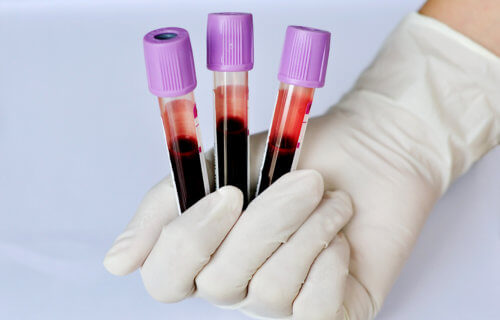
TORONTO, Ontario — A revolutionary procedure could make donor organs available for more patients — regardless of their blood type. Researchers from the University Health Network in Toronto have proven that it’s possible to convert the blood type of an organ, creating a universal organ that would avoid rejection during transplants.
The procedure, conducted at the Latner Thoracic Surgery Research Laboratories and UHN’s Ajmera Transplant Centre, changed the lungs from a donor with type A blood into an organ with type O blood. Scientists consider type O the universal donor type. The breakthrough may significantly cut down on the disparity in organ transplant availability and shorten transplant waiting lists worldwide.
“With the current matching system, wait times can be considerably longer for patients who need a transplant depending on their blood type,” explains senior author Dr. Marcelo Cypel, Surgical Director of the Ajmera Transplant Centre, in a media release.
“Having universal organs means we could eliminate the blood-matching barrier and prioritize patients by medical urgency, saving more lives and wasting less organs,” adds Dr. Cypel, who is also a thoracic surgeon at UHN’s Sprott Department of Surgery.
Why is blood type so important?
A person’s blood type is dependent upon the antigens sitting on the surface of their red blood cells. People with type A blood have A antigens on their cells, while type B has B antigens and type AB has both. People with type O blood, however, have no antigens on the surface of their cells.
The reason this is important is because these antigens trigger an immune response if they’re foreign to a person’s body. This is also why patients needing a blood transfusion can only receive blood from donors with the same blood type — or from universal type O donors.
This problem also complicates organ donations. Researchers explain that antigens A and B are present on the surfaces of organs as well. Even people with type O blood have problems receiving transplants from type A or B donors. Since type O patients have anti-A and anti-B antibodies in their blood, receiving an organ from a type A donor will likely result in rejection.
For these reasons, doctors have to match up organs according to blood type as well as many other factors — leading to a wait for the perfect organ which can last several years. On average, type O patients actually have the longest wait for lung transplants — sometimes twice as long as type A patients. Kidney transplant patients can also end up waiting up to five years for a compatible donor.
“This translates into mortality. Patients who are type O and need a lung transplant have a 20 percent higher risk of dying while waiting for a matched organ to become available,” says explains study first author Dr. Aizhou Wang. “If you convert all organs to universal type O, you can eliminate that barrier completely.”
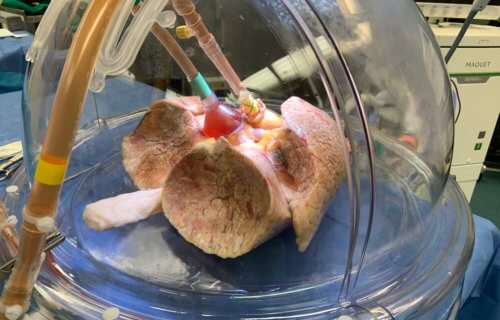
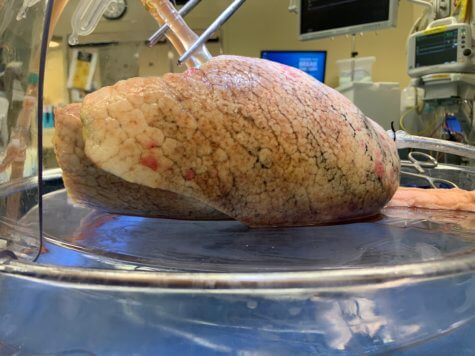
Universal blood type organs (Credit: UHN)
How did scientists make a universal organ?
In the proof-of-concept study, Dr. Cypel’s team used the Ex Vivo Lung Perfusion (EVLP) System to pump nourishing fluids through human donor lungs from a type A patient. This process allowed the researchers to warm the lungs up to body temperature so the team could convert the organs for transplantation.
Before the procedure, the donor’s lungs were not considered suitable for an organ transplant. During the experiment, study authors treated one lung with a group of enzymes to flush out the A antigens, while leaving the other lung untreated.
From there, they tested the conversion by adding type O blood with large concentrations of anti-A antibodies to the EVLP circuit. This simulated the conditions of an ABO-incompatible transplant. Results show that the treated lung was well tolerated, meaning the lung would likely be safe from rejection if the team placed it in a human patient. Meanwhile, the untreated lung showed signs of rejection, meaning such a transplant in a human would likely fail.
Gut enzymes are key to universal organs
Dr. Stephen Withers, a biochemist at the University of British Columbia, found a group of gut enzymes in 2018 which became the first step in creating these universal organs. Researchers used the EVLP circuit to deliver these enzymes to the lungs during the new experiment.
“Enzymes are Mother Nature’s catalysts and they carry out particular reactions. This group of enzymes that we found in the human gut can cut sugars from the A and B antigens on red blood cells, converting them into universal type O cells,” Dr. Withers explains. “In this experiment, this opened a gateway to create universal blood-type organs.”
“This is a great partnership with UHN and I was amazed to learn about the ex vivo perfusion system and its impact [on] transplants. It is exciting to see our findings being translated to clinical research,” Dr. Withers adds.
The study authors are working on a proposal to begin a clinical trial on this new technique. They hope that the trial could begin within the next 12 to 18 months.
A kangaroo was saved after taking a dunk in the ocean off the coast of Australia by a rookie lifeguard.
Onlookers enjoying the surf and scenery on a rock shelf over-hanging the ocean in Bundjalung National Park were surprised to see an eastern grey kangaroo jumping across rock pools and tumbling into rough surf.
“My other workmate, Carissa and I, we were sitting on the tractor and she goes, ‘Oh my God, there’s a kangaroo jumping off the rocks!’” said 17-year old Lillian Bee-Young, a new lifeguard who had a surfboard nearby. “We were just figuring out what we should do… because we’ve never had that happen before.”
There were rough conditions that day on the north coast of New South Wales. Lillian believed the kangaroo was trying to avoid some fishermen and just “got wiped out by a set (of waves).”
Lillian told ABC News Australia that she didn’t quite know how to proceed as she paddled out with the rescue board. She didn’t know whether to try and get it onto the board, for example, or if that would put her in danger and stress the marsupial out even more.
It was just managing to keep its head above the water, but didn’t want to come ashore due to a gathering crowd.
Her friend Carissa cleared an avenue to allow Roo to feel comfortable, and after a few stumbles, it made it back onto dry land and immediately went off into the bushes.
“It was quite special. There were people cheering and clapping… and then [the kangaroo] was just sitting there up in the bushes, almost, I thought, as a thank you… It was really serene,” Lillian said.
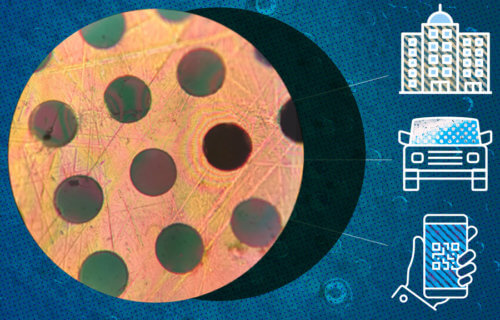
The new material is a two-dimensional polymer that self-assembles into sheets and could be used as a lightweight, durable coating for car parts or cell phones, or as a building material for bridges or other structures. (Credits:Image: polymer film courtesy of the researchers; Christine Daniloff, MIT)
CAMBRIDGE, Mass. —Scientists at MIT have developed a material that is as light as plastic — but stronger than steel. They believe the material could revolutionize the car, mobile phone, and building industries.
The easily manufactured substance – up to six times more difficult to break than bulletproof glass – is the result of an engineering feat previously thought to be impossible. It is a two-dimensional polymer that self-assembles into sheets, unlike all other polymers, which form one-dimensional, spaghetti-like chains.
Until now, scientists believed it was impossible to induce polymers to form 2D sheets. Now, its developers hope the material could be used as a lightweight, durable coating for car parts or mobile phones. It could also serve as a worthy candidate for the construction of office buildings, bridges, or other structures.
“We don’t usually think of plastics as being something that you could use to support a building, but with this material, you can enable new things,” says senior author Michael Strano, a professor of chemical engineering at MIT, in a statement. “It has very unusual properties and we’re very excited about that.”
The researchers filed for two patents on the pioneering process they used to generate the material.
Birth of 2DPA-1
So how did this groundbreaking substance come to be? Polymers, which include all plastics, consist of chains of building blocks called monomers. The chains grow by adding new molecules onto their ends. Once formed, polymers can be shaped into three-dimensional objects, such as water bottles, using injection molding. Experts have long believed that if polymers could be induced to grow into a two-dimensional sheet, they should form extremely strong, lightweight materials.
However, many decades of work led to the conclusion that it was impossible to create such sheets.
One reason was that if just one monomer rotates up or down, out of the plane of the growing sheet, the material will begin expanding in three dimensions and the sheet-like structure will be lost. However, in the new study, Strano and his colleagues came up with a new polymerization process that allows them to generate a two-dimensional sheet called a polyaramide.
For the monomer building blocks, they use a compound called melamine, which contains a ring of carbon and nitrogen atoms. Under the right conditions, the monomers can grow in two dimensions, forming discs. Strano explains that these discs stack on top of each other, held together by hydrogen bonds between the layers, which make the structure very stable and strong.
“Instead of making a spaghetti-like molecule, we can make a sheet-like molecular plane, where we get molecules to hook themselves together in two dimensions,” says Strano. “This mechanism happens spontaneously in solution, and after we synthesize the material, we can easily spin-coat thin films that are extraordinarily strong.”
Because the material self-assembles in solution, Strano says it can be made in large quantities by simply increasing the quantity of the starting materials. The researchers showed that they could coat surfaces with films of the material, which they call 2DPA-1.
“With this advance, we have planar molecules that are going to be much easier to fashion into a very strong, but extremely thin material,” says Strano.
Revolutionary material ‘can completely prevent water or gases from getting through’
The researchers write that the new material’s elastic modulus – a measure of how much force it takes to deform a material – is between four and six times greater than that of bulletproof glass. They also claim that its yield strength – how much force it takes to break the material – is twice that of steel, even though the material has only about one-sixth the density of steel.
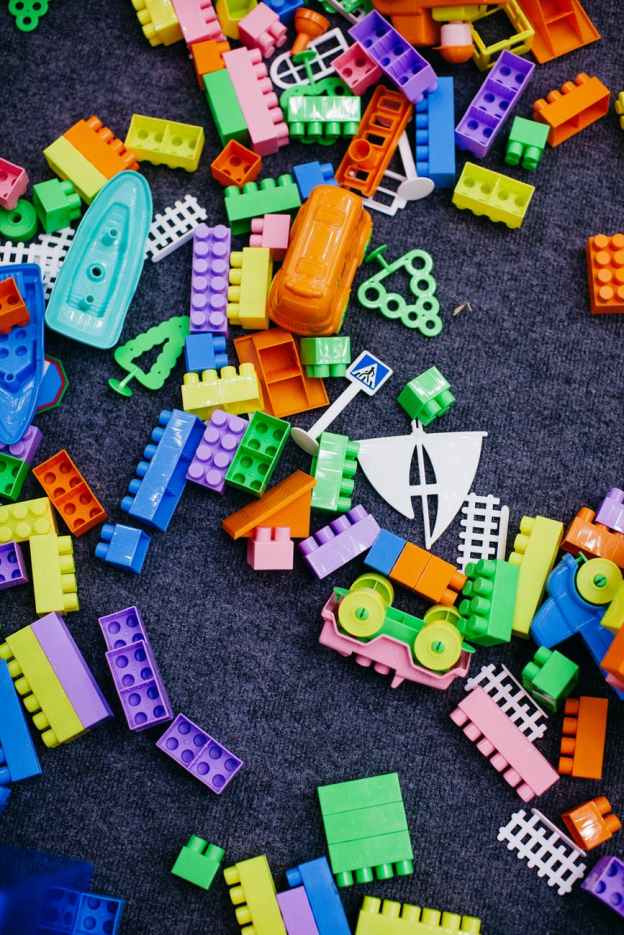
Strano says that another key feature of 2DPA-1 is that it is impermeable to gases. “While other polymers are made from coiled chains with gaps that allow gases to seep through, the new material is made from monomers that lock together like Lego, and molecules cannot get between them,” he adds. “This could allow us to create ultrathin coatings that can completely prevent water or gases from getting through. This kind of barrier coating could be used to protect metal in cars and other vehicles, or steel structures.”
The study’s findings are published in the journal Nature. The authors are now studying in more detail how the material is able to form 2D sheets. They’re also experimenting with changing its molecular make-up to create other new materials.
South West News Service writer Stephen Beech contributed to this report.
From today’s New York Times (with apologies for wonky formatting.)
Preparing vaccines in Rochester Hills, Mich. Emily Elconin for The New York Times
The C.D.C. has begun to publish data on Covid outcomes among people who have received booster shots, and the numbers are striking:
Based on 25 U.S. jurisdictions. | Source: C.D.C.
As you can see, vaccination without a booster provides a lot of protection. But a booster takes somebody to a different level.
This data underscores both the power of the Covid vaccines and their biggest weakness — namely, their gradual fading of effectiveness over time, as is also the case with many other vaccines. If you received two Moderna or Pfizer vaccine shots early last year, the official statistics still count you as “fully vaccinated.” In truth, you are only partially vaccinated.
Once you get a booster, your risk of getting severely ill from Covid is tiny. It is quite small even if you are older or have health problems.
The average weekly chance that a boosted person died of Covid was about one in a million during October and November (the most recent available C.D.C. data). Since then, the chances have no doubt been higher, because of the Omicron surge. But they will probably be even lower in coming weeks, because the surge is receding and Omicron is milder than earlier versions of the virus. For now, one in a million per week seems like a reasonable estimate.
That risk is not zero, but it is not far from it. The chance that an average American will die in a car crash this week is significantly higher — about 2.4 per million. So is the average weekly death rate from influenza and pneumonia — about three per million.
With a booster shot, Covid resembles other respiratory illnesses that have been around for years. It can still be nasty. For the elderly and immunocompromised, it can be debilitating, even fatal — much as the flu can be. The Omicron surge has been so terrible because it effectively subjected tens of millions of Americans to a flu all at once.
For the unvaccinated, of course, Covid remains many times worse than the flu.
‘Heartbreaking’
I’m highlighting these statistics because there is still a large amount of vaccine skepticism in the U.S. I have heard it frequently from readers in the past week, after our poll on Covid attitudes and partisanship, as well as the “Daily” episode about the poll.
This vaccine skepticism takes two main forms. The more damaging form is the one that’s common among Republicans. They’re so skeptical of vaccines — partly from misinformation coming from conservative media figures and Republican politicians — that many remain unvaccinated.
Look at this detail from the Kaiser Family Foundation’s latest portrait of vaccination: Incredibly, there are more unvaccinated Republican adults than boosted Republican adults.
From a survey of 1,536 adults in Jan. 2022. | Source: Kaiser Family Foundation
This lack of vaccination is killing people. “It’s cost the lives of people I know, including just last week a friend of 35 years, a person I met on one of the first weekends of my freshman year of college,” David French, a conservative writer who lives in Tennessee, wrote in The Atlantic. “I can’t tell you how heartbreaking it is to see person after person fall to a virus when a safe and effective shot would have almost certainly not just saved their life but also likely saved them from even having a serious case of the disease.”
Dr. Peter Hotez, a vaccine expert at the Baylor College of Medicine, estimates that in the second half of last year, 200,000 Americans needlessly lost their lives because they refused Covid vaccines. “Three doses of either Pfizer or Moderna will save your life,” Hotez told me. “It’s the only way you can be reasonably assured that you will survive a Covid-19 infection.” (Young children, who are not yet eligible for the vaccines, are also highly unlikely to get very sick.)
The vaccines don’t prevent only death. Local data shows the risks of hospitalization are extremely low, too. Vaccination also reduces the risk of long Covid to very low levels.
Healthy and anxious
The second form of vaccine skepticism is among Democrats — although many would recoil at any suggestion that they are vaccine skeptics. Most Democrats are certainly not skeptical about getting a shot. But many are skeptical that the vaccines protect them.
About 41 percent of Democratic voters say they are worried about getting “seriously sick” with Covid, according to a Kaiser Family Foundation poll released last week. That’s a very high level of anxiety for a tiny risk.
Here’s the proof that much of the fear is irrational: Young Democrats are more worried about getting sick than old Democrats, even though the science says the opposite should be true.
From a survey of 1,536 adults in Jan. 2022. | Source: Kaiser Family Foundation
The most plausible explanation for this pattern is political ideology. Younger Democrats are significantly more liberal than older Democrats, according to the Pew Research Center (and other pollsters, too). Ideology tends to shape Covid views, for a complex mix of often irrational reasons. The more liberal you are, the more worried about Covid you tend to be; the more conservative you are, the less worried you tend to be.
I know that many liberals believe an exaggerated sense of personal Covid risk is actually a good thing, because it pushes the country toward taking more precautions. Those precautions, according to this view, will reduce Covid’s death toll, which truly is horrific right now. In a later newsletter this week, I will consider that argument.
For now, I’ll simply echo the many experts who have pleaded with Americans to get vaccinated and boosted.
Answers and convenience
What might help increase the country’s ranks of vaccinated? Vaccine mandates, for one thing — although many Republican politicians, as well as the Republican appointees on the Supreme Court, oppose broad mandates. Private companies can still impose mandates on their employees and customers.
Without mandates, the best hope for increased vaccination is probably community outreach. While many unvaccinated Americans are firmly opposed to getting a shot, others — including some Democrats and independents — remain agnostic. If getting a vaccination is convenient and a nurse or doctor is available to answer questions, they will consider it.
“I cannot count how many people I’ve spoken to about the Covid vaccine who have been like, ‘No, I don’t think so. No,’” Dr. Kimberly Manning of Emory University told The Atlanta Journal-Constitution. “Then I run into them two weeks later and they tell me they got vaccinated.”
Related: “You have to scratch your head and say, ‘How the heck did this happen?’” Dr. Anthony Fauci told Michael Barbaro on today’s episode of “The Daily,” about the partisan gap in Covid attitudes. Fauci also predicted that people who were anxious about Covid would become less so as caseloads fell.
In Times Opinion, James Martin, a Jesuit priest, argues that schadenfreude over vaccine skeptics’ suffering warps the soul.
If you live in the UK, you may soon glimpse the first wild bison to roam the country in thousands of years. Although not native to Britain, The Wilder Blean project in Kent plans to reintroduce bison in 2022 to help with woodland recovery and management on a controlled site, as was done successfully in the Netherlands in 2007. The rangers will begin with a young bull from Germany, two young females from Ireland, and an older female from Scotland.
ST. LOUIS — Dogs are the light of many pet owners’ lives and now a new study finds they’re also lighting the way out of depression for many Americans. Researchers found that dogs are boosting their owners’ mental health during the coronavirus pandemic.
Study authors say pets have also increased amounts of social support by fueling friendships. The findings come from a review of more than 1,500 people in the U.S. — half of whom own dogs.
“Dog owners reported having significantly more social support available to them compared to potential dog owners, and their depression scores were also lower, compared to potential dog owners,” the study’s corresponding author Dr. Francois Martin of Nestle Purina Research writes in the journal PLOS One.
“There were no differences in anxiety and happiness scores between the two groups. Dog owners had a significantly more positive attitude towards and commitment to pets. Taken together, our results suggest that dog ownership may have provided people with a stronger sense of social support, which in turn may have helped buffer some of the negative psychological impacts caused by the COVID-19 pandemic,” the researchers report.
Dog walking can be a stress reliever
Researchers defined potential dog owners as individuals interested in owning a dog in the future. Both groups answered an online survey during the study. Results show the dog owners also had a significantly more positive attitude towards and commitment to their pets. However, the team did not find any differences in anxiety and happiness scores between these groups.
“Dog walking during confinements may have alleviated stressors and motivated self-care,” Dr. Martin’s team writes.
Other recent studies suggest pet ownership improves mood, leads to less loneliness, greater social support, and less stress by increasing exercise. Owners also said their dogs helped them cope with emotional stressors (91%) and maintain physical activity (96%) during lockdown.
“However, recent studies have also reported that pet ownership during the COVID-19 pandemic may have negatively affected people because of limited availability to resources,” the researchers write, noting that these resources include veterinary care and pet supplies.
“The present study aimed to understand if pet dogs offered their owners social support and contributed to better wellbeing during the COVID-19 pandemic,” they continue. “It was hypothesized that pet dog ownership would act as a buffer against negative impacts caused by the pandemic.”
Each group answered validated “psychometric” questionnaires on depression, anxiety, and happiness.
“Other types of pets are also likely to provide social support to humans. However, it is unclear if this support is equivalent and if the psychological mechanisms involved are the same as human-dog relationships,” Dr. Martin writes.
Furry friends help during difficult times
In the context of the pandemic, there is emerging evidence the relationship and attitude of people towards their pets may vary according to the species. Therefore, the team only included dog and potential dog owners in the investigation. All the participants were over 18 years of age.
Study authors excluded people owning other types of pets or those who failed to complete the entire survey. Those who owned more than one dog were asked to answer for the pet they felt closest to. The final sample comprised 1,535 volunteers, including 768 and 767 dog and potential dog owners, respectively.
“The COVID-19 pandemic has negatively affected diverse populations and our results provide evidence that pet owners and potential pet owners have also been impacted,” Dr. Martin concludes.
“Our results show that pet dog owners were significantly less depressed than non-pet owners during the COVID-19 pandemic. They are attached and committed to their dogs and they reported more social support available to them. Our work adds to the corpus of scientific literature demonstrating that pet dogs may positively contribute to the wellbeing of owners during difficult times.”
Study authors are calling for more work to better understand the relationship between pet ownership and well-being. Future research, the team says, would focus on people with low and moderate social support and include owners with diverse dog attachment level.
Here’s another reason to take care of our complexions: New research finds that increased collagen helps fight cancer. While topical creams may or may not make much difference (dermal penetration is minimal), treatments that build collagen such as Genesis and IPL (intense pulsed light) may do more than keep that youthful glow. Schedule that derm appointment STAT!
Anti-wrinkle cream ingredient collagen could hold the key to curing cancer
NEW YORK — A substance that the body creates naturally and is also an ingredient in anti-wrinkle creams could hold the key to stopping the spread of cancer. Researchers from The Tisch Cancer Institute at Mount Sinai say cancerous tumors secrete a form of the protein collagen that keeps them quiet for years, even as they spread to other parts of the body. Their findings reveal that these tumor cells only turn malignant once their supplies of collagen run out.
Experiments involving mice and humans found increasing levels of type III collagen — the form of the protein cancer cells produce and cover themselves in — stops diseased cells from spreading. The collagen that surrounds the cells forces them to remain in a dormant state, preventing recurrence and metastasis — where they migrate to other organs.
“Our findings have potential clinical implications and may lead to a novel biomarker to predict tumor recurrences, as well as a therapeutic intervention to reduce local and distant relapses,” says senior author Professor Jose Bravo-Cordero in a media release.
Using state-of-the-art scanning techniques, the team tracked breast, head, and neck cancer cells implanted in mice. This enabled them to visualize the supporting “scaffold” as they became dormant and how this covering changed as the cells awoke.
Covering tumor cells in collagen could keep cancer asleep
In samples from cancer patients, researchers found type III collagen predicted tumor recurrence and metastasis. In the mice, infusions of collagen around cancer cells blocked their progression, forcing them back into dormancy.
“This intervention aimed at preventing the awakening of dormant cells has been suggested as a therapeutic strategy to prevent metastatic outgrowth,” Prof Bravo-Cordero says.
“As the biology of tumor dormancy gets uncovered and new specific drugs are developed, a combination of dormancy-inducing treatments with therapies that specifically target dormant cells will ultimately prevent local recurrence and metastasis and pave the way to cancer remission.”
How cancer cells remain inert for long periods before awakening to wreak havoc throughout the body has baffled experts for decades. The study, published in the journal Nature Cancer, solves a major mystery and opens the door to therapies using collagen as a cancer treatment.
From cosmetics to cancer research
Most people likely know collagen for its use in helping people look younger. However, the protein is also a natural building block for the skin, bones, and connective tissues throughout the body. It provides strength and elasticity, but women experience a dramatic drop in production after menopause.
In cosmetic products, collagen injections can improve the contours of the skin. Fillers that contain collagen remove lines and wrinkles from the face. It can also improve the appearance of scars.
Study authors note that collagen is present in the extracellular matrix, an intricate network that determines the physical properties of tissues — including tumors. Most cancer deaths are due to these harmful cells spreading throughout the body, which can still happen several years after surgical removal of the original tumor.
Previous research has shown collagen dressings heal chronic wounds that do not respond to other treatments. Encasing a tumor in collagen may have similarly dramatic success, Prof. Bravo-Cordero explains.
The study author adds that wound treatment with collagen scaffolds has displayed promising results and is a therapeutic alternative for people with complex skin wounds.
“Our studies demonstrate the potential therapeutic use of type III collagen to prevent the reawakening of cancer cells by inducing and maintaining cancer cell dormancy in the primary site,” researchers conclude in a statement to SWNS.
South West News Service writer Mark Waghorn contributed to this report.
Whoops, almost missed Monday this week. That’s what I get for spending hours attempting to delete all the cyber-hysteria emails that pop up like whack-a-mole: Delete twenty and another thirty-five pop up, seemingly instantaneously.
DUBLIN, Ireland — Blood contains all sorts of life-giving components, from red blood cells that carry oxygen to white blood cells that fight off infections. However, our blood also works hard to repair wounds. Thanks to platelet-rich plasma (PRP), blood clots around scraps and scratches, allowing our bodies to heal and limit scarring. Now, researchers in Ireland have discovered an innovative way of improving the healing process even further — 3D printing!
A team from RCSI University of Medicine and Health Sciences say replicating more blood plasma through 3D printing technology can help scientists create a PRP implant that speeds up healing. Platelet-rich plasma is the body’s natural healing substance and it makes up about half of a person’s blood.
The new study explored the possibility of extracting PRP from a patient with severe skin wounds and creating more of this substance in a 3D printer. Scientists would then use these platelets to form an implant doctors can place on difficult-to-heal skin wounds — like a scaffold — during surgery.
No more scars for serious wounds?
Tests by the RCSI team found that applying a PRP implant speeds up the healing process by triggering the development of new blood vessels (vascularization). The implant also inhibits scarring and the thickening of tissue around wounds (fibrosis). Researchers say both of these benefits are key for wounds to heal effectively.
“Existing literature suggests that while the PRP already present in our blood helps to heal wounds, scarring can still occur. By 3D-printing PRP into a biomaterial scaffold, we can increase the formation of blood vessels while also avoiding the formation of scars, leading to more successful wound healing,” says RCSI professor of bioengineering and regenerative medicine, Fergal O’Brien, in a university release.
“As well as promising results for skin wound healing, this technology can potentially be used to regenerate different tissues, therefore dramatically influencing the ever-growing regenerative medicine, 3D printing and personalized medicine markets.”
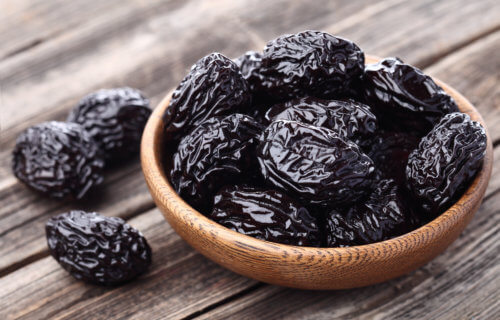
Prunes may be the secret weapon to prevent holiday weight gain
LIVERPOOL, United Kingdom — Has Thanksgiving already sent your diet spiraling off a cliff? You’re probably not alone. With holiday weight gain a major issue for many, a new study has found the one snack that may keep your holiday appetite (and your waistline) in check — prunes.
Researchers from the University of Liverpool discovered that eating more prunes helped a group of dieters control their appetite better, consume fewer calories, and even lose slightly more weight than people choosing others snacks during a 12-week test.
“These studies demonstrate that dried fruit can both produce satiety and be incorporated into the diet during weight management,” says Professor Jason C. G. Halford, President of the European Association for the Study of Obesity (EASO), in a media release.
Researchers examined the impact of eating prunes in two phases. The first compared the reactions of participants who either ate prunes, raisins, or jelly bean-like candies during the experiment. The team found that people eating prunes generally consumed the fewest number of calories during their next meal. The prune snackers also reported feeling less hungry throughout the day, feeling fuller after eating, and feeling as though they couldn’t eat as much later on.
Prunes make it ‘easier’ to lose weight
In the second part, study authors examined the amount of weight each person lost after completing a 12-week weight loss program. They split the volunteers into two groups, one eating prunes as their daily snack and one who only received guidance on healthy snacking but could choose whatever snack they wanted.
Although researchers say the weight loss difference between the two groups was not significant in terms of total pounds lost, results show the prune group participants lost slightly more weight on average (4.4 pounds vs. 3.4 pounds). People eating prunes also told the team they felt it was easier to lose the weight than those eating other snacks.
“This study reveals that nutrient-dense prunes can provide an advantage over other snack choices due to their favorable effects on satiety and appetite control,” adds Andrea N. Giancoli, MPH, RD Nutrition Advisor for the California Prune Board.
“These are the first data to demonstrate both weight loss and no negative side effects when consuming prunes as part of a weight management diet,” Halford concludes.
A recent poll found that Americans expect to gain eight pounds during the holiday season. Although prunes have a reputation of being a snack people only choose to relieve constipation, researchers say putting out a bowl at your next holiday party may cure you of festive overeating.






 Preparing vaccines in Rochester Hills, Mich. Emily Elconin for The New York Times
 Based on 25 U.S. jurisdictions. | Source: C.D.C.
 From a survey of 1,536 adults in Jan. 2022. | Source: Kaiser Family Foundation
 From a survey of 1,536 adults in Jan. 2022. | Source: Kaiser Family Foundation



 olderfatterhappierdotcom