This was a first: a Dear John letter from our landscaper, a vendor with whom we’d had a cordial, mutually respectful eight-year relationship.
To paraphrase: “Dear ___ (yes, a form letter), this has been a challenging year so we’ve decided to cut back on the number of clients we service. Unfortunately, you are among them.”
What he doesn’t bother to mention (because it’s a form letter) is that for the past 14 months we have been paying our monthly contractual fee EVEN THOUGH THEY HAVEN’T DONE ANY WORK. Sorry, am I shouting?? In what universe is it ok to accept over $1000 for services not rendered and then not even have the courtesy to acknowledge our loyalty or pick up the phone to work out a solution?
So much for trying to be supportive of a small business. You know that old adage, “No good deed ever goes unpunished”? ARRGGGHHHH.
TOKYO, Japan — As digital devices become an everyday part of society, many probably view a pen and paper as things of the past. Despite the ease of tapping information into a smartphone or tablet, a new study finds you may want to keep those paper notebooks after all. Researchers in Tokyo have discovered that people writing notes by hand display more brain activity than their peers entering data into an electronic device.
A team from the University of Tokyo adds the unique and tactile information that comes from writing things on paper may also help writers remember the information better.
“Actually, paper is more advanced and useful compared to electronic documents because paper contains more one-of-a-kind information for stronger memory recall,” says corresponding author and neuroscientist Professor Kuniyoshi L. Sakai in a university release.
“Our take-home message is to use paper notebooks for information we need to learn or memorize.”
The pen is mightier than the tablet?
It’s a common belief that digital devices help people complete tasks faster. Despite this, the study finds people writing notes by hand actually finished their task 25 percent quicker than tablet users.
Researchers add that paper notebooks also contain more complex spatial information than a digital screen. Physical paper allows the writer to add tangible permanence to their important information. Writers can also use irregular strokes to convey special meaning and uneven shapes — like a folded corner of a page. Study authors say “digital paper” is much more uniform. There is no fixed position when scrolling and the information disappears from view when users close the app.
What happens to the brain when you write on paper?
The study gathered 48 volunteers to read a fictional conversation between two people talking about their future plans. The discussion included 14 different class times, assignment due dates, and scheduled appointments. Researchers also sorted the participants — all between 18 and 29 years-old from university campuses or the NTT Data Institute of Management Consulting — into three groups, according to memory skills, personal preferences of digital or paper methods, gender, and age.
The groups then recorded the fictional schedules using a paper notebook and pen, a calendar app using a tablet and stylus, or an app on a smartphone using the touch-screen keyboard. The participants did not take extra time to memorize the information after completing the task.
After a one-hour break and an “interference task” to distract the volunteers from thinking about their notes, researchers gave participants a test on the conversation. The multiple choice questions also ranged in difficultly from simple to more complex. Simple questions asked “when is the assignment due?” while others included “which is the earlier due date for the assignments?”
During this test, study authors examined brain activity using functional MRI (fMRI) scans. During this procedure, scientists say increased blood flow in specific brain regions is a sign of higher neuronal activity.
The results reveal young adults using paper completed their note-taking in just 11 minutes. Tablet and smartphone users finished in 14 and 16 minutes, respectively. Volunteers using pen and paper also scored higher on the multiple choice test. However, researchers say the participants’ brain activity reveals even greater differences.
Volunteers using paper displayed more brain activity in areas with a connection to language and imaginary visualization. They also show more activity in the hippocampus, a brain region vital to memory and navigation.
Writing on paper may also be better for kids and creativity
Study authors say the fact that writing on paper triggers activity in the hippocampus shows analog methods contain richer spatial details which make hand-written notes easier to remember.
“Digital tools have uniform scrolling up and down and standardized arrangement of text and picture size, like on a webpage. But if you remember a physical textbook printed on paper, you can close your eyes and visualize the photo one-third of the way down on the left-side page, as well as the notes you added in the bottom margin,” Sakai explains.
The team notes that it is possible to personalize digital documents, using highlighting, underlining, circling, and drawing arrows. People who prefer a digital pad can even leave virtual sticky notes that mimic analog-style spatial enrichment.
Although the experiment only included young adults, researchers believe the link between paper writing and brain activity will be even stronger in children.
“High school students’ brains are still developing and are so much more sensitive than adult brains,” Sakai adds.
“It is reasonable that one’s creativity will likely become more fruitful if prior knowledge is stored with stronger learning and more precisely retrieved from memory. For art, composing music, or other creative works, I would emphasize the use of paper instead of digital methods.”
BERLIN (AP) — The scientist who won the race to deliver the first widely used coronavirus vaccine says people can rest assured the shots are safe, and the technology behind it will soon be used to fight another global scourge — cancer.
Ozlem Tureci, who co-founded the German company BioNTech with her husband, was working on a way to harness the body’s immune system to tackle tumors when they learned last year of an unknown virus infecting people in China.
Over breakfast, the couple decided to apply the technology they’d been researching for two decades to the new threat, dubbing the effort “Project Lightspeed.”
Within 11 months, Britain had authorized the use of the mRNA vaccine BioNTech developed with U.S. pharmaceutical giant Pfizer, followed a week later by the United States. Tens of millions of people worldwide have received the shot since December.
“It pays off to make bold decisions and to trust that if you have an extraordinary team, you will be able to solve any problem and obstacle which comes your way in real time,” Tureci told The Associated Press in an interview.
Among the biggest challenges for the small, Mainz-based company that had yet to get a product to market was how to conduct large-scale clinical trials across different regions and how to scale up the manufacturing process to meet global demand.
Along with Pfizer, the company enlisted the help of Fosun Pharma in China “to get assets, capabilities and geographical footprint on board, which we did not have,” Tureci said.
Among the lessons she and her husband, BioNTech chief executive Ugur Sahin, learned along with their colleagues was “how important cooperation and collaboration is internationally.”
Tureci, who was born in Germany to Turkish immigrants, said the company, which has staff members from 60 countries, reached out to medical oversight bodies from the start, to ensure that the new type of vaccine would pass the rigorous scrutiny of regulators.
“The process of getting a medicine or a vaccine approved is one where many questions are asked, many experts are involved and there is external peer review of all the data and scientific discourse,” she said.
Amid a scare in Europe this week over the coronavirus shot made by British-Swedish rival AstraZeneca, Tureci dismissed the idea that any corners were cut by those racing to develop a vaccine.
“There is a very rigid process in place and the process does not stop after a vaccine has been approved,” she said. “It is, in fact, continuing now all around the world, where regulators have used reporting systems to screen and to assess any observations made with our or other vaccines.”
Tureci and her colleagues have all received the BioNTech vaccine themselves, she told the AP. “Yes, we have been vaccinated,” she said.
As BioNTech’s profile has grown during the pandemic, so has its value, providing funds the company can use to pursue its original goal of developing a new tool against cancer.
The vaccines made by BioNTech-Pfizer and U.S. rival Moderna uses messenger RNA, or mRNA, to carry instructions into the human body for making proteins that prime it to attack a specific virus. The same principle can be applied to get the immune system to take on tumors.
“We have several different cancer vaccines based on mRNA,” said Tureci, who is BioNTech’s chief medical officer.
Asked when such a therapy might be available, Tureci said “that’s very difficult to predict in innovative development. But we expect that within only a couple of years, we will also have our vaccines (against) cancer at a place where we can offer them to people.”
For now, Tureci and Sahin are trying to ensure the vaccines governments have ordered are delivered and that the shots respond effectively to any new mutation in the virus.
On Friday, German President Frank-Walter Steinmeier awarded the wife and husband one of the country’s highest decorations, the Order of Merit, during a ceremony attended by Chancellor Angela Merkel, a trained scientist herself.
“You began with a drug to treat cancer in a single individual,” Steinmeier told the couple. “And today we have a vaccine for all of humanity.”
Tureci said ahead of the ceremony that getting the award was “indeed an honor.”
But she insisted developing the vaccine was the work of many.
“It’s about the effort of many: our team at BioNTech, all the partners who were involved, also governments, regulatory authorities, which worked together with a sense of urgency,” Tureci said. “The way we see it, this is an acknowledgement of this effort and also a celebration of science.”
Ah, dear sun… you were so hot. In my misspent youth, how I burned for your touch. And oh, how I am paying for this as an adult!
Those of you who are blessed with darker complexions will never know the true agony of raw, red, sunburned skin. Or the “cute” freckles that eventually become age spots. Or the ever-present threat of skin cancer lurking below the surface, waiting to pounce years later.
But who thought about this while spending long, sunsoaked days at the beach with my friends during the endless summers of my teens and early twenties?
For decades since, I have been diligent about sunblock, avoiding the sun, and wearing a hat. But I have displeased the sun by my inattention, and now I am being punished. A biopsy here, a patch of squamous carcinoma there (on my wrist a few years ago), and lately a nasty little basal cell uprising on the tip of my nose. On my damn face, for heavens sake — you couldn’t wreak your revenge somewhere else?!?!
Last Monday I trekked to a specialist an hour away for Mohs surgery. The technique was developed in the 1940s by Dr. Frederick Mohs at the University of Wisconsin, and has subsequently been refined.
Unlike other forms of treatment, Mohs is generally reserved for cosmetic areas or types of skin cancer that are at risk of recurring. It permits immediate and complete microscopic examination of affected tissue to make sure all “roots” are removed. And it is said to leave the least noticable scar.
Well.
We arrived at a very nice office and the very nice doctor (both physician and surgeon) immediately told me I looked much younger than my age, so we were off to a good start.
A little numbing, a little scraping, a little cauterizing, and then a long wait to see if he’d gotten everything. Which he hadn’t, so then it was time for Round Two, which did.
I emerged three hours later feeling ok only because the numbing hadn’t worn off yet and my nose was covered with a pressure bandage.
Naturally, I did not know what I looked like, which was a good thing. Although the cancer was fairly superficial and about the size of a pencil eraser, I have a row of stitches all the way up the side of my nose. And OMG do they itch!
The bandage came off two days later and I could assess the full effect. Luckily, I’ve had to keep the area covered with petroleum jelly and regular bandages so nobody has to see it, including me. To add to the loveliness are several areas of bruising, which are now in the process of fading from bright red to purple to yellow.
I’ll see the derm again on Tuesday to get the outer stitches removed, but I have been “assured” that the dissolving stitches will render my nose a little lumpy for months until they dissolve. Not to mention the scar. Woo hoo.
So, dear readers, be warned: If you have fair skin that is prone to burning or freckling, and especially if you are young enough, it is time to end your love affair with the sun for once and for all.
Oh, and meanwhile, ask your dermatologist about nicotinamide and HelioCare, just to improve the odds.
Great apes at the San Diego Zoo receive a Covid-19 vaccine for animals
By Stella Chan and Scottie Andrew, CNN
Updated 4:10 PM ET, Fri March 5, 2021Members of the San Diego Zoo’s orangutan and bonobo tribes have received a Covid-19 vaccine designated for non-human use, zoo officials said.
(CNN) Several great apes at the San Diego Zoo have been vaccinated against Covid-19 a few weeks after the zoo’s gorillas tested positive for the virus. Members of the zoo’s bonobo and orangutan troops were vaccinated using doses from a supply intended strictly for non-human use, the San Diego Zoo Wildlife Alliance (SDZWA) said in statement to CNN. Veterinarians identified members of the bonobo and orangutan troops most at risk who could be easily vaccinated, the organization said.
Vaccinations began in January and have continued up to this month, and the animals received their second dose after three weeks. “The animals are doing well and we have seen no adverse reactions from the vaccine. The wildlife in our care is closely monitored throughout their lives,” said Darla Davis, a SDZWA spokeswoman.
In January, eight of the San Diego Zoo Safari Park’s gorillas caught the virus, though their symptoms were mild and limited to coughing, congestion and fatigue. The troop has since fully recovered.
Do you ever get to the point that life has gotten so far away from you that you don’t even know how to begin to make excuses?
That’s how blogging has been for me these past couple of weeks. A combination of factors that I rationally know are out of my control but are nonetheless stressful, plus long lists of specific things that need to be done, overlaid with general anxiety about world issues such as the weather and that damn impeachment trial. (Seriously — how could any sentient being think 45’s behavior was anything but inexcusable?!) But that one, at least, is in the rearview mirror for now.
I know this is a first world problem, so I apologize in advance.
Dear Husband (DH) and I are in the midst of renovating our soon-to-be-one-and-only-house, which is rapidly being gutted. This is all good news, though it means we are renting a townhome/apartment in another location and need to drive out periodically to pick up mail and make sure there are no contractors lying insensate under a random beam.
Meanwhile, we are trying with no success to date to get on a Covid vaccination schedule. We have signed up in both of the counties where our house and rental are and neither has resulted in an appointment since the state has nowhere near enough supplies for everyone who wants to get it.
On the good news front, our Texas house went under contract within a day of our lovely realtor — who is DH’s oldest daughter — notifying a few agents that we were preparing to sell it. Everything would be proceeding smoothly if it weren’t for, oh, deadly ice storms, massive amounts of snow, power outages, etc. We’re thankful not to be living there but worry about friends and family who are coping with this.
Selling the house also means having someone else pack and ship it. Anxiety-producing because a) we have a lot of things we hope to sell or donate and can’t manage this ourselves, and b) we have to relinquish all fantasies of control over the specifics of the process. I’m trying to adopt the attitude that “stuff is just stuff” and if something gets lost or broken we will replace it. But this is not helping me sleep at night… I’m not counting sheep, I’m counting boxes.
I guess, like all of us, I have to put my faith in whatever powers-that-be may exist, know that we will eventually be on the other side of pandemic-related stress, and just hunker down while managing the few small aspects that are within my control.
If anyone has any good tips for patience after this year of endless upheaval, please share!
This just in: Wearing a mask — any mask — reduces the risk of infection with the coronavirus, but wearing a more tightly fitted surgical mask, or layering a cloth mask atop a surgical mask, can vastly increase protections to the wearer and others, the Centers for Disease Control and Prevention reported on Wednesday.
New research by the agency shows that transmission of the virus can be reduced by up to 96.5 percent if both an infected individual and an uninfected individual wear tightly fitted surgical masks or a cloth-and-surgical-mask combination.
To summarize some encouraging vaccine news in today’s New York Times:
All five vaccines with public results have eliminated Covid-19 deaths. They have also drastically reduced hospitalizations. “They’re all good trial results,” reports Caitlin Rivers, an epidemiologist at Johns Hopkins University. “It’s great news.”
Don’t focus on the relatively minor differences among the vaccine results. The available data is very encouraging — including the vaccines’ effect on the virus’s variants.
Coronaviruses have been circulating for decades if not centuries, and they’re often mild. The common cold can be a coronavirus. The world isn’t going to eliminate coronaviruses — or this particular one— anytime soon.
We don’t need to eliminate Covid-19 for life to return to normal. We need to downgrade it from a deadly pandemic to a normal virus.
All five vaccines — from Pfizer, Moderna, AstraZeneca, Novavax and Johnson & Johnson — look extremely good. Of the roughly 75,000 people who have received one of the five in a research trial, not a single person has died from Covid, and only a few people appear to have been hospitalized. None have remained hospitalized 28 days after receiving a shot.
For perspective, in 75,000 American adults, Covid has killed roughly 150 and sent several hundred more to the hospital. The vaccines reduce those numbers to zero and nearly zero, based on the research trials. A typical U.S. flu season kills between five and 15 out of every 75,000 adults and hospitalizes more than 100.
When you read that the Johnson & Johnson vaccine was 66 percent effective or that the Novavax vaccine was 89 percent effective, those numbers are referring to the prevention of all illness. Researchers count mild symptoms as a failure.
What about the highly contagious new virus variants that have emerged in Britain, Brazil and South Africa? There is no evidence yet that it increases deaths among vaccinated people. Two of the five vaccines — from Johnson & Johnson and Novavax — have reported some results from South Africa, and none of the people there who received a vaccine died of Covid.
The vaccines still provide considerable protection against the variant, though less than against the original version. Some protection appears to be enough to turn this coronavirus into a fairly normal disease in the vast majority of cases.
Any of the five vaccines can save your life. If you have to choose between getting the Johnson & Johnson vaccine now or waiting three weeks to get the Moderna or Pfizer vaccine, the experts say: Get what you can, as soon as you can. Don’t risk three more weeks of exposure.





 Members of the San Diego Zoo’s orangutan and bonobo tribes have received a Covid-19 vaccine designated for non-human use, zoo officials said.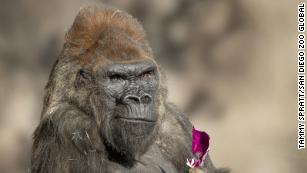





 olderfatterhappierdotcom