Category Archives: Food & Recipes

A Sojourn in Sicily – Part 1

Traveling to Europe from Austin is usually an adventure unto itself, and this trip was no exception.

We’d opted to fly in/out of Houston to avoid the missed or much-too-lengthy connections that occur when landing somewhere else in the US.

After a last-minute switch of hotels (note to airport travelers: do not book the Houston airport Holiday Inn, which is filthy and reeks of smoke!), we check in at the airport Marriott and have dinner at highly recommended Chez Nous in nearby Humble. I learn that the town is pronounced “umble” – perhaps to avoid the obvious jokes about pie?

The meal is excellent and we’re off to a good start.

Next morning, we check in for our flights: Houston to Newark and then on to Milan. Board the plane, settle in, and… nothing happens. After three “we’ll be slightly delayed” announcements we’re told of a “mechanical issue” (airline code for “we have no freakin’ clue what’s wrong”) and herded off the plane to scramble for new flights, as many on board are clearly going to miss their connection.

Several hours later we’re en route to Munich, where we’ll connect via Lufthansa to Milan. We arrive safely – still shivering from the insanely cold airplane – way behind schedule. Our luggage does not.

This necessitates another hour filling in paperwork while the lost luggage clerk tries to figure out whether United or Lufthansa is responsible for locating it and getting it to the hotel before we leave for our next destination.

BUT, intrepid travelers that we are, we head to our hotel, the very lovely Grand Hotel Et De Milan, and set off wandering this sophisticated and stylish city.

Day 1

Since we’re both opera fans, the main reason we’ve stopped in Milan this trip is to see a performance at La Scala the following night. Today, we head over to the opera house museum, which is pretty much a shrine to Maria Callas, patron saint of warblers worldwide. There are costumes, posters, videos, photos, portraits, you name it. Also set and costume designs from various other performances.

We scarf down a delicious dinner of trenette with pesto and cacio e pepe (here’s one recipe, though it’s even simpler and better if you use grated cacio cheese, olive oil, pasta water and freshly ground pepper) at nearby ristorante Salumiao, which we like so much we eat there the next night as well.

Day 2

Having been awakened at 1 a.m. by my dear husband (DH) who was obsessing about the missing luggage and wanting me to call someone (who in god’s name is working at that hour? but sure, why not!), I’m not as rested as I could be. Still, off we go to walk around and shop for a shirt and tie for DH to wear to La Scala in case the bags don’t arrive (it’s looking bleak).

Best discovery of the day: Museo Novecento, showcasing major art movements from 1910-1960’s, including some interesting political pieces.

After an afternoon drink at the hotel bar we return to our room to change for the opera and – mirabile dictu – bags have arrived!

At La Scala we see a silly opera (Von Weber’s Die Freischutz; about a hapless suitor, magic bullets, and the devil) with pleasant, mostly forgettable music, but we share a box with a nice couple and can now cross it off DH’s bucket list.

Days 3-6

We take the train to Florence – our 4th visit to this beautiful city, which is sadly overrun with selfie-stick-brandishing tourists even in October. Our hotel (a private palazzo nicely located near the Duomo) turns out to be lovely despite its unprepossessing exterior: ancient gate/courtyard with faint “eau de urine” from generations of animals and a dirty welcome mat in front of the battered industrial elevator which takes you upstairs to …

FullSizeRender (7)

Some highlights: Eating at Del Fagioli and Alla Vecchia Bettola, admiring fresh vegetables at the market and frescos at the Pitti Palace and Santa Maria Novella, and window shopping on the Ponte Vecchio,”considering” whether we need to buy the Buccellati lifelike silver crab serving dish that’s “only” 3600 euros after the VAT refund. Hey, let’s take two!

Day 7: Arrival in Sicily!

Alitalia seamlessly transfers our luggage from Florence to Rome to Palermo (take note, United!), where our Stanley Tucci lookalike driver takes us to our modern (aka no frills) hotel at 11:30 pm. I’d bought a sandwich to eat on the plane but DH has not eaten – he’s been fighting a cold and wasn’t hungry until now– and dines on minibar bottles and potato chips. Who says travel isn’t glamorous!

Next up: Palermo….

Go To The One Around The Corner

Inevitably, if you love to travel and love to eat, you’ll hit every destination armed with restaurant recommendations from foodie friends, bloggers, guide books and the like.

This is often a wonderful resource. But it comes with a downside: a place that’s already popular is often crowded with tourists – not quite the authentic experience you may have been seeking. Personally, I don’t want to hear my native language (especially when it’s LOUD) when I’m traveling abroad. Unless I’m in the UK, of course.

As I get older, I also find that simple meals of fresh ingredients meticulously prepared are infinitely more pleasurable than course after course of “fancy” food at Michelin-starred restaurants. That’s because: 1) I’m no longer interested in making eating a multi-hour activity, no matter how creative the chef is. 2) I can’t eat that much at one sitting. 3) Too often, the food is so rich that I feel vaguely queasy – or more than vaguely – after consuming an elaborate meal.

Hence, the new “Corner” philosophy.

Simply put, instead of the place everyone’s been telling you about (which may, of course, be fabulous), look nearby for an unassuming restaurant that’s frequented by the locals. Better yet, get a recommendation for a non-touristy place by asking a friendly shopkeeper for suggestions. Chances are, not only will the food itself be memorable, but there will be a story or experience attached to the meal. Bonus: there’s a good chance the local favorite is a lot less expensive than the tourist trap.

Here are a few places we stumbled upon during our recent trip to Milan, Florence and Sicily. As I found out later, they’re all highly rated on Trip Advisor — proving that if you trust your instincts they’ll lead you somewhere good, even if it’s not “undiscovered”!

Alla Vecchia Bettola, Florence

My husband and I collect antique prints of fish and shells for the guest bathroom (although, truth be told, we are running out of wall space). This gives each trip a shopping focus and often leads to interesting experiences as we search for our “souvenirs”.

unnamed

In Florence, we made our way to a store we’d located online, only to discover that their prints were all reproductions. Even though we weren’t buying anything, the owner generously steered us to another shop that did sell original prints. And when we asked about nearby places to eat typical Florentine food, she suggested this restaurant, where we enjoyed a wonderful lunch (charcuterie to start; risotto carciofi for me and pasta bolognese for my husband) with a murmur of Italian in the background.

IMG-2849

Alla Vecchia Bettola before the lunch crush

Nuti, Florence

Two days later, we wandered into Nuti, after bypassing the restaurant a friend had recommended which had an impossible wait time and seemed to be full of Americans.

Although hardly “non-touristy”, as the menu is in both English and Italian, Nuti’s food was delicious (beautiful grilled eggplant, zucchini, red and yellow peppers — all sliced very thin and seasoned with garlic and olive oil; fritto misto di mare for me and zesty pasta cinghiale for my husband) and the atmosphere was calm and relaxing; again, with a Florentine clientele.

IMG-2898 (1)

The restaurant’s charming and charismatic manager

IMG-2897 (1)

Isn’t everything better when it’s fried?!?

Piatti Primi, Palermo

Tucked in a side street near the famous Quattro Centi but off the main drag, this “typical” restaurant offered simple Sicilian cuisine (more grilled veggies, pasta with swordfish) that was simply terrific.

IMG-2903

IMG-2904

Finally, one of the best meals we had was the squid ink pasta with anchovy sauce my husband cooked in the kitchen of our condo in Taormina. It not only tasted amazing, it combined the fun of shopping for local ingredients, the leisure to eat at a time that was convenient, the flexibility to get our bread from a wonderful bakery and our dessert from a different pasticceria, AND we didn’t have to dress up.

FullSizeRender (5)

A sampling of treats from Pasticceria D’Amore, Taormina


A Day in Victoria BC

Well, it’s been two months since we took this trip but my excuse is that you may find it more enjoyable to visit now that the summer high season has ended. (How’s that for turning procrastination into a benefit?) Fewer tourists and cruise ships make it a lot nicer to maneuver through downtown. On the minus side, though, it’s more likely to rain so the crossing could get a bit rough.

I won’t begin to attempt a comprehensive travelogue, especially at this late date. There’s a ton of info online, after all. The lovely thing about Victoria is that you leave the very American city of Seattle and three hours later it feels as though you’re in Europe. Heaven for an Anglophile like me.

We stayed in Seattle the day before and the day after, which made for a nice little getaway. There’s plenty to do in both cities if you have time.

But if you only have 24 hours, as we did, here’s a quick snapshot.

We board the Victoria Clipper ferry in downtown Seattle. Food and drink options, plus a basket of free chewable Dramamine. Because who wants to be sitting near someone who’s seasick for three hours? (Tip: half a tablet keeps your stomach calm without making you too sleepy.)

(Can we say “Bad hair day?!?”) Arrive at Victoria’s Inner Harbour around noon. Check in at our hotel, the Grand Pacific, which is modern and spacious.)

Lunch: Steamship Grill and Bar. Waterfront views and delicious seafood in a beautiful Beaux Arts building. A glass of wine and now I really feel that I’m on vacation. Check out this adorable water taxi!

IMG-2587.JPG

Walk off lunch: Victoria’s easy to get around on foot. Other attractions, such as the famous and gorgeous Butchart Gardens, are a short ride away.

IMG-2548

IMG_2573Up Government Street past Parliament and Royal BC Museum…

FullSizeRender (3)to Market Square, lower Johnson St. shopping area (LoJo to the locals) and Canada’s oldest Chinatown.

IMG_2559


After sampling a couple of chocolate shops, my recco is Pure Lovin’ Chocolate in twisty, cramped, Dickensian Fan Tan Alley, named after a popular gambling game from the 1940s.

IMG_2555.jpg

Rare photo of husband looking relaxed!

IMG_2561 (1).jpgThere are flowers everywhere!

IMG_2554 (1).jpg

Amble back to hotel via Wharf Street to enjoy views of ferries and seaplanes.

FullSizeRender (2)

Cocktails and dinner: If you don’t opt for the Empress Hotel’s lavish and pricey afternoon tea — or aren’t staying there — grab a drink before dinner in the Q bar and scarf down their yummy charcoal-dusted popcorn.

IMG-2562

IMG-2563The restaurant is good too.IMG_2567.jpgIMG_2569.jpg


After dinner, stroll through the public spaces and lavish grounds of this venerable grande dame, and see the government buildings all lit up.

86A04687-4D2F-4376-B905-6BDA65F38E32

The next morning, we grab some coffee and explore the neighborhood, which is quiet and peaceful. IMG-2578IMG-2577Winding up with a scenic walk along the Foster pathway, named for (and presumably funded by) David Foster, Canadian musician and ex-husband of Real Housewives of Beverly Hills’ Yolanda.

We catch the 11:30 ferry back to Seattle, which arrives at 2:15 pm — time to enjoy the city!

The Joys of Improv

Leftovers! Why does that word have such an unfortunate connotation — “sad”, “dreary”, “unwanted”? For example: Last to be chosen for softball (that would be me in 6th grade). Late to losing one’s virginity (also me… age 20). Third tier invitee to a wedding or party (not me I hope, although I’ve never found out if I was on the C list.)

But in fact you can make amazing things out of leftovers because they invoke your creativity. Only downside… you’ll never make that dish the same way twice.

I refuse to take credit when a recipe I’ve read in a book turns out ok. All I had to do was read and follow instructions. (On second thought, maybe credit IS due because I suck at following instructions; just ask my Long Suffering Husband.)

Still, isn’t it much more fun to wing it without a net and make something up? That’s what we’re faced with at this point in the season, when we’re close to shutting down the summer house and have to invent recipes based on what’s in the fridge/freezer that needs to be used because I have some weird Puritanical Streak or Jewish Guilt telling me it’s a SIN TO WASTE FOOD!!!!

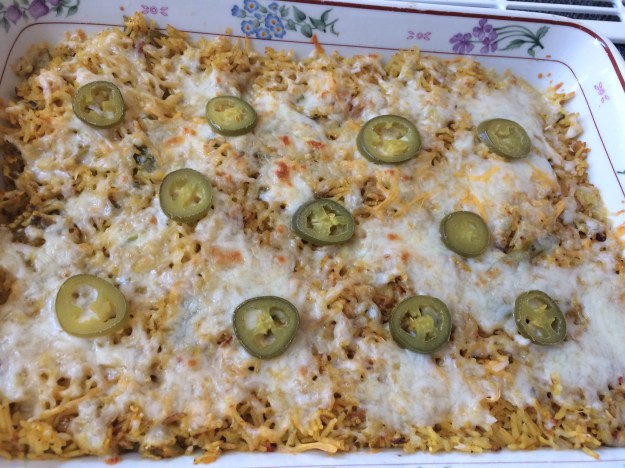
Last night, the LSH combined basic rice with leftover salsa, leftover cheddar and mozzarella, turmeric, salt and pepper, paprika, chili powder and moribund sliced jalapenos to create Mexican rice. Probably not authentic, but definitely tasty and it hit all the points for Using Up Crap In the Fridge.

IMG_2699

Below is an adaptation of a favorite recipe, tweaked to use up various bits of excellent cheese that were malingering in the fridge. Feel free to substitute other nuts and adjust based on your own leftovers; there’s pretty much no wrong way to make this.

Cheesy Shortbread Leaves

Ingredients

  • 3.5 ounces crumbled cheese (about ½ cup), e.g. gruyère/cheddar/conté
  • 3 tablespoons unsalted butter, room temperature
  • 1 teaspoon Dijon mustard
  • ½ cup all purpose flour
  • ¼ cup cornstarch
  • ¼ teaspoon coarse salt
  • 1/8 teaspoon ground black pepper
  • 1 teaspoon minced fresh tarragon
  • 1/3 cup almonds, finely chopped

Preparation

  1. Blend cheese and butter in food processor until creamy.
  2. Add flour, cornstarch, mustard, tarragon, salt and pepper. Pulse until mixture resembles coarse meal.
  3. Add nuts and process just until it forms moist clumps.
  4. Gather dough into a ball. Flatten into a disk and wrap in plastic. Refrigerate until firm, about 1 hour.
  5. Preheat oven to 325° F. Line 2 baking sheets with parchment paper.
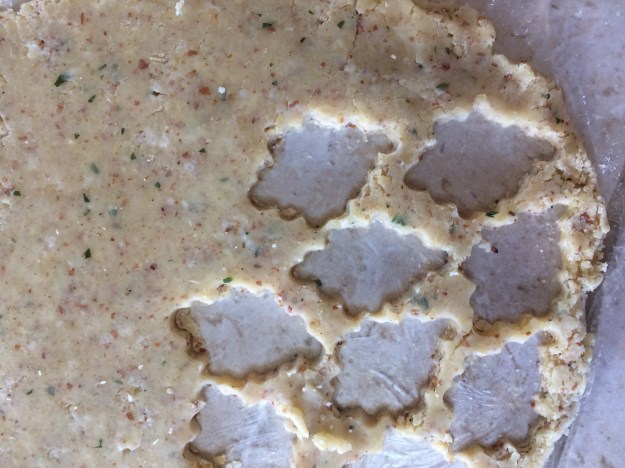
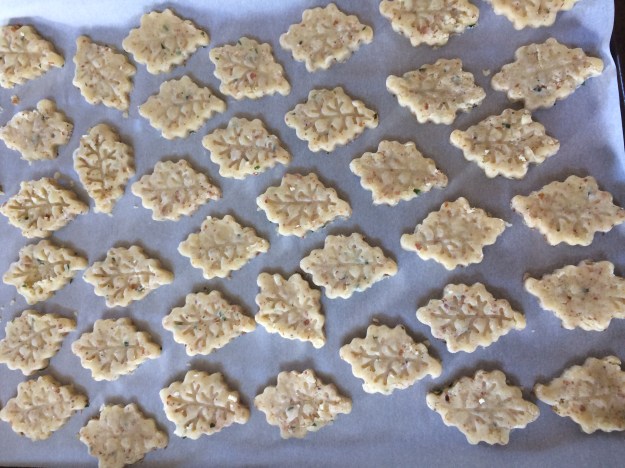
  6. Roll out dough between sheets of plastic wrap to 1/8″-1/4” thickness. Remove the top sheet of plastic and using a 2” x 1” leaf-shaped cookie cutter, cut out leaves. Note: if you don’t have a cookie cutter, you can roll the dough into a log, chill until firm enough to cut but not super-cold, and then cut slices instead. Gather dough scraps and re-roll to make additional leaves.
  7. Transfer leaves to baking sheets and bake until golden brown, about 20 minutes.

Makes about 4 dozen, depending on thickness of dough and size of cookie cutter.

IMG_2701IMG_2702IMG_2703

Random Hacks

The Internet was full of interesting tips this week!

FullSizeRender 6

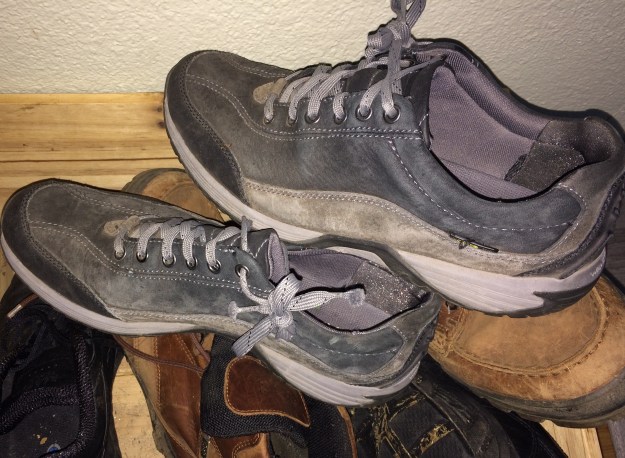
7 ways to prevent (and fix!) smelly shoes

1. Start with clean feet: Soak them in salt water, then dry off and dust with talcum powder (baby powder or Gold Bond).

2. Put antiperspirant on the soles of your feet.

3. Sprinkle the inside of your shoes with baking soda and leave overnight. Vacuum or shake out in the morning.

4. Place dry tea bags inside your shoes and leave them overnight.

5. Put crumpled newspaper inside your shoes and leave overnight. It absorbs odor-retaining moisture.

6. Place your shoes in individual plastic zip bags and leave them in your freezer overnight to kill bacteria. During the winter, leaving them overnight in a cold car will work too. Let your shoes slowly return to room temperature before wearing.

7. Spritz sneakers or fabric-lined shoes with mixture of water and white vinegar. Let dry thoroughly.


happiness-1866081_640

5 steps to relaxation

1. Place the tip of your tongue just behind your front teeth and exhale sharply.

2. Close your mouth and inhale slowly through your nose for a count of four.

3. Hold your breath for a count of seven.

4. Exhale strongly to a count of eight.

5. Repeat 3 times. Ahhhhh.

dollar-1398335_640

17 ways to save money

  1. Clear your browsing history. When shopping online – especially for airline tickets – make sure to empty your cache. Online companies follow your history and raise prices based on this information.
  2. Shop as a guest. When buying online, use the Guest option instead of creating an account. New customers usually get lower prices.
  3. Leave items in your online cart. Get everything filled in, with your name, e-mail address etc., but don’t purchase immediately. You’ll often get a follow-up e-mail a day or two later offering a discount code to incentivize you to complete the sale.
  4. Lower the brightness on your TV and computer screen. Reducing the brightness of your TV and/or computer monitors from their default settings can reduce power consumption by up to 40%. 
  5. Carry large bills. Research shows that you’re likely to pay less if you use cash instead of a credit card. That’s because purchases feel more “real” when you see the amount you’re spending. If you carry only $50 bills you’ll be less inclined to break them, which helps avoid impulse buys.
  6. Make lists. You’re also less likely to succumb to impulse buys at the mall or grocery store if you’ve decided ahead of time what you need and plan to buy.
  7. Build your credit. Your credit score determines your rate on loans; nowadays utility and insurance companies use these scores to calculate monthly premiums.
  8. Make large purchases at the end of the month. Buying a couch, car or electronics? All sales reps have to meet monthly quotas. If they’ve had a slow month they may be willing to give you a deep discount in order to make a sale—and reach their quota. 
  9. Paint your roof white. If you live in a warm climate, this quirky idea could save you a bundle on air conditioning bills. Traditional roofs are dark, and dark colors absorb more heat.  Go even further and install solar panels – the upfront cost will be worth it if you plan to live in your house for a long time.
  10. Brew your own coffee. Home brewing cuts your cost to about $0.25 per cup vs. $3 at a pricey coffee shop, saving you hundreds per year (and over $1000 if you have a 2/day habit!) 
  11. Eat less meat. Eating vegetable-centric meals 2-3 times per week will save you some major cash.
  12. Buy generic. Store brands often have the same ingredients as name brands and may even be made by the same companies. Same with prescriptions – ask your doctor if the generic version is an effective option. 
  13. Buy a water filter. Bottled water isn’t just expensive; it’s not necessarily healthier than tap water. The filtration process may result in water that’s actually better for you than spring water!
  14. Exercise daily. Research confirms that working out regularly limits the number of trips you’ll take to the doctor’s office.
  15. Eat out at culinary schools. If you love dining out, investigate culinary schools in your area. You can enjoy delicious meals from up-and-coming chefs at significant savings vs. restaurants.  
  16. Stay hydrated. Many people overeat because they mistake thirst for hunger. Drinking water before a meal will help you to only consume what you need. Result: lower grocery bills!
  17. Ask for discounts. Most companies offer money-saving promotions but may not advertise them. When contacting your cable, gas, phone, or credit card companies, ask if there’s a way to reduce your bills. Sometimes, mentioning that you’re ready to cancel a service or switch providers is all it takes for them to “magically” come up with a better deal.

Paint It Black

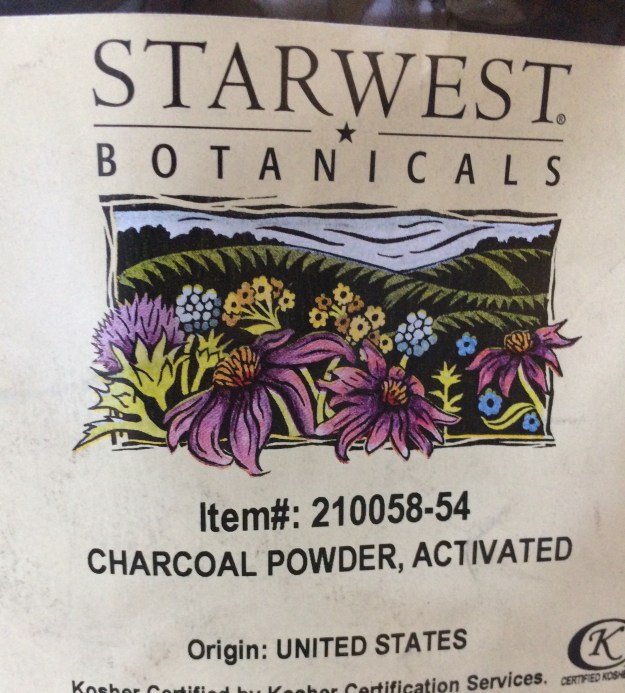
The Q Bar at the Empress Hotel in Victoria BC serves the most addictively delicious charcoal-spiced popcorn with their drinks. Inspired to recreate it, I was curious to see how else I might use food-grade activated charcoal.

IMG_2562.JPG

First, though, I wanted to learn what it is and what it does. Activated charcoal – not to be confused with the chemical-laden stuff you use on the grill! – is made from a variety of sources such as hardwood and coconut shells and naturally traps toxins, chemicals, gases etc. in its porous surface.

Activated charcoal (AC) doesn’t absorb these toxins; instead, it works through the chemical process of adsorption. A quick refresher: In the body, absorption is the process that occurs when elements such as nutrients, chemicals and toxins are soaked up and assimilated into the bloodstream. Adsorption is a chemical reaction in which elements bind to a surface. The charcoal’s negative electric charge causes positively charged toxins and gas to attach to its tiny nooks and crannies, allowing them to be flushed out so the body doesn’t reabsorb them.

6 Common Uses for Activated Charcoal

Having purchased a bag of the stuff from Amazon, it was time to figure out what to do with it besides making popcorn (stay tuned for recipe).

FullSizeRender 5Teeth Whitening Being a fan of coffee, tea and red wine, my teeth often look a bit dingy. AC is supposed to whiten teeth while promoting good oral health and it’s certainly cheaper than Opalescence or whitening strips so I figured I’d try it. My Internet search revealed that AC attaches to plaque and microscopic stains while changing the pH balance in the mouth to help prevent cavities, bad breath, and gum disease.

I spoon a small amount into a ramekin and tote it to the bathroom. Be warned, the fine powder can (and will) stain grout and fabrics. Protect counters, floors and clothing before using and lean way over the sink. And always avoid breathing it in (there’s a warning label about potential hazards).

Directions are simple: Wet a toothbrush and dip into the powdered AC. Brush teeth for about 2 minutes, paying special attention to areas showing the most staining. Your mouth will immediately turn black, and I looked like an extra in a road company production of Les Misérables; truly hideous. Then sip a bit of water, swish through mouth thoroughly and spit out. Continue rinsing until the water runs clear.

For best results, brush your teeth with activated charcoal two-three times per week.

Note: If you have crowns, caps or porcelain veneers, it’s possible that activated charcoal will stain them, although most users say this isn’t a problem since these are smooth, hard surfaces. Play it safe and just brush it on natural teeth. Of course, if your teeth become sensitive, quit using it.

Gas & Bloating AC has been found to alleviate discomfort by binding with gas-causing by-products in certain foods. Several brands of charcoal supplement tablets are available at pharmacies and drugstores, which has to be a lot neater and more appetizing than dumping black powder into a glass. Make sure to read the directions and drink plenty of water to get the charcoal into your system.

Incidentally, drinking 8-10 glasses of pure water every day helps to calm the digestive tract, fight fatigue, keep organs functioning, and lubricate joints and tissues.

Alcohol Poisoning & Preventing Hangovers While AC does not adsorb alcohol, it does help to quickly remove other substances from the body (such as artificial sweeteners) that contribute to symptoms.

When taken at the same time as alcohol, some studies show that AC can significantly reduce blood alcohol concentrations. Seems easier to just stop after the second margarita, no?

Bee stings This is a cool home remedy! Make a paste with powdered charcoal and water and put it on the painful area. Be sure to cover it with a bandage so you don’t stain your clothes. Again, a bit messy but if it works, why not?

Mold I’m diligent about spraying Tilex in the shower but never thought about mold living in people’s bodies (Ick!) Turns out, inhaling mold spores has been linked to eye irritation, headaches, respiratory and immune system issues, kidney and liver failure, decreased brain function and heart disease.

If you experience symptoms such as rashes, headaches, watery eyes, coughing or wheezing that aren’t explained in other ways (e.g., allergies), check your home for mold spore levels, even if you don’t see visible mold. It can develop behind drywall, under floors and in ventilation ducts, especially in homes that have flooded or have small leaks under a sub-floor or in the walls.

Poor ventilation exacerbates the problem, and damp, humid areas such as bathrooms, basements and laundry rooms are particularly prone to mold growth.

AC tablets can help flush out spores in your body; check with your doctor for dosing recommendations. And if there is visible mold in your home, natural remedies such as baking soda, apple cider vinegar, tea tree oil and borax will clean hard surfaces and help keep mold from growing back. Make sure to wear gloves and a protective mask during cleanup so you don’t inhale more spores.

Water Filtration Activated charcoal traps impurities in water including solvents, pesticides, industrial waste and other chemicals. (Hello, Brita!) Note that AC doesn’t trap viruses, bacteria or hard-water minerals.

Food Poisoning AC is also recommended for food poisoning accompanied by nausea and diarrhea. Check the dosage on your bottle of AC tablets and of course call 911 in severe cases of any type of poisoning.

Now, about that popcorn: Mix garlic powder, salt and pepper to taste in a small bowl. Add a tiny amount of powdered food grade charcoal and stir, being careful not to inhale the charcoal.

Charcoal powder won’t stain sinks and other hard surfaces but it could stain grout and WILL stain clothes. So use carefully!

Sprinkle a small amount on buttered popcorn and enjoy!

IMG_2595

Stayin’ Sane

Most days, the political news makes me want to pull the covers over my head and stay in bed for the next several years.

Take transgender military personnel. These brave folks are dodging bullets and land mines – are we seriously worried about whether they pee standing up or sitting down?

But, in the struggle to feel optimistic, I have a simple suggestion: buy wine. Not to drink, although drinking is to be encouraged in these fraught times, but to save.

This occurred to me yesterday, after stopping at one of our favorite wineries, Yamhill Valley Vineyards and buying a case of wine that won’t mature until 2020 or beyond. (Dare I suggest that we have a better chance with pinot than with our current president maturing by 2020?)

grapes-1952073_640

Think about it: You buy a bottle that is drinkable now but is going to be so much better if you have the patience to wait a few years. (This may be the only area in which I am patient. Just ask my Long Suffering Husband.)

Your wine can be a little time capsule. You could wrap it in a current newspaper and hope that 6-8 years from now the news will seem quaint and vaguely amusing. You can put it away somewhere cool and comfortable and just visit it occasionally to make sure it’s doing ok. You can start collecting recipes of yummy food that will be perfect to eat with your special bottle. Be creative! Have fun!

Our friend Linda, the tasting manager at Yamhill, is taking this whole optimism thing to a new level. She has found a new love, lost over 100 pounds, and looks gorgeously, radiantly happy as her wedding approaches. What’s more of a leap of faith than marriage, right?

cork-1574810_640

Let’s all check in with each other in 2020, open our bottles, and toast our collective survival. Good times ahead! xx, Alisa

[Unsponsored post. All photos from Pixabay.com.]

Desire, Anticipation, Realization

Remember the old Heinz commercial with the Carly Simon soundtrack? Anticipation has been motivating people long before it was an advertising theme. I’ll bet Mrs. Caveman found saber tooth stew more appealing after waiting all day for Mr. C to bring home the goodies. (Imagine how a little ketchup would have helped!)caveman-159964_640

I’m not a patient person. But I love pre-planning vacations: reading about my destination; researching places to explore and eat; making and revising endless lists of what to bring and wear; creating a wish list of possible purchases. Anticipation extends the trip well beyond the actual time away if I start enjoying it months in advance.

I also find anticipation half the fun of baking – the long, slow rise of the bread or waiting for some delicious dessert to come out of the oven. And what’s nicer than looking forward to a hot cup of tea or coffee after being outside on a cold, rainy day – or a frosty beer after a blisteringly hot one?

Although it can be frustrating, time-consuming or confusing, anticipation is especially useful when purchasing something expensive. When’s the last time you bought a car or house on impulse before taking the time to decide exactly what you wanted? (If you did, you have far more disposable income than I do; please buy me a Bentley!)

money-1428594_640

Psychologists tell us that desiring something is more satisfying than actually acquiring it (scientists call this “habituation”). There’s often a letdown after getting the object, which is why prolonging the process can be so enjoyable. (Check out a fascinating article on this topic in The Atlantic.)

I’ve been thinking about this since arriving at our summer house 20 lbs. lighter than last year and discovering that “I have nothing to wear” wasn’t hyperbole. I had exactly one pair of jeans and three sweaters that fit; everything else down to my underwear needed to be replaced.

hanger-804608_640

The surprise, for a dedicated shopper like myself, is that mass acquisition isn’t much fun. I’ve pretty much had to blitz-shop online (hello, The Outnet) to compile an instant wardrobe. As a result, I’ve been denied the pleasures of anticipation, window-shopping, weighing pros and cons, etc. as part of the experience.

Years ago, on a trip to Milan, my husband and I watched a group of young women return to our hotel laden with shopping bags from every high end store you can imagine (Chanel, Louis Vuitton, Dior etc.) woman-1329790_640

I’ve often wondered: Did those girls really appreciate everything they bought, after the shopping high wore off? If you could acquire anything you desire without a second’s thought, would it be special?

What do you think — is anticipation more satisfying than acquisition? And what about delayed gratification… does something have more value to you when you’ve saved up for it? Are there things you bought that you love as much — or more — now that you have them?

In other words, does the “high” always fade?

Avoiding Brain Drain

In hopes of staving off cognitive decline, I’ve been refreshing my French with the help of the free online language courses on DuoLingo. Next up: brushing up on my minimal Italian (one college semester) in preparation for our trip to Sicily, Milan and Florence in October.flag-2292679_640Younger readers may think this is an issue that only affects their parents or grandparents. Not so fast: apparently the seeds of dementia can be sewn in our 30’s, 40’s and 50’s — up to three decades before the disease appears full-blown. Yowza.

Nearly two-thirds of Alzheimer’s sufferers are women. But the good news is that there’s a lot we can do to protect ourselves – at every age. Reducing inflammation, insulin resistance, blood sugar, high LDL cholesterol and vascular problems lowers our risk, and current research now focuses as much on causes as on cures.

The Big Three: Eating, Exercise and Engagement.

EATING

The Mediterranean Diet won’t just keep you slim; it’s literally brain food. Eating veggies, nuts, berries, beans, whole grains, fish, poultry and olive oil boosts brain health. And don’t forget the wine: the resveratrol in red wine has many benefits.

wineglass-1495861_640

  • Protects the lining of our arteries so blood can flow freely
  • Improves the body’s ability to repair damage caused by free radicals, which helps prevent premature aging of cells
  • Blocks the production of inflammatory agents

What to avoid? Sugar. Too much can lead to obesity and diabetes, both of which increase the risk of dementia. So swap that margarita for cabernet! And watch your cholesterol: high levels can cause plaque buildup in blood vessels and keep blood from effectively reaching all parts of your brain.

EXERCISE

It’s as good for your brain as it is for your butt.

dumb-bell-670061_640

  • Aerobic exercise builds up grey matter in the cerebral cortex (where memories live), releases chemicals thought to affect learning and memory, and delivers oxygen to your brain.
  • Regular exercise sharpens focus and stimulates nerve cells and blood vessel formation in the hippocampus, another part of the brain associated with memory. Don’t you love the word hippocampus, which sounds like a university for, you know, hippos? (I threw that in to see if you’re paying attention.) hippo-783522_640
  • Studies have shown that strength training improves blood flow to areas of the brain associated with executive function and memory. So pump that iron!
  • Stress busters such as yoga help reduce cortisol, the fight-or-flight hormone that can go into overdrive, impairing memory and causing neuron-damaging inflammation.

ENGAGEMENT 

books-441866_640

  • Learn something new and keep doing new things (at least an hour each day).
  • Spend time socializing; it helps build new brain cells.
  • Protect your heart (and not just romantically!) The better it pumps, the more blood can circulate throughout your body, nourishing the neurons and blood vessels in your brain.
  • Feeling bored at work or in a social situation? Wiggle your toes — it snaps you back to the moment.
  • Hit the sheets for at least seven hours. The slow-wave stage before REM sleep is thought to be the time when cognitive function strengthens and consolidates.
  • Take time to relax. It lowers blood pressure to help reduce strain on blood vessels.

Now if you’ll excuse me, it’s time for my new fitness regimen: lifting several heavy glasses of wine while reading Italian travel guides and researching restaurants. Gotta start someplace, right? Salute e ciao!

Rosemary Redux

Time got away from me this week.  We traveled to the west coast to open our summer house and it’s been nonstop errands.  So, no time for a long post but here’s a wonderful recipe to kick off summer: sweet, salty shortbread with an herbal kick.

ROSEMARY SHORTBREAD adapted from epicurious.com

FullSizeRender 9

Ingredients

  • 3/4 stick (6 tablespoons) unsalted butter, softened
  • 1 tablespoon honey (2 tsp if you prefer less sweetness)
  • 1/4 cup powdered sugar (cut back a bit if you prefer less sweetness
  • 1 cup all-purpose flour
  • 1/4 teaspoon baking powder
  • 1/2 teaspoon salt
  • 1 tablespoon chopped fresh rosemary leaves or 1.5 teaspoons dried rosemary, crumbled
  • Optional garnish: small rosemary sprigs if using fresh herbs


Preparation

  1. Preheat oven to 350°F and generously butter (or spray with Baker’s Joy) a 9-inch cake pan or 9-inch round shortbread mold.
  2. In the bowl of an electric mixer beat butter with honey and sugar until light and fluffy. In another bowl whisk together flour, baking powder, salt, and chopped or dried rosemary. Add flour mixture to butter mixture and beat until just combined.
  3. On a lightly floured surface knead dough until it just comes together (about 8 times). With floured hands press dough evenly into pan or mold. If using cake pan, score dough into 8 wedges with floured tines of a fork and press edges decoratively with flat sides of the tines. Press small rosemary sprigs on top.
  4. Bake shortbread in middle of oven 20 to 30 minutes or until pale golden, and let stand in pan for 10 minutes.
  5. While shortbread is still warm, loosen edges from pan with a small knife and invert onto your hand covered with a kitchen towel. Invert shortbread onto a cutting board and cut halfway along score marks. (If using a cake pan, let it cool in the pan until easy to cut and remove.)
  6. Cool shortbread on a rack.

YIELD: 8 large wedges.  IMG_1910

Note: I prefer smaller pieces and this recipe works well in a square 8×8 pan too. Not as pretty though!