Tag Archives: bloggers 50+

Really Good News Monday: Hope on the Horizon?

The first coronavirus vaccine to be tested in people appears to be safe and able to stimulate an immune response against the virus, its manufacturer, Moderna, announced on Monday.

The findings are based on results from the first eight people who each received two doses of the vaccine, starting in March.

Those people, healthy volunteers, made antibodies that were then tested in human cells in the lab, and were able to stop the virus from replicating — the key requirement for an effective vaccine. The levels of those so-called neutralizing antibodies matched the levels found in patients who had recovered after contracting the virus in the community.

The company has said that it is proceeding on an accelerated timetable, with the next phase involving 600 people to begin soon. But U.S. government officials have warned that producing a vaccine that would be widely available could take a year to 18 months. There is no proven treatment or vaccine against the coronavirus at this time.

The Idiot and the Odyssey

People have long speculated that there might be intelligent life on other planets. The implication being there is intelligent life on THIS planet, something that is becoming increasingly difficult to demonstrate, especially in these so-called United States, which a moment ago I typed as the Untied States, which is a far more apt description.

Exhibit A:

Today, the Environmental Protection Agency (hah) refused to regulate a chemical found in rocket fuel that can contaminate water and contribute to fetal damage. The policy acknowledges that exposure to high levels of perchlorate can cause I.Q. damage despite deciding not to regulate it.

Sounds as though these clowns have already been drinking gallons of the stuff.

Exhibit B:

The chairman of the Senate Intelligence Committee (oxymoron alert) stepped down a day after F.B.I. agents seized his cellphone as part of an investigation into whether he sold hundreds of thousands of dollars’ worth of stocks using nonpublic information about the coronavirus.

Wait: He thought it was safe to discuss his stock buys on his cell phone??

Exhibit C:

I have to thank the brilliant Ellen Hawley (Notes from the U.K.) for calling this to my attention: London’s Transport Secretary is urging people to use public transport while admitting he wouldn’t use it himself. (Actually, that may be a sign of intelligence these days.) Moreover, maintaining the recommended social distancing on a bus would result in approximately enough room for six passengers plus the driver.

Which would require 10 times as many buses to service a normal rush hour.

Going out on a limb here, I’m guessing New York would face a similar dilemma. And exactly how is anyone planning to fund 10x as many buses?

Oh, they aren’t.  They’re going to let the folks who need to use public transportation rather than chauffeurs crowd on in and take their chances.  Heck, it’s the price you pay if you’re older/poorer/etc., isn’t it?

Back to the intelligent life part, which started me down this rabbit hole.  I was reading this morning — an important element of my daily procrastination schedule — that there might be life on one of Jupiter’s moons.

If they don’t have politicians, I’d say they’re ahead of the game.

photo of parking for aliens only signage

Photo by James Lee on Pexels.com


Good News Monday: An Expert Speaks

With so much misinformation out there, it’s useful to listen to people who actually know what they’re talking about. (Hint: Not politicians.)  While the below article is sobering, it does explain how we can avoid catching the virus.  And that’s good news.

[Reprinted from today’s New York Times]

Updated: 7 hours ago

The Risks – Know Them – Avoid Them

It seems many people are breathing some relief, and I’m not sure why. An epidemic curve has a relatively predictable upslope and once the peak is reached, the back slope can also be predicted. We have robust data from the outbreaks in China and Italy, that shows the backside of the mortality curve declines slowly, with deaths persisting for months. Assuming we have just crested in deaths at 70k, it is possible that we lose another 70,000 people over the next 6 weeks as we come off that peak. That’s what’s going to happen with a lockdown.

As states reopen, and we give the virus more fuel, all bets are off. I understand the reasons for reopening the economy, but I’ve said before, if you don’t solve the biology, the economy won’t recover.

There are very few states that have demonstrated a sustained decline in numbers of new infections. Indeed, the majority are still increasing and reopening. As a simple example of the USA trend, when you take out the data from New York and just look at the rest of the USA, daily case numbers are increasing. Bottom line: the only reason the total USA new case numbers look flat right now is because the New York City epidemic was so large and now it is being contained.

So throughout most of the country we are going to add fuel to the viral fire by reopening. It’s going to happen if I like it or not, so my goal here is to try to guide you away from situations of high risk.

Where are people getting sick?

We know most people get infected in their own home. A household member contracts the virus in the community and brings it into the house where sustained contact between household members leads to infection.

But where are people contracting the infection in the community? I regularly hear people worrying about grocery stores, bike rides, inconsiderate runners who are not wearing masks…. are these places of concern? Well, not really. Let me explain.

In order to get infected you need to get exposed to an infectious dose of the virus; based on infectious dose studies with MERS and SARS, some estimate that as few as 1000 SARS-CoV2 viral particles are needed for an infection to take hold. Please note, this still needs to be determined experimentally, but we can use that number to demonstrate how infection can occur. Infection could occur, through 1000 viral particles you receive in one breath or from one eye-rub, or 100 viral particles inhaled with each breath over 10 breaths, or 10 viral particles with 100 breaths. Each of these situations can lead to an infection.

How much Virus is released into the environment?

A Bathroom: Bathrooms have a lot of high touch surfaces, door handles, faucets, stall doors. So fomite transfer risk in this environment can be high. We still do not know whether a person releases infectious material in feces or just fragmented virus, but we do know that toilet flushing does aerosolize many droplets. Treat public bathrooms with extra caution (surface and air), until we know more about the risk.

A Cough: A single cough releases about 3,000 droplets and droplets travels at 50 miles per hour. Most droplets are large, and fall quickly (gravity), but many do stay in the air and can travel across a room in a few seconds.

A Sneeze: A single sneeze releases about 30,000 droplets, with droplets traveling at up to 200 miles per hour. Most droplets are small and travel great distances (easily across a room).

If a person is infected, the droplets in a single cough or sneeze may contain as many as 200,000,000 (two hundred million) virus particles which can all be dispersed into the environment around them.

A breath: A single breath releases 50 – 5000 droplets. Most of these droplets are low velocity and fall to the ground quickly. There are even fewer droplets released through nose-breathing. Importantly, due to the lack of exhalation force with a breath, viral particles from the lower respiratory areas are not expelled.

Unlike sneezing and coughing which release huge amounts of viral material, the respiratory droplets released from breathing only contain low levels of virus. We don’t have a number for SARS-CoV2 yet, but we can use influenza as a guide. We know that a person infected with influenza releases about 3 – 20 virus RNA copies per minute of breathing.

Remember the formulae: Successful Infection = Exposure to Virus x Time

If a person coughs or sneezes, those 200,000,000 viral particles go everywhere. Some virus hangs in the air, some falls into surfaces, most falls to the ground. So if you are face-to-face with a person, having a conversation, and that person sneezes or coughs straight at you, it’s pretty easy to see how it is possible to inhale 1,000 virus particles and become infected.

But even if that cough or sneeze was not directed at you, some infected droplets–the smallest of small–can hang in the air for a few minutes, filling every corner of a modest sized room with infectious viral particles. All you have to do is enter that room within a few minutes of the cough/sneeze and take a few breaths and you have potentially received enough virus to establish an infection.

But with general breathing, 20 copies per minute into the environment, even if every virus ended up in your lungs, you would need 1000 copies divided by 20 copies per minute = 50 minutes.

Speaking increases the release of respiratory droplets about 10 fold; ~200 copies of virus per minute. Again, assuming every virus is inhaled, it would take ~5 minutes of speaking face-to-face to receive the required dose.

The exposure to virus x time formulae is the basis of contact tracing. Anyone you spend greater than 10 minutes with in a face-to-face situation is potentially infected. Anyone who shares a space with you (say an office) for an extended period is potentially infected. This is also why it is critical for people who are symptomatic to stay home. Your sneezes and your coughs expel so much virus that you can infect a whole room of people.

What is the role of asymptomatic people in spreading the virus?

Symptomatic people are not the only way the virus is shed. We know that at least 44% of all infections–and the majority of community-acquired transmissions–occur from people without any symptoms (asymptomatic or pre-symptomatic people). You can be shedding the virus into the environment for up to 5 days before symptoms begin.

Infectious people come in all ages, and they all shed different amounts of virus. The figure below shows that no matter your age (x-axis), you can have a little bit of virus or a lot of virus (y-axis). (ref)

The amount of virus released from an infected person changes over the course of infection and it is also different from person-to-person. Viral load generally builds up to the point where the person becomes symptomatic. So just prior to symptoms showing, you are releasing the most virus into the environment. Interestingly, the data shows that just 20% of infected people are responsible for 99% of viral load that could potentially be released into the environment (ref)

So now let’s get to the crux of it. Where are the personal dangers from reopening?

When you think of outbreak clusters, what are the big ones that come to mind? Most people would go to the cruise ships. But you would be wrong. Ship outbreaks don’t even land in the top 50 outbreaks to date.

Ignoring the terrible outbreaks in nursing homes, we find that the biggest outbreaks are in prisons, religious ceremonies, and workplaces, such a meat packing facilities and call centers. Any environment that is enclosed, with poor air circulation and high density of people, spells trouble.

Some of the biggest super-spreading events are:

  • Meat packing: In meat processing plants, densely packed workers must communicate to one another amidst the deafening drum of industrial machinery and a cold-room virus-preserving environment. There are now outbreaks in 115 facilities across 23 states, 5000+ workers infected, with 20 dead. (ref)

  • Weddings, funerals, birthdays: 10% of early spreading events

  • Business networking: Face-to-face business networking like the Biogen Conference in Boston in March.

As we move back to work, or go to a restaurant, let’s look at what can happen in those environments.

Restaurants: Some really great shoe-leather epidemiology demonstrated clearly the effect of a single asymptomatic carrier in a restaurant environment (see below). The infected person (A1) sat at a table and had dinner with 9 friends. Dinner took about 1 to 1.5 hours. During this meal, the asymptomatic carrier released low-levels of virus into the air from their breathing. Airflow (from the restaurant’s various airflow vents) was from right to left. Approximately 50% of the people at the infected person’s table became sick over the next 7 days. 75% of the people on the adjacent downwind table became infected. And even 2 of the 7 people on the upwind table were infected (believed to happen by turbulent airflow). No one at tables E or F became infected, they were out of the main airflow from the air conditioner on the right to the exhaust fan on the left of the room. (Ref)

Workplaces: Another great example is the outbreak in a call center (see below). A single infected employee came to work on the 11th floor of a building. That floor had 216 employees. Over the period of a week, 94 of those people become infected (43.5%: the blue chairs). 92 of those 94 people became sick (only 2 remained asymptomatic). Notice how one side of the office is primarily infected, while there are very few people infected on the other side. While exact number of people infected by respiratory droplets / respiratory exposure versus fomite transmission (door handles, shared water coolers, elevator buttons etc) is unknown. It serves to highlight that being in an enclosed space, sharing the same air for a prolonged period increases your chances of exposure and infection. Another 3 people on other floors of the building were infected, but the authors were not able to trace the infection to the primary cluster on the 11th floor. Interestingly, even though there were considerable interaction between workers on different floors of the building in elevators and the lobby, the outbreak was mostly limited to a single floor (ref). This highlights the importance of exposure and time in the spreading of SARS-CoV2.

Choir: The church choir in Washington State. Even though people were aware of the virus and took steps to minimize transfer; e.g. they avoided the usual handshakes and hugs hello, people also brought their own music to avoid sharing, and socially distanced themselves during practice. A single asymptomatic carrier infected most of the people in attendance. The choir sang for 2 1/2 hours, inside an enclosed church which was roughly the size of a volleyball court.

Singing, to a greater degree than talking, aerosolizes respiratory droplets extraordinarily well. Deep-breathing while singing facilitated those respiratory droplets getting deep into the lungs. Two and half hours of exposure ensured that people were exposed to enough virus over a long enough period of time for infection to take place. Over a period of 4 days, 45 of the 60 choir members developed symptoms, 2 died. The youngest infected was 31, but they averaged 67 years old. (corrected link)

Indoor sports: While this may be uniquely Canadian, a super spreading event occurred during a curling event in Canada. A curling event with 72 attendees became another hotspot for transmission. Curling brings contestants and teammates in close contact in a cool indoor environment, with heavy breathing for an extended period. This tournament resulted in 24 of the 72 people becoming infected. (ref)

Birthday parties / funerals: Just to see how simple infection-chains can be, this is a real story from Chicago. The name is fake. Bob was infected but didn’t know. Bob shared a takeout meal, served from common serving dishes, with 2 family members. The dinner lasted 3 hours. The next day, Bob attended a funeral, hugging family members and others in attendance to express condolences. Within 4 days, both family members who shared the meal are sick. A third family member, who hugged Bob at the funeral became sick. But Bob wasn’t done. Bob attended a birthday party with 9 other people. They hugged and shared food at the 3 hour party. Seven of those people became ill. Over the next few days Bob became sick, he was hospitalized, ventilated, and died.

But Bob’s legacy lived on. Three of the people Bob infected at the birthday went to church, where they sang, passed the tithing dish etc. Members of that church became sick. In all, Bob was directly responsible for infecting 16 people between the ages of 5 and 86. Three of those 16 died.

The spread of the virus within the household and back out into the community through funerals, birthdays, and church gatherings is believed to be responsible for the broader transmission of COVID-19 in Chicago. (ref)

Sobering right?

Commonality of outbreaks

The reason to highlight these different outbreaks is to show you the commonality of outbreaks of COVID-19. All these infection events were indoors, with people closely-spaced, with lots of talking, singing, or yelling. The main sources for infection are home, workplace, public transport, social gatherings, and restaurants. This accounts for 90% of all transmission events. In contrast, outbreaks spread from shopping appear to be responsible for a small percentage of traced infections. (Ref)

Importantly, of the countries performing contact tracing properly, only a single outbreak has been reported from an outdoor environment (less than 0.3% of traced infections). (ref)

So back to the original thought of my post.

Indoor spaces, with limited air exchange or recycled air and lots of people, are concerning from a transmission standpoint. We know that 60 people in a volleyball court-sized room (choir) results in massive infections. Same situation with the restaurant and the call center. Social distancing guidelines don’t hold in indoor spaces where you spend a lot of time, as people on the opposite side of the room were infected.

The principle is viral exposure over an extended period of time. In all these cases, people were exposed to the virus in the air for a prolonged period (hours). Even if they were 50 feet away (choir or call center), even a low dose of the virus in the air reaching them, over a sustained period, was enough to cause infection and in some cases, death.

Social distancing rules are really to protect you with brief exposures or outdoor exposures. In these situations there is not enough time to achieve the infectious viral load when you are standing 6 feet apart or where wind and the infinite outdoor space for viral dilution reduces viral load. The effects of sunlight, heat, and humidity on viral survival, all serve to minimize the risk to everyone when outside.

When assessing the risk of infection (via respiration) at the grocery store or mall, you need to consider the volume of the air space (very large), the number of people (restricted), how long people are spending in the store (workers – all day; customers – an hour). Taken together, for a person shopping: the low density, high air volume of the store, along with the restricted time you spend in the store, means that the opportunity to receive an infectious dose is low. But, for the store worker, the extended time they spend in the store provides a greater opportunity to receive the infectious dose and therefore the job becomes more risky.

Basically, as the work closures are loosened, and we start to venture out more, possibly even resuming in-office activities, you need to look at your environment and make judgments. How many people are here, how much airflow is there around me, and how long will I be in this environment. If you are in an open floorplan office, you really need critically assess the risk (volume, people, and airflow). If you are in a job that requires face-to-face talking or even worse, yelling, you need to assess the risk.

If you are sitting in a well ventilated space, with few people, the risk is low.

If I am outside, and I walk past someone, remember it is “dose and time” needed for infection. You would have to be in their airstream for 5+ minutes for a chance of infection. While joggers may be releasing more virus due to deep breathing, remember the exposure time is also less due to their speed.

While I have focused on respiratory exposure here, please don’t forget surfaces. Those infected respiratory droplets land somewhere. Wash your hands often and stop touching your face!

As we are allowed to move around our communities more freely and be in contact with more people in more places more regularly, the risks to ourselves and our family are significant. Even if you are gung-ho for reopening and resuming business as usual, do your part and wear a mask to reduce what you release into the environment. It will help everyone, including your own business.

This article was inspired by a piece written by Jonathan Kay in Quillete:

COVID-19 Superspreader Events in 28 Countries: Critical Patterns and Lessons

About the author

Erin S. Bromage, Ph.D., is an Associate Professor of Biology at the University of Massachusetts Dartmouth. Dr. Bromage graduated from the School of Veterinary and Biomedical Sciences James Cook University, Australia where his research focused on the epidemiology of, and immunity to, infectious disease in animals. His Post-Doctoral training was at the College of William and Mary, Virginia Institute of Marine Science in the Comparative Immunology Laboratory of late Dr. Stephen Kaattari.

Dr. Bromage’s research focuses on the evolution of the immune system, the immunological mechanisms responsible for protection from infectious disease, and the design and use of vaccines to control infectious disease in animals. He also focuses on designing diagnostic tools to detect biological and chemical threats in the environment in real-time.

Dr. Bromage joined the Faculty of the University of Massachusetts Dartmouth in 2007 where he teaches courses in Immunology and Infectious disease, including a course this semester on the Ecology of Infectious Disease which focused on the emerging SARS-CoV2 outbreak in China.

Time Keeps On Slipping

You’d think that with all this sheltering in place, time would be crawling by and every day would seem longer than the one before due to their rather dreary lack of variety.  And yet, each day finds its own rhythm.

Time is a shape shifter. It expands to fill a vacuum, and contracts when doing something pleasurable.  It lives on in memory, where events can be revisited and reimagined for years. It’s too short when we’re happy; too long when we’re impatient or bored.

Pandemic Time is a law unto itselfExcursions now take on mythic importance, to be remembered and savored because they’re so rare.  It can feel like “forever” before we can eat out or get our nails done, even if it’s only a matter of days or weeks. And although there are certainly enough hours to do all those chores I’ve been putting off, night inevitably drops the curtain on another day where they didn’t get done — because, well, there’s always tomorrow.

Mostly I’m grateful to have these days at all, when so many haven’t.  I read somewhere recently that “Good times become good memories.  Bad times become good lessons.” One can only hope.

inspirational quotes on a planner

Photo by Bich Tran on Pexels.com

Sexual Politics

A heated Facebook exchange this weekend prompted me to revisit an older post about #MeToo and my own workplace experiences.

I think there’s a big difference between true harassment and unwanted or inappropriate behavior. Viewed through today’s lens, every decades-old compliment, hug or shoulder rub can seem nasty and predatory.  But it may have been no more serious than an ill-advised attempt to flirt, show warmth, or express appreciation.

It’s equally possible that a woman who had a crush on an attractive, charismatic man fantasized or misinterpreted a benign gesture.

So yes, let’s investigate the Bidens, Kavanaughs, and Trumps to see if they actually crossed the line. But let’s not automatically assume that every allegation has merit either.

blindfolded-2025474_640.png

Wistful Thinking

There are so many things I miss these days, from the prosaic to the profound.  Among them:

  • Free samples at Costco and Trader Joe’s
  • Visiting with my kids
  • Dinner out with friends
  • Responsible government leadership
  • A proper haircut
  • A decent pedicure
  • My group exercise class
  • Anxiety-free sleep
  • News that’s actually news
  • Space to roam
  • My waistline

But perhaps the one thing I miss most of all is the anticipation of upcoming travel.  For those of us who love a change of scenery — whether exotic or familiar — there is something deeply satisfying about planning a trip down to the last detail, while leaving lots of room for unexpected developments. (The good kind, not the “oh s*** I’m suddenly quarantined in a foreign country” kind.)

I’m enjoying vicarious adventures through other bloggers’ posts, but we all know it’s hardly the same.  Having cancelled our London trip planned for March, and now deciding not to play “beat the odds” with the trip to France we’d scheduled for this summer, I feel a bit adrift.

And wondering… what do YOU miss most these days?

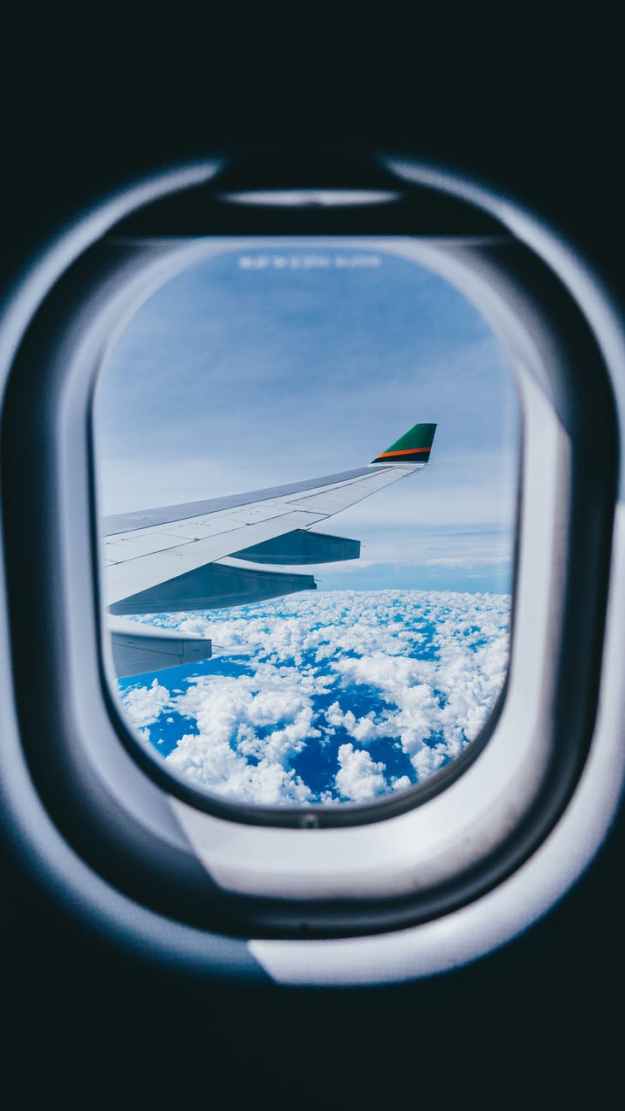
airplane window view of airplane wing and clouds

Photo by Chait Goli on Pexels.com

Good News Monday/COVID-19: What NOT to Worry About

I found this reassuring.

[Reprinted from today’s New York Times] 

By 

When we asked readers to send their questions about coronavirus, a common theme emerged: Many people are fearful about tracking the virus into their homes on their clothes, their shoes, the mail and even the newspaper.

We reached out to infectious disease experts, aerosol scientists and microbiologists to answer reader questions about the risks of coming into contact with the virus during essential trips outside and from deliveries. While we still need to take precautions, their answers were reassuring.

For most of us who are practicing social distancing and making only occasional trips to the grocery store or pharmacy, experts agree that it’s not necessary to change clothes or take a shower when you return home. You should, however, always wash your hands. While it’s true that a sneeze or cough from an infected person can propel viral droplets and smaller particles through the air, most of them will drop to the ground.

Studies show that some small viral particles could float in the air for about half an hour, but they don’t swarm like gnats and are unlikely to collide with your clothes. “A droplet that is small enough to float in air for a while also is unlikely to deposit on clothing because of aerodynamics,” said Linsey Marr, an aerosol scientist at Virginia Tech. “The droplets are small enough that they’ll move in the air around your body and clothing.”

I asked Dr. Marr to explain further, since we’re all getting a mini lesson in aerodynamics.

“The best way to describe it is that they follow the streamlines, or air flow, around a person, because we move relatively slowly. It’s kind of like small insects and dust particles flowing in the streamlines around a car at slow speed but potentially slamming into the windshield if the car is going fast enough,” said Dr. Marr.

“Humans don’t usually move fast enough for this to happen,” Dr. Marr continued. “As we move, we push air out of the way, and most of the droplets and particles get pushed out of the way, too. Someone would have to spray large droplets through talking — a spit talker — coughing or sneezing for them to land on our clothes. The droplets have to be large enough that they don’t follow the streamlines.”

So, if you’re out shopping and somebody sneezes on you, you probably do want to go home, change and shower. But the rest of the time, take comfort that your slow-moving body is pushing air and viral particles away from your clothes, a result of simple physics.

For all the reasons outlined above, you should not be worried about viral contamination of your hair or beard if you are practicing social distancing. Even if someone sneezed on the back of your head, any droplets that landed on your hair would be an unlikely source of infection.

“You have to think through the process of what would have to happen for someone to become infected,” said Dr. Andrew Janowski, instructor of pediatric infectious diseases at Washington University School of Medicine St. Louis Children’s Hospital. “You have someone who sneezes, and they have to have X amount of virus in the sneeze. Then there has to be so many drops that land on you.”

The answer depends on whether you’re doing routine laundry or cleaning up after a sick person.

Routine laundry should not cause worry. Wash it as you normally would. While some types of viruses, like the norovirus, can be tough to clean, the new coronavirus, like the flu virus, is surrounded by a fatty membrane that is vulnerable to soap. Washing your clothes in regular laundry detergent, following the fabric instructions, followed by a stint in the dryer is more than enough to remove the virus — if it was even there in the first place.

“We do know that viruses can deposit on clothing (from droplets) and then be shaken loose into the air with movement, but you would need a lot of viruses for this to be a concern, far more than a typical person would encounter while going for a walk outdoors or going to a grocery store,” Dr. Marr said.

The exception is if you are in close contact with a sick person. The Centers for Disease Control and Prevention recommends that you wear gloves when cleaning up after someone who is sick, and take care not to shake laundry and bedding. Use the warmest water setting possible and dry completely. You can mix laundry from an ill person with the rest of the household load. But just leaving laundry to sit for a while also reduces risk, because the virus will dry out and decay. “We know these types of viruses tend to decay faster on fabric than on hard, solid surfaces like steel or plastic,” said Dr. Marr.

Most of what we know about how long this novel coronavirus lives on surfaces comes from an important study published in The New England Journal of Medicine in March. The study found that the virus can survive, under ideal conditions, up to three days on hard metal surfaces and plastic and up to 24 hours on cardboard.

But the study did not look at fabric. Still, most virus experts believe that the cardboard research offers clues about how the virus probably behaves on fabric. The absorbent, natural fibers in the cardboard appeared to cause the virus to dry up more quickly than it does on hard surfaces. The fibers in fabric would be likely to produce a similar effect.

A 2005 study of the virus that causes SARS, another form of coronavirus, provides further reassurance. In that study, researchers tested increasingly large amounts of viral samples on paper and on a cotton gown. Depending on the concentration of the virus, it took five minutes, three hours or 24 hours for it to become inactive. “Even with a relatively high virus load in the droplet, rapid loss of infectivity was observed for paper and cotton material,” the researchers concluded.

The risk of getting sick from handling mail or packages is extremely low and, at this point, only theoretical. There are no documented cases of someone getting sick from opening a package or reading a newspaper.

But that doesn’t mean you shouldn’t take precautions. After handling mail or packages or reading the newspaper, dispose of the packaging and wash your hands. If you still feel especially anxious about it, take guidance from the New England Journal study and just let mail and packages sit for 24 hours before handling them.

Your chances of catching the virus when you go outdoors is extremely low, provided you’re keeping a safe distance from others.

“Outdoors is safe, and there is certainly no cloud of virus-laden droplets hanging around,” said Lidia Morawska, professor and director of the International Laboratory for Air Quality and Health at Queensland University of Technology in Brisbane, Australia.

“Firstly, any infectious droplets exhaled outside would be quickly diluted in outdoor air, so their concentrations would quickly become insignificant,” Dr. Morawska said. “In addition, the stability of the virus outside is significantly shorter than inside. So outside is not really a problem, unless if we are in a very crowded place — which is not allowed now anyway. It is safe to go for a walk and jog and not to worry about the virus in the air, and there is no need for an immediate washing of the clothes.”

Shoes can harbor bacteria and viruses, but that doesn’t mean they are a common source of infection. A 2008 study commissioned by Rockport Shoes found a lot of gross stuff, including fecal bacteria, on the soles of our shoes. A recent study from China found that among health care workers, half had coronavirus detected on their shoes, which is not unexpected since they worked in hospitals with infected patients.

So what should we do about our shoes? If your shoes are washable, you can launder them. Some readers asked about cleaning the soles of their shoes with a wipe. That is not recommended. Not only does it waste a good wipe (they are still in short supply), but it brings germs that would stay on the sole of your shoe or on the ground directly to your hands.

You can try not to think about what’s lurking on your shoes — or you can have a conversation with your family about becoming a shoe-free household. We covered the pros and cons of shoeless living in our article, “Should You Take Your Shoes Off at Home?” If you have a child who crawls or plays on the floor, a family member with allergies, or someone with a compromised immune system, a shoe-free home might be a good idea for general hygiene.

Dr. Janowski said shoes are not a big worry for contracting coronavirus, but it might make you squeamish if you think about where your shoes have been. “If you want to talk about bacteria, we know bacteria love to live on shoes,” Dr. Janowski said. “You never know what you stepped in.”

Beauty Adventure: DIY Upkeep

(Suggested by my friend T, fellow struggler in the Quarantine Beauty Wars)

Who decided that hair salons and eyebrow professionals were “non-essential” services?!(Obviously, a man.) Ah well, one must soldier on during quarantine and strive to look semi-presentable for Zoom meetings as well as one’s own self-respect.

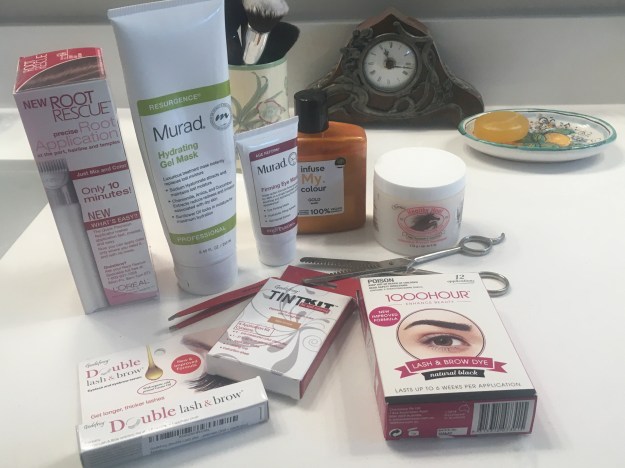
My current arsenal includes the following. What’s in yours, ladies?

L’Oreal Root Rescue.  Some wag recently wrote, “In 8 weeks, 88% of blondes will cease to exist.”  I do not aspire to the Pandemic Punk look (dark roots and lighter hair) so upkeep is mandatory! My highlights are still intact but my base layer needs ongoing assistance.  A zigzag part is helpful camouflage, too.

Texturizing scissors – If you snip a few layers around your face it will help freshen your style until you can finally get to your stylist.  Give him/her a larger-than-usual tip when you go!

Tweezers.  Does it get any better than Tweezerman?

Brow/Lash serum.  To boost skimpy eyelashes and/or brows, I like Godefroy double lash & brow, which you can find on Amazon. It’s an organic caster oil formula, and I’ve found it doesn’t redden my eyelids the way RevitaLash does. It’s also a lot less expensive but, then again, it’s also less effective.  (Why is this not surprising?)

Brow tint. Also by Godefroy, their TintKit comes in a lot of colors and is easy to use.  Start conservatively, e.g. 2 minutes, if you want a subtle change.

1000 Hour Lash & Brow Dye doesn’t last nearly that long, but is good in a pinch if you have pale lashes like mine and want some definition without putting on mascara. (And seriously, who’s putting on a full face of makeup for days spent indoors?) It takes practice and you need to go slowly, one eye at a time.

Moisturizers and face mask (the indoor kind). I’m currently on a retinol regimen so I’ve pared down a lot of my skin care, but am still using a few Murad products.

Nail care – I’m cursed with thin nails and a short nail bed so they never look great au natural, and all this handwashing makes them even worse.  Hoping Healthy Hoof will help strengthen them. To compensate, my red OPI Big Apple toes add some much-needed glamour.

DIY lip scrub –  Mix a tiny amount of butter with cinnamon and sugar.  The grains rub off dry skin, while the butter smoothes it.  And it tastes great if you happen to swallow any.

DIY body scrub – Mix sugar with any household oil, e.g. canola, olive or grapeseed, until you have a smooth paste that’s not too runny.  Add a few drops of your favorite essential oil.

IMG-1792