Interfaith Voices: The Jewish New Year and the possibilities for transformation
by Sari Sapon-White
At sundown on Sept. 15, the Jewish New Year begins.
The first 10 days of the Jewish year, known as the “Yamim Norayim” (Days of Awe), begin with Rosh Hashanah and end with Yom Kippur, the Day of Atonement.
Rosh Hashanah (literally “the head of the year”) is a day to look back on the accomplishments as well as the disappointments of the previous year, and to look forward with hope to the new possibilities that lie ahead.
Unlike the secular New Year, it is not marked with late-night parties or resolutions. Jews typically welcome Rosh Hashanah with a festive family dinner, an evening service that introduces the special melodies that are sung at this season, and a blessing over sliced apples and honey in hopes that sweetness lies ahead.
This evening is followed by a full day (or two) of services that include singing, readings from the Hebrew Bible, and blowing the shofar (ram’s horn), dramatically awakening our spirit and readying us for a heightened level of self-awareness.
But that isn’t the endpoint — in one week it will be Yom Kippur, often considered the holiest day of the Jewish year. The intervening days are spent not in communal prayer but in private reflection.
We are to review our behavior over the past year and identify the ways in which we missed the mark or fell short of the morals and values we aspire to uphold.
While the ultimate purpose of this process is to make things right with God and be granted a new year of life, we are told that we cannot ask God to forgive our failings unless we first ask forgiveness of any fellow human beings whom we have mistreated. This process is known in Hebrew as “heshbon ha-nefesh,” an accounting of the soul.
Yom Kippur has an entirely different tone from Rosh Hashanah; it is marked by a complete fast, simple dress (often white) and a full day of services that include many penitential prayers.
It is an intense experience of prayer that urges us to take responsibility for the ways in which we have failed to be our best selves in our relationships with loved ones, friends, community members, strangers and God.
If it sounds hard, it is. It can feel grueling and emotionally painful. What carries me through is doing this in community with other Jews. When we recite long lists of the ways in which we have strayed, we say the words aloud in unison.
Certainly, no one of us has fallen short in all those ways, but by speaking them together we acknowledge our own failings and express support for those standing next to us who have different but equally challenging habits they also yearn to change.
As the sun begins to set, we hear the final blast of the shofar. Standing together, humbled and vulnerable, we hope to move closer to the version of ourselves we most wish to be in the world.
I recently heard a Jewish spiritual leader propose that we also use this time of year to ask ourselves if there is anything around us that is broken that we did not break, and then consider what we might do toward healing this brokenness.
Taking responsibility for social justice is a core tenet of Judaism, but I see tremendous value in adding this question.
The times we are living through are fraught with inequity, injustice and increasingly frightening manifestations of climate chaos; it feels right and timely to bring the focused intentionality of these days to a broader vision of transformation.
Sari Sapon-White of Corvallis is a writer who also tutors children preparing for their Bar and Bat Mitzvah. She is an active member of the local Jewish community.
This morning I received an email that leaves me speechless.
Nearly twenty years ago, my son’s friend suddenly and tragically developed lower-body paralysis that left him unable to walk. Of course, friends and family rallied around, donating time and money to help.
Since then, “C” has held down a steady job and gotten married. His wife works. His single mother continues to work and has an excellent income. This woman, someone I considered a friend in those years, pointedly dropped contact after I remarried, moved out of state, and ceased being “useful”. I haven’t heard from her in thirteen years. We are both on FaceBook and my birthday is two days before hers, so I know her lack of contact — even annual birthday wishes — is deliberate. Even when I’ve sent birthday wishes to her.
Back to this morning, when I received a group letter FundMe-type request to contribute to the cost of a new, $80,000 wheelchair-accessible van for the son, who is now nearly 40. WTF?!?
I am biting my lip and fingers to avoid sending her a blistering email in return, but am inclined to simply ignore it.
What would you do?
*”chutzpah” — roughly pronounced “hoots-pah”,ˈho͝otspə,ˈKHo͝otspə”, is a Yiddish word meaning nerve, gall, audacity, supreme self-confidence, and conspicuous boldness.
Finally — after two failed attempts at overseas travel this year — we recently enjoyed a Viking Ocean cruise to Britain and Norway. Here are 12 things I discovered:
Although I appreciated the gorgeous scenery, I realized I generally prefer exploring cities and towns where I can enjoy the culture and architecture and talk to locals we meet along the way.
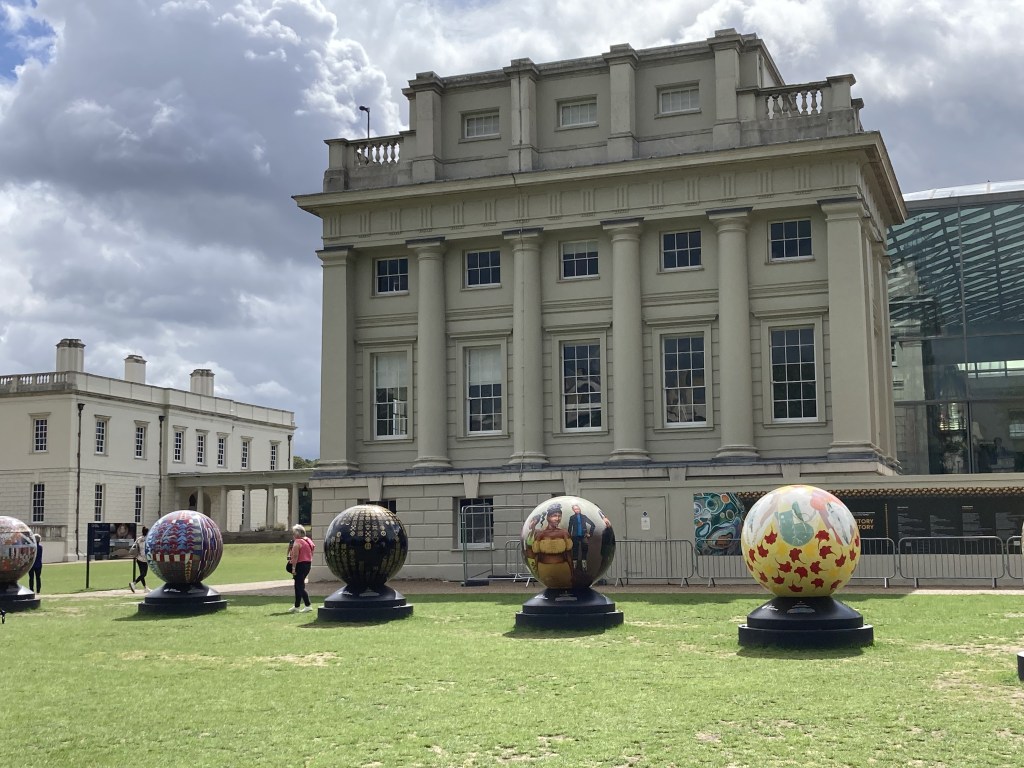
Art installation in Greenwich UK imagining a better world
2. Life’s much easier with two carry-on bags (one for clothes, one for toiletries, books, electronics, etc. vs checking luggage. Even a 19-day trip was manageable with two smaller bags.
Random photo of Kirkwall, Orkney Islands
3. Even so, always pack an extra folding bag. The sweatshirt I bought didn’t fit in my suitcase so I checked the suitcase on the return flight and used my extra tote as a carryon.
4. The Ring of Brodgar stones are older than Stonehenge.
Stromness: the third largest henge (circular enclosure) in Britain
5. Our ideal trip is about two weeks. Longer, and we get restless.
Yours truly in Leknes
6. Goats help maintain traditional Norwegian thatched roofs.
Supposedly, they actually put goats on the roof. No data on whether they fall off
7. Wristbands and ginger chewable Dramamine only go so far if the ocean is bumpy.
Mostly, it was calm and beautiful.
8. In medieval times, the following items were catapulted into enemy territory to speed victory, along with the usual rocks and boulders: rotting food, bees, baskets of snakes, body parts from corpses.
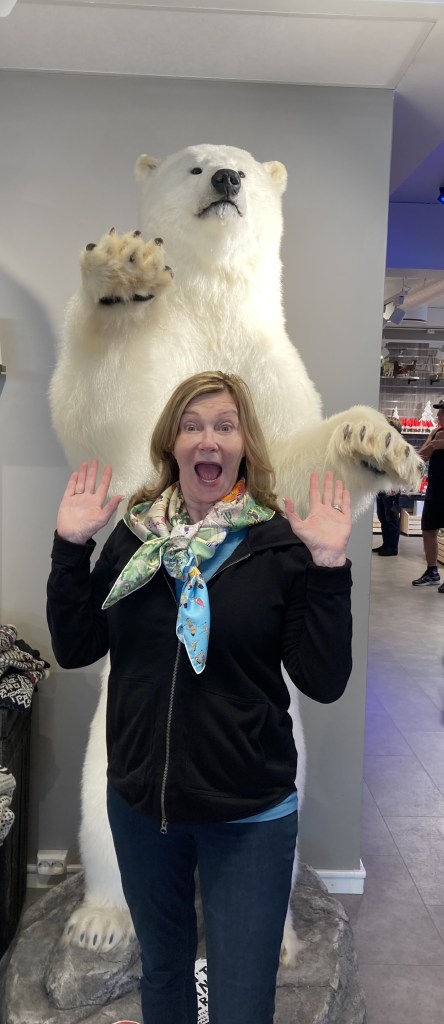
Taxidermy (including reindeer and elk) is popular in Norwegian gift shops
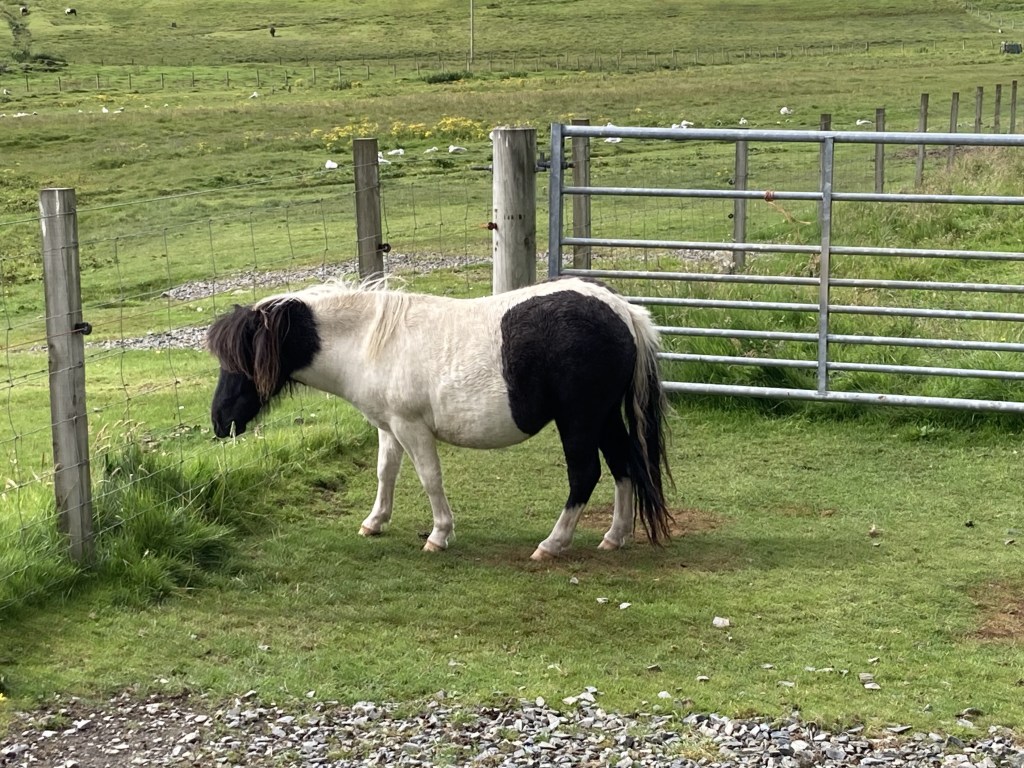
9. There are more Shetland ponies in The Netherlands than there are in the Shetland Islands.
Only 1000 in Shetland vs 50,000 in Holland and 15,000 in Britain
10. Pot bellies are much cuter on ponies than people.
Am I right?
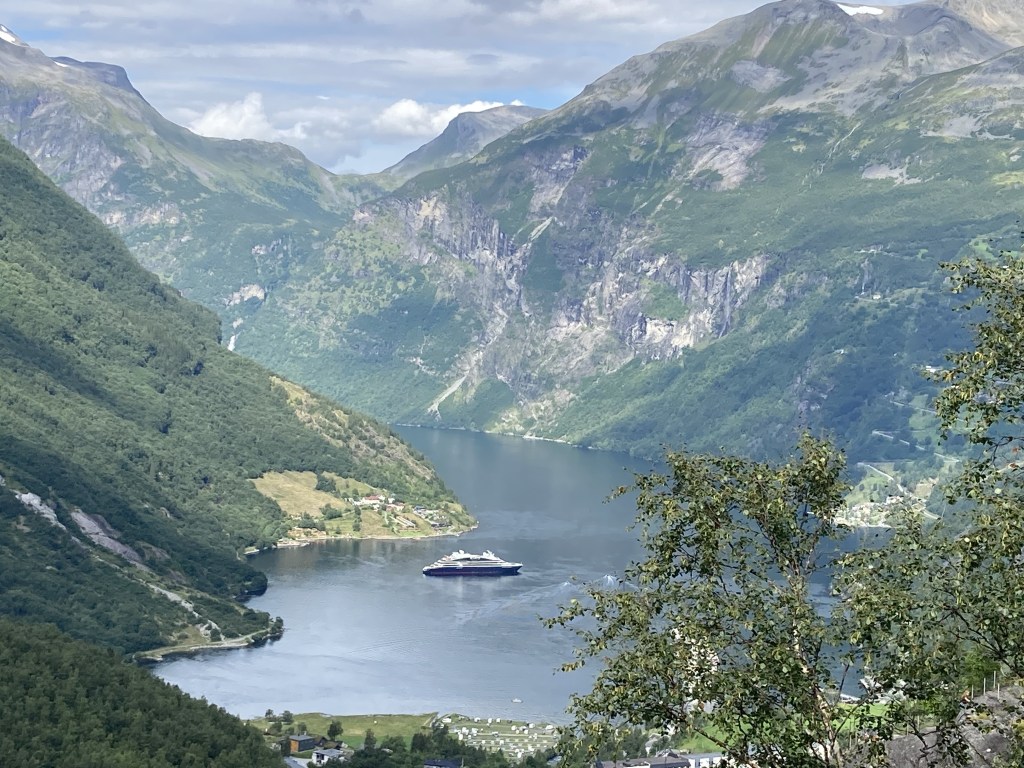
11. The Norwegian fjords, waterfalls and countryside are breathtaking.
12. Even an imperfect trip is better than no trip!
Geirangerfjord– 11 hairpin turns to get up this highMageroya
This article brightened my freakin’ morning; enjoy!
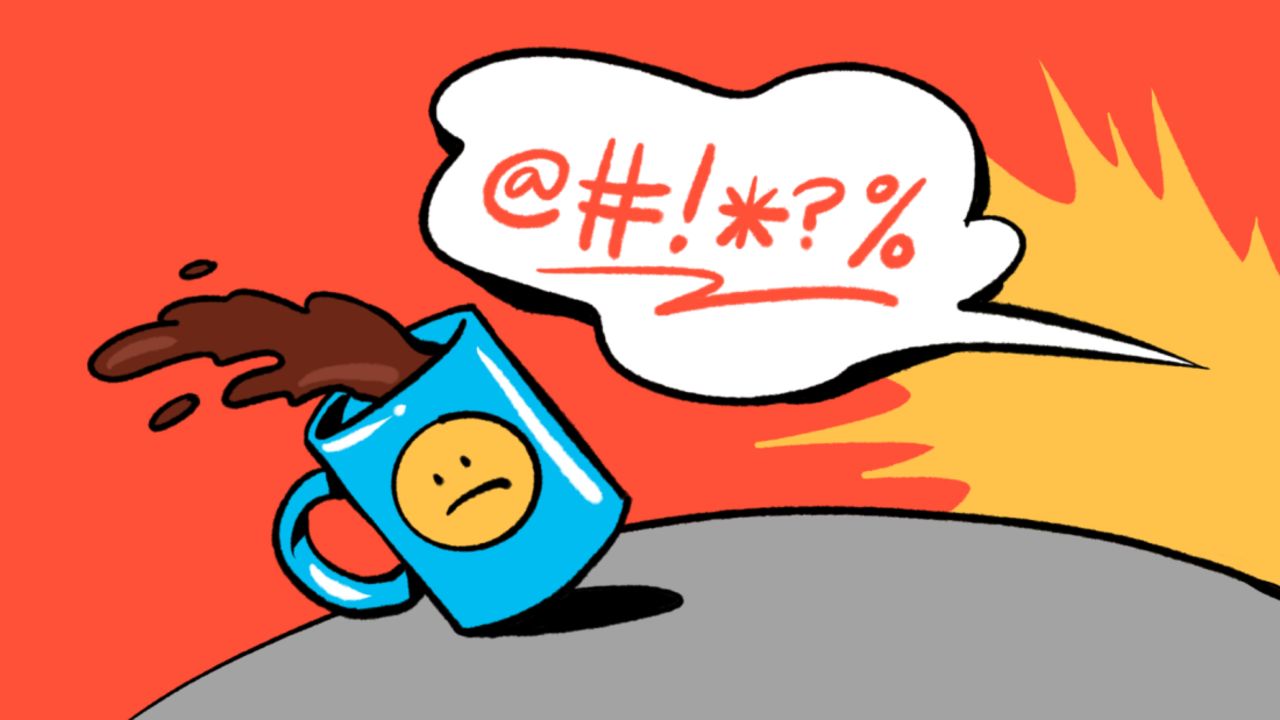
Why swearing is a sign of intelligence, helps manage pain and more
By Sandee LaMotte, CNN
Max Pepper/CNN
Polite society considers swearing to be a vulgar sign of low intelligence and education, for why would one rely on rude language when blessed with a rich vocabulary?
That perception, as it turns out, is full of, uh … baloney. In fact, swearing may be a sign of verbal superiority, studies have shown, and may provide other possible rewards as well.
“The advantages of swearing are many,” said Timothy Jay, professor emeritus of psychology at the Massachusetts College of Liberal Arts, who has studied swearing for more than 40 years.
“The benefits of swearing have just emerged in the last two decades as a result of a lot of research on brain and emotion, along with much better technology to study brain anatomy.”
1. Cursing may be a sign of intelligence
Well-educated people with plenty of words at their disposal, a 2015 study found, were better at coming up with curse words than those who were less verbally fluent.
Participants were asked to list as many words that start with F, A or S in one minute. Another minute was devoted to coming up with curse words that start with those three letters. The study found those who came up with the most F, A and S words also produced the most swear words.
That’s a sign of intelligence “to the degree that language is correlated with intelligence,” said Jay, who authored the study. “People that are good at language are good at generating a swearing vocabulary.”
Swearing can also be associated with social intelligence, Jay added.
“Having the strategies to know where and when it’s appropriate to swear, and when it’s not,” Jay said, “is a social cognitive skill like picking the right clothes for the right occasion. That’s a pretty sophisticated social tool.”
2. Swearing may be a sign of honesty
Science has also found a positive link between profanity and honesty. People who cursed lied less on an interpersonal level, and had higher levels of integrity overall, a series of three studies published in 2017 found.
“When you’re honestly expressing your emotions with powerful words, then you’re going to come across as more honest,” said Jay, who was not involved in the studies.
While a higher rate of profanity use was associated with more honesty, the study authors cautioned that “the findings should not be interpreted to mean that the more a person uses profanity, the less likely he or she would engage in more serious unethical or immoral behaviors.”
3. Profanity improves pain tolerance
And swearing doesn’t just help your endurance: If you pinch your finger in the car door, you may well feel less pain if you say ‘s**t” instead of “shoot.”
People on bikes who swore while pedaling against resistance had more power and strength than people who used “neutral” words, studies have shown.
Research also found that people who cursed while squeezing a hand vice were able to squeeze harder and longer.
Spouting obscenities doesn’t just help your endurance: If you pinch your finger in the car door, you may well feel less pain if you say “sh*t” instead of “shoot.”
Another study found people who cursed as they plunged their hand into icy water felt less pain and were able to keep their hands in the water longer than those who said a neutral word.
“The headline message is that swearing helps you cope with pain,” said psychologist Richard Stephens, the lead author of the three studies. Stephens researches swearing at the Psychobiology Research Laboratory at Keele University in Staffordshire, England.
Stephens says it works like this: swearing produces a stress response that initiates the body’s ancient defensive reflex. A flush of adrenaline increases heart rate and breathing, prepping muscles for fight or flight.
Simultaneously, there isanother physiological reaction called an analgesic response, whichmakes the body more impervious to pain.
“That would make evolutionary sense because you’re going to be a better fighter and better runner if you’re not being slowed down by concerns about pain,” Stephens said.
“So it seems like by swearing you’re triggering an emotional response in yourself, which triggers a mild stress response, which carries with it a stress-induced reduction in pain,” he added.
Careful, however, the next time you decide to extend your workout by swearing. Curse words lose their power over pain when they are used too much, research has also discovered.
Some of us get more out of swearing than others. Take people who are more afraid of pain, called “catastrophizers.”
“The research found men who were lower catastrophizers seemed to get a benefit from swearing, whereas men who are higher catastrophizers didn’t,” Stephens said. “Whereas with women there wasn’t any difference.”
4. Cussing is a sign of creativity
Swearing appears to be centered in the right side of the brain, the part people often call the “creative brain.”
“We do know patients who have strokes on the right side tend to become less emotional, less able to understand and tell jokes, and they tend to just stop swearing even if they swore quite a lot before,” said Emma Byrne, author of “Swearing Is Good for You.”
Research on swearing dates back to Victorian times, when physicians discovered that patients who lost their ability to speak could still curse.
“They swore incredibly fluently,” Byrne said. “Childhood reprimands, swear words and terms of endearment — words with strong emotional content learned early on tend to be preserved in the brain even when all the rest of our language is lost.”
5. Throwing expletives instead of punches
Why do we choose to swear? Perhaps because profanity provides an evolutionary advantage that can protect us from physical harm, Jay said.
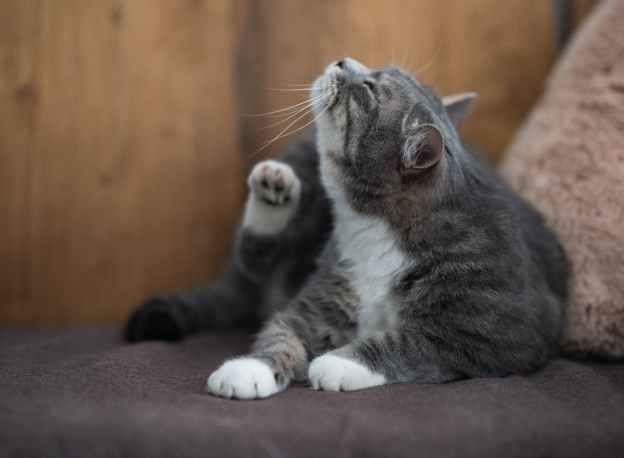
“A dog or a cat will scratch you, bite you when they’re scared or angry,” he said. “Swearing allows us to express our emotions symbolically without doing it tooth and nail.
“In other words, I can give somebody the finger or say f**k you across the street. I don’t have to get up into their face.”
Cursing then becomes a remote form of aggression, Jay said, offering the chance to express feelings quickly while hopefully avoiding repercussions.
“The purpose of swearing is to vent my emotion, and there’s an advantage in that it allows me to cope,” he said. “And then it communicates very readily to bystanders what my emotional state is. It has that advantage of emotional efficiency — it’s very quick and clear.”
A universal language
What makes the use of naughty words so powerful? The power of the taboo, of course. That reality is universally recognized: Just about every language in the world contains curse words.
“It seems that as soon as you have a taboo word, and the emotional insight that the word is going to cause discomfort for other people, the rest seems to follow naturally,” Byrne said.
It’s not just people who swear. Even primates curse when given the chance.
“Chimpanzees in the wild tend to use their excrement as a social signal, one that’s designed to keep people away,” Byrne said.
Hand-raised chimps who were potty-trained learned sign language for “poo” so they could tell their handlers when they needed the toilet.
“Chimpanzees in the wild tend to use their excrement as a social signal, one that’s designed to keep people away,” Byrne said. “And as soon as they learned the poo sign they began using it like we do the word s**t.”
Does that mean that we should curse whenever we feel like it, regardless of our environment or the feelings of others? Of course not. But at least you can cut yourself some slack the next time you inadvertently let an f-bomb slip.
Are mosquitos a worldwide phenomenon, or just a pesky pest here in the US?
Now that it’s full-on summer — and in honor of the forthcoming July 4th festivities — here’s a tip to avoid getting bitten.
According to interestingfacts.com, beer is their favorite beverage. Read on:
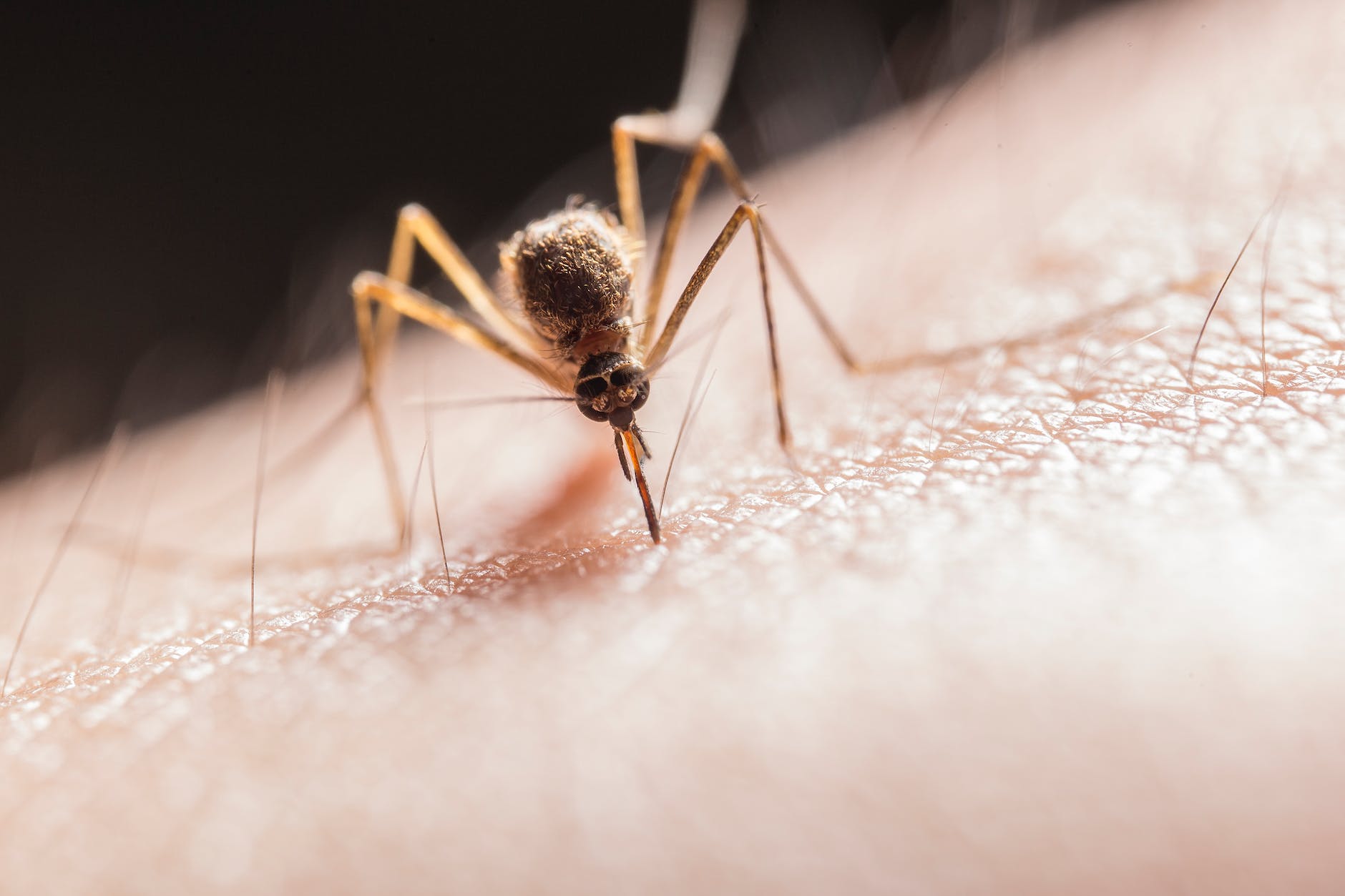
“There are a few ways to avoid the itch-inducing bites of summer’s biggest pest: the mosquito. Wearing long-sleeved apparel and dousing yourself in insect repellent can help, but avoiding some beverages — particularly alcohol — might further protect you. According to a 2010 study of mosquito biting preferences, beer makes humans more attractive to the paltry pests.
Researchers found that Anopheles gambiae, a mosquito species in the genus responsible for transmitting malaria, were more attracted to humans who had consumed beer (compared to those who consumed only water), and the results were evident as soon as 15 minutes after the humans began drinking. Other studies have produced similar findings; one examination of alcohol’s role in mosquito meal choices found that those who imbibed just one 12-ounce beer were more likely to be pestered by the insects. It’s unclear why beer primes humans to become bite victims, though some scientists believe it could be partly linked to body temperature; alcohol expands the blood vessels, a process that slightly increases the skin temperature and also makes us sweat — two factors that may attract more hungry mosquitoes.
For being such tiny insects, mosquitoes are incredibly effective in their ability to feast on larger prey. Their proboscises — aka mouths — are created from a complex system that includes six needlelike mouthparts called stylets; when a mosquito bites, the stylets are used to hunt for nearby blood vessels. That makes a mosquito’s job of finding food quick and easy work — a necessity when dinner comes with a risk of being swatted.”
Unless you die young, you’re likely to grow old. And although this is not without challenges, there are numerous upsides including financial security, learning to say “no” to people, experiences or activities you simply don’t enjoy, and the resultant contentment that comes from being true to yourself.
Credit: Heritage Images/ Hulton Fine Art Collection via Getty Images
A common misconception is that our predecessors lived brutish lives cut short by disease and war. While modern medicine has certainly expanded life expectancy, many people in the past lived as long as people live today. For example, some ancient Roman offices sought by politically ambitious men couldn’t even be held until someone was 30.
When scientists analyzed the pelvis joints (a reliable indicator of age) in skeletons from ancient civilizations, they found that many people lived long lives. One study of skeletons from Cholula, Mexico, between 900 and 1531 CE found that a majority of specimens lived beyond the age of 50. Low life expectancy in ancient times was more the result of high infant mortality rates than of people living unusually short lives. Modern science has helped more humans survive our vulnerable childhood years and life expectancy averages have risen as a result.
The amount of sleep each of us needs is only altered during childhood and adolescence as our bodies require more energy to do the tough work of growing. Once we’re in our 20s, humans require the same amount of sleep per night for the rest of our lives (though the exact number of hours differs from person to person). In fact, the elderly are more likely to be sleep-deprived because they receive lower-quality sleep caused by sickness, pain, medications, or a trip or two to the bathroom. This can be why napping during the day becomes more common as we grow older.
While we’re likely to get shorter as we age, some bones keep growing. A 2008 study for Duke University revealed that skull bones continue to grow, with the forehead moving forward and cheek bones moving backward. Unfortunately, this imperceptible bit of facial movement exacerbates wrinkles, because as the skull shifts forward, the overlying skin sags.
The pelvis also keeps growing throughout our lives. Scientists analyzing the pelvic width of 20-year-olds compared to 79-year-olds found a 1-inch difference in width, which adds an additional 3 inches to your waistband. That means our widening in the middle as we age isn’t our imagination — or about a slower metabolism.
While our hips get bigger, our pupils get smaller. The human pupil is controlled by the circumferential sphincter and iris dilator muscles, which weaken as we get older. Because of this loss of muscle function, pupils get smaller as we age, and are also less responsive to light. Smaller pupils make it harder to see at night (hello, reading a menu in a dark restaurant?!), so people in their 60s need three times as much light to read comfortably as people in their 20s.
Although the body experiences some slowing down as we age, growing old isn’t all bad news. Researchers from the University of Queensland found that older people had stronger immunities than people in their 20s, as the body keeps a repository of illnesses that can stretch back decades. This extra line of defense begins to drop off in our 70s and 80s, but until then, our bodies generally just get better and better at fighting off disease due to biological experience. Additionally, as we age we experience fewer migraines, the severity of allergies declines, and we produce less sweat. Older people also exhibit higher levels of “crystalized intelligence” (or what some might call “wisdom”) than any other age group.
If age is just a number, in the cosmic view human age is rather insignificant. The atoms that make up the human body are already billions of years old. For example, hydrogen — one of the key components of our bodies — formed in the Big Bang 13.7 billion years ago. Likewise, carbon, the primary component of all known life, formed in the fiery cauldron of stars at least 7 billion years ago.
Which, comparatively speaking, makes us all universally young. I find that strangely comforting!
On a recent neighborhood walk with dear friends B and D, I was gently reminded that I hadn’t, ahem, posted anything in quite a long time.
These walks are especially lovely in the spring, when yards are bursting with colorful blooms and flowering trees, and we share the street with our local marauding wild turkeys (flock? rafter? gaggle? the Internet seems undecided.)
Neighborhood boys out for a stroll
Mixing metaphors, I headed down the turkey rabbit hole to uncover the following facts:
An adult wild turkey has about 5,500 feathers (did someone actually count them, and what kind of a job is that?), including the 18 tail feathers that make up the male’s distinct fan. Many of the feathers are iridescent.
Wild turkeys can fly and have a top flight speed of about 55 miles per hour.
Their powerful legs can run at speeds up to 25 miles per hour. (In our neighborhood, they never seem to move faster than a leisurely stroll.)
The average lifespan of a wild turkey is three to five years, and the oldest known wild turkey lived to be about 13 years old. They weigh from 5-20 pounds.
Wild turkeys see in color and have excellent daytime vision– three times better than a human’s eyesight. However, they have poor night vision and become warier as it grows darker.
Found any good grubs lately?
Most of their diet is grass and grain, but wild turkeys will also eat insects, nuts, berries, and small reptiles. Preferred feeding times are early morning and evening.
A wild turkey’s gobble can be heard up to one mile away and is a primary means for a tom to communicate with his harem of hens. The calls also warn other toms away from territory already claimed.
During the winter months, hens and toms live in separate flocks. As the weather warms up, males leave their winter flock and move to mating grounds to attract females. (Think spring break with feathers!)
Male turkeys will mate with as many female turkeys as possible. (Are hens just more selective?)
The wild turkey’s bald head– red, pink, white or blue– and fleshy facial wattles can quickly change color with excitement or emotion. The flap of skin that hangs down over a turkey’s bill is called a snood and can also change color, shape, and size based on mood and activities.
Wild turkeys are very social, making sounds that communicate a range of meaning from calling in their young to mating calls. Sounds include gobble, yelp, cluck, chump, hum, purr, putt, cackle, and kee-kee.
Adult male turkeys are called toms, and females are called hens. Wild turkey babies are called poults, juvenile males are jakes, and juvenile females are jennies.
Still curious? Check outthespruce.com for more fun facts.
While some people enjoy sprinkling this herb on guacamole and tacos, others can’t stand its “soapy” flavor. The reason? Genetics. According to a 2012 study, people with certain olfactory receptor genes — about 20% — are more likely to detect cilantro’s aldehydes, compounds also found in common household cleaning agents and perfumes. Feel strongly? You’re not alone: Facebook’s I Hate Cilantro page has more than 26,000 likes.
2. Why does OJ tastes horrible after you brush your teeth?
Blame the toothpaste ingredient sodium lauryl sulfate (SLS) which produces the foam created during brushing. SLS temporarily blocks the tongue’s sweet receptors, while also destroying compounds in saliva that suppress our bitter receptors. The result? A double-whammy for sensitive taste buds, leaving us to taste only citric acid without the oranges’ natural sweetness.
Does your mouth ever feel coated or “chalky” after eating these nutritious greens? The effect, known as “spinach tooth,” results from the vegetable’s oxalic acid and calcium; combined as we chew, they produce easily detectable crystals of calcium oxalate, which could cause problems for anyone susceptible to kidney stones. Boiling, steaming, or adding lemon juice to spinach helps offset the unpleasant mouthful that accompanies the benefits of iron, fiber, and vitamin C.
Think twice before serving asparagus to company! An acid found solely in this particular vegetable breaks down into sulfur byproducts upon digestion and surfaces in urine as soon as 15 minutes after eating. Not everyone detects this aroma: A 2016 study found that roughly 60% of participants didn’t smell anything funky.
Ever overindulged in too many chips or fries? Besides feeling guilty, you may also notice swollen fingers, toes, or lips, a condition known as edema. The puffiness results from our body’s response to excess sodium: it pumps more water into our bloodstream, resulting in fluid-bloated tissue. Drinking lots of water, eating high-potassium foods, and sweating it out in the gym can help flush out bloat.
After enjoying pesto, have you experienced a metallic aftertaste that can linger for up to two weeks? After reports of “pine nut syndrome” or “pine mouth” first surfaced in Belgium, investigators followed the trail to the Far East, where seeds of the Chinese white pine (Pinus armandii) appeared to be the source of this unusual but harmless affliction. The cause is still unclear, although one professor at the University of Idaho suggested that the seeds stimulate a hormone that increases the production of bitter-tasting bile.
This isn’t the result of consuming a specific food, but a possible outcome of residue lingering on hands and arms. Lemons, limes, and other citrus fruits contain chemicals called furanocoumarins which can produce poison ivy-like effects of discoloration, inflammation, and blistering when exposed to the sun’s ultraviolet rays. Technically called phytophotodermatitis, the condition is also known as “bartender dermatitis”, a reference to preparing citrus-infused cocktails in tropical locations. While prevention isn’t as simple as wiping off the juice — more thorough soap-and-water scrubbing is required — the rashes are usually treatable with cold compresses and topical creams.
Less than a week after returning home from our “trip that wasn’t”, my husband fell and broke his wrist as well as sustaining a small but painful crack in one of his vertebrae. It’s been nonstop hospital stays, physical therapy, doc appointments, shopping for various meds and home care equipment, etc.
Hence, the lack of posts.
It’s a vivid reminder that our health is everything. And that caregivers, whether professional or family, have a really difficult job to do. Hats off to those who work in nursing and healthcare, or anyone caring for a parent or partner.
Dear older readers: Get those bone scans, keep up with annual screenings, stay active mentally and physically, and remain motivated by always having something you’re looking forward to doing in the future.
And you youngsters: Don’t be too smug; you’ll get older too, if you’re lucky!
There’d been warning signs: first, Dear Husband had some sinus issues ten days ago. Then I came down with bronchitis a week ago, but I was taking antibiotics and feeling better. DH had a low temperature and a cough, but our Covid tests were negative and we figured we could tough it out: After all, it was a long cruise and we could rest on the ship until we were both 100%. So we packed at the last minute and decided to go for it.
Mother Nature had other plans.
The forecast had been for light snow Wednesday night into Thursday morning. The airport was expected to be clear. Our flight was on schedule when we left the house Thursday morning five hours before the noon departure to allow for rush hour traffic.
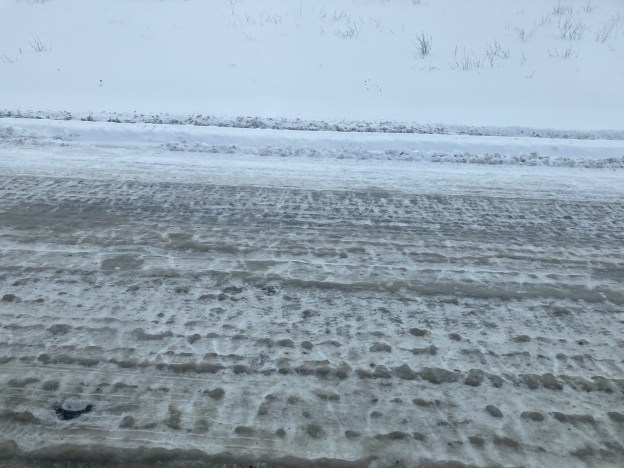
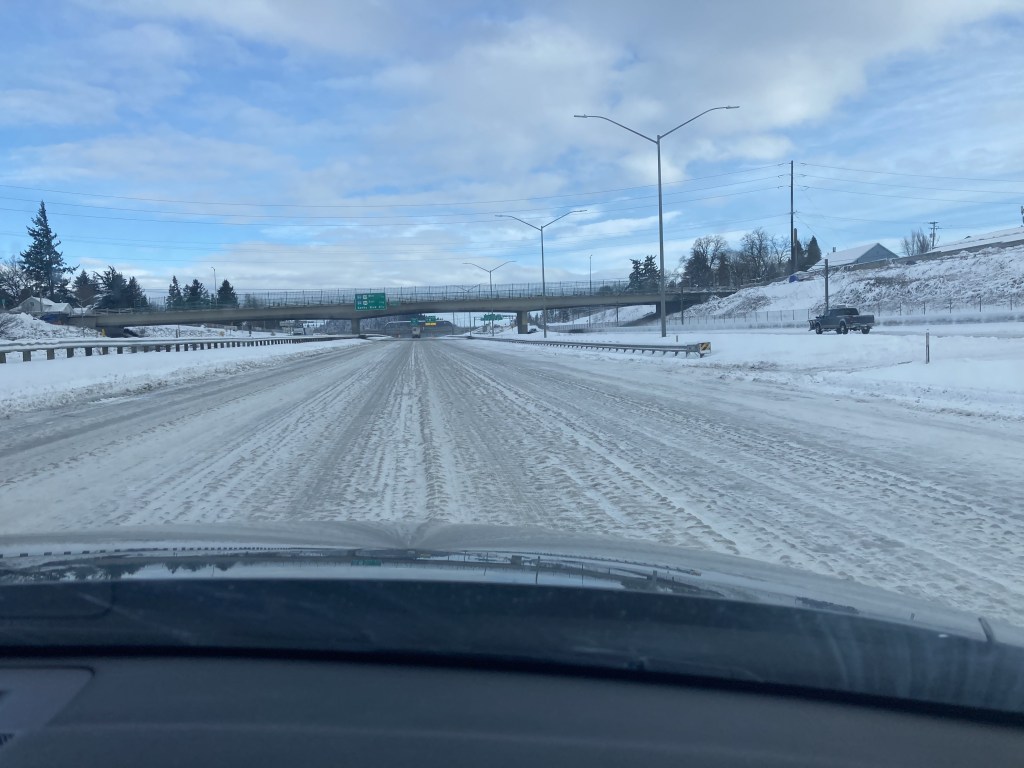
The first hour of the drive was fine; just some flurries. But problems started when we hit the main highway. (Note to ODOT: it’s winter in Oregon; do you not have salt trucks??). After about a half hour, we started to see trucks on the side of the road affixing chains. A few that seemed stalled or stuck. And the road suddenly became a frozen wasteland.
Fairly soon, traffic stopped altogether and we crawled along for another hour, passing more and more stalled trucks and abandoned cars. Nonetheless, my intrepid husband steered us safely to PDX, where we parked and made our way to the ticket counter. This was now 10:30 so we were cutting it a bit closer than ideal but the first flight was still showing as “on time”.
Until it wasn’t. It then transpired that there were no flights for that day or the next to get us down to Chile where the cruise was departing. All in all, 188 flights had been canceled, on a day described as the “second worst snow day in Portland history”. Lucky us.
With no way to get to Chile, we had to cancel the entire trip.
Dispirited, we left the airport for the two-hour drive home. The skies had cleared, the roads looked ok, traffic was moving.
Until it wasn’t. We were still on the airport exit road when everything suddenly stopped. We could see there’d been an accident not far in front of us. But a bright yellow emergency vehicle was arriving so that looked promising. There was an abandoned car to our right, and a black Jeep had tried to drive around a truck further up the road and slid into it. The truck behind that truck couldn’t move either.
So we sat. And sat. And, little by little, the emergency guys moved the wrecked cars off the road and then hooked up all the stopped cars to drag them one at a time up a hill to the left of the trucks– which still weren’t moving even after the wrecks had been cleared. We never did find out why.
Just as we were next in line to be towed to the main road, the ODOT guy told us it would be quite a while so we should back up to the access road instead. This put us in the wrong direction, leading us to more icy back roads before we could get back to a highway.
We made it home ten hours after we’d left and collapsed into bed, where we spent most of yesterday. Next comes the fun part of sorting out the trip cancelation insurance.
On balance, we’ve been lucky. In all our travels, this is the first time we’ve been unable to get to our destination, and nobody plowed into us on those frozen roads. But going forward, we will plan to arrive at least a day before we need to be somewhere — especially if it’s a destination with limited flight options.
















 olderfatterhappierdotcom