Category Archives: Health

Good News Monday: Stemming the Tide

Amid concerns about the spread of COVID-19, here’s a practical and uplifting guide to managing our anxieties.

As the author writes in today’s New York Times, the good news is that “even in the face of fear, we do have the capacity to act in ways that would help limit contagion during an epidemic.  (If link doesn’t work, here is the article.)

(NY Times)

Are you fearful about catching the coronavirus? Are you anxious about whether you’re properly prepared for its arrival? You’re in good company.

In the past few days, I’ve had more than a few patients call or email to ask me to double or even triple the dosage of their prescription antidepressant or anti-anxiety medication so that they could have a bigger supply on hand “just in case.”

Throughout the country, people are stockpiling food in anticipation of a shortage or a quarantine. Supplies of Purell hand sanitizer flew off the shelves in local pharmacies and are now hard to find or even unavailable online.

I understand the impulse to secure one’s safety in the face of a threat. But the fact is that if I increase the supply of medication for my patients, I could well deprive other patients of needed medication, so I reluctantly declined those requests.

As a psychiatrist, I frequently tell my patients that their anxieties and fears are out of proportion to reality, something that is often true and comforting for them to realize. But when the object of fear is a looming pandemic, all bets are off.

In this case, there is reason for alarm. The coronavirus is an uncertain and unpredictable danger. This really grabs our attention, because we have been hard-wired by evolution to respond aggressively to new threats. After all, it’s safer to overact to the unknown than to do too little.

Unfortunately, that means we tend to overestimate the risk of novel dangers. I can cite you statistics until I am blue in the face demonstrating that your risk of dying from the coronavirus is minuscule compared with your risk of dying from everyday threats, but I doubt you’ll be reassured. For example, 169,000 Americans died by accident and 648,000 died of heart disease in 2017, according to the Centers for Disease Control and Prevention. As of Sunday morning 19 Americans had died from the coronavirus.

The reason this probably doesn’t make you feel better is simple: Just as we tend to assume the worst about novel threats — the safest, if not the most statistically justifiable, strategy — we tend to underestimate the danger of familiar risks because we are habituated to them. We are not very rational when it comes to assessing risk.

The good news is that even in the face of fear, we do have the capacity to act in ways that would help limit contagion during an epidemic. Specifically, we can behave altruistically, which benefits everyone.

For example, research shows that when people are told that it is possible — but not certain — that going to work while sick would infect a co-worker, people are less willing to stay home than when they are reminded of the certainty that going to work sick would expose vulnerable co-workers to a serious chance of illness. Stressing the certainty of risk, in other words, more effectively motivates altruism than stressing the possibility of harm.

The lesson for the real world is that health officials should be explicit in telling the public that selfish responses to an epidemic, such as going to work while sick or failing to wash your hands, threaten the health of the community.

There are other ways to encourage selfless behavior. For example, another study examined the neural activity of people while they played a game in which they made either generous or selfish choices to award or withhold money. The researchers found that when subjects made selfish decisions, the brain’s reward center was activated, whereas when they made generous decisions, a region of the brain implicated in empathy lit up. This suggests that people are more likely to be altruistic if they are primed to think of others and to imagine how their behavior might benefit them.

There is no question that we can all be encouraged to act in the interest of our fellow humans during perilous times. Specifically, public figures need to convey loudly and clearly that we should not go to work or travel when we’re sick and that we should not hoard food and medical supplies beyond our current need — not just give us health statistics or advise about how to wash our hands.

But that will require morally authoritative leaders who can inspire the better angels of our nature by reminding us that we are all in this epidemic together.

Richard A. Friedman is a professor of clinical psychiatry and the director of the psychopharmacology clinic at the Weill Cornell Medical College, and a contributing opinion writer. 

Priorities

In the midst of gloom, doom and general mayhem, I read something yesterday that provided a glimmer of humor.

Apparently observed amidst the panicky consumers laying siege to groceries, pharmacies and big box stores: a man stocking up on 16 boxes of condoms and a large tub of coconut oil.

When the apocalypse comes?

silhouette photo of man leaning on heart shaped tree

Photo by Rakicevic Nenad on Pexels.com

Good News Monday: Rotten Luck

Garbage: it’s not just for landfills anymore! A company in New York City has created an all-purpose cleaner made from 97% food waste plus 3% sustainably sourced natural fragrance. Lab tests indicate that it’s 99% effective at cleaning tough dirt from multiple surfaces.

Rather than adding water — which accounts for as much as 90% in most household cleaners — all the liquid in this product is directly derived from the recycled food waste.

And instead of a plastic spray bottle that might or might not get recycled, the product comes in a refillable aluminum bottle.

How’s that for cleaning up a mess?

woman standing holding chopping board

Photo by mentatdgt on Pexels.com


Good News Monday: Helping Nurses Help Others

Nurses become nurses to help people. But they can spend up to 30% of their time on unsatisfying tasks that don’t involve seeing patients, such as delivering lab samples and gathering supplies.

Now, a robot named Moxi proposes to change that.  Designed to be socially intelligent,  Moxi debuted at Texas hospitals in September 2018. The robot features an expressive face with an arm, hand, and four wheeled base, and can use its hand to pick up medical supplies and deliver them to nurses or doctors; remove bags of soiled linen; and bring samples to on-site labs. This helps hospitals manage their workflow and frees up more staff time for patient care.

A.I. programming even allows Moxi to learn from human teachers. Someone, please teach it to cook appetizing hospital meals!

Meet Moxi: Our Socially Intelligent Robot Supporting Healthcare Teams

The FOUE Effect

My colonoscopy last week prompts me to address a phenomenon I call “FOUE”, a common issue in modern life.

FOUE, pronounced “phooey” is an acronym for Fear of Unpleasant Experiences. Most of us suffer from this condition at one time or another, especially if an outcome is potentially scary:

  • Putting off a doctor visit or mammogram
  • Noticing our waistband is tight but not getting on the scale to see how bad it is (ignorance is temporary bliss)
  • Having a sinking feeling that our boss isn’t happy with us, but not asking directly
  • Avoiding confrontations with our nearest and dearest
  • Not opening a bill we know will be high, or a letter from the revenue service

As the sages say, knowledge is power.  If we confront the thing we’re worried about, we will at least know where things stand and be able to take action.

So, back to the colonoscopy and why people avoid them. If you’ve had one, you know it’s generally unpleasant — not the actual procedure, because you sleep through it, but the prep in which you drink gallons of liquid, take laxatives, and spend a day or two in the bathroom.  (Hint to you over-50’s: buy some diaper rash cream before your prep. You know what I’m talking about.)

Happily, there’s a newer option that makes this a little less icky.  Called HygIEacare, the process lets you avoid drinking the nasty prep liquid and instead have your insides flushed with warm water to make sure everything is nice and clean.

You sit in a sort of bathtub, with a pillow to lean back on, for about an hour, and can read and relax (more or less) while water flows into your tush and which you then expel whenever you feel the urge, as it were.  I won’t say it’s delightful, but it’s definitely an improvement. Highly recommended if it’s an option where you are, although it’s pricey ($245 in Austin) and not covered by insurance.

(Above, before the event: the water system, tub, me trying to relax)

The upshot: everything went well, which I attribute to taking a daily probiotic and eating more fiber than I had the previous time (five years ago).

Coincidentally, last Friday was also the 15th anniversary of my divorce from my first husband, a real a*hole. All in all, a shitty day … in a good way!

Happy Blue Year


Good News Monday: You’ve Got Some Nervines!

Got stress? Lately I’ve seen several mainstream press mentions of nervines, natural herbs that are reported to help support the nervous system.

These include tonics made from organic skullcap and oat tops, mildly calming herbs such as catnip and chamomile, and stronger relaxants such as valerian root and hops.

Lavender and chamomile tea are pretty mainstream these days but here are several I didn’t know about, per a few websites. Many are staple folk remedies that have been used for centuries.

Have any of you tried any of these? I can’t personally vouch for them and since herbs aren’t regulated the way drugs have to be, it’s always wise to consult a physician about dosing and possible side effects. Still, I’m intrigued. Any recommendations?

Organic skullcap in bloom with purple flowers

  • Oat tops – Although they may not produce an immediate physical feeling of relaxation, oat tops are called a superfood for the nervous system, meant to support nerve functioning over time. Suggested for anyone who is overworked or relies on caffeine to get through the day, this herb is said to calm the nerves, reduce fatigue, relieve emotional instability, and help restore peace and tranquility to over-stressed and chronically upset people.
  • Skullcap – Helps relieve occasional tension and stress, circular thoughts, and nervousness. Can be used throughout the day during stressful situations or at night before bed to calm worried thoughts. I’m curious to try this one. Considered to have anti-spasmodic and anti-inflammatory properties, herbalists recommend skullcap for muscle tension, insomnia, chronic headaches and relaxation.
  • Chamomile – A classic, relaxing nighttime tea, the herb is also helpful for relieving mild daily mental stress.  If you don’t like the taste, try adding a little lemon and honey.
  • Lavender – This lovely calming herb is often used in aromatherapy applications. Wonderful in the bath or shower, massage oils, pillows, room sprays, and fragrance.
  • Lemon balm – Sunshine in plant form, this citrusy herb helps with nervous exhaustion, gloom, and restlessness, while also providing pure aromatic pleasure. Rub a leaf between your fingers and inhale deeply for an immediate mood boost.
  • Catnip – Gentle, calming herb suggested for sleeplessness in children and the elderly. Are we all cats at heart?
  • California poppy – Used for its calming properties, this plant helps promote relaxation in those seeking rest. Picture that wonderful scene in The Wizard of Oz!
  • Passionflower – Considered helpful for relieving general tension, occasional nervous restlessness, and supporting restful sleep.
  • Hops – With a distinctive flavor and action known well by beer drinkers everywhere, this plant supports relaxation and helps calm a nervous stomach.
  • Valerian – When sleep seems impossible thanks to nervous energy and a brain that won’t shut off, this potent herb encourages relaxation. Caution: for some people, valerian can have the opposite effect, causing stimulation and even more anxiety.  If this happens, an herbalist can suggest something else.

Wishing you all a relaxing, stress-free New Year.  We all deserve one! xx Alisa

Good News Monday: The Future Looks Less Sh**ty

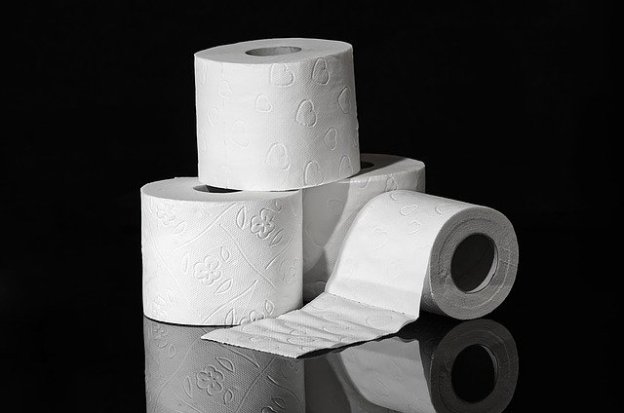
Breaking news: Scientists have developed a way to keep poop from sticking to toilet paper. (Does this make your day, or what?!)

Apparently, the slippery spray-on coating — like Teflon for TP — could prevent bacteria build up, reduce the amount of water needed to flush, and leave the toilet cleaner.

Want to read the whole story? Click here.

white toilet paper

Photo by hermaion on Pexels.com

The Ick Factor

Something new to worry about — with an easy fix.

According to a microbiologist, we should be washing all our towels after three uses, max.  That’s because damp towels are breeding grounds for bacteria, which we’ll then transfer to our bodies. Yuck, right?

The solution: sniff your towel. If it stays damp too long it will develop an odor, which is your cue to wash it, pronto.

bathroom bathtub ceramic clean

Photo by Pixabay on Pexels.com