Formerly a creative director and writer at NY and NJ ad agencies, I'm now retired and living in Oregon, USA, with my husband and countless dust balls.
With this blog, I specifically hope to reach "mid-century moderns" -- women born in the '50's -- with content and observations about the issues we deal with every day. But I welcome all readers of any age, sex, orientation, etc… you youngsters will eventually be my age too, and I love reading everyone’s comments!
A quick refresher on how to add or subtract pounds/kilos visually
COLOR
Light colors make you look larger. Darker colors make you look smaller. Use them to call attention to areas you want to highlight or minimize.
SHAPE
Garments that are boxy and shapeless add weight, though we tend to hope they disguise extra pounds. Longer lengths, such as a jacket that falls below the hips, elongate your silhouette.
FIT
Avoid squeezing into anything too tight. One size up will be more comfortable as well as more flattering. If you want to add curves this principle still applies; too-tight clothing will only emphasize your shape.
FABRIC
It’s no surprise that thick, bulky fabrics (I’m looking at you, teddy bear coats!) add literal inches.
DESIGN
Single-breasted jackets have less fabric around the mid-section than double-breasted ones do. And the additional buttons on a double-breasted style call attention to the bust and belly, especially if they’re metallic.
VERTICAL vs HORIZONTAL
Vertical lines elongate; horizontals widen. This is not just about actual stripes; a contrast-color belt creates a horizontal, as does an outfit with multiple hem lengths. If you love horizontal stripes, as I do, add a long solid-color cardigan to minimize the pattern and create a vertical line.
For the leanest look, stay within one color palette (including shoes) and add visual interest and/or color with jewelry or a scarf near the face.
Instead of obsessing about gas prices, Omicron, the stock market, our excruciatingly slow home renovation, losing those pandemic pounds, and all the other anxieties keeping me from a good night’s sleep, I will remember that I am not fighting or fleeing for my life.
May all our collective prayers for peace in Ukraine be answered.
Admittedly, it’s pretty difficult these days to think of any good news. My brain is consumed with thoughts of Ukraine, as I’m sure yours is as well.
But if drinking a little wine is helping the world seem a little less terrifying, apparently there’s a health benefit as well. Read on, and sip with impunity.
NEW ORLEANS — Enjoy a glass of vino with your meal every now and again? Turns out you might be doing your body good. Researchers from Tulane University report that drinking wine with dinner could help stave off diabetes.
Compounds in grape skin combat the metabolic disease by reducing blood sugar levels, say scientists. But drinking beer or liquor with food increases the risk.
The finding is based on data from 312,000 British residents who describe themselves as regular drinkers. Those who had a glass of wine or two — particularly red — at mealtimes were 14 percent less likely to develop the metabolic disease over the next decade.
“Drinking moderate amounts of wine with meals may prevent Type 2 diabetes if you do not have another health condition that may be negatively affected by moderate alcohol consumption and in consultation with your doctor,” says lead author Dr. Hao Ma, a biostatistical analyst at the Tulane University Obesity Research Center, in a statement.
Good news for wine drinkers
Wine is rich in healthy plant chemicals including resveratrol, which acts like an antioxidant. Red varieties are particularly abundant in the compound.
“The effects of alcohol consumption on health have been described as a double-edged sword because of its apparent abilities to cut deeply in either direction – harmful or helpful, depending on how it is consumed,” says Ma. “Previous studies have focused on how much people drink and have had mixed results. Very few studies have focused on other drinking details, such as the timing of alcohol intake.”
Moderate drinking is defined as a small glass of wine (150ml) or other alcoholic beverage daily for women, and up to two for men.
“Clinical trials have also found that moderate drinking may have some health benefits, including on glucose metabolism,” adds Ma. “However, it remains unclear whether glucose metabolism benefits translate into a reduction of type 2 diabetes. In our study, we sought to determine if the association between alcohol intake and risk of type 2 diabetes might differ by the timing of alcohol intake with respect to meals.”
The participants were tracked for about eleven years on average. They did not have diabetes, cardiovascular diseases or cancer at the outset. Their average age 56, slightly more than half were women and 95 percent were white. Those who reduced alcohol consumption due to illness, doctor’s advice or pregnancy were excluded.
During the follow-up period about 8,600 developed Type 2 diabetes. Those who drank with their meal — rather than without eating food — cut their risk by 14 percent. The potential benefit was evident only among the former group. Specific times were not collected. It was also mainly among those who drank wine rather than other types of alcohol.
Alcohol still raises risks of many other conditions
While the finding is good news for wine lovers, researchers still say consuming alcohol is best in moderation. That’s because it’s also linked to high blood pressure, obesity, stroke, breast cancer, liver disease, depression, suicide, accidents, alcohol abuse and alcoholism. The risks increase as the amount of alcohol an individual drinks rises. For some cancers and other health conditions, the risk increases even at very low levels of alcohol consumption – less than one drink daily.
The American Heart Association and the US Centers for Disease Control and Prevention (CDC) recommend that adults who do not drink alcohol should not start. Among those who drink alcohol regularly, they should talk with their doctors about the benefits and risks of consuming alcohol in moderation.
Some people should not drink at all, including women who are pregnant or trying to get pregnant, people under the age of 21 and people with certain health conditions.
Professor Robert Eckel, of the University of Colorado, who was not involved in the study, says the relationship between alcohol and Type 2 diabetes remains controversial. Eckel is a former president of the American Heart Association. “These data suggest that it is not the alcohol with meals but other ingredients in wine, perhaps antioxidants, that may be the factor in potentially reducing new-onset type 2 diabetes,” he notes. “While the type of wine, red versus white, needs to be defined, and validation of these findings and mechanisms of benefit are needed, the results suggest that if you are consuming alcohol with meals, wine may be a better choice.”
The study was presented at the American Heart Association Epidemiology, Prevention, Lifestyle & Cardiometabolic Health Conference in Chicago.
South West News Service writer Mark Waghorn contributed to this report.
Do any of you watch The Marvelous Mrs. Maisel? One of the current storylines reminded me of a long-forgotten (subconsciously buried?) episode in my own life.
In the show, Joel’s interfering mother keeps trying to set him up with a “nice, appropriate, Jewish girl”, while he is secretly dating medical student Mei Lin, whose parents are the landlords of his Chinatown nightclub.
Flashback.
It was the 70s. I was in my early twenties, living in Manhattan, and had been seriously dating a Canadian artist for about a year who was not remotely Jewish and therefore not even borderline acceptable to my parents as a potential suitor despite his charm and talent.
My mother– never the most open-minded of people — opposed him sight unseen and started a campaign to “help” me come to my senses. This mostly took the form of not-so-subtle hints and comments. Then, one day, she learned that a neighbor’s father was in the hospital and his doctor was single and Jewish. Jackpot! My mother, never having met the man herself and knowing nothing else about him, told her neighbor to give the doctor my phone number — needless to say without my permission — even though she knew I was in a relationship.
I was livid. But it wasn’t the poor guy’s fault, so when he called I agreed to meet him for coffee.
Was he Prince Charming? Not in the least. I found him unattractive, timid, too old, and boring, and we had nothing in common except the same religion. I daresay he was not drawn to me either.
Ultimately, the artist and I broke up — for reasons having nothing to do with our families. But I’d learned my lesson: Keep my private life private unless I wanted to endure a boatload more unsolicited advice.
As a parent, I know it’s hard to see our kids making choices we feel are wrong for them. But unless their latest love interest is a criminal mastermind or serial killer, it seems wise to stay out of their relationships unless they ask for our opinions.
Who knows? With a little R-E-S-P-E-C-T, they might even listen.
Until last month, your strongest association with the sunflower might have been Van Gogh, who painted their exuberant brightness in Provence. I had no idea it was Ukraine’s national flower, did you?
These days, the sunflower has become a symbol of resistance for Ukrainians,their allies, and their supporters. In London, sunflowers line barricades at the Russian embassy. Yard signs decorated with sunflowers and the blue and yellow Ukrainian flag adorn yards in the US. Protesters worldwide hold them in their hands, wear them in their lapels, or pin them to their clothes.
Sunflowers are widely adored in Ukraine, but the newfound meaning behind them arose after a viral video showcased the sheer courage of one Ukrainian civilian.
The origins of sunflowers in Ukraine
Sunflowers were cultivated in North America around 3000 BC and introduced to Eastern Europe around the 1500s. Tsar Peter the Great is credited for the popular cultivation of the plant in the 18th century, according to the National Sunflower Association. The “sunny” cultivars found a new home in Ukraine and flourished in the country’s hot-dry climate and nutrient-dense soil.
In folklore, the flowers were believed to protect “the wearer against evil spirits, bad fortune, and illness,” according to the Russian Flora Blog.
The sunflower became further embedded in Ukraine’s identity when the Church didn’t ban its oil for Lent. During the early 19th century, sunflowers were mass-produced across the country, primarily for consumption. Sunflower seeds fried in oil and coated with salt were — and still are — a popular snack along with halwa, a soft confection made with the plant’s seed and oil.
Others tout the flowers’ scientific properties. According to the Athens Science Observer, sunflowers are “a hyperaccumulator of dangerous heavy metals,” which means they can draw out metal toxins from the soil and clear up environmental contamination. Shortly after the 1986 Chernobyl disaster, sunflowers were widely grown to extract cesium-137 and strontium-90, the two most common toxins found at the site.
In 1996, top defense officials from the U.S., Russia, and Ukraine scattered sunflower seeds in a field at the Pervomaysk missile base in southern Ukraine to mark the country’s complete nuclear disarmament.
“It is altogether fitting that we plant sunflowers here at Pervomaysk to symbolize the hope we all feel at seeing the sun shine through again,” said Defense Secretary William J. Perry that day.
Seeds to a gunfight: that viral video
On Feb. 24, sunflowers entered the world’s consciousness thanks to a video first posted by Ukraine World. In the brief clip, a Ukrainian woman is seen challenging a heavily armed Russian soldier, insisting he pocket a handful of sunflower seeds so that they’ll grow when he’s killed on Ukrainian terrain.
According to translations provided by BBC News, the woman is told to go away after she asked the soldier who he was. She doesn’t stop there however and asks the soldier if he is Russian, to which he replies with a simple “yes.”
“So what the f**k are you doing here?” she asks furiously. The soldier dismisses her question once again.
“You are occupants, you are fascists!” she says. “What the f**k are you doing on our land with all these guns? Take these seeds and put them in your pockets, so at least sunflowers will grow when you all lie down here.”
The soldier warns her to not escalate the situation.
“What situation? Guys, guys. Put the sunflower seeds in your pockets, please,” she repeated. “You will lie down here with the seeds. You came to my land. Do you understand? You are occupiers. You are enemies. And from this moment, you are cursed. I’m telling you.”
Ukraine. Omicron. Climate change. Can we ever catch a break from the sad, the sordid, the violent, the vain, the completely unnecessary and utterly preventable death and destruction?
Amid all the serious issues to worry and obsess about, I’ve found a few bright spots in my weekly perusal of the news, courtesy of The Week:
An English bulldog, missing for five years, turned up in a Tennessee shelter, a thousand miles from her home in New York. She was identified by a microchip and happily reunited with her grateful and astonished owner.
A young woman in Denver, CO, was watching some children playing on a frozen pond when she saw the ice crack. She dashed out of her apartment to pull the kids out. Then the ice broke, plunging her into the frigid depths. Treading water, the heroic 23-year-old held an unconscious six-year old girl above the water until help arrived, and all survived.
And from the sublime to the ridiculous: It seems that a man in New York has filed a $6 billion class-action suit against the New York Giants and Jets for playing their home games in New Jersey. He claims that millions of New York football fans have suffered “mental and emotional damage”, depression, sadness and anxiety.
To maintain my own sanity, I’m focusing on long walks, hot baths, watching comedies, baking, planning vacations, and re-organizing my closet. How are you coping, dear readers?
Universal blood type organs created in groundbreaking procedure, making transplants available for all patients
TORONTO, Ontario — A revolutionary procedure could make donor organs available for more patients — regardless of their blood type. Researchers from the University Health Network in Toronto have proven that it’s possible to convert the blood type of an organ, creating a universal organ that would avoid rejection during transplants.
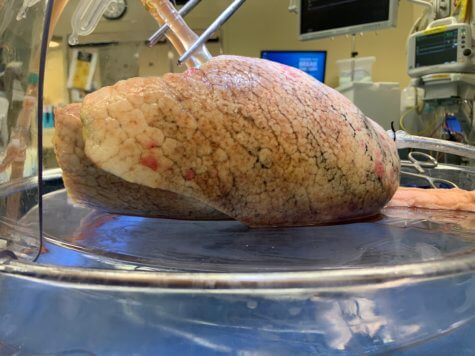
The procedure, conducted at the Latner Thoracic Surgery Research Laboratories and UHN’s Ajmera Transplant Centre, changed the lungs from a donor with type A blood into an organ with type O blood. Scientists consider type O the universal donor type. The breakthrough may significantly cut down on the disparity in organ transplant availability and shorten transplant waiting lists worldwide.
“With the current matching system, wait times can be considerably longer for patients who need a transplant depending on their blood type,” explains senior author Dr. Marcelo Cypel, Surgical Director of the Ajmera Transplant Centre, in a media release.
“Having universal organs means we could eliminate the blood-matching barrier and prioritize patients by medical urgency, saving more lives and wasting less organs,” adds Dr. Cypel, who is also a thoracic surgeon at UHN’s Sprott Department of Surgery.
Why is blood type so important?
A person’s blood type is dependent upon the antigens sitting on the surface of their red blood cells. People with type A blood have A antigens on their cells, while type B has B antigens and type AB has both. People with type O blood, however, have no antigens on the surface of their cells.
The reason this is important is because these antigens trigger an immune response if they’re foreign to a person’s body. This is also why patients needing a blood transfusion can only receive blood from donors with the same blood type — or from universal type O donors.
This problem also complicates organ donations. Researchers explain that antigens A and B are present on the surfaces of organs as well. Even people with type O blood have problems receiving transplants from type A or B donors. Since type O patients have anti-A and anti-B antibodies in their blood, receiving an organ from a type A donor will likely result in rejection.
For these reasons, doctors have to match up organs according to blood type as well as many other factors — leading to a wait for the perfect organ which can last several years. On average, type O patients actually have the longest wait for lung transplants — sometimes twice as long as type A patients. Kidney transplant patients can also end up waiting up to five years for a compatible donor.
“This translates into mortality. Patients who are type O and need a lung transplant have a 20 percent higher risk of dying while waiting for a matched organ to become available,” says explains study first author Dr. Aizhou Wang. “If you convert all organs to universal type O, you can eliminate that barrier completely.”
Universal blood type organs (Credit: UHN)
How did scientists make a universal organ?
In the proof-of-concept study, Dr. Cypel’s team used the Ex Vivo Lung Perfusion (EVLP) System to pump nourishing fluids through human donor lungs from a type A patient. This process allowed the researchers to warm the lungs up to body temperature so the team could convert the organs for transplantation.
Before the procedure, the donor’s lungs were not considered suitable for an organ transplant. During the experiment, study authors treated one lung with a group of enzymes to flush out the A antigens, while leaving the other lung untreated.
From there, they tested the conversion by adding type O blood with large concentrations of anti-A antibodies to the EVLP circuit. This simulated the conditions of an ABO-incompatible transplant. Results show that the treated lung was well tolerated, meaning the lung would likely be safe from rejection if the team placed it in a human patient. Meanwhile, the untreated lung showed signs of rejection, meaning such a transplant in a human would likely fail.
Gut enzymes are key to universal organs
Dr. Stephen Withers, a biochemist at the University of British Columbia, found a group of gut enzymes in 2018 which became the first step in creating these universal organs. Researchers used the EVLP circuit to deliver these enzymes to the lungs during the new experiment.
“Enzymes are Mother Nature’s catalysts and they carry out particular reactions. This group of enzymes that we found in the human gut can cut sugars from the A and B antigens on red blood cells, converting them into universal type O cells,” Dr. Withers explains. “In this experiment, this opened a gateway to create universal blood-type organs.”
“This is a great partnership with UHN and I was amazed to learn about the ex vivo perfusion system and its impact [on] transplants. It is exciting to see our findings being translated to clinical research,” Dr. Withers adds.
The study authors are working on a proposal to begin a clinical trial on this new technique. They hope that the trial could begin within the next 12 to 18 months.
FORT WORTH, Texas — The beautiful people get all the breaks. A new study finds an interesting link between how attractive someone is and the strength of their immune system.
A team at Texas Christian University found that when people had to rate a group of photos based on the attractiveness of each person’s face, they consistently rated individuals with stronger immune health as more attractive than other photos in the study.
Although beauty is often in the eye of the beholder, researchers say there has been a historical link between what societies consider attractive and reproductive success. The TCU team theorized that, because certain evolutionary traits tie into more mating success, people who seem more attractive to others may also appear healthier to the opposite sex.
To test that theory, researchers gathered 159 men and women and photographed each one without makeup and while displaying a neutral expression on their face. Study authors then took blood samples from each person to measure their levels of white blood cells — which battle disease and infections.
The team then brought in 492 other people to rate members of the opposite sex in these photos based on their attractiveness. The volunteers did not have any information on each person’s immune health and only had that one neutral photo to base their rating on. Results show people with stronger immune systems were rated as being more attractive by the 492 volunteers.
“The current research suggests that a relationship between facial attractiveness and immune function is likely to exist,” corresponding author Summer Mengelkoch and her team write in the journal Proceedings of the Royal Society B.
Opposites attract
Interestingly, the study finds men and women have very different ideas about what makes a face attractive and healthy. Researchers found that, on average, women rated men with higher levels of NK (natural killer) cells as more attractive. These cells play a key role in fighting off and killing bacteria.
Men, on the other hand, found women with lower NK cell levels in their blood more attractive. Study authors believe the reason for this is women with lower NK levels generally have higher estrogen levels — a hormone important to sexual reproduction.
As for which features are likely to stand out and attract attention, researchers found a not-so-surprising list of qualities people look for in a pretty face.
“Features such as clear skin, prominent cheekbones, bright eyes, and full, red lips have been deemed attractive throughout recorded human history,” the researchers write.
A kangaroo was saved after taking a dunk in the ocean off the coast of Australia by a rookie lifeguard.
Onlookers enjoying the surf and scenery on a rock shelf over-hanging the ocean in Bundjalung National Park were surprised to see an eastern grey kangaroo jumping across rock pools and tumbling into rough surf.
“My other workmate, Carissa and I, we were sitting on the tractor and she goes, ‘Oh my God, there’s a kangaroo jumping off the rocks!’” said 17-year old Lillian Bee-Young, a new lifeguard who had a surfboard nearby. “We were just figuring out what we should do… because we’ve never had that happen before.”
There were rough conditions that day on the north coast of New South Wales. Lillian believed the kangaroo was trying to avoid some fishermen and just “got wiped out by a set (of waves).”
Lillian told ABC News Australia that she didn’t quite know how to proceed as she paddled out with the rescue board. She didn’t know whether to try and get it onto the board, for example, or if that would put her in danger and stress the marsupial out even more.
It was just managing to keep its head above the water, but didn’t want to come ashore due to a gathering crowd.
Her friend Carissa cleared an avenue to allow Roo to feel comfortable, and after a few stumbles, it made it back onto dry land and immediately went off into the bushes.
“It was quite special. There were people cheering and clapping… and then [the kangaroo] was just sitting there up in the bushes, almost, I thought, as a thank you… It was really serene,” Lillian said.














 olderfatterhappierdotcom