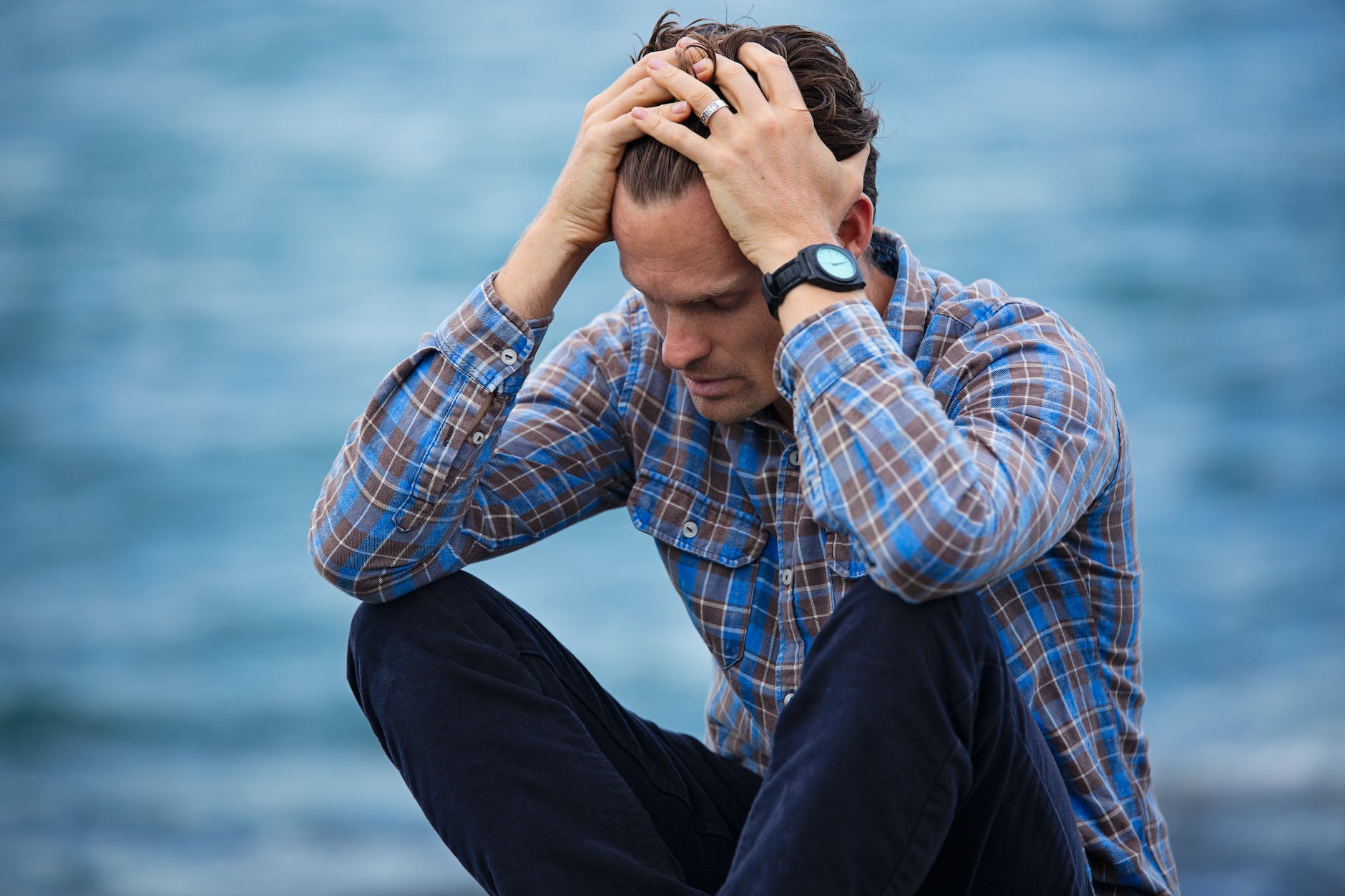
People who worry excessively about their health tend to die earlier than those who don’t, a recent study from Sweden has found. It seems strange that hypochondriacs who, by definition, worry yet have nothing wrong with them, should enjoy shorter lifespans than the rest of us. Let’s find out more.
First, a word about terminology. The term “hypochondriac” is fast becoming pejorative. Instead, we medical professionals are encouraged to use the term illness anxiety disorder (IAD). So, to avoid triggering our more sensitive readership, we ought to use this term.
We can define IAD as a mental health condition characterized by excessive worry about health, often with an unfounded belief that a serious medical condition is present. It may be associated with frequent visits to a doctor, or it may involve avoiding them altogether on the grounds that a real and quite possibly fatal condition might be diagnosed.
The latter variant strikes me as quite rational. A hospital is a dangerous place and you can die in a place like that.
IAD can be quite debilitating. A person with the condition will spend a lot of time worrying and visiting clinics and hospitals. It is costly to health systems because of time and diagnostic resources used and is quite stigmatizing.
Busy healthcare professionals would much rather spend time treating people with “real conditions” and can often be quite dismissive. So can the public.
Now, about that study
The Swedish researchers tracked around 42,000 people (of whom 1,000 had IAD) over two decades. During that period, people with the disorder had an increased risk of death. (On average, worriers died five years younger than those who worried less.) Furthermore, the risk of death was increased from both natural and unnatural causes. Perhaps people with IAD have something wrong with them after all.
People with IAD dying of natural causes had increased mortality from cardiovascular causes, respiratory causes and unknown causes. Interestingly, they did not have an increased mortality from cancer. This seems odd because cancer anxiety is rife in this population. The principal cause of unnatural death in the IAD cohort was from suicide, with at least a fourfold increase over those without IAD.
So how do we explain these curious findings?
IAD is known to have a strong association with psychiatric disorders. As suicide risk is increased by psychiatric illness, then this finding seems quite reasonable. If we add in the fact that people with IAD may feel stigmatized and dismissed, then it follows that this may contribute to anxiety and depression, leading ultimately to suicide in some cases.
The increased risk of death from natural causes seems less easy to explain. There may be lifestyle factors. Alcohol, smoking and drug use are more common in anxious people and those with a psychiatric disorder. It is known that such vices can limit one’s longevity and so they may contribute to the increased mortality from IAD.
IAD is known to be more common in those who have had a family member with a serious illness. Since many serious illnesses have a genetic component, there may be good constitutional causes for this increase in mortality: lifespan is shortened by “faulty” genes.
What can we learn?
Doctors need to be alert to the underlying health problems of patients and must listen with greater care. When we are dismissive of our patients, we can often be badly caught out. People with IAD may well have a hidden underlying disorder – an unpopular conclusion, I accept.
Perhaps we can illustrate this point with the case of the French novelist, Marcel Proust. Proust is often described by his biographers as a hypochondriac, yet he died in 1922 at the age of 51 at a time when the life expectancy of a Frenchman was 63.
During his life, he complained of numerous gastrointestinal symptoms such as fullness, bloating and vomiting, yet his medical attendants could find little wrong. In fact, what he described is consistent with gastroparesis.
This is a condition in which motility of the stomach is reduced and it empties more slowly than it should, causing it to overfill. This can lead to vomiting and with that comes a risk of inhaling vomit, leading to aspiration pneumonia and Proust is known to have died of complications of pneumonia.
Finally, a word of caution: writing about IAD can be quite risky. The French playwright Molière wrote Le Malade Imaginaire (The Imaginary Invalid), a play about a hypochondriac called Argan who tries to get his daughter to marry a doctor in order to reduce his medical bills. As for Molière, he died at the fourth performance of his work.
As you know, I try to avoid political topics on this blog. But the following (warning: it’s long!) has enough stories of heroism and coexistence to warrant sharing. These stories of everyday people are fascinating, illuminating, and encouraging. I hope you’ll read it all the way to the end.
Opinion Columnist, reporting from Rahat, Israel, Nov. 22, 2023
I confess that as a longtime observer of the Arab-Israeli conflict, I aggressively avoid both the “From the river to the sea” activists on the pro-Palestinian left and the similarly partisanzealots on the “Greater Israel” Zionist right — not just because I find their exclusivist visions for the future abhorrent but also because the reporter in me finds them so blind to the complexities of the present.
They aren’t thinking about the Jewish mother in Jerusalem who told me in one breath how she just got a gun license to protect her kids from Hamas, and in the next about how much she trusted her kids’ Palestinian Arab teacher, who rushed her children to the school bomb shelter during a recent Hamas air raid. They aren’t thinking about Alaa Amara, the Israeli Arab shop owner from Taibe, who donated 50 bicycles to Jewish kids who survived the Hamas attack on their border communities on Oct. 7, only to see his shop torched, apparently by hard-line nationalist Israeli Arab youth, a few days later, only to see a crowdfunding campaign in Hebrew and English raise more than $200,000 to help him rebuild that same shop just a few days after that.
Over the last half-century, I have seen Palestinians and Israelis do terrible things to one another. But this episode that began with the barbaric Hamas attack on Israelis, including women, little kids and soldiers in communities alongside Gaza, and the Israeli retaliation against Hamas fighters embedded in Gaza that has also killed, wounded and displaced so many thousands of Palestinian civilians — from newborns to the elderly — is surely the worst since the 1947 U.N. partition days.
But those on all sides who read this column know that I am not one for keeping score. My focus is always on how to get out of this eye-for-an-eye, tooth-for-a-tooth horror show before everyone is left blind and toothless.
To that end, I devoted a lot of time on my trip to Israel and the West Bank this month observing and probing the actual day-to-day interactions among Israeli Arabs and Jews. These are always complex, sometimes surprising, occasionally depressing — and, more often than you might expect,uplifting—experiences. Because they reveal enough seeds of coexistence scattered around that one can still dream the impossible dream — that we might one day have a two-state solution for Israelis and Palestinians living between the Mediterranean Sea and the Jordan River.
So, this Thanksgiving week, I ask you to spare a few moments with me to reflect on some of these people, including some of the extraordinary acts of rescue that they committed on Oct. 7. They will give you more faith in humanity than the headlines around this story would ever suggest.
To put it another way, a friend once described my worldview as a cross between Thomas Hobbes and Walter Mondale. For several days on my trip, I let out my inner Mondale to chase some rays of hope shooting through the darkness.
It began soon after I arrived in Tel Aviv, when I sat down with perhaps the most courageous Israeli political leader today, Mansour Abbas. Abbas is a Palestinian Arab citizen of Israel who happens to be a devout Muslim and a member of Israel’s parliament, where he leads the important United Arab List party. Abbas’s voice is even more vital now because he did not respond to the Hamas terrorism with silence. Abbas understands that while it’s right to be outraged at the pain Israel is inflicting on Gaza’s civilians, reserving all of your outrage for Gaza’s pain creates suspicion among Jews in Israel and worldwide, who notice when not a word is uttered about the Hamas atrocities that triggered this war.
The first thing Abbas said to me about the Hamas onslaught was this: “No one can accept what happened on that day. And we cannot condemn it and say ‘but’ — that word ‘but’ has become immoral.” (Recent polls show overwhelming Israeli Arab condemnation of the Hamas attack.)
Abbas sees the complexities lived by that Israeli Jewish mother in Jerusalem who never lost trust in her kids’ Palestinian Arab teacher, and by that Israeli Arab bicycle shop owner who spontaneously reached out a hand to ease the pain of Jewish children he’d never met. At the same time, though, Abbas spoke about the searing pain Israeli Palestinian Arabs and Bedouins feel at seeing their relatives pummeled and killed in Gaza.
“One of the hardest things today is to be an Israeli Arab,” Abbas said to me. “The Arab Israeli feels the pain twice — once as an Arab and once as an Israeli.”
That’s the thing about this neighborhood: If you only look at one group or the other under a microscope, you want to cry — the brutal massacre of Jews, the harsh treatment of Palestinians by Jewish supremacist settlers. The list is endless. But if you look at their stories through a kaleidoscope, observing the complexity of their interactions, you can see hope. If you want to report accurately about Israelis and Palestinians, always bring a kaleidoscope.
Which brings me to the stories of the Israeli Bedouin Arabs and Oct. 7.
Avrum Burg
About a week into my trip, I got a call from my friend Avrum Burg, the former speaker of the Israeli Knesset, whose grandfather was the chief rabbi of Hebron in 1929. He told me that he and his pal Talab el-Sana — an Israeli Bedouin Arab who served with him in the Knesset, and who provided a key vote that gave Yitzhak Rabin the majority that enabled him to make the Oslo peace deal — wanted to take me to meet some “righteous Bedouins.” These were Arabic-speaking but Hebrew-fluent Muslim-Bedouin citizens of Israel, who had played heroic roles in saving Jews from Hamas’s attack.
Bedouins in Israel are a nomadic community who largely reside in Israel’s Negev Desert and are part of the Israeli Arab minority — 21 percent of the country — spread across cities and towns. There are some 320,000 Bedouins in Israel, with about 200,000 living in government-recognized communities and about 120,000 in makeshift, unrecognized shantytowns. Many Bedouins have served in the Israeli Army, often as trackers, because of their deep knowledge of the area’s geography from generations of roaming desert terrain.
Well, it turns out that some Israeli Bedouins who lived near or worked in the border communities ravaged by Hamas helped to rescue Israeli Jews there. Some Bedouins got abducted by Hamas along with Jews, while others were murdered by Hamas because the terrorist group treated anyone who lived or worked in Israeli kibbutzim and spoke Hebrew as “Jews” — deserving to be killed.
And after Oct. 7, some of those Bedouins who saved Israeli Jews found themselves being treated to hostile glances and quiet slurs by other Israeli Jews, who automatically assumed they were Hamas sympathizers.
And all along, both Jewish and Bedouin victims of Hamas were treated together in Israeli hospitals, where nearly half of all the new incoming doctors are now Israeli Arabs or Druze, as are some 24 percent of the nurses and roughly 50 percent of the pharmacists.
Yup, an Israeli Bedouin Arab can save an Israeli Jew on the Gaza border in the morning, be discriminated against by Jews on the streets of Beersheba in the afternoon and boast that his daughter — a doctor, trained at an Israeli medical school — stayed on her feet all night taking care of Jewish and Arab patients at Hadassah Hospital.
It’s complicated.
El-Sana and Burg took me to two Bedouin villages to meet young men who saved Jews. Joining us was Ran Wolf, an Israeli urban planner who specializes in building shared spaces — innovation centers, cultural centers and markets — to be used by both Israeli Jews and Palestinian Arabs. We stopped at Ran’s home in Tel Aviv on the way to get some water, where he told me this story:
After the Hamas rockets started falling on Tel Aviv on Oct. 7, he called his regular contractor, Emad, an Israeli Arab from Jaffa, to say that the doors on the bomb shelter in his basement couldn’t be closed. “The problem was happening in a lot of shelters, and after Oct. 7 everyone wanted to get theirs fixed,” said Wolf. Indeed, when his neighbors got wind that a repairman was on the block, they asked him to fix theirs, too.
“Emad is a good friend, and he refused to take any money for two days of work,” said Wolf. Keep in mind, he added, that Emad lives in Jaffa, south of Tel Aviv. In the 1948 war, Emad’s father stayed in Jaffa and his uncle fled to Khan Younis in the southern Gaza Strip. “So he was raised in Israel — but half his family is now in Gaza,” Wolf said. “He himself got a Hamas missile 200 yards from his home in Jaffa” the other day, he added.
Get out your kaleidoscope: Today you have Jaffa Palestinian refugees living under a Hamas government in Gaza who are firing rockets at Jaffa Palestinians who are Israeli citizens, one of whom repaired the rocket shelters of his Jewish friends in Tel Aviv — for free.
Ran Wolf
When we arrived in Rahat, the largest Bedouin town in Israel in the Negev Desert, el-Sana, sitting in the back seat of the car, managed to one-up that story.
He explained that some of the first Israeli victims of the Hamas rocket attacks on Oct. 7 were actually Bedouins, many of whom live in unrecognized villages in the Negev that are not listed on any digital maps. (The Israeli government has not kept up with their population growth, as it has for most Jewish towns.)
Those villages do not have municipal bomb shelters or warning sirens to protect their people when Hamas rockets start landing, but — and you cannot make this up — el-Sana explained that the way Israel’s Iron Dome antimissile system works is that when Hamas launches a rocket it automatically plots the trajectory to determine if that rocket from Gaza will land on a settled space in Israel, and kill people, or on an empty field or in the sea. If it is an empty space on a map or in the sea, Iron Dome won’t waste one of its expensive rockets shooting down a cheap Hamas rocket.
Six Bedouins were killed by a Hamas rocket that landed on their village of Al Bat — including two brothers, ages 11 and 12 — because that Bedouin town is not on any official Israeli map loaded into the Iron Dome database, el-Sana explained.
Meanwhile, eight other Bedouins who worked in Jewish communities near Gaza were murdered by Hamas and at least seven more Bedouins, all Israeli citizens, are believed to have been kidnapped and taken to Gaza.
And yet days later some of these same Bedouins did not hesitate to help rescue Israeli Jews, along with their cousins.
El-Sana had set up an interview for me in Al Zayada village, an unrecognized Bedouin settlement in the Negev, at the unrecognized home of Youssef Ziadna, 47, a Bedouin driver who had been recognized for rescuing Jews on Oct. 7. Ziadna, a bus driver, explained that on Friday, Oct. 6, he was hired to drive a group of Jewish kids to an outdoor trance music festival called the Supernova Sukkot Gathering, celebrating the Jewish holiday of Sukkot, adjacent to Kibbutz Re’im, which is adjacent to the Gaza border.
“After I dropped them off, we agreed that on Saturday I would come back and take them home at 6 p.m.,” he told me. But early on Saturday morning, “I got a call from one of them, Amit,” telling him to come immediately, he said. “They were being attacked and there was gunfire everywhere.”
As he rushed to the scene and got near the kibbutz, Ziadna said, “I saw a barrage of rockets and many cars coming toward me — escaping — blinking their lights for me to turn around. Some people who stopped and jumped out of their cars said there were terrorists in Be’eri, so ‘run away.’ I got out of my car and hid on the side of the road and every time I raised my head I got shot at. But I committed to pick these people up, and it was a kilometer away.”
Ziadna said that when the shooting subsided for a bit, he managed to get back in his vehicle and use his cellphone to link up with Amit and his friends — and anyone else he could cram into his minibus. Instead of driving back on the road, where “I knew they’d kill us,” he said, “I drove through the fields.”Image
Talab el-Sana
As a Bedouin, Ziadna had intimate knowledge of the terrain that proved lifesaving. He was able to cut a route through fields and avoid the main thoroughfare near where Hamas terrorists were ambushing escapees from the music festival. Many other escaping cars then also jumped off the road and followed Ziadna’s minibus through the fields, he said. He told The Times of Israel, which profiled him, that he crammed some 30 people into his vehicle, even though it was licensed for only 14 passengers.
A few days later, he said he got a call from a phone number he did not recognize but that he believed was from Gaza, and a voice said in Arabic: “Are you Youssef Ziadna? You saved the lives of Jews? We’re going to kill you.”
He reported the call to the Israeli police. It’s just one reason, he said, that he still needs daily phone calls with a psychologist to try to overcome his trauma from Oct. 7.
Another family member at our gathering, Daham Ziadna, 35, said a total of four of their family members were abducted by Hamas; one was killed for sure, and three others are still missing. Two of them were last seen lying on the ground in a TikTok video released by Hamas, with two gun-toting Hamas fighters standing over them. For Hamas, said Daham, “everyone who lives in Israel is a Jew.”
Daham told me that a few days ago he had gone to the local bank to withdraw some money from the A.T.M., and two Israeli Jews passed him on the sidewalk. “One had a Russian accent. As they walked past me, the Russian guy said, ‘Here’s another Arab.’ I said to him: ‘These “Arabs” you are talking about on the morning of Oct. 7 were on the border of Gaza fighting for the Israeli state — regardless of Jews or Arabs — and the ones who destroy the country are people like you who incite poison.’”
Israeli Arabs live between a rock and a hard place, he added: “Many Jews look at us as if we are all Hamas, and the Hamas people look at us as if we are all Jews.”
A few miles away, in Rahat, el-Sana introduced me to the al-Qrinawi family, who had their own remarkable tale to tell. Their family spokesman, Ismail, led me through the drama, flanked by his male cousins and a giant platter of rice, chicken and chickpeas.
On the morning of Oct. 7, as word spread of the Hamas attack, they discovered through their family’s WhatsApp group that three of their cousins who worked in the dining room at Kibbutz Be’eri had apparently been abducted. Around 10 a.m., one family member got a call from the phone of an Israeli woman named Aya Medan that was strange. It turned out she had met up with one of their missing cousins, Hisham, and they were hiding together from the Hamas terrorists in the same thorny bush near Be’eri. Hisham used her cellphone to call his Bedouin clan for help. Their other two cousins had fled in another direction.
Their uncle, the family patriarch, ordered four of his nephews to get in the family Land Cruiser and go rescue them, since the area was normally about 30 minutes away — but not that day. They grabbed two handguns and sped off.
“When we got close, we found that all the roads were closed,” Ismail told me. “So we went through the woods and through a deep wadi in order to go around. Our car almost flipped over in the wadi.”
First, “we bumped into people running away from the party,” he said. “We gave them our phones to call their parents and made sure that they got into other cars that were driven by Israelis. We managed to rescue 30 or 40 people at the party. But all the time, I am talking to Aya, trying to locate her and Hisham.”
It was taking forever. After two and a half hours of dodging gunfire and Hamas rockets, Ismail said, they managed to find Aya and Hisham hiding in bushes very close to Kibbutz Be’eri. The two had sent a cellphone picture of the area where they were hiding so they could be more easily located. Minutes later, Aya recalled for The Times of Israel, Hisham tugged at her, saying, “Aya, they’re here, they’re actually here.”
The cousins opened the car doors, Aya and Hisham scrambled inside and the Bedouins again used their off-road skills to get them to safety. Sort of.
The most terrifying moment of the day, Ismail told me, was when they got back onto a main road. They got stopped at a makeshift Israeli Army checkpoint, with jittery Israeli soldiers who could not identify friend or foe from afar. “The Israeli soldiers surrounded our car and every one of them was pointing a gun at us. I shouted: ‘We’re Israeli citizens! Don’t shoot!’”
Aya told The Times of Israel that she was asked by an Israeli soldier whether she was being kidnapped. She said, “No, I’m from Be’eri, and they came from Rahat to get us out of there.”
Bedouins saving Israeli Jews from Hamas being saved by a rescued Israeli Jewish woman from being shot by the Israeli Army after they rescued her … kaleidoscopic.
While I was interviewing the al-Qrinawi family, they introduced me to Shir Nosatzki, a co-founder of the Israeli group Have You Seen the Horizon Lately, which promotes Jewish-Arab partnerships. Immediately after learning of the rescue, her husband, Regev Contes, made a seven-minute video in Hebrew to share the tale of the Bedouin rescue team with his fellow Israelis. It has reportedly garnered hundreds of thousands of views in Israel. I asked Nosatzki why they made the video.
“It was to show that Oct. 7 was not a war between Jews and Arabs but between darkness and light,” she said.
Before driving back to Tel Aviv, el-Sana insisted on taking us to his favorite kebab restaurant in Rahat. There we sat: an Israeli Bedouin who had served in the Knesset, the grandson of the former chief rabbi of Hebron and a Jewish New York Times columnist from Minnesota who had reported from both Beirut and Jerusalem in the 1970s and 1980s. We reflected on the day in a crazy mix of Hebrew, Arabic and English
Between grilled lamb and hummus, we all came to the same conclusion: Even at this dark hour, we had just seen something hugely important — “the seeds of coexistence, in death and in life,” as Burg put it, seeds that Hamas set out to destroy. These seeds, el-Sana added, “should give us hope that we can build a common future based on common values that cross borders of Jewish and Arab ethnicity.”
They are right. These seeds, small as they might be, have never been more important than they are right now. Why? Because this Israel-Hamas war, whenever it ends, has been so traumatic for everyone already that it will trigger the biggest debate about what the relations and boundaries between Israelis and Palestinians should be since the U.N. partition plan in 1947. I am sure of it — because anything less will mean permanent war.
I can already tell you that there will be a lot of destructive voices in that discussion: Palestinian and Arab Hamas apologists, who are already denying or playing down Hamas’s atrocities; Jewish supremacist settlers, eager not only to expand in the West Bank but also, insanely, to Gaza, and who show no apparent concern for the devastating suffering of Palestinian civilians killed in Israel’s retaliation there; Benjamin Netanyahu, who will sell Israel’s future down the river to stay in office and out of jail; and Hamas’s useful idiots in the West, particularly on campuses, where students denounce all of Israel as a colonial enterprise while chanting “From the river to the sea, Palestine will be free.”
(Please spare me the explanation that this is really a call for coexistence: I was in Beirut in the 1970s when this chant was popular, and I can assure you it was not a call for two states for two peoples. If you have a mantra that needs 15 minutes to explain, you need a new mantra.)
Given all these wrecking crews waiting to go to work, we are going to need more than ever to elevate the authentic voices of coexistence — leaders with the integrity of those Israeli Bedouins, ready to do and say the right things, not only when it is not easy but also when it’s dangerous.
Which brings me back to Mansour Abbas of the United Arab List.
His party, broadly speaking, comes from the same Muslim Brotherhood wing of Palestinian politics as Hamas — only where Hamas worships violence and exclusion, Abbas advocates nonviolence and inclusion. Abbas was a key power broker helping Prime Minister Naftali Bennett and Foreign Minister Yair Lapid forge Israel’s 2021 national unity government. Netanyahu, ever the divider, brought that government down in part with anti-Arab and anti-Muslim tropes directed at Abbas.
Abbas understands that coexistence means saying the right things, not only when it’s politically difficult but also when it’s dangerous. After viewing videos of the Hamas attack in the Knesset, he told Arabic Radio al-Nas about Oct. 7: “I saw a father with two children who went into a bomb shelter outside their home, and they threw a grenade into the shelter. The father jumped on the grenade and was killed, and the two children were wounded and remained alive. The massacre is against everything we believe in, our religion, our Islam, our nationality, our humanity.” Hamas’s actions do “not represent our Arab society, nor our Palestinian people, nor our Palestinian nation.”
In our interview, Abbas told me that we need “a new political rhetoric” and not to get drawn back into the old games. “This ‘river to the sea’ talk is not helpful,” he said. “They are making a mistake. If you want to help Palestinians, then talk about a two-state solution and peace and security for all the people.”
That is why, he added, “I am working on a plan that starts by ending the current war and ends with the creation of a Palestinian state alongside of Israel.”
Abbas is clear-eyed about the difficult road ahead. I am, too. I finished my recent journey with two takeaways. The first is that this Gaza war is still far from over. Israel believes there will be no peace in or from Gaza as long as Hamas is in power there.
But the other is that just as the darkness of the Yom Kippur War produced the dawn of the Camp David treaty, and just as the viciousness of the first intifada and the Israeli pushback led to the Oslo Accords, out of the horrors of Oct. 7 will one day come another attempt to build two states for these two indigenous peoples. Otherwise, this whole corner of the world will become uninhabitable for any sane person. There are just too many people with too many powerful weapons today.
And when that day comes, it will take a bridge-builder like Mansour Abbas — who understands the true kaleidoscopic reality of this place, and the authentic connection of both communities to it — to nurture the seeds of coexistence that are still here, albeit buried deeper than ever. Abbas, Youssef Ziadna, the al-Qrinawi family, Aya Medan, my friends Avrum, Talab and Ran — they will be the rescuers.
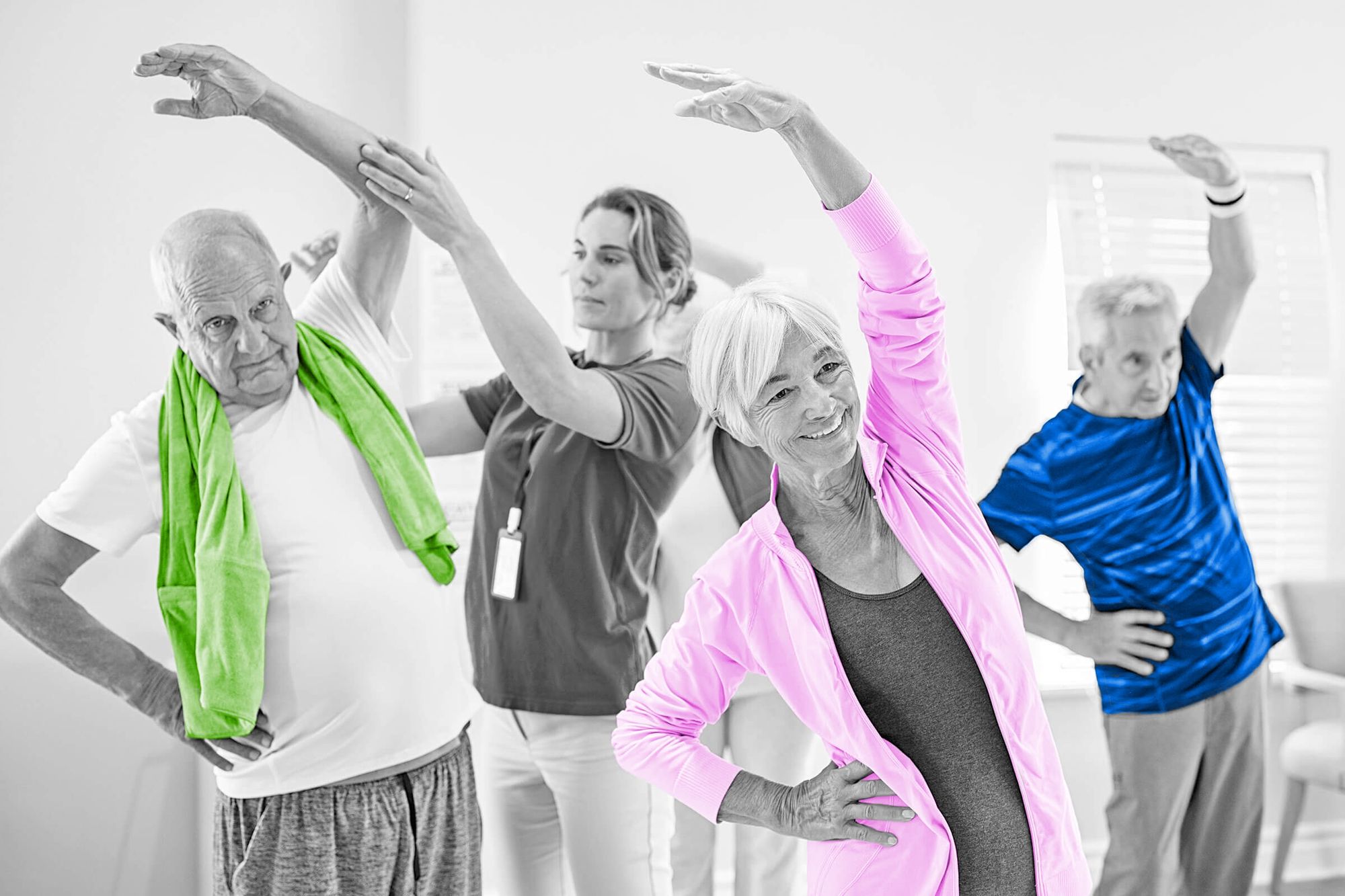
Unless you die young, you’re likely to grow old. And although this is not without challenges, there are numerous upsides including financial security, learning to say “no” to people, experiences or activities you simply don’t enjoy, and the resultant contentment that comes from being true to yourself.
Credit: Heritage Images/ Hulton Fine Art Collection via Getty Images
A common misconception is that our predecessors lived brutish lives cut short by disease and war. While modern medicine has certainly expanded life expectancy, many people in the past lived as long as people live today. For example, some ancient Roman offices sought by politically ambitious men couldn’t even be held until someone was 30.
When scientists analyzed the pelvis joints (a reliable indicator of age) in skeletons from ancient civilizations, they found that many people lived long lives. One study of skeletons from Cholula, Mexico, between 900 and 1531 CE found that a majority of specimens lived beyond the age of 50. Low life expectancy in ancient times was more the result of high infant mortality rates than of people living unusually short lives. Modern science has helped more humans survive our vulnerable childhood years and life expectancy averages have risen as a result.
The amount of sleep each of us needs is only altered during childhood and adolescence as our bodies require more energy to do the tough work of growing. Once we’re in our 20s, humans require the same amount of sleep per night for the rest of our lives (though the exact number of hours differs from person to person). In fact, the elderly are more likely to be sleep-deprived because they receive lower-quality sleep caused by sickness, pain, medications, or a trip or two to the bathroom. This can be why napping during the day becomes more common as we grow older.
While we’re likely to get shorter as we age, some bones keep growing. A 2008 study for Duke University revealed that skull bones continue to grow, with the forehead moving forward and cheek bones moving backward. Unfortunately, this imperceptible bit of facial movement exacerbates wrinkles, because as the skull shifts forward, the overlying skin sags.
The pelvis also keeps growing throughout our lives. Scientists analyzing the pelvic width of 20-year-olds compared to 79-year-olds found a 1-inch difference in width, which adds an additional 3 inches to your waistband. That means our widening in the middle as we age isn’t our imagination — or about a slower metabolism.
While our hips get bigger, our pupils get smaller. The human pupil is controlled by the circumferential sphincter and iris dilator muscles, which weaken as we get older. Because of this loss of muscle function, pupils get smaller as we age, and are also less responsive to light. Smaller pupils make it harder to see at night (hello, reading a menu in a dark restaurant?!), so people in their 60s need three times as much light to read comfortably as people in their 20s.
Although the body experiences some slowing down as we age, growing old isn’t all bad news. Researchers from the University of Queensland found that older people had stronger immunities than people in their 20s, as the body keeps a repository of illnesses that can stretch back decades. This extra line of defense begins to drop off in our 70s and 80s, but until then, our bodies generally just get better and better at fighting off disease due to biological experience. Additionally, as we age we experience fewer migraines, the severity of allergies declines, and we produce less sweat. Older people also exhibit higher levels of “crystalized intelligence” (or what some might call “wisdom”) than any other age group.
If age is just a number, in the cosmic view human age is rather insignificant. The atoms that make up the human body are already billions of years old. For example, hydrogen — one of the key components of our bodies — formed in the Big Bang 13.7 billion years ago. Likewise, carbon, the primary component of all known life, formed in the fiery cauldron of stars at least 7 billion years ago.
Which, comparatively speaking, makes us all universally young. I find that strangely comforting!
Ukraine. Omicron. Climate change. Can we ever catch a break from the sad, the sordid, the violent, the vain, the completely unnecessary and utterly preventable death and destruction?
Amid all the serious issues to worry and obsess about, I’ve found a few bright spots in my weekly perusal of the news, courtesy of The Week:
An English bulldog, missing for five years, turned up in a Tennessee shelter, a thousand miles from her home in New York. She was identified by a microchip and happily reunited with her grateful and astonished owner.
A young woman in Denver, CO, was watching some children playing on a frozen pond when she saw the ice crack. She dashed out of her apartment to pull the kids out. Then the ice broke, plunging her into the frigid depths. Treading water, the heroic 23-year-old held an unconscious six-year old girl above the water until help arrived, and all survived.
And from the sublime to the ridiculous: It seems that a man in New York has filed a $6 billion class-action suit against the New York Giants and Jets for playing their home games in New Jersey. He claims that millions of New York football fans have suffered “mental and emotional damage”, depression, sadness and anxiety.
To maintain my own sanity, I’m focusing on long walks, hot baths, watching comedies, baking, planning vacations, and re-organizing my closet. How are you coping, dear readers?
From today’s New York Times (with apologies for wonky formatting.)
Preparing vaccines in Rochester Hills, Mich. Emily Elconin for The New York Times
The C.D.C. has begun to publish data on Covid outcomes among people who have received booster shots, and the numbers are striking:
Based on 25 U.S. jurisdictions. | Source: C.D.C.
As you can see, vaccination without a booster provides a lot of protection. But a booster takes somebody to a different level.
This data underscores both the power of the Covid vaccines and their biggest weakness — namely, their gradual fading of effectiveness over time, as is also the case with many other vaccines. If you received two Moderna or Pfizer vaccine shots early last year, the official statistics still count you as “fully vaccinated.” In truth, you are only partially vaccinated.
Once you get a booster, your risk of getting severely ill from Covid is tiny. It is quite small even if you are older or have health problems.
The average weekly chance that a boosted person died of Covid was about one in a million during October and November (the most recent available C.D.C. data). Since then, the chances have no doubt been higher, because of the Omicron surge. But they will probably be even lower in coming weeks, because the surge is receding and Omicron is milder than earlier versions of the virus. For now, one in a million per week seems like a reasonable estimate.
That risk is not zero, but it is not far from it. The chance that an average American will die in a car crash this week is significantly higher — about 2.4 per million. So is the average weekly death rate from influenza and pneumonia — about three per million.
With a booster shot, Covid resembles other respiratory illnesses that have been around for years. It can still be nasty. For the elderly and immunocompromised, it can be debilitating, even fatal — much as the flu can be. The Omicron surge has been so terrible because it effectively subjected tens of millions of Americans to a flu all at once.
For the unvaccinated, of course, Covid remains many times worse than the flu.
‘Heartbreaking’
I’m highlighting these statistics because there is still a large amount of vaccine skepticism in the U.S. I have heard it frequently from readers in the past week, after our poll on Covid attitudes and partisanship, as well as the “Daily” episode about the poll.
This vaccine skepticism takes two main forms. The more damaging form is the one that’s common among Republicans. They’re so skeptical of vaccines — partly from misinformation coming from conservative media figures and Republican politicians — that many remain unvaccinated.
Look at this detail from the Kaiser Family Foundation’s latest portrait of vaccination: Incredibly, there are more unvaccinated Republican adults than boosted Republican adults.
From a survey of 1,536 adults in Jan. 2022. | Source: Kaiser Family Foundation
This lack of vaccination is killing people. “It’s cost the lives of people I know, including just last week a friend of 35 years, a person I met on one of the first weekends of my freshman year of college,” David French, a conservative writer who lives in Tennessee, wrote in The Atlantic. “I can’t tell you how heartbreaking it is to see person after person fall to a virus when a safe and effective shot would have almost certainly not just saved their life but also likely saved them from even having a serious case of the disease.”
Dr. Peter Hotez, a vaccine expert at the Baylor College of Medicine, estimates that in the second half of last year, 200,000 Americans needlessly lost their lives because they refused Covid vaccines. “Three doses of either Pfizer or Moderna will save your life,” Hotez told me. “It’s the only way you can be reasonably assured that you will survive a Covid-19 infection.” (Young children, who are not yet eligible for the vaccines, are also highly unlikely to get very sick.)
The vaccines don’t prevent only death. Local data shows the risks of hospitalization are extremely low, too. Vaccination also reduces the risk of long Covid to very low levels.
Healthy and anxious
The second form of vaccine skepticism is among Democrats — although many would recoil at any suggestion that they are vaccine skeptics. Most Democrats are certainly not skeptical about getting a shot. But many are skeptical that the vaccines protect them.
About 41 percent of Democratic voters say they are worried about getting “seriously sick” with Covid, according to a Kaiser Family Foundation poll released last week. That’s a very high level of anxiety for a tiny risk.
Here’s the proof that much of the fear is irrational: Young Democrats are more worried about getting sick than old Democrats, even though the science says the opposite should be true.
From a survey of 1,536 adults in Jan. 2022. | Source: Kaiser Family Foundation
The most plausible explanation for this pattern is political ideology. Younger Democrats are significantly more liberal than older Democrats, according to the Pew Research Center (and other pollsters, too). Ideology tends to shape Covid views, for a complex mix of often irrational reasons. The more liberal you are, the more worried about Covid you tend to be; the more conservative you are, the less worried you tend to be.
I know that many liberals believe an exaggerated sense of personal Covid risk is actually a good thing, because it pushes the country toward taking more precautions. Those precautions, according to this view, will reduce Covid’s death toll, which truly is horrific right now. In a later newsletter this week, I will consider that argument.
For now, I’ll simply echo the many experts who have pleaded with Americans to get vaccinated and boosted.
Answers and convenience
What might help increase the country’s ranks of vaccinated? Vaccine mandates, for one thing — although many Republican politicians, as well as the Republican appointees on the Supreme Court, oppose broad mandates. Private companies can still impose mandates on their employees and customers.
Without mandates, the best hope for increased vaccination is probably community outreach. While many unvaccinated Americans are firmly opposed to getting a shot, others — including some Democrats and independents — remain agnostic. If getting a vaccination is convenient and a nurse or doctor is available to answer questions, they will consider it.
“I cannot count how many people I’ve spoken to about the Covid vaccine who have been like, ‘No, I don’t think so. No,’” Dr. Kimberly Manning of Emory University told The Atlanta Journal-Constitution. “Then I run into them two weeks later and they tell me they got vaccinated.”
Related: “You have to scratch your head and say, ‘How the heck did this happen?’” Dr. Anthony Fauci told Michael Barbaro on today’s episode of “The Daily,” about the partisan gap in Covid attitudes. Fauci also predicted that people who were anxious about Covid would become less so as caseloads fell.
In Times Opinion, James Martin, a Jesuit priest, argues that schadenfreude over vaccine skeptics’ suffering warps the soul.
Happy New Year, dear readers! As we shake off our hangovers and make resolutions, I suggest we virtually hold hands and pray that 2022 isn’t a repeat of 2020 and 2021.
A century ago, the Roaring Twenties ushered in an era of economic prosperity, cultural milestones including jazz and Art Deco, the end of corsets along with acknowledgment of a woman’s right to vote, innovations such as automobiles, radio and telephones, electrical appliances, and moving pictures.
So far, the 2020s have little to boast about: a deadly pandemic; social isolation; increased pushback against the basic human dignities of controlling our own bodies, loving whom we choose, existing without fear because of the color of our skin; the ever-increasing consequences of climate change, etc.
It’s enough to make any sensate being take to our beds with a bottle of booze and wait until humanity comes to its collective senses.
But hey, it’s a new year, and optimism springs eternal. We’ve still got a chance to turn this century into the Soaring 20s. It’s just gonna take a little effort.
Even as daily life seems headed towards recovery, it’s hard to relax. This insightful analysis explains why “burnout” only begins to describe what so many of us have been feeling.
[by Soo Youn, The Washington Post]
Why burnout won’t go away, even as life returns to ‘normal’
For Marcia Howard, the Cheez-Its were a breaking point.
At her son’s first in-person school event this year, she realized she forgot to bring the class snack.
“I just broke down in the car and I started crying,” she said. As a class parent, she was torn up about forgetting the crackers. “It turns out everything has been overwhelming. And there’s no shaking it.”
Howard started a new job at the beginning of the coronavirus pandemic working as a creative operations director at a Fortune 500 company.
“I’m a Black woman. Between the pandemic and everything that happened to George Floyd and the summer of protests. . . . I had that first wave of, ‘Oh, gosh, I’m tired. I don’t feel like I can do anything. I stay up all night, looking at my phone and just really can’t focus,’ ” she said.
Then the fall came around, and it became clear many schools wouldn’t fully reopen for in-person learning.
“I’ve never thought about quitting more,” said Howard, who lives in New York City.
She’s been told by her company that she can take time off as she needs, but it’s just not that simple for her, she said. “It is all really wonderful to hear. But trying to prove myself in a corporate environment as the only Black leader, can I?” Howard said.
In February, she says she was told by her therapist that she was on the verge of depression.
“I feel like everyone is starting to think the world is getting back to normal, and I just can’t even bring myself to be hopeful about it,” Howard said.
With vaccinations initiated for half of Americans over 12, and guidance on masking and social distancing easing, the triage stage of the pandemic is lessening for some in the United States. Yet external progress markers can disguise – or even induce – a flurry of conflicting emotional, physical or cognitive states. Like getting sick right after turning in your last final, for some women who bore the brunt of domestic burdens while juggling work pressures for over a year, the breaking point may come with the breathing room.
As the country races toward a “normal” summer, for women like Howard, the picture doesn’t match up with her reality. She’s still struggling through a burnout unlike any other.
“Traditionally, we think of burnout being a state where someone is increasingly overwhelmed with the tasks in their lives, feeling a markedly decreased sense of accomplishment and effectiveness in what they are doing, and feeling like the things they loved to do now feel like just additional tasks. After a time, there can be mental health consequences,” said Maureen Sayres Van Niel, a Boston-based psychiatrist.
The pandemic magnified that condition exponentially.
“We had women with and without children managing situations that had life and death consequences in their daily lives: how to provide food for their families when the deadly virus was omnipresent or they were suddenly without an income, how to care for an elderly mother without physical contact,” she said. “Burnout in the traditional sense doesn’t capture the sense of the past year’s events.”
By March 2021, 1 in 4 Americans adults suffered the loss of a close friend or relative to the coronavirus, according to the KFF coronavirus vaccine Monitor; about 1 in 3 knew someone who died. And for those with family and friends in countries where death tolls are mounting daily, there is little relief.
“By mid-summer many will likely be feeling conflicting emotions such as relief that they are protected against the virus and happiness to see friends and family again. But having these new freedoms allows us to reflect on what we just lived through, what we endured, and what we lost. We will then be able to really feel our burnout, to let it surface,” said Stanford University sociologist Marianne Cooper. “People will need time to process what they have lived through.”
People are also mourning the loss of jobs – as well as routines, health, opportunities and time.
Baltimore-based psychiatrist Kimberly Gordon says burnout isn’t an adequate term. She treats patients from underserved communities and has lived and worked through traumatic events like Hurricane Katrina. She frames the current conversation as one of moral injury, a term referring to “the strong cognitive and emotional response that can occur following events that violate a person’s moral or ethical code.”
“Burnout suggests that the problem resides within the individual, who is in some way deficient. It implies that the individual lacks the resources or resilience to withstand the work environment,” according to a 2019 study published in the journal Federal Practitioner.
That’s impossible, the authors say: “While there is nothing inherently wrong with any of those practices, it is absurd to believe that yoga will solve the problems.”
The problem with using the term burnout, Gordon said, is that people equate it with a failure of their own, compounding the issue.
“You take these people who are really passionate and energetic, who want to do a good job, and they lose their motivation,” Gordon said. “Moral injury addresses the systems issues that lead to burnout, and calls for systems to address those issues.”
For some, the moral injury felt like betrayal by employers, the government and neighbors.
Jennifer Casaletto, an emergency physician in North Carolina, remembers one of the lowest points in the middle of the pandemic, a period she refers to as “backstabbing.”
“That was one of the hardest humps to get over, realizing we’re still going to work risking our lives and the lives of our family, and our friends telling us ‘This is completely overhyped.'” She recalled an incident during which a neighbor brought their child to Casaletto’s house to get stitches, then told her they were going on vacation to Mexico and were hoping to get around having to mask on the plane.
While the pandemic has been hard on everyone, women are bearing the physical and mental load of burnout unequally, emerging data shows.
In March, the Axios/Ipsos Coronavirus Index found 30% of women said they felt “overwhelmed or burned out” over the past year, compared with 21% of men.
“The pandemic has also laid bare the ways in which the society and its institutions were not created with the biology of women workers in mind,” Sayres Van Niel said.
Mental health professionals suggest telling employers about what you need to be more productive at work.
“We think of ourselves as passive participants in our workplace but we can actually have an active role in the culture,” Gordon said.
For example, say you can work until 7 p.m. but you need child care. One of Gordon’s patients recently told their manager they were manic depressive, and they were able to come up with a more flexible schedule.
“It’s really important to find workplaces or create workspaces, where people can have courageous conversations,” she said.
She also recommended making small changes in everyday life, like exercise or watching a comedy special. Little daily tweaks can be more effective than a week-long vacation over time, she said.
Howard, the Fortune 500 director, says she tries to work in a daily bath and is focusing on a renewed exercise routine. There’s still plenty for her to be stressed out about: an upcoming minor surgery for her son, family reunions with mixed vaccination statuses and a recent emergency room visit for the family cat.
It can feel like the rush to reopen is happening too fast, she said, putting her at odds with others who are thrilled to take off their masks and return to “normal.”
“I’ve just realized that I don’t have to be there. . . . I don’t emotionally have to get there. I can take my time recovering from the past year and a half. I’m sitting with my feelings and it’s still normal to be unable to focus.”
– – –
This story first appeared in The Washington Post’s The Lily publication.
Encouraging news from today’s New York Times (Sorry, the formatting is a little wonky):
Why the vaccine news is better than you may think.
By David Leonhardt
Preparing the Pfizer vaccine in Phoenix.Adriana Zehbrauskas for The New York Times
‘We’re underselling the vaccine’ Early in the pandemic, many health experts — in the U.S. and around the world — decided that the public could not be trusted to hear the truth about masks. Instead, the experts spread a misleading message, discouraging the use of masks.
Their motivation was mostly good. It sprung from a concern that people would rush to buy high-grade medical masks, leaving too few for doctors and nurses. The experts were also unsure how much ordinary masks would help.
But the message was still a mistake.
It confused people. (If masks weren’t effective, why did doctors and nurses need them?) It delayed the widespread use of masks (even though there was good reason to believe they could help). And it damaged the credibility of public health experts.
“When people feel as though they may not be getting the full truth from the authorities, snake-oil sellers and price gougers have an easier time,” the sociologist Zeynep Tufekci wrote early last year.
Now a version of the mask story is repeating itself — this time involving the vaccines. Once again, the experts don’t seem to trust the public to hear the full truth.
This issue is important and complex enough that I’m going to make today’s newsletter a bit longer than usual. If you still have questions, don’t hesitate to email me at themorning@nytimes.com.
‘Ridiculously encouraging’ Right now, public discussion of the vaccines is full of warnings about their limitations: They’re not 100 percent effective. Even vaccinated people may be able to spread the virus. And people shouldn’t change their behavior once they get their shots.
These warnings have a basis in truth, just as it’s true that masks are imperfect. But the sum total of the warnings is misleading, as I heard from multiple doctors and epidemiologists last week.
“It’s driving me a little bit crazy,” Dr. Ashish Jha, dean of the Brown School of Public Health, told me.
“We’re underselling the vaccine,” Dr. Aaron Richterman, an infectious-disease specialist at the University of Pennsylvania, said.
“It’s going to save your life — that’s where the emphasis has to be right now,” Dr. Peter Hotez of the Baylor College of Medicine said.
The Moderna and Pfizer vaccines are “essentially 100 percent effective against serious disease,” Dr. Paul Offit, the director of the Vaccine Education Center at Children’s Hospital of Philadelphia, said. “It’s ridiculously encouraging.”
The details Here’s my best attempt at summarizing what we know:
The Moderna and Pfizer vaccines — the only two approved in the U.S. — are among the best vaccines ever created, with effectiveness rates of about 95 percent after two doses. That’s on par with the vaccines for chickenpox and measles. And a vaccine doesn’t even need to be so effective to reduce cases sharply and crush a pandemic.
If anything, the 95 percent number understates the effectiveness, because it counts anyone who came down with a mild case of Covid-19 as a failure. But turning Covid into a typical flu — as the vaccines evidently did for most of the remaining 5 percent — is actually a success. Of the 32,000 people who received the Moderna or Pfizer vaccine in a research trial, do you want to guess how many contracted a severe Covid case? One.
Although no rigorous study has yet analyzed whether vaccinated people can spread the virus, it would be surprising if they did. “If there is an example of a vaccine in widespread clinical use that has this selective effect — prevents disease but not infection — I can’t think of one!” Dr. Paul Sax of Harvard has written in The New England Journal of Medicine. (And, no, exclamation points are not common in medical journals.)
On Twitter, Dr. Monica Gandhi of the University of California, San Francisco, argued: “Please be assured that YOU ARE SAFE after vaccine from what matters — disease and spreading.”
The risks for vaccinated people are still not zero, because almost nothing in the real world is zero risk. A tiny percentage of people may have allergic reactions. And I’ll be eager to see what the studies on post-vaccination spread eventually show. But the evidence so far suggests that the vaccines are akin to a cure
Offit told me we should be greeting them with the same enthusiasm that greeted the polio vaccine: “It should be this rallying cry.”
The costs of negativity Why are many experts conveying a more negative message?
Again, their motivations are mostly good. As academic researchers, they are instinctively cautious, prone to emphasizing any uncertainty. Many may also be nervous that vaccinated people will stop wearing masks and social distancing, which in turn could cause unvaccinated people to stop as well. If that happens, deaths would soar even higher.
But the best way to persuade people to behave safely usually involves telling them the truth. “Not being completely open because you want to achieve some sort of behavioral public health goal — people will see through that eventually,” Richterman said. The current approach also feeds anti-vaccine skepticism and conspiracy theories.
After asking Richterman and others what a better public message might sound like, I was left thinking about something like this:
We should immediately be more aggressive about mask-wearing and social distancing because of the new virus variants. We should vaccinate people as rapidly as possible — which will require approving other Covid vaccines when the data justifies it.
People who have received both of their vaccine shots, and have waited until they take effect, will be able to do things that unvaccinated people cannot — like having meals together and hugging their grandchildren. But until the pandemic is defeated, all Americans should wear masks in public, help unvaccinated people stay safe and contribute to a shared national project of saving every possible life.
Shortly after 9 a.m. on Monday, vaccinations took place in Long Island Jewish Medical Center in Queens, N.Y. The pandemic has scarred New York State profoundly, leaving more than 35,000 people dead and severely weakening the economy. The vaccinations started after the Food and Drug Administration’s emergency authorization of the Pfizer-BioNTech vaccine on Friday night, and as the U.S. coronavirus death toll approaches 300,000, with a steady surge in new cases daily.








 Preparing vaccines in Rochester Hills, Mich. Emily Elconin for The New York Times
 Based on 25 U.S. jurisdictions. | Source: C.D.C.
 From a survey of 1,536 adults in Jan. 2022. | Source: Kaiser Family Foundation
 From a survey of 1,536 adults in Jan. 2022. | Source: Kaiser Family Foundation


 olderfatterhappierdotcom