Category Archives: Uncategorized

Flower Power

Until last month, your strongest association with the sunflower might have been Van Gogh, who painted their exuberant brightness in Provence. I had no idea it was Ukraine’s national flower, did you?

These days, the sunflower has become a symbol of resistance for Ukrainians, their allies, and their supporters. In London, sunflowers line barricades at the Russian embassy. Yard signs decorated with sunflowers and the blue and yellow Ukrainian flag adorn yards in the US. Protesters worldwide hold them in their hands, wear them in their lapels, or pin them to their clothes.

How a national flower became a symbol of protest

(Adapted from an article on salon.com)

A person holds sunflowers and a Ukrainian flag as members of the Ukrainian community protest at Place du Canada in Montreal, Quebec, on February 27, 2022. - Tens of thousands of Ukrainians have fled their country since Russian President Vladimir Putin unleashed a full-scale invasion on Thursday. (ANDREJ IVANOV/AFP via Getty Images)

Sunflowers are widely adored in Ukraine, but the newfound meaning behind them arose after a viral video showcased the sheer courage of one Ukrainian civilian.

The origins of sunflowers in Ukraine

Sunflowers were cultivated in North America around 3000 BC and introduced to Eastern Europe around the 1500s. Tsar Peter the Great is credited for the popular cultivation of the plant in the 18th century, according to the National Sunflower Association. The “sunny” cultivars found a new home in Ukraine and flourished in the country’s hot-dry climate and nutrient-dense soil.

In folklore, the flowers were believed to protect “the wearer against evil spirits, bad fortune, and illness,” according to the Russian Flora Blog.  

The sunflower became further embedded in Ukraine’s identity when the Church didn’t ban its oil for Lent. During the early 19th century, sunflowers were mass-produced across the country, primarily for consumption. Sunflower seeds fried in oil and coated with salt were — and still are — a popular snack along with halwa, a soft confection made with the plant’s seed and oil.

Others tout the flowers’ scientific properties. According to the Athens Science Observer, sunflowers are “a hyperaccumulator of dangerous heavy metals,” which means they can draw out metal toxins from the soil and clear up environmental contamination. Shortly after the 1986 Chernobyl disaster, sunflowers were widely grown to extract cesium-137 and strontium-90, the two most common toxins found at the site. 

In 1996, top defense officials from the U.S., Russia, and Ukraine scattered sunflower seeds in a field at the Pervomaysk missile base in southern Ukraine to mark the country’s complete nuclear disarmament. 

“It is altogether fitting that we plant sunflowers here at Pervomaysk to symbolize the hope we all feel at seeing the sun shine through again,” said Defense Secretary William J. Perry that day.

Seeds to a gunfight: that viral video

On Feb. 24, sunflowers entered the world’s consciousness thanks to a video first posted by Ukraine World. In the brief clip, a Ukrainian woman is seen challenging a heavily armed Russian soldier, insisting he pocket a handful of sunflower seeds so that they’ll grow when he’s killed on Ukrainian terrain. 

According to translations provided by BBC News, the woman is told to go away after she asked the soldier who he was. She doesn’t stop there however and asks the soldier if he is Russian, to which he replies with a simple “yes.”

“So what the f**k are you doing here?” she asks furiously. The soldier dismisses her question once again.

“You are occupants, you are fascists!” she says. “What the f**k are you doing on our land with all these guns? Take these seeds and put them in your pockets, so at least sunflowers will grow when you all lie down here.”

The soldier warns her to not escalate the situation.

“What situation? Guys, guys. Put the sunflower seeds in your pockets, please,” she repeated. “You will lie down here with the seeds. You came to my land. Do you understand? You are occupiers. You are enemies. And from this moment, you are cursed. I’m telling you.”
Good News Monday: And Now For Something Completely Frivolous

Ukraine. Omicron. Climate change. Can we ever catch a break from the sad, the sordid, the violent, the vain, the completely unnecessary and utterly preventable death and destruction?

Amid all the serious issues to worry and obsess about, I’ve found a few bright spots in my weekly perusal of the news, courtesy of The Week:

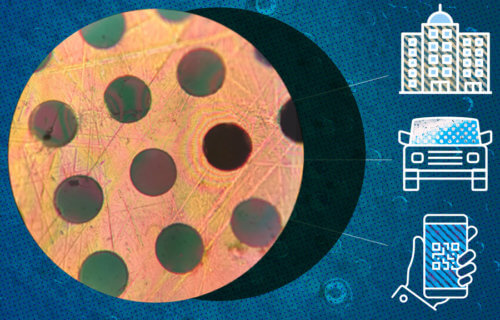
  1. An English bulldog, missing for five years, turned up in a Tennessee shelter, a thousand miles from her home in New York. She was identified by a microchip and happily reunited with her grateful and astonished owner.
  2. A young woman in Denver, CO, was watching some children playing on a frozen pond when she saw the ice crack. She dashed out of her apartment to pull the kids out. Then the ice broke, plunging her into the frigid depths. Treading water, the heroic 23-year-old held an unconscious six-year old girl above the water until help arrived, and all survived.
  3. And from the sublime to the ridiculous: It seems that a man in New York has filed a $6 billion class-action suit against the New York Giants and Jets for playing their home games in New Jersey. He claims that millions of New York football fans have suffered “mental and emotional damage”, depression, sadness and anxiety.

To maintain my own sanity, I’m focusing on long walks, hot baths, watching comedies, baking, planning vacations, and re-organizing my closet. How are you coping, dear readers?

Photo by Rene Asmussen on Pexels.com

Good News Monday: Universal Transplants?

Universal blood type organs
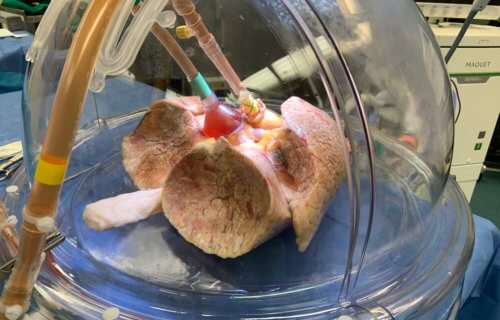
Universal blood type organs (Credit: UHN)

Universal blood type organs created in groundbreaking procedure, making transplants available for all patients

TORONTO, Ontario — A revolutionary procedure could make donor organs available for more patients — regardless of their blood type. Researchers from the University Health Network in Toronto have proven that it’s possible to convert the blood type of an organ, creating a universal organ that would avoid rejection during transplants.

The procedure, conducted at the Latner Thoracic Surgery Research Laboratories and UHN’s Ajmera Transplant Centre, changed the lungs from a donor with type A blood into an organ with type O blood. Scientists consider type O the universal donor type. The breakthrough may significantly cut down on the disparity in organ transplant availability and shorten transplant waiting lists worldwide.

“With the current matching system, wait times can be considerably longer for patients who need a transplant depending on their blood type,” explains senior author Dr. Marcelo Cypel, Surgical Director of the Ajmera Transplant Centre, in a media release.

“Having universal organs means we could eliminate the blood-matching barrier and prioritize patients by medical urgency, saving more lives and wasting less organs,” adds Dr. Cypel, who is also a thoracic surgeon at UHN’s Sprott Department of Surgery.

Why is blood type so important?

A person’s blood type is dependent upon the antigens sitting on the surface of their red blood cells. People with type A blood have A antigens on their cells, while type B has B antigens and type AB has both. People with type O blood, however, have no antigens on the surface of their cells.

The reason this is important is because these antigens trigger an immune response if they’re foreign to a person’s body. This is also why patients needing a blood transfusion can only receive blood from donors with the same blood type — or from universal type O donors.

This problem also complicates organ donations. Researchers explain that antigens A and B are present on the surfaces of organs as well. Even people with type O blood have problems receiving transplants from type A or B donors. Since type O patients have anti-A and anti-B antibodies in their blood, receiving an organ from a type A donor will likely result in rejection.

For these reasons, doctors have to match up organs according to blood type as well as many other factors — leading to a wait for the perfect organ which can last several years. On average, type O patients actually have the longest wait for lung transplants — sometimes twice as long as type A patients. Kidney transplant patients can also end up waiting up to five years for a compatible donor.

“This translates into mortality. Patients who are type O and need a lung transplant have a 20 percent higher risk of dying while waiting for a matched organ to become available,” says explains study first author Dr. Aizhou Wang. “If you convert all organs to universal type O, you can eliminate that barrier completely.”

Universal blood type organs
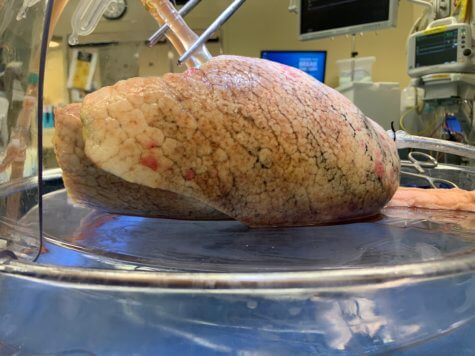
Universal blood type organs (Credit: UHN)

How did scientists make a universal organ?

In the proof-of-concept study, Dr. Cypel’s team used the Ex Vivo Lung Perfusion (EVLP) System to pump nourishing fluids through human donor lungs from a type A patient. This process allowed the researchers to warm the lungs up to body temperature so the team could convert the organs for transplantation.

Before the procedure, the donor’s lungs were not considered suitable for an organ transplant. During the experiment, study authors treated one lung with a group of enzymes to flush out the A antigens, while leaving the other lung untreated.

From there, they tested the conversion by adding type O blood with large concentrations of anti-A antibodies to the EVLP circuit. This simulated the conditions of an ABO-incompatible transplant. Results show that the treated lung was well tolerated, meaning the lung would likely be safe from rejection if the team placed it in a human patient. Meanwhile, the untreated lung showed signs of rejection, meaning such a transplant in a human would likely fail.

Gut enzymes are key to universal organs

Dr. Stephen Withers, a biochemist at the University of British Columbia, found a group of gut enzymes in 2018 which became the first step in creating these universal organs. Researchers used the EVLP circuit to deliver these enzymes to the lungs during the new experiment.

“Enzymes are Mother Nature’s catalysts and they carry out particular reactions. This group of enzymes that we found in the human gut can cut sugars from the A and B antigens on red blood cells, converting them into universal type O cells,” Dr. Withers explains. “In this experiment, this opened a gateway to create universal blood-type organs.”

“This is a great partnership with UHN and I was amazed to learn about the ex vivo perfusion system and its impact [on] transplants. It is exciting to see our findings being translated to clinical research,” Dr. Withers adds.

The study authors are working on a proposal to begin a clinical trial on this new technique. They hope that the trial could begin within the next 12 to 18 months.

The study is published in the journal Science Translational Medicine.

Article by Chris Melore, Studyfinds.com

Is Health Also in the Eye of the Beholder?

A fascinating study.

Photo by Luis Ruiz on Pexels.com

FORT WORTH, Texas — The beautiful people get all the breaks. A new study finds an interesting link between how attractive someone is and the strength of their immune system.

A team at Texas Christian University found that when people had to rate a group of photos based on the attractiveness of each person’s face, they consistently rated individuals with stronger immune health as more attractive than other photos in the study.

Although beauty is often in the eye of the beholder, researchers say there has been a historical link between what societies consider attractive and reproductive success. The TCU team theorized that, because certain evolutionary traits tie into more mating success, people who seem more attractive to others may also appear healthier to the opposite sex.

To test that theory, researchers gathered 159 men and women and photographed each one without makeup and while displaying a neutral expression on their face. Study authors then took blood samples from each person to measure their levels of white blood cells — which battle disease and infections.

The team then brought in 492 other people to rate members of the opposite sex in these photos based on their attractiveness. The volunteers did not have any information on each person’s immune health and only had that one neutral photo to base their rating on. Results show people with stronger immune systems were rated as being more attractive by the 492 volunteers.

“The current research suggests that a relationship between facial attractiveness and immune function is likely to exist,” corresponding author Summer Mengelkoch and her team write in the journal Proceedings of the Royal Society B.

Opposites attract

Interestingly, the study finds men and women have very different ideas about what makes a face attractive and healthy. Researchers found that, on average, women rated men with higher levels of NK (natural killer) cells as more attractive. These cells play a key role in fighting off and killing bacteria.

Men, on the other hand, found women with lower NK cell levels in their blood more attractive. Study authors believe the reason for this is women with lower NK levels generally have higher estrogen levels — a hormone important to sexual reproduction.

As for which features are likely to stand out and attract attention, researchers found a not-so-surprising list of qualities people look for in a pretty face.

“Features such as clear skin, prominent cheekbones, bright eyes, and full, red lips have been deemed attractive throughout recorded human history,” the researchers write.

Good News Monday: Love is All Around

Just came across this lovely story. Happy Valentines Day, everyone!

ABC Australia/YouTube

A kangaroo was saved after taking a dunk in the ocean off the coast of Australia by a rookie lifeguard.

Onlookers enjoying the surf and scenery on a rock shelf over-hanging the ocean in Bundjalung National Park were surprised to see an eastern grey kangaroo jumping across rock pools and tumbling into rough surf.

“My other workmate, Carissa and I, we were sitting on the tractor and she goes, ‘Oh my God, there’s a kangaroo jumping off the rocks!’” said 17-year old Lillian Bee-Young, a new lifeguard who had a surfboard nearby. “We were just figuring out what we should do… because we’ve never had that happen before.”

There were rough conditions that day on the north coast of New South Wales. Lillian believed the kangaroo was trying to avoid some fishermen and just “got wiped out by a set (of waves).”

Lillian told ABC News Australia that she didn’t quite know how to proceed as she paddled out with the rescue board. She didn’t know whether to try and get it onto the board, for example, or if that would put her in danger and stress the marsupial out even more.

It was just managing to keep its head above the water, but didn’t want to come ashore due to a gathering crowd.

Her friend Carissa cleared an avenue to allow Roo to feel comfortable, and after a few stumbles, it made it back onto dry land and immediately went off into the bushes.

“It was quite special. There were people cheering and clapping… and then [the kangaroo] was just sitting there up in the bushes, almost, I thought, as a thank you… It was really serene,” Lillian said.

(WATCH the video.)

The Canine Connection

Thought for the day: Humans are like dogs.

We are generally friendly and want others to like us. We form packs with those like ourselves. We need lots of attention.

And some of us spend far too much time with our noses up others’ butts.

Photo by Blue Bird on Pexels.com

Good News Monday: Plastic Fantastic

2D Polymer material

The new material is a two-dimensional polymer that self-assembles into sheets and could be used as a lightweight, durable coating for car parts or cell phones, or as a building material for bridges or other structures. (Credits:Image: polymer film courtesy of the researchers; Christine Daniloff, MIT)

CAMBRIDGE, Mass. — Scientists at MIT have developed a material that is as light as plastic — but stronger than steel. They believe the material could revolutionize the car, mobile phone, and building industries.

The easily manufactured substance – up to six times more difficult to break than bulletproof glass – is the result of an engineering feat previously thought to be impossible. It is a two-dimensional polymer that self-assembles into sheets, unlike all other polymers, which form one-dimensional, spaghetti-like chains.

Until now, scientists believed it was impossible to induce polymers to form 2D sheets. Now, its developers hope the material could be used as a lightweight, durable coating for car parts or mobile phones. It could also serve as a worthy candidate for the construction of office buildings, bridges, or other structures.

“We don’t usually think of plastics as being something that you could use to support a building, but with this material, you can enable new things,” says senior author Michael Strano, a professor of chemical engineering at MIT, in a statement. “It has very unusual properties and we’re very excited about that.”

The researchers filed for two patents on the pioneering process they used to generate the material.

Birth of 2DPA-1

So how did this groundbreaking substance come to be? Polymers, which include all plastics, consist of chains of building blocks called monomers. The chains grow by adding new molecules onto their ends. Once formed, polymers can be shaped into three-dimensional objects, such as water bottles, using injection molding. Experts have long believed that if polymers could be induced to grow into a two-dimensional sheet, they should form extremely strong, lightweight materials.

However, many decades of work led to the conclusion that it was impossible to create such sheets.

One reason was that if just one monomer rotates up or down, out of the plane of the growing sheet, the material will begin expanding in three dimensions and the sheet-like structure will be lost. However, in the new study, Strano and his colleagues came up with a new polymerization process that allows them to generate a two-dimensional sheet called a polyaramide.

For the monomer building blocks, they use a compound called melamine, which contains a ring of carbon and nitrogen atoms. Under the right conditions, the monomers can grow in two dimensions, forming discs. Strano explains that these discs stack on top of each other, held together by hydrogen bonds between the layers, which make the structure very stable and strong.

“Instead of making a spaghetti-like molecule, we can make a sheet-like molecular plane, where we get molecules to hook themselves together in two dimensions,” says Strano. “This mechanism happens spontaneously in solution, and after we synthesize the material, we can easily spin-coat thin films that are extraordinarily strong.”

Because the material self-assembles in solution, Strano says it can be made in large quantities by simply increasing the quantity of the starting materials. The researchers showed that they could coat surfaces with films of the material, which they call 2DPA-1.

“With this advance, we have planar molecules that are going to be much easier to fashion into a very strong, but extremely thin material,” says Strano.

Revolutionary material ‘can completely prevent water or gases from getting through’

The researchers write that the new material’s elastic modulus – a measure of how much force it takes to deform a material – is between four and six times greater than that of bulletproof glass. They also claim that its yield strength – how much force it takes to break the material – is twice that of steel, even though the material has only about one-sixth the density of steel.

Strano says that another key feature of 2DPA-1 is that it is impermeable to gases. “While other polymers are made from coiled chains with gaps that allow gases to seep through, the new material is made from monomers that lock together like Lego, and molecules cannot get between them,” he adds. “This could allow us to create ultrathin coatings that can completely prevent water or gases from getting through. This kind of barrier coating could be used to protect metal in cars and other vehicles, or steel structures.”

The study’s findings are published in the journal NatureThe authors are now studying in more detail how the material is able to form 2D sheets. They’re also experimenting with changing its molecular make-up to create other new materials.

South West News Service writer Stephen Beech contributed to this report.

The Worst Foods For Your Brain

Not bacon, cream, or the usual suspects. I’m talking about a steady diet of negative influences that makes us feel lousy to the core. Such as:

  1. Fake news in all its mean, snarky iterations
  2. By extension, only getting news from one point of view. It’s important to hear what the other side is thinking, too — but not so much that we start hurling things at the TV
  3. Following the minutiae of celebrities’ pretend-perfect lives
  4. Inactivity
  5. Living in the past, whether you have good memories (those glory days as a high school athlete) or bad (your dysfunctional family)
  6. Envy
  7. Social media that makes us feel our lives aren’t as glamorous, exciting, happy, or satifying as other people we know
  8. Obsessing. Make a plan, take action, move on
  9. Seeing the glass half-empty
  10. Tunnel vision
  11. Influencer unboxings. Hey, many times they didn’t even PAY for the stuff!
  12. Holding on to anger
  13. Not cutting ourselves enough slack : our finances, weight, wrinkles, job, house, parenting skills etc.
  14. Forgetting that you are good enough just as you are
Photo by Andre Furtado on Pexels.com

The Confessional

In what passes for a social life these days, my most frequent interactions outside of conversations with my husband reside in the beauty world, aka mani/pedis, haircuts, brow shaping, etc.

I’m not sure if men have comparable experiences, but the intimacy of beauty rituals with people we see regularly invites a certain amount of sharing. Mostly, we discuss benign frustrations, updates, and recommendations (will our home renovation EVER be finished; when can we visit with our kids who don’t live nearby; someone’s annoying neighbor or relative; where can we find the best sushi, etc.) but sometimes I overhear a startling story.

This week, the woman getting her nails done next to me told the manicurist a peculiarly personal and grisly tale. She was in the salon with her four-year-old niece and mentioned that she is unlikely to have children herself, as she is a widow approaching her 38th birthday. She went on to recount the following: her husband’s ashes are in an urn in her home and apparently the contents also include a necklace. It seems the lid somehow became loose and the niece has recently been using it as a storage container, removing some of the ashes to make space to add her own treasures.

I couldn’t help wondering what body parts have been replaced with a four-year-old’s special possessions. And maybe it’s me, but this seemed beyond the pale of what one discusses with one’s manicurist!

Photo by freestocks.org on Pexels.com

Latest Dispatch From the “You Can’t Make This S*** Up” Department

Thanks to TheEnlightenedMind622 for bringing this to my attention. My jaw is still on the floor.

Desperate No-Vaxxers Paying COVID-Positive People $150 for Dinner and COVID Infection

PARTY LIKE IT’S 2019

A new vaccination mandate in Italy requires everyone over 50 to be vaccinated or pay a hefty fine. Some are opting to pay to get infected with COVID instead.

ROME—The messages started popping up on Telegram a few days after Italy announced a new vaccine mandate requiring everyone over age 50 to be vaccinated against COVID-19 or risk hefty fines and even termination from their jobs.

Here in the first epicenter of the pandemic outside of China, Italy has paid a hefty price with lockdowns that have crippled the economy and the deaths of more than 140,000 people. Vaccine mandates have become the primary strategy in moving forward, yet a small number of people continue to resist.

The only alternative to getting vaccinated is having recovered from the infection, which must be registered on a person’s national health card. “I am urgently looking for a positive and I am willing to pay,” one desperate anti-vaxxer wrote, according to Italian police who are cracking down on the clandestine COVID meetups and other scams ahead of the Feb. 1 deadline for the over-50 vaccine mandate.

Soon after the announcement of the new law, enterprising opportunists started offering COVID parties where people who tested positive for the disease mix and mingle with those who want to catch it—one racket in Tuscany even includes a truffle dinner with Barolo wine, along with a positive-testing infection for around $150.

Other scams have also emerged. Two people were arrested in Rome after one man who was COVID positive used the health card of someone who wanted to skirt the vaccines to get tested at a pharmacy. When the COVID-positive man opted to pay with his own credit card—which obviously did not match the health card of the man who wanted a positive COVID diagnosis attached to his—the pharmacy conducting the test reported them both.

Infectious-disease specialist Pier Luigi Lopalco said on Italian television that the COVID parties and other scams are against the law and people involved should be hunted down and arrested. “This uses the same logic as playing Russian roulette. For a person who has never had COVID, who has not been vaccinated, encountering this virus can mean a mild form of the disease, but it can also mean ending up in intensive care,” he said on Italian television. “The discriminating factor between these two occurrences, probably, lies in genetics. And there is nothing that can be done to know in advance.”

He added, “Nobody can know before getting infected if they belong to the lucky group that will not have serious consequences or to that less fortunate group that can end up being intubated.”

The trend is not so terribly different from anti-vax parents who held measles parties for their kids when vaccinations became mandatory in Italy—which led to legislation that made such practices illegal.

After an anti-vax nurse was arrested for hosting a COVID party in Milan last week, virologist Roberto Burioni tweeted his disgust. “I would pay any amount to get me (and my loved ones) the vaccine, instead there are people who pay not to have it,” he wrote. “It’s like paying to have airbags removed from your car.”