
Author Archives: adguru101

Unknown's avatar

About adguru101

Formerly a creative director and writer at NY and NJ ad agencies, I'm now retired and living in Oregon, USA, with my husband and countless dust balls. With this blog, I specifically hope to reach "mid-century moderns" -- women born in the '50's -- with content and observations about the issues we deal with every day. But I welcome all readers of any age, sex, orientation, etc… you youngsters will eventually be my age too, and I love reading everyone’s comments!

Good News Monday: Plastic Fantastic

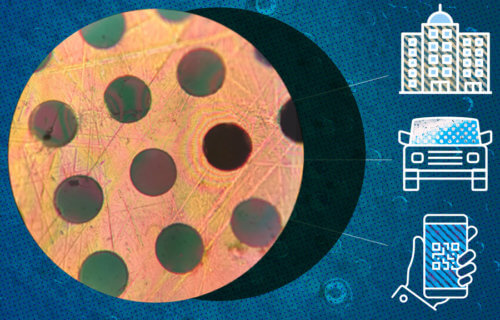
2D Polymer material

The new material is a two-dimensional polymer that self-assembles into sheets and could be used as a lightweight, durable coating for car parts or cell phones, or as a building material for bridges or other structures. (Credits:Image: polymer film courtesy of the researchers; Christine Daniloff, MIT)

CAMBRIDGE, Mass. — Scientists at MIT have developed a material that is as light as plastic — but stronger than steel. They believe the material could revolutionize the car, mobile phone, and building industries.

The easily manufactured substance – up to six times more difficult to break than bulletproof glass – is the result of an engineering feat previously thought to be impossible. It is a two-dimensional polymer that self-assembles into sheets, unlike all other polymers, which form one-dimensional, spaghetti-like chains.

Until now, scientists believed it was impossible to induce polymers to form 2D sheets. Now, its developers hope the material could be used as a lightweight, durable coating for car parts or mobile phones. It could also serve as a worthy candidate for the construction of office buildings, bridges, or other structures.

“We don’t usually think of plastics as being something that you could use to support a building, but with this material, you can enable new things,” says senior author Michael Strano, a professor of chemical engineering at MIT, in a statement. “It has very unusual properties and we’re very excited about that.”

The researchers filed for two patents on the pioneering process they used to generate the material.

Birth of 2DPA-1

So how did this groundbreaking substance come to be? Polymers, which include all plastics, consist of chains of building blocks called monomers. The chains grow by adding new molecules onto their ends. Once formed, polymers can be shaped into three-dimensional objects, such as water bottles, using injection molding. Experts have long believed that if polymers could be induced to grow into a two-dimensional sheet, they should form extremely strong, lightweight materials.

However, many decades of work led to the conclusion that it was impossible to create such sheets.

One reason was that if just one monomer rotates up or down, out of the plane of the growing sheet, the material will begin expanding in three dimensions and the sheet-like structure will be lost. However, in the new study, Strano and his colleagues came up with a new polymerization process that allows them to generate a two-dimensional sheet called a polyaramide.

For the monomer building blocks, they use a compound called melamine, which contains a ring of carbon and nitrogen atoms. Under the right conditions, the monomers can grow in two dimensions, forming discs. Strano explains that these discs stack on top of each other, held together by hydrogen bonds between the layers, which make the structure very stable and strong.

“Instead of making a spaghetti-like molecule, we can make a sheet-like molecular plane, where we get molecules to hook themselves together in two dimensions,” says Strano. “This mechanism happens spontaneously in solution, and after we synthesize the material, we can easily spin-coat thin films that are extraordinarily strong.”

Because the material self-assembles in solution, Strano says it can be made in large quantities by simply increasing the quantity of the starting materials. The researchers showed that they could coat surfaces with films of the material, which they call 2DPA-1.

“With this advance, we have planar molecules that are going to be much easier to fashion into a very strong, but extremely thin material,” says Strano.

Revolutionary material ‘can completely prevent water or gases from getting through’

The researchers write that the new material’s elastic modulus – a measure of how much force it takes to deform a material – is between four and six times greater than that of bulletproof glass. They also claim that its yield strength – how much force it takes to break the material – is twice that of steel, even though the material has only about one-sixth the density of steel.

Strano says that another key feature of 2DPA-1 is that it is impermeable to gases. “While other polymers are made from coiled chains with gaps that allow gases to seep through, the new material is made from monomers that lock together like Lego, and molecules cannot get between them,” he adds. “This could allow us to create ultrathin coatings that can completely prevent water or gases from getting through. This kind of barrier coating could be used to protect metal in cars and other vehicles, or steel structures.”

The study’s findings are published in the journal NatureThe authors are now studying in more detail how the material is able to form 2D sheets. They’re also experimenting with changing its molecular make-up to create other new materials.

South West News Service writer Stephen Beech contributed to this report.

The Worst Foods For Your Brain

Not bacon, cream, or the usual suspects. I’m talking about a steady diet of negative influences that makes us feel lousy to the core. Such as:

  1. Fake news in all its mean, snarky iterations
  2. By extension, only getting news from one point of view. It’s important to hear what the other side is thinking, too — but not so much that we start hurling things at the TV
  3. Following the minutiae of celebrities’ pretend-perfect lives
  4. Inactivity
  5. Living in the past, whether you have good memories (those glory days as a high school athlete) or bad (your dysfunctional family)
  6. Envy
  7. Social media that makes us feel our lives aren’t as glamorous, exciting, happy, or satifying as other people we know
  8. Obsessing. Make a plan, take action, move on
  9. Seeing the glass half-empty
  10. Tunnel vision
  11. Influencer unboxings. Hey, many times they didn’t even PAY for the stuff!
  12. Holding on to anger
  13. Not cutting ourselves enough slack : our finances, weight, wrinkles, job, house, parenting skills etc.
  14. Forgetting that you are good enough just as you are
Photo by Andre Furtado on Pexels.com

Good News Monday: Yes, They Work

From today’s New York Times (with apologies for wonky formatting.)

Preparing vaccines in Rochester Hills, Mich. Emily Elconin for The New York Times
The C.D.C. has begun to publish data on Covid outcomes among people who have received booster shots, and the numbers are striking:
Based on 25 U.S. jurisdictions. | Source: C.D.C.
As you can see, vaccination without a booster provides a lot of protection. But a booster takes somebody to a different level.
This data underscores both the power of the Covid vaccines and their biggest weakness — namely, their gradual fading of effectiveness over time, as is also the case with many other vaccines. If you received two Moderna or Pfizer vaccine shots early last year, the official statistics still count you as “fully vaccinated.” In truth, you are only partially vaccinated.
Once you get a booster, your risk of getting severely ill from Covid is tiny. It is quite small even if you are older or have health problems.
The average weekly chance that a boosted person died of Covid was about one in a million during October and November (the most recent available C.D.C. data). Since then, the chances have no doubt been higher, because of the Omicron surge. But they will probably be even lower in coming weeks, because the surge is receding and Omicron is milder than earlier versions of the virus. For now, one in a million per week seems like a reasonable estimate.
That risk is not zero, but it is not far from it. The chance that an average American will die in a car crash this week is significantly higher — about 2.4 per million. So is the average weekly death rate from influenza and pneumonia — about three per million.
With a booster shot, Covid resembles other respiratory illnesses that have been around for years. It can still be nasty. For the elderly and immunocompromised, it can be debilitating, even fatal — much as the flu can be. The Omicron surge has been so terrible because it effectively subjected tens of millions of Americans to a flu all at once.
For the unvaccinated, of course, Covid remains many times worse than the flu.
‘Heartbreaking’
I’m highlighting these statistics because there is still a large amount of vaccine skepticism in the U.S. I have heard it frequently from readers in the past week, after our poll on Covid attitudes and partisanship, as well as the “Daily” episode about the poll.
This vaccine skepticism takes two main forms. The more damaging form is the one that’s common among Republicans. They’re so skeptical of vaccines — partly from misinformation coming from conservative media figures and Republican politicians — that many remain unvaccinated.
Look at this detail from the Kaiser Family Foundation’s latest portrait of vaccination: Incredibly, there are more unvaccinated Republican adults than boosted Republican adults.
From a survey of 1,536 adults in Jan. 2022. | Source: Kaiser Family Foundation
This lack of vaccination is killing people. “It’s cost the lives of people I know, including just last week a friend of 35 years, a person I met on one of the first weekends of my freshman year of college,” David French, a conservative writer who lives in Tennessee, wrote in The Atlantic. “I can’t tell you how heartbreaking it is to see person after person fall to a virus when a safe and effective shot would have almost certainly not just saved their life but also likely saved them from even having a serious case of the disease.”
Dr. Peter Hotez, a vaccine expert at the Baylor College of Medicine, estimates that in the second half of last year, 200,000 Americans needlessly lost their lives because they refused Covid vaccines. “Three doses of either Pfizer or Moderna will save your life,” Hotez told me. “It’s the only way you can be reasonably assured that you will survive a Covid-19 infection.” (Young children, who are not yet eligible for the vaccines, are also highly unlikely to get very sick.)
The vaccines don’t prevent only death. Local data shows the risks of hospitalization are extremely low, too. Vaccination also reduces the risk of long Covid to very low levels.
Healthy and anxious
The second form of vaccine skepticism is among Democrats — although many would recoil at any suggestion that they are vaccine skeptics. Most Democrats are certainly not skeptical about getting a shot. But many are skeptical that the vaccines protect them.
About 41 percent of Democratic voters say they are worried about getting “seriously sick” with Covid, according to a Kaiser Family Foundation poll released last week. That’s a very high level of anxiety for a tiny risk.
Here’s the proof that much of the fear is irrational: Young Democrats are more worried about getting sick than old Democrats, even though the science says the opposite should be true.
From a survey of 1,536 adults in Jan. 2022. | Source: Kaiser Family Foundation
The most plausible explanation for this pattern is political ideology. Younger Democrats are significantly more liberal than older Democrats, according to the Pew Research Center (and other pollsters, too). Ideology tends to shape Covid views, for a complex mix of often irrational reasons. The more liberal you are, the more worried about Covid you tend to be; the more conservative you are, the less worried you tend to be.
I know that many liberals believe an exaggerated sense of personal Covid risk is actually a good thing, because it pushes the country toward taking more precautions. Those precautions, according to this view, will reduce Covid’s death toll, which truly is horrific right now. In a later newsletter this week, I will consider that argument.
For now, I’ll simply echo the many experts who have pleaded with Americans to get vaccinated and boosted.
Answers and convenience
What might help increase the country’s ranks of vaccinated? Vaccine mandates, for one thing — although many Republican politicians, as well as the Republican appointees on the Supreme Court, oppose broad mandates. Private companies can still impose mandates on their employees and customers.
Without mandates, the best hope for increased vaccination is probably community outreach. While many unvaccinated Americans are firmly opposed to getting a shot, others — including some Democrats and independents — remain agnostic. If getting a vaccination is convenient and a nurse or doctor is available to answer questions, they will consider it.
“I cannot count how many people I’ve spoken to about the Covid vaccine who have been like, ‘No, I don’t think so. No,’” Dr. Kimberly Manning of Emory University told The Atlanta Journal-Constitution. “Then I run into them two weeks later and they tell me they got vaccinated.”
Related: “You have to scratch your head and say, ‘How the heck did this happen?’” Dr. Anthony Fauci told Michael Barbaro on today’s episode of “The Daily,” about the partisan gap in Covid attitudes. Fauci also predicted that people who were anxious about Covid would become less so as caseloads fell.
In Times Opinion, James Martin, a Jesuit priest, argues that schadenfreude over vaccine skeptics’ suffering warps the soul.

The Confessional

In what passes for a social life these days, my most frequent interactions outside of conversations with my husband reside in the beauty world, aka mani/pedis, haircuts, brow shaping, etc.

I’m not sure if men have comparable experiences, but the intimacy of beauty rituals with people we see regularly invites a certain amount of sharing. Mostly, we discuss benign frustrations, updates, and recommendations (will our home renovation EVER be finished; when can we visit with our kids who don’t live nearby; someone’s annoying neighbor or relative; where can we find the best sushi, etc.) but sometimes I overhear a startling story.

This week, the woman getting her nails done next to me told the manicurist a peculiarly personal and grisly tale. She was in the salon with her four-year-old niece and mentioned that she is unlikely to have children herself, as she is a widow approaching her 38th birthday. She went on to recount the following: her husband’s ashes are in an urn in her home and apparently the contents also include a necklace. It seems the lid somehow became loose and the niece has recently been using it as a storage container, removing some of the ashes to make space to add her own treasures.

I couldn’t help wondering what body parts have been replaced with a four-year-old’s special possessions. And maybe it’s me, but this seemed beyond the pale of what one discusses with one’s manicurist!

Photo by freestocks.org on Pexels.com

Latest Dispatch From the “You Can’t Make This S*** Up” Department

Thanks to TheEnlightenedMind622 for bringing this to my attention. My jaw is still on the floor.

Desperate No-Vaxxers Paying COVID-Positive People $150 for Dinner and COVID Infection

PARTY LIKE IT’S 2019

A new vaccination mandate in Italy requires everyone over 50 to be vaccinated or pay a hefty fine. Some are opting to pay to get infected with COVID instead.

ROME—The messages started popping up on Telegram a few days after Italy announced a new vaccine mandate requiring everyone over age 50 to be vaccinated against COVID-19 or risk hefty fines and even termination from their jobs.

Here in the first epicenter of the pandemic outside of China, Italy has paid a hefty price with lockdowns that have crippled the economy and the deaths of more than 140,000 people. Vaccine mandates have become the primary strategy in moving forward, yet a small number of people continue to resist.

The only alternative to getting vaccinated is having recovered from the infection, which must be registered on a person’s national health card. “I am urgently looking for a positive and I am willing to pay,” one desperate anti-vaxxer wrote, according to Italian police who are cracking down on the clandestine COVID meetups and other scams ahead of the Feb. 1 deadline for the over-50 vaccine mandate.

Soon after the announcement of the new law, enterprising opportunists started offering COVID parties where people who tested positive for the disease mix and mingle with those who want to catch it—one racket in Tuscany even includes a truffle dinner with Barolo wine, along with a positive-testing infection for around $150.

Other scams have also emerged. Two people were arrested in Rome after one man who was COVID positive used the health card of someone who wanted to skirt the vaccines to get tested at a pharmacy. When the COVID-positive man opted to pay with his own credit card—which obviously did not match the health card of the man who wanted a positive COVID diagnosis attached to his—the pharmacy conducting the test reported them both.

Infectious-disease specialist Pier Luigi Lopalco said on Italian television that the COVID parties and other scams are against the law and people involved should be hunted down and arrested. “This uses the same logic as playing Russian roulette. For a person who has never had COVID, who has not been vaccinated, encountering this virus can mean a mild form of the disease, but it can also mean ending up in intensive care,” he said on Italian television. “The discriminating factor between these two occurrences, probably, lies in genetics. And there is nothing that can be done to know in advance.”

He added, “Nobody can know before getting infected if they belong to the lucky group that will not have serious consequences or to that less fortunate group that can end up being intubated.”

The trend is not so terribly different from anti-vax parents who held measles parties for their kids when vaccinations became mandatory in Italy—which led to legislation that made such practices illegal.

After an anti-vax nurse was arrested for hosting a COVID party in Milan last week, virologist Roberto Burioni tweeted his disgust. “I would pay any amount to get me (and my loved ones) the vaccine, instead there are people who pay not to have it,” he wrote. “It’s like paying to have airbags removed from your car.”

The Book Club Virgin

Although I’ve been an avid reader all my life — and exchanged book recommendations with friends for years — I was never in a book club until today.

Of course, “thanks” to Covid, it wasn’t what I’ve always imagined: a cozy gathering in someone’s living room, drinking wine, snacking, and veering off-topic.

Well, that last part kind of happened.

This was a Zoom gathering of a dozen women including many who knew each other and a couple of newbies. What I soon realized is that a book club provides permission to gossip shamelessly and unreservedly about people we’ve never met: “I can’t believe he said that!” “I can’t believe she DID that!” “What on earth were they thinking?” “His parents never really understood him.” “She was just trapped.” “How could he have been so callous?”

And, of course, we all wondered what the future holds and whether there will be a sequel.

This could be my favorite new guilty pleasure.

Photo by Monstera on Pexels.com

Good News Monday: Return of the Bison

If you live in the UK, you may soon glimpse the first wild bison to roam the country in thousands of years. Although not native to Britain, The Wilder Blean project in Kent plans to reintroduce bison in 2022 to help with woodland recovery and management on a controlled site, as was done successfully in the Netherlands in 2007. The rangers will begin with a young bull from Germany, two young females from Ireland, and an older female from Scotland.

Home on the range, indeed!

Photo by Pixabay on Pexels.com

Not sure if this is the right type of bison but it’s all I could find 🙂

The Deploring Twenties

Happy New Year, dear readers! As we shake off our hangovers and make resolutions, I suggest we virtually hold hands and pray that 2022 isn’t a repeat of 2020 and 2021.

A century ago, the Roaring Twenties ushered in an era of economic prosperity, cultural milestones including jazz and Art Deco, the end of corsets along with acknowledgment of a woman’s right to vote, innovations such as automobiles, radio and telephones, electrical appliances, and moving pictures.

So far, the 2020s have little to boast about: a deadly pandemic; social isolation; increased pushback against the basic human dignities of controlling our own bodies, loving whom we choose, existing without fear because of the color of our skin; the ever-increasing consequences of climate change, etc.

It’s enough to make any sensate being take to our beds with a bottle of booze and wait until humanity comes to its collective senses.

But hey, it’s a new year, and optimism springs eternal. We’ve still got a chance to turn this century into the Soaring 20s. It’s just gonna take a little effort.

Photo by Victor Freitas on Pexels.com

Good News Monday Bonus Round

Sharing some warm, fuzzy, anti-Omicron holiday news.

Photo by Heather White on Pexels.com

Dogs are boosting owners’ mental health during pandemic, making them less likely to be depressed

by Study Finds

ST. LOUIS — Dogs are the light of many pet owners’ lives and now a new study finds they’re also lighting the way out of depression for many Americans. Researchers found that dogs are boosting their owners’ mental health during the coronavirus pandemic.

Study authors say pets have also increased amounts of social support by fueling friendships. The findings come from a review of more than 1,500 people in the U.S. — half of whom own dogs.

Dog owners reported having significantly more social support available to them compared to potential dog owners, and their depression scores were also lower, compared to potential dog owners,” the study’s corresponding author Dr. Francois Martin of Nestle Purina Research writes in the journal PLOS One.

“There were no differences in anxiety and happiness scores between the two groups. Dog owners had a significantly more positive attitude towards and commitment to pets. Taken together, our results suggest that dog ownership may have provided people with a stronger sense of social support, which in turn may have helped buffer some of the negative psychological impacts caused by the COVID-19 pandemic,” the researchers report.

Dog walking can be a stress reliever

Researchers defined potential dog owners as individuals interested in owning a dog in the future. Both groups answered an online survey during the study. Results show the dog owners also had a significantly more positive attitude towards and commitment to their pets. However, the team did not find any differences in anxiety and happiness scores between these groups.

“Dog walking during confinements may have alleviated stressors and motivated self-care,” Dr. Martin’s team writes.

Other recent studies suggest pet ownership improves mood, leads to less loneliness, greater social support, and less stress by increasing exercise. Owners also said their dogs helped them cope with emotional stressors (91%) and maintain physical activity (96%) during lockdown.

“However, recent studies have also reported that pet ownership during the COVID-19 pandemic may have negatively affected people because of limited availability to resources,” the researchers write, noting that these resources include veterinary care and pet supplies.

“The present study aimed to understand if pet dogs offered their owners social support and contributed to better wellbeing during the COVID-19 pandemic,” they continue. “It was hypothesized that pet dog ownership would act as a buffer against negative impacts caused by the pandemic.”

Each group answered validated “psychometric” questionnaires on depression, anxiety, and happiness.

“Other types of pets are also likely to provide social support to humans. However, it is unclear if this support is equivalent and if the psychological mechanisms involved are the same as human-dog relationships,” Dr. Martin writes.

Furry friends help during difficult times

In the context of the pandemic, there is emerging evidence the relationship and attitude of people towards their pets may vary according to the species. Therefore, the team only included dog and potential dog owners in the investigation. All the participants were over 18 years of age.

Study authors excluded people owning other types of pets or those who failed to complete the entire survey. Those who owned more than one dog were asked to answer for the pet they felt closest to. The final sample comprised 1,535 volunteers, including 768 and 767 dog and potential dog owners, respectively.

“The COVID-19 pandemic has negatively affected diverse populations and our results provide evidence that pet owners and potential pet owners have also been impacted,” Dr. Martin concludes.

“Our results show that pet dog owners were significantly less depressed than non-pet owners during the COVID-19 pandemic. They are attached and committed to their dogs and they reported more social support available to them. Our work adds to the corpus of scientific literature demonstrating that pet dogs may positively contribute to the wellbeing of owners during difficult times.”

Study authors are calling for more work to better understand the relationship between pet ownership and well-being. Future research, the team says, would focus on people with low and moderate social support and include owners with diverse dog attachment level.

Good News Monday: Preventing Wrinkles AND Cancer?

Here’s another reason to take care of our complexions: New research finds that increased collagen helps fight cancer. While topical creams may or may not make much difference (dermal penetration is minimal), treatments that build collagen such as Genesis and IPL (intense pulsed light) may do more than keep that youthful glow. Schedule that derm appointment STAT!

Photo by Ron Lach on Pexels.com

Anti-wrinkle cream ingredient collagen could hold the key to curing cancer

NEW YORK — A substance that the body creates naturally and is also an ingredient in anti-wrinkle creams could hold the key to stopping the spread of cancer. Researchers from The Tisch Cancer Institute at Mount Sinai say cancerous tumors secrete a form of the protein collagen that keeps them quiet for years, even as they spread to other parts of the body. Their findings reveal that these tumor cells only turn malignant once their supplies of collagen run out.

Experiments involving mice and humans found increasing levels of type III collagen — the form of the protein cancer cells produce and cover themselves in — stops diseased cells from spreading. The collagen that surrounds the cells forces them to remain in a dormant state, preventing recurrence and metastasis — where they migrate to other organs.

“Our findings have potential clinical implications and may lead to a novel biomarker to predict tumor recurrences, as well as a therapeutic intervention to reduce local and distant relapses,” says senior author Professor Jose Bravo-Cordero in a media release.

Using state-of-the-art scanning techniques, the team tracked breast, head, and neck cancer cells implanted in mice. This enabled them to visualize the supporting “scaffold” as they became dormant and how this covering changed as the cells awoke.

Covering tumor cells in collagen could keep cancer asleep

In samples from cancer patients, researchers found type III collagen predicted tumor recurrence and metastasis. In the mice, infusions of collagen around cancer cells blocked their progression, forcing them back into dormancy.

“This intervention aimed at preventing the awakening of dormant cells has been suggested as a therapeutic strategy to prevent metastatic outgrowth,” Prof Bravo-Cordero says.

“As the biology of tumor dormancy gets uncovered and new specific drugs are developed, a combination of dormancy-inducing treatments with therapies that specifically target dormant cells will ultimately prevent local recurrence and metastasis and pave the way to cancer remission.”

How cancer cells remain inert for long periods before awakening to wreak havoc throughout the body has baffled experts for decades. The study, published in the journal Nature Cancer, solves a major mystery and opens the door to therapies using collagen as a cancer treatment.

From cosmetics to cancer research

Most people likely know collagen for its use in helping people look younger. However, the protein is also a natural building block for the skin, bones, and connective tissues throughout the body. It provides strength and elasticity, but women experience a dramatic drop in production after menopause.

In cosmetic products, collagen injections can improve the contours of the skin. Fillers that contain collagen remove lines and wrinkles from the face. It can also improve the appearance of scars.

Study authors note that collagen is present in the extracellular matrix, an intricate network that determines the physical properties of tissues — including tumors. Most cancer deaths are due to these harmful cells spreading throughout the body, which can still happen several years after surgical removal of the original tumor.

Previous research has shown collagen dressings heal chronic wounds that do not respond to other treatments. Encasing a tumor in collagen may have similarly dramatic success, Prof. Bravo-Cordero explains.

The study author adds that wound treatment with collagen scaffolds has displayed promising results and is a therapeutic alternative for people with complex skin wounds.

“Our studies demonstrate the potential therapeutic use of type III collagen to prevent the reawakening of cancer cells by inducing and maintaining cancer cell dormancy in the primary site,” researchers conclude in a statement to SWNS.

South West News Service writer Mark Waghorn contributed to this report.