Formerly a creative director and writer at NY and NJ ad agencies, I'm now retired and living in Oregon, USA, with my husband and countless dust balls.
With this blog, I specifically hope to reach "mid-century moderns" -- women born in the '50's -- with content and observations about the issues we deal with every day. But I welcome all readers of any age, sex, orientation, etc… you youngsters will eventually be my age too, and I love reading everyone’s comments!
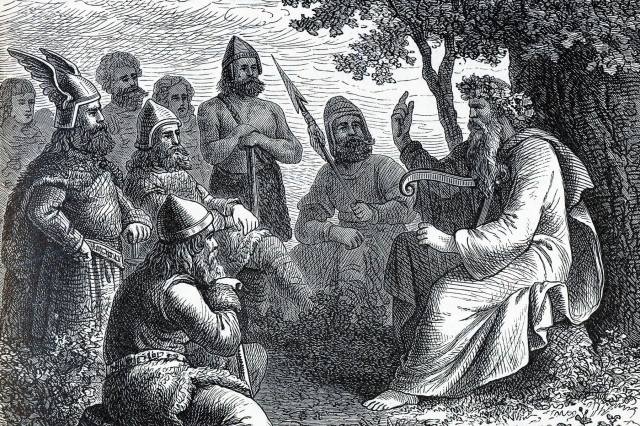
Samhain (pronounced “sow-in”), the ancient Celtic festival that inspired many of our modern-day Halloween traditions, represents the end of the harvest season and the onset of winter. An Irish Gaelic word also used in Scottish Gaelic and Manx, “Samhain” translates to “summer’s end”. Traditionally celebrated on November 1, it marked the time when the harvest had been gathered and stored, cattle were moved to closer pastures, livestock were secured for the winter, and communities were hunkering down for the long, cold months ahead.
Samhain was also believed to be a time when the spirits of those who had died during the year traveled to the otherworld. People believed that during Samhain, the boundary between the living and the dead was at its thinnest, allowing the spirit world to interact with the human world. To protect themselves from restless or malevolent spirits, people would light fires, leave offerings for deceased loved ones, and wear disguises.
Today, much of what we know about Samhain is rooted in Irish mythology, making it difficult to discern truth from lore. But here are five things we do know about this ancient and mysterious holiday.
Observed by the ancient Celts across Ireland, Scotland, and the Isle of Man, Samhain dates back to the Iron Age, more than 2,000 years ago. The Celts divided the year into two halves, Samhain (the darkness) and Beltane (the light). Those two halves were further divided by Imbolc (a holiday marking the beginning of the spring season) and Lughnasadh (marking the beginning of the harvest season). These four cross-quarter days, as they were known, were celebrated with fire festivals and were among the eight sacred days in ancient Celtic tradition, along with the spring and fall equinoxes and summer and winter solstices, known as quarter days.
Some historians believe that Samhain, which fell on the day that corresponds to November 1 on the contemporary calendar, marked the beginning of the Celtic new year, while others argue there isn’t enough evidence to support that hypothesis. What we do know for certain is that elements of Samhain influenced the celebration of Halloween as we know it.
Samhain Came Before All Hallows’ Eve
Irish immigrants brought the traditions of Samhain to the United States in the 1800s, but the name “Halloween” traces back to influences of early Christianity as the church sought to incorporate pagan traditions into a Christian narrative in order to woo converts. In the eighth century, Pope Gregory III designated November 1 as All Saints’ Day to honor Christian martyrs and saints. By the 10th century, November 2 was recognized as All Souls’ Day, a time to remember the souls of the dead.
Over time, All Saints’ Day became known as All Hallows’ Day, and the evening before, called All Hallows’ Eve, eventually morphed into Halloween. Celebrated on the night of October 31, Halloween isn’t the same thing as Samhain, but the Celtic holiday inspired several traditions of our modern-day Halloween, including carving vegetables, dressing in costumes, and visiting homes to receive treats.
Fire Was Central to the Celebration
Marking the midpoint between the fall equinox and winter solstice, Samhain was the most important of the four fire festivals, coming as it did at the end of the harvest and the beginning of the colder, darker days ahead. The festival was observed over several days as a means of celebrating the harvest, appeasing the gods, honoring the dead, and warding off spirits.
Conflicting sources say that people’s hearth fires would either burn out from being left unattended during the gathering of the harvest or were deliberately extinguished at the start of the Samhain festival. In either case, after the harvest had been gathered, a large communal fire was lit by Celtic priests, known as druids. Sacrifices of crops and animals were made, and the animal bones were then tossed into the “bone-fire,” which is where we get the word “bonfire.” Celebrants would light torches from the bonfire to take back to their homes in order to relight their own hearth fires.
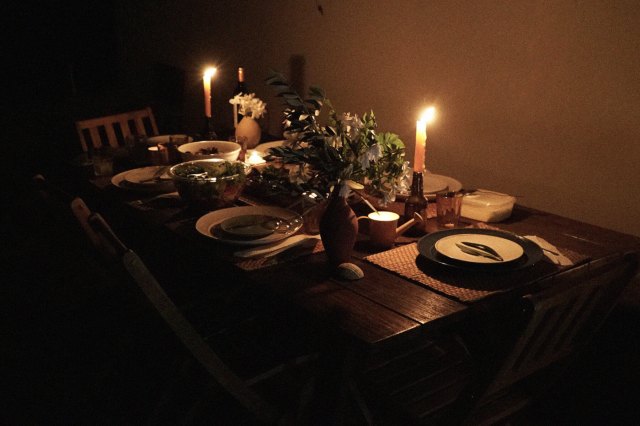
The Celts believed that Samhain was a time when the spirits of the dead could walk the world of the living, and that this temporary “thinning of the veil” between life and death meant it was possible to communicate with the deceased. A tradition known as a “dumb supper” involved setting a place at the head of the table to invite deceased ancestors to visit. The meal was served in absolute silence and celebrants avoided looking at the head of the table because they believed seeing the spirits would bring bad luck. After the supper, the untouched meal of the spirits was taken out and left in the woods.
Divination practices were also popular during Samhain because people believed the heightened spiritual energy of this liminal time was conducive to fortunetelling. Apples and nuts were used to predict the future and answer questions about the unknown. Some of these traditions later evolved into games, such as bobbing for apples.
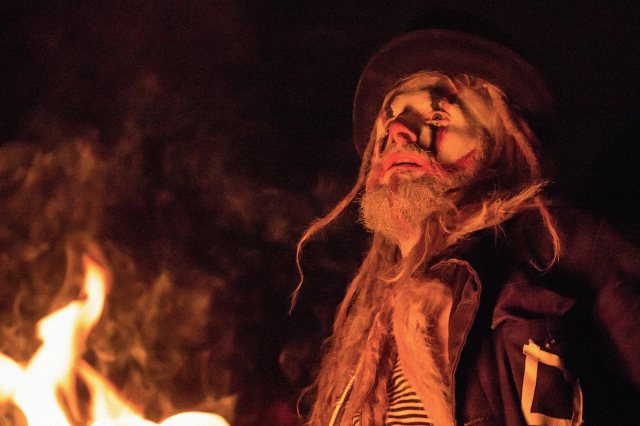
During the ancient festival of Samhain, people would wear masks, veils, and ghostly disguises to conceal their identity, confuse the spirits, and protect themselves from evil. Costumes were generally made from animal skins, and face coverings might have been an effort to impersonate dead ancestors. Children, meanwhile, would go from house to house showing off their disguises and singing or performing silly tricks in exchange for treats.
The Celts also created lanterns by carving faces into root vegetables that had been gathered during the harvest, including turnips, beets, and potatoes. These lanterns were illuminated with candles and placed in windows and outside of homes to ward off mischievous otherworldly visitors, including demons. This vegetable-carving tradition came to the U.S. with Irish and Scottish immigrants who discovered that pumpkins, which weren’t indigenous to Ireland, were well suited for carving.
It’s been a while, dear readers, but I can’t resist sharing the ultimate (IMHO) tacky story: couples who ask guests to pay to attend their wedding! And not pocket change, mind you, we’re talking major bucks.
Whatever happened to a meaningful and personal experience, vs an opportunity to show off for one’s friends/family/Instagram?!? Emily Post would be horrified. Read on, and do share your opinion: Is this ever ok?
With many guests already spending hundreds of dollars to attend a wedding, some experts say that requiring an entrance fee to your nuptials is in poor taste. Credit…Getty Images
Planning a wedding has become so expensive that some couples are asking their guests to pay to attend their special day.
Hassan Ahmed, 23, is charging his guests $450 for a ticket to his wedding next year in Houston, where he lives. Mr. Ahmed said he hadn’t heard back from many of his 125 wedding guests. But he has already spent over $100,000 on the wedding, including deposits for the venue, the D.J. and the photographer. In a video on TikTok, he said he was confused by the response, noting that many of his guests had spent more money on Beyoncé or Chris Brown tickets.
According to a study by the wedding planning website the Knot, the average cost of a wedding ceremony and reception in 2023 was $35,000 — an increase of $5,000 from the year before. The Knot surveyed about 10,000 couples who had married in the United States in 2023.
But the approach of selling tickets to a wedding has mostly upset guests, many of whom have expressed the opinion that it is in poor taste for the couple to put their financial burden onto their guests and that there are more cost-effective ways for couples to have a wedding.
Matthew Shaw, the founder of Sauveur, a wedding planning company in London, said that selling tickets “introduces a strange relationship between you and your guests, turning your guests into customers.”
He added, “You’re no longer hosting — you’re offering them a paid experience, which introduces a very different narrative in terms of what guests are expecting.”
Though the cost of having a wedding is increasing, Mr. Shaw added: “I think there’s this assumption that we must have these big weddings. You can have really magical scaled-back and simpler celebrations, or more intimate and fewer guests. When we all went through the pandemic, we found other ways to celebrate.”
The cost of being a guest is also becoming more expensive. The average cost of attending a wedding is $580, according to a 2023 study by the Knot, which surveyed 1,000 people who had attended a wedding in the previous year. That was an increase of $120 compared with 2021.
Nova Styles and Reemo Styles, who were married at St. Patrick’s Cathedral in New York in June 2023, charged guests $333 and sold all their tickets.
The couple, who live on the Upper East Side, said they had not charged guests to cover the cost of their wedding, which was upward of $70,000; rather, they had needed to winnow their guest list down significantly.
The couple hired a double-decker bus that took guests to New York landmarks that were significant in their love story. The first stop was the legal ceremony at the cathedral. Other stops included Hudson Yards, where Mr. Styles, 31, proposed, and the 42nd Street AMC theater, where they played a video of their journey together. The final stop was the reception, which was held at a private event space on the 102nd floor at the One World Observatory.
The couple originally had a 350-person guest list, but the bus had space for only 60 people. “It was stressful,” Mr. Styles said. “We had to figure out a way for them to choose us, because we can’t choose them.”
Ms. Styles added, “We wanted people who really wanted to be there.” They felt that the ticket system was the best way to do it.
Lola Marie, 41, a close friend of the couple who paid the $333 ticket price, was at first confused when she received the invitation.
“I was definitely hesitant,” Ms. Marie said. “I was shocked. ‘Pay for a wedding? I never heard nothing like that. That sounds crazy. Who y’all think y’all are?’”
She called the couple, and once they explained their reasoning for selling tickets to their wedding, she understood. She decided to pay immediately after the call.
“It was worth more than $333,” Ms. Marie said, adding that she knew the couple’s intention was not to make money from their guests. She said she had a lot of fun celebrating and would have paid much more for the steak and lobster dinner at the top of One World Trade Center, with stunning views of the city and a surprise performance by the rapper Fabolous.
Jamie Wolfer, the founder of Wolfer & Co., a wedding planning company in Waco, Texas, said that while she understood that each couple would have a unique situation, generally, charging guests for tickets “really does kind of feel like a social faux pas” that can lead to conflicts between couples and their guests.
Mr. Shaw added that he could see a situation where couples ask guests to throw in $50 because times are tough, or a request for cash gifts. “But this is serious money people are asking,” he said.
Sadiba Hasan reports on love and culture for the Styles section of The Times.
I’ve neglected this blog for too long, as there’s been a lot going on: Health issues with my husband, leading to many medical appointments, endless phone calls, and the usual snafus with insurance.
Happily, we are about to travel: just a week in France on a Viking river cruise, barely in Paris so I hope to skip Olympics madness. Very much looking forward to 8 days when I will not have to cook, clean, or deal with bills.
And, although this blog is not supposed to address politics, thank you Joe for finally stepping aside. Kamala isn’t perfect — not too thrilled with her position on Israel — but anything/anyone is better than that dangerous criminal orange cheeseball so I am cautiously optimistic about the future.
The following piece caught my eye and I think is a good explanation of the ways that otherwise good people are being led astray by so-called progressive rhetoric.
There is an elephant in the room and we need to address it.
It is the relationship between antisemitism and “anti-Zionism.”
I am not Jewish. So, on the one hand, should I be the one defining the problem and offering solutions? On the other hand, why is it always left to Jewish people to make this case?
It is time for allies to stand up.
Here are my 15 things to consider about antisemitism and “anti-Zionism.”
1. Stop saying, ‘Anti-Zionism is not antisemitism.’
This is a deeply problematic statement. The idea that Jewish people and their allies scream “Antisemitism!” when confronted with “anti-Zionism” is a deflection and a projection.
The statement “anti-Zionism is not antisemitism” is used to avoid confronting the possible (in fact, undeniable) presence of antisemitism in the anti-Zionist movement.
They accuse Jews and their allies of deflecting real concerns about Israel by crying antisemitism. It is they, though, who deflect real concerns about antisemitism by cry-bullying about Zionists “silencing” them.
2. Start acting like anti-racists. Stop acting like racists.
We might expect this behavior from Right-wing extremists, who deny the presence of racism and dismiss invitations to self-examination. But it is (mostly) not coming from those people.
This atrocious deflection is coming overwhelmingly from “progressive,” self-declared anti-racism activists who, when faced with the remotest suggestion that they might be exhibiting any form of prejudice, always respond respectfully and engage in introspection.
Except when it comes to Jews and antisemitism.
Instead, not only will they not engage in self-reflection in this sole instance, they double down and accuse Jewish people of manipulating their experiences with prejudice to “silence” criticism of Israel.
In other words, they invoke antisemitic ideas of Jewish deviousness to avoid addressing their own antisemitism. This is obviously among the most unprogressive responses imaginable.
3. Be clear on nomenclature.
Anti-Zionism is not “criticism of Israel.” Anti-Zionism is the idea that Jewish people do not have the right to self-determination. It is a call for the eradication of the State of Israel.
The (very different) statement “criticism of Israel is not antisemitic” is probably fair (though it depends on the language and imagery we use and on our motivations). But anti-Zionism means something very specific.
And if Jewish people are the only people whose right to self-determination we oppose — indeed, if the only country in the world we seek to eradicate is the Jewish one — well, excuse me for concluding the blatantly obvious.
4. Understand your biases.
We might conclude that we do not “hate” Jews, therefore we are not “antisemitic.” The terminology is problematic, I admit that. The prefix “anti-” suggests active antipathy. That exists, but it is probably not the most significant factor here.
We are not suggesting that people hate Jews, therefore they hate Israel. That’s not how this works. What is happening is that we hear allegations against Israel that dovetail with prejudices about Jews that have been handed down to us through generations of Western civilization and we are predisposed to believe them.
The most obvious example is the idea that Israelis steal Arab land. The fact is that Israel has given away proportionately more land in peacetime than any country in human history. Israel abandoned the Sinai Peninsula — giving up 75 percent of its landmass and its only hope for oil self-sufficiency — in the faint hope of a cold peace within Egypt.
Israel unilaterally disengaged from Gaza in 2005. Israel offered the Palestinian Authority control over the West Bank through the Oslo Accords peace process — and then-Palestinian leader Yasser Arafat overthrew the negotiating table and launched the Second Intifada.
Despite all the evidence, much of the world still adheres to a false narrative that Israelis (that is, Jews) take what is not theirs.
How does this happen?
Inherent prejudices and confirmation bias. We encounter allegations that Israel is taking stuff from Arabs and we hear echoes of our grandparents’ warnings about “those people” and their greed.
There are scores of examples like these, in which accusations against Israel dovetail with received prejudices about Jews — and the soils tilled by generations of anti-Jewish bias allow anti-Israel allegations (some with a seed of truth, some completely fabricated) to flourish.
5. You are criticizing Israel. Your words are heard by Jews.
The defense that most “pro-Palestinian” activists make today is that they are not criticizing Jews, just Israel. This is profoundly naive and disingenuous.
Here’s why: There are about 15 million Jews in the world. About half live in Israel. It is simply not sustainable to think that decent, empathetic people could condemn in the most violent, hateful terms possible the one Jewish country in the world, home to half the world’s Jewish people, with no emotional impact whatsoever on the other half of the Jewish people.
Outcome matters more than intent. You may heap hatred on Israel but Israelis do not hear it. The Jews who live in the Diaspora do. And they know what antisemitism-fueled discourse looks like, even if you do not.
6. Understand the Jews’ connections to Israel.
Regardless of the sheer numerical importance of Israel, almost every Jewish person in the world has a deep personal, familial, spiritual, religious, historical and/or cultural connection to the land of Israel.
Any expression whatsoever that diminishes or dismisses that connection — and such expressions are ubiquitous in the “pro-Palestinian” movement — is an absolute abrogation of the core identity of almost every Jew in the world.
Is that antisemitism?
Really, who cares what we call it.
7. Act in good faith.
The Holocaust is a huge issue (and a huge problem) in this dialogue. If your reaction to even bringing up this history is to roll your eyes, sigh or in any other way dismiss this as absolutely central, you lack the empathy and good faith to be engaged in this discussion.
8. Know your history.
The relationship between the Holocaust, Israel, and Zionism is complex. I cannot possibly do it justice in this brief space.
But the least you need to know is this: The Holocaust happened because of the Nazis, yes.
However, it was allowed to occur, in the scope that it did, killing more than one-third of the Jewish people in the world, because every other country outside of Germany was complicit.
At the Evian Conference of 1938, the entire “civilized world” voted as one to reject sanctuary to the imperiled Jews of Europe. Democratic countries, led by the United States, but enthusiastically endorsed by Canada, Australia, and every free European country, refused to take any Jewish refugees.
The Holocaust happened because the entire world turned their back on the Jews. The existence of Israel is the Jewish People’s answer not only to the Holocaust, but to the Evian Conference. It is the recognition that Jews can count on nobody but themselves at the most existential moment. If you don’t get that, you get nothing.
9. Know the centrality of Israel.
Because of this, the appealing, naive, preposterous idea of a “one-state solution” (which is, to be extremely generous, the least genocidal interpretation of the phrase “From the river to the sea”) denies the core reason Israel exists: So that, no matter what, there will always be one country in the world whose immigration policy welcomes endangered Jews.
10. Recognize the right to Jewish self-determination.
All of these (entirely legitimate) arguments for Israel’s right to exist are (or, at least, should be) irrelevant. The Jewish People have a right to national self-determination. If you think that the Palestinian people have a right to national self-determination, but Jewish people do not, you need to take a deep look into yourself and your biases.
11. Don’t (mis)define Jews.
If, however, you buy into the argument that Jewish people do not deserve self-determination because they are a “religion” rather than a “race,” you lack the knowledge to be engaged in this discussion.
Judaism is a religion. But Jewishness is something broader, with Judaism at its core. Jews are a people, an ethnocultural group, a nation. Yes, Jewishness is different than how most other identities are constituted.
But the fact that you do not understand the nuances of what makes a Jew a Jew, or who the Jewish People are, does not justify abrogating their right to national self-determination. Why should Jewish people suffer for your ignorance?
12. Understand that Jews are deeply invested in Israel.
Another Holocaust related point: as the magnitude of the Shoah slowly dawned on Jewish (and non-Jewish) people, in the years after 1945, it would have been completely understandable for the surviving Jews in the world to have plummeted into an unprecedented collective depression, to have given up all hope of redemption or belief in the humanity of their fellow beings.
Instead, in ways that dumbfound me as a non-Jew and a student of history, the Jewish People engaged in what is one of history’s most profoundly inspiring and redeeming experiments in rebirth and renewal.
Whether they chose to move to Israel or not, whether they signed up as foreign volunteers to defend Israel when it was attacked by its combined neighbors at the moment of its birth, whether they sold the family silver and sent the money the new state, whatever they did, almost every single Jew in the world took hope and invested their emotional, spiritual and financial resources into building the Jewish state.
That personal and familial connection remains — even among Jews who have never set foot in Israel.
This is what you spit on when you spit on Israel.
13. Israel is a testament to the past and a guarantee of the future.
Political Zionism was invented in the 19th century, but after the Holocaust, it became an almost-universal Jewish value, and the closest thing that could exist to an antidote to the Holocaust. Nothing — nothing — could undo what the Nazis did (with the complicity of the entire world).
But the universal Jewish commitment to creating, building and sustaining the Jewish state is viewed by almost all Jews as both a tragically belated testament to the memory of those murdered (if Israel had existed 10 years earlier, six million might not have died) but also a promise to the future, the greatest fulfillment of the crucial words: “Never again!”
14. Israel does not guarantee Jewish survival. But it is the best bet.
This raises two additional questions: Does the existence of Israel guarantee the security of the Jewish people?
October 7th said, clearly not, and that was only a reiteration of decades of genocidal attacks against the Jewish people in Israel by state actors and terrorist organizations.
It is, nevertheless, the surest guarantee that Jews will never again lack a coordinated defense against those who seek their destruction.
15. Don’t be cavalier about genocide.
The other question this raises may be (we know this from far-too-common statements): Isn’t it a bit paranoid to think that Jews could face another Holocaust? Is this not evidence of a particularly Jewish “persecution complex”?
If this idea so much as enters your mind as a legitimate argument, you lack both knowledge of the world and empathy for the Jewish experience.
Plenty of voices have called, and continue to call, for the annihilation of the entire Jewish People — voices not only in the darkest recesses of the Internet, but from leading religious, political and social figures around the world, including the government of Iran, which is nearing the capability to eradicate at least half the Jewish people in the world with nuclear weapons.
Even if there were no chance of a future genocide — there is, and your dismissal of the possibility is one of the reasons for your Jewish neighbors’ anxieties right now — the fears among Jewish people of a repetition of that unimaginable history is absolutely legitimate.
How could it not be?
Their grandparents thought they were integrated, welcome citizens in their “civilized” societies. Now the world is dogpiling in ways that have resonance for anyone with knowledge of that history.
It is impossible in this short space to thoroughly itemize the connections that Jewish people worldwide have with the people, land, and state of Israel and that, by extension, help explain why the words you may intend as “only directed toward Israel” have impacts on Jews that many perceive as antisemitic.
But that complexity, if nothing else, should encourage any person of goodwill to exercise some degree of humility and empathy when approaching this subject.
A friend of a friend is the ex-wife of a billionaire, and told my friend she was signing up her pre-teen children for a “Life Skills” class. I almost spit out my decaf, imagining the following curriculum:
How to boil water
What to do if your phone dies (subtitled: How to Read 101)
Defensive budgeting (e.g., how to pre-empt someone wearing your exact same outfit)
Closet organization: by color, Birkin size, European vs US brands, etc.
What exactly is “cleaning”?
How do you remedy a too-hot frappuccino?
How to hail a taxi or call an Uber when your chauffeur is MIA
When to economize by flying First Class
What not to say to millionaires and other poor people
How to avoid eating in non-Michelin restaurants
Why do people stand in line?
How to tie your shoes
What is the difference between a pot and a pan?
What breed of pet looks best on your Insta feed?
What is a grocery store and why does anyone go in there?
Violating my self-imposed “rule” not to discuss politics but thought this was an important article to share. I’ve bolded some of his remarks.
The author, Bassem Eid, is a Palestinian human rights activist who lives in Judea and Samaria. He published this article in Newsweek Magazine on March 5th and updated it on March 7th.
My Fellow Palestinians: Stop Blaming the Jews—Hamas Is Starving Our Brothers and Sisters in Gaza | Opinion
By Bassem Eid
How can we understand the terrible, self-imposed deprivation now gripping the people of Gaza? The heart-wrenching stampede that unfolded in Gaza last Thursday casts a stark light on the brutal reality of life under Hamas‘s rule. It is a somber reminder of the urgent need to address the suffering of Gaza’s people, but it also serves as a crucial moment to clarify the accountability for Gaza’s plight.
The chaos and desperation that led to this tragedy are direct outcomes of Hamas’s governance, which prioritizes violence and killing Jews over the welfare of its population. The stampede, occurring during an aid distribution, tragically underscores the severe humanitarian crisis in Gaza. Driven by sheer desperation, people found themselves in a deadly crush, a situation that should never occur.
To pave the way for peace and stability for my brothers and sisters in Gaza, it is essential to acknowledge the root causes of their suffering. Hamas’s diversion of resources, suppression of dissent, and neglect of civilian needs must end. The international community, along with the Palestinian people, must demand accountability and seek a future where governance prioritizes human dignity, economic opportunity, and peaceful coexistence. Only through addressing these fundamental issues can we hope to prevent such tragedies and build a brighter future for all Palestinians.
As a Palestinian human rights activist deeply sympathetic to the plight of the Palestinian people and the complexities of the Israeli-Palestinian conflict, I can tell you beyond the shadow of a doubt that the terrorist group Hamas is responsible for the suffering of Gazans.
Outside obfuscators often try to misplace blame for the suffering onto Israel’s “blockade” on the Strip, but a brief consideration of the timeline shows the absurdity of this conceit. Israel unilaterally withdrew all of its soldiers and settlers from Gaza in 2005. Within hours, Hamas-aligned looters had stripped bare and destroyed the greenhouses and farms Israel had left behind for local sustenance. In 2007, Hamas seized military control of the strip in a brutal local coup against the internationally recognized Palestinian Authority (PA), throwing its supporters off the roofs of buildings.
Rape, torture, and bodily mutilation were reported on a systemic scale, and over 240 innocents were dragged back to Hamas’s terror emirate in Gaza as hostages. Hamas is still holding over 130 of these innocents hostage. As a human rights activist and a human being, I recognize that it defies all rules of geopolitics, morality, and human nature to suggest that Israel not respond militarily to dismantle Hamas and rescue its people, who we now know are being raped and psychologically tortured in captivity.
And yet, amidst the intensity of the ongoing war, Israel has facilitated the transfer of international aid to Hamas-controlled territory—while Hamas has been seizing these essential supplies and transferring them for military purposes. Hamas has built a massive network of tunnels under the Strip that exceeds the New York subway system in length, where hostages have been kept underground without light and used as human shields to protect terrorist commanders. Hamas’s cannibalization of the civilian economy has gone so far as to dig up water pipes and convert them into makeshift rockets to fire into Israeli territory.
Beyond economic manipulation, Hamas’s rule in Gaza is marked by a severe crackdown on political dissent. Opposition and press voices are silenced, often violently, with human rights organizations reporting arbitrary arrests, torture, and extrajudicial killings. LGBTQ+ individuals, and anyone else who defies the harsh religious extremism governing all life in the Strip face torture and execution.
The real victims of Hamas’s governance are the ordinary people of Gaza, who endure the consequences of their rulers’ bloodthirsty actions. The youth, facing unemployment rates that are among the highest in the world, see their futures evaporate in an economy stifled by mismanagement and artificially exacerbated conflict. The sick suffer from a health care system in disarray, with hospitals overwhelmed and under-resourced, in part due to the diversion of medical supplies to serve Hamas’s fighters and the repurposing of these healing spaces into military command centers.
As a Palestinian human rights activist, my loyalty lies with the Palestinian people, whose rights and future have been compromised by a cruel leadership that prioritizes military and terrorist objectives over human welfare. For those of us caught in the middle, the path forward requires an honest confrontation with the reality of our situation.
The plight of Gaza is a wound at the heart of the Middle East, a testament to the failures of an international policy that has foolishly coddled a brutal tyrant and implacable foe. Only by dismantling the governing rule of the irredeemable Hamas can we begin to heal this wound and move toward a future where the rights and dignity of all Palestinians are upheld, and peace and economic development alongside our Israeli neighbors can at last bear fruit for both sides.
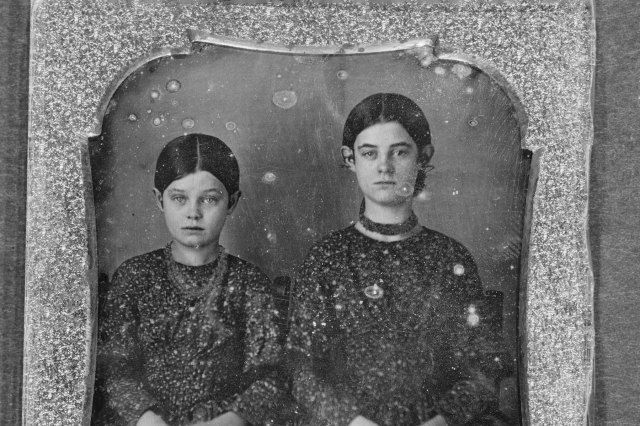
First developed in the late 1820s, photography combined art and science into one medium capable of capturing an image in the moment. The innovation transformed recorded history into something that could be documented in pictures as well as text. As the technology advanced, the medium exploded in popularity, making it possible for families to create snapshots of memories for future generations to appreciate. These early photographic portraits transport us back in time, painting a picture of a different way of life: Families were larger, clothes were bulkier, and postures were noticeably stiff and formal. But perhaps the most conspicuous difference of all is that no one ever seemed to smile.
The somber expressions preserved in early photographs might lead us to assume that past generations led austere and joyless lives. However, the lack of joviality in these snapshots can be attributed to several other factors. Here’s the truth behind those stern expressions in old photos.
In the earliest days of photography, the lengthy exposure periods made it impractical to photograph people. For instance, French inventor Nicéphore Niépce’s 1826 “View from the Window at Le Gras,” credited as the oldest surviving photograph, required an exposure time of eight hours. It was more than a decade before Louis Daguerre’s 1839 invention of the daguerreotype made portrait photography practical. But even then, it was a relatively slow and meticulous process that required the subject to remain still for as long as 20 minutes.
By the early 1840s, photographic technology had advanced further, and the daguerreotype images that once required a 20-minute exposure neededonly 20 seconds to process. Still, even modern photo subjects understand the difficulty of maintaining an open-mouthed smile for any amount of time. It only takes a few moments for a candid smile to turn into something more like an awkward grimace. And anyone who has dealt with a restless child can attest that more than a few seconds of remaining motionless is a formidable challenge. To minimize movement and guarantee a sharp image, children were sometimes put into restraints for the length of a photo shoot.
Additionally, until the 20th century, the expense of photographic equipment and the toxic and dangerous chemicals needed to process film meant that most photographs were taken by professional photographers working out of studios or traveling with their equipment. A photography session was a time-consuming and pricey undertaking; it cost the average person as much as three or more months’ salary, and a person might only be photographed a few times in their life. The requirement for stillness, combined with the novelty and cost of posing for a professional photographer, created an atmosphere where it was simply easier to maintain a neutral or serious expression. But even once the technology existed to capture more relaxed expressions, it was a long time before smiling in photos became the norm.
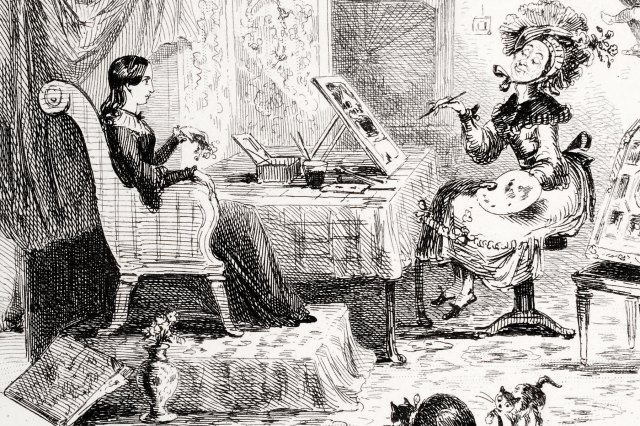
Though technological limitations are frequently cited as the reason for the solemn expressions in old photographs, it wasn’t the only reason our ancestors so often appeared solemn in front of the camera. One notable feature shared by artist portraits from the 17th and 18th centuries and photographs from the early 19th century is the presence of stoic, enigmatic expressions on the subjects’ faces. As portrait artist Miss La Creevy observes in Charles Dickens’ novel Nicholas Nickleby, only two types of expressions existed in portraiture: “the serious and the smirk.”
Before photography, a painted portrait was the only way to preserve someone’s image for posterity. Having your portrait painted was an activity associated with wealth and social status, and accordingly, the art form had its own rules and expectations. This formal portraiture proved to be a big influence on early photographers, who featured their subjects in ways that represented their social status, occupation, or other interests. The social mores associated with painted portraits carried over into photographic portraiture, and smiling was discouraged.
Photo credit: Heritage Images/ Hulton Archive via Getty Images
Social Etiquette Frowned Upon Smiling
Some historians believe that advancements and accessibility in dental care may have contributed to more smiles eventually being captured on film. Other experts disagree, noting that for centuries, a lack of dental care was the norm and thus wasn’t considered to detract from a person’s physical appeal. Still, smiling for a photograph wasn’t commonplace in the early days of photography. In fact, instead of the modern directive to “say cheese!” to produce a wide, toothy grin, some photographers in Victorian-era England asked people to say “prunes,” forcing them to tighten their lips for a more socially acceptable expression based on the beauty standards and etiquette of the time.
In an era where open-mouthed grins were considered unacceptable and a smile was believed to signify someone was poor, drunk, lewd, or otherwise corrupt, it was rare for someone to choose to smile in a portrait — and even less likely that a photographer would encourage it. That all changed, however, with Kodak’s democratization of photography in the early 20th century.
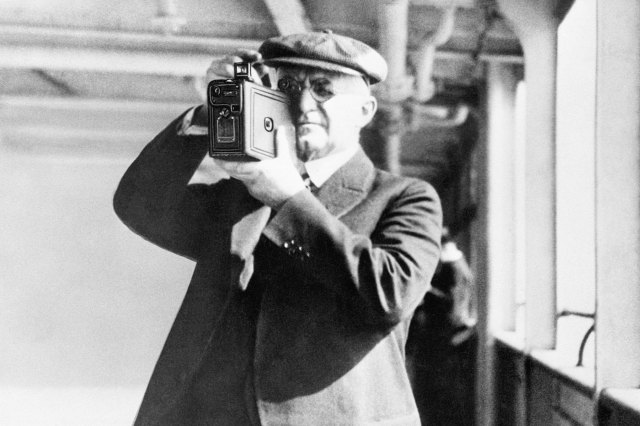
As photography became more accessible in the late 19th century, a wider variety of people took and sat for photographs, and what was acceptable in portrait photography became less rigid. In 1888, Kodak founder George Eastman started a photographic revolution that put cameras in the hands of amateur photographers and gave them an instruction manual on how to take good photos. In 1900, the Kodak Brownie camera was marketed for children and sold for just $1, creating a photography craze that appealed to adults as well.
By the 1920s, a century after the first landscape photographs were captured on film, more relaxed postures and a greater variety of expressions, including closed- and open-mouthed smiles, were common in both amateur and professional photography. With the advent of color photography, the popularity of candid photos, and the rise of affordable personal cameras, capturing an array of expressions — including moments of genuine joy — became the gold standard.
When it comes to your haircut, color, or nails, chances are you see the same person fairly often and develop a relationship.
It’s quite an intimate one — exchanging news about our lives and families — but can it go too far for what’s ultimately still a transactional relationship?
I was confronted with this recently when a new acquaintance revealed that she was looking for a new hair stylist. “L” said she’d given up on someone she’d been going to for 6 years when, at her last appointment in October, he was unsupportive of how she felt after the Hamas massacre. She said, “I want people to know me”, no matter the circumstances.
My reaction was mixed. I empathized with her feelings but think it was unwise at best to bring up such a hot-button topic, even if she anticipated that he’d react the same way she had. Why bring politics to the salon?
I was brought up in a family that was very private and didn’t believe in oversharing, the curse of the modern world IMHO. No matter how much I like my current “beauty team”, I simply don’t need (or want) everyone to be my best friend. So, while I’m happy to talk about many personal topics, there are some that just seem inappropriate. I go to the salon for a fun, lighthearted, relaxing experience, not to validate my opinions.
p.s. I don’t want to chat when I’m getting a massage, either!
Generations of children and spouses had it drilled into them to turn off the lights when they leave a room, whether to preserve the lifespan of the bulb, reduce the energy bill, or … both?
Here’s what Wirecutter experts say: The practice may have held merit for incandescent bulbs, which were terribly inefficient. But modern bulbs use so little energy that leaving them on doesn’t make a meaningful difference on bills. And, depending on the bulb, turning them off regularly won’t affect their lifespan, either. So don’t worry about flipping that switch on your way out.
I’ve met a lot of 55+ women lately who are grey from head to toe: hair, skin, drab shapeless clothing — although they all have vibrant personalities. And I’m wondering whether choosing not to adopt a flattering haircut — with or without color — or even a swipe of lipstick is meant as a signal that they are “serious people”.
Back in the day, my grandmother would describe being “put together” as “making an effort”. And I see this not only as a matter of self-respect but as respect for others, especially if you’re going to be a guest in someone’s home.
I’ve always been interested in fashion, including an early foray into costume design, and taken pleasure in clothes and accessories I find attractive. It’s less a question of pursuing youthfulness than simple enjoyment. That said, the inner me doesn’t want to look like an old hag, either.
Hats off to the 80+ year old woman I’ve been running into who flaunts brightly-dyed unnaturally red hair, a tangle of necklaces, and cheerful sweaters. Her appearance always makes me smile.
So I wonder if giving up on all that is supposed to be a badge of honor — “I have more important things to do/think about” or simply the result of not knowing how to look better or deciding — yes, I think it’s a decision — not to care.
This is true of men as well — hello, daily sweatpants — but culturally unsurprising.












 olderfatterhappierdotcom