Tag Archives: bloggers 50+

Good News Monday: Relaxation IS Possible

Since we’re all stressed these days, I thought this article was worth sharing, even though suggestions such as seeing an acupuncturist are a bit aspirational at the moment.

[Reprinted from AllTimeLists.com]

“Just relax.”

You have heard this a million times, right? Usually, it is some well-meaning friend or family member that sees you are under some intense pressure, and they offer this piece of advice as if it never occurred to you. But of course, you want to relax. But the situation you are in is just not relaxing.

What you need is a proven method to reduce the stress you are feeling. When it comes to calming the mind and spirit, the Chinese and other Far East nations of the world have been practicing techniques for centuries. Many of them are quite simple. Let’s look at some ways to reduce your stress and increase your energy.

Qigong

Pronounced “chee-gun,” it combines meditative and physically active elements and is the basic exercise system within Chinese medicine. Translated into English, qigong is “life energy cultivation.” It’s a holistic system of coordinated body posture and movement, breathing, and meditation used for health, spirituality, and martial arts training. Here’s a summary of the exercise routine:

10. Crane Stands on One Leg – The exercise is intended to develop balance and agility, gently stretch your ligaments, improve circulation, and release your spine. Repeat on each side at least five times. Don’t worry if it doesn’t work the first time.

9. Standing Still With Absorbing – This meditative exercise improves your breathing and encourages your body to contract and expand itself to generate vitality. Visualize your breath inflating like an internal balloon. Meanwhile, imagine you are pulling energy in toward the core of your body. Continue for 2–5 minutes. IMPORTANT: Your arms should stay in the same place throughout the exercise.

8. Coiling Recharge – The exercise is perfect as a stand-alone practice or as an energizing warm-up before martial arts. Qigong involves using the hands to direct energy, often in a spiral pattern. It helps to develop energy, power, and well-being. IMPORTANT: Pay attention to your fingers — they should be turned down to your abdominal area.

7. Chinese Wall Squat – This exercise is a fundamental exercise for keeping the Qi channels in and around the spinal and lumbar region clear. It is very effective in alleviating mental and nervous disorders, and it also helps to improve kidney function. IMPORTANT: Repeat the stance as many times as you can, but don’t forget to listen to your body. Experts from the Qigong Institute recommend starting with 10 squats and increasing it daily.

6. Endurance Activator – This exercise is known as the “walk-three-miles point.” In the Middle Ages, fatigued monks practiced it to enhance stamina and improve leg strength. IMPORTANT: Avoid rounding your back.

5. Picking Fruit – This is a simple exercise, but it’s very effective. Try to lift your arms high above your head, and stretch upward like you’re picking fruit from a tree. This is one of the oldest movements of mankind, and it activates the kidneys, the spleen, and the pancreas. These organs are all activated, and the joints are lifted.

4. Full-Body Spiralling – This movement helps to open up the joints and relax the muscles. The exercise also teaches full-body integration and allows you to engage your tendons and ligaments rather than relying on purely muscular strength. Repeat eight times.

3. Horse-Stance Circles – The main purpose of the exercise is not just training the body but training your energy and mind. It is a marvelous method that can really help to alleviate tension in your hips and improve posture, as well as opening up energy in your lower body. Assume a wide stance, keeping your feet close to parallel. Start with your elbows bent, and extend your hands overhead, allowing your shoulders to rotate so your hands face each other. Your fingertips should lightly touch at the top.

2. Bending and Lifting – This exercise improves knee-joint stability and teaches you how to lift things without hurting yourself. IMPORTANT: Bend at your knees and waist. Make sure your knees do not extend past your toes and that your spine is straight.

1. Circling Knees – This is a widespread warm-up exercise in martial arts that invigorates the legs, both up and down. Start with your feet shoulder-width apart, and slowly bend at your waist and knees. Place your hands on your knees, and circle them outward around your ankles, making sure to not let your knees extend past your toes.

Aside from this exercise and meditation program, there are also simple tasks you can do that will dial down the stress and pain of the daily grind.

Foot Massage 

In China, it is relatively common to have regular foot massages. Chinese medicine tells us that our feet connect to the earth and the energy of the earth circulates throughout our body. The feet conduct energy to our heart, liver, and other organs so it’s very important to take good care of them. You can also go barefoot as this too helps open the body’s energy channels.

Acupuncture 

This practice is a great way to improve circulation in the body. It has been shown to be a solution to treat symptoms of stress like muscle aches and pains. Acupuncture opens up the meridian or energy channels of the body to relax the muscles.

Meditation 

In China, people meditate daily. Chinese doctors encourage meditation because it reduces stress and promotes health and well-being. There are many different types of meditation such as Tai Chi, QiGong, and Buddhist meditation.

Valerian Root and Chrysanthemum Tea 

Valerian root has been used for thousands of years in China to promote relaxation. Other cultures have also used it to alleviate stress and it is commonly used in many sleep aids found in grocery or drug stores. In Chinese medicine, it is most often used as a tea. If you’re interested in purchasing Valerian tea you can find it at Walmart.com. Chrysanthemum tea is used on a daily basis to relax and maintain a healthy liver. You can purchase Chrysanthemum tea here.

These tips should help reduce the stress to the point that no one will fill compelled to tell you, “just relax.” Enjoy your less-stressed life!

alone bed bedroom blur

Photo by Pixabay on Pexels.com



To Brie or Not to Brie

Armed with gloves, Purell and facemasks, we sallied forth this morning to explore the dangerous terrain of a grocery store.  Terra incognita for over a month, we’d finally caved to the need for items beyond Amazon’s ability to deliver.

First, a great deal of strategy was required.  The store needed to be overpriced and inconveniently located, so as to attract the fewest customers. The shopping list needed to be air tight, with no room for impulse buys or backtracking through aisles already traveled. All equipment needed to be checked in advance for pinholes through which sneaky microbes might invade. Sanitizer needed to be at the ready.  Ditto, credit card… no fumbling for cash.

Upon arrival, we spotted a few other intrepid souls, all great distances apart and moving cautiously.  We carefully stalked the produce section, standing well back to furtively scan the available items before plunging into the fray.  While no one seemed interested in artichokes, we did note a mysterious convergence in the imported cheese section.  Pasta was also dangerously populated and best avoided.

For approximately the price of a skydiving session, we completed our daring expedition and emerged triumphant with empty wallets and a full cart. I, for one, am exhausted by all this exertion and plan to take to my couch with the vapors.

As the famous Earl Nightingale quote has it: “Wherever there is danger, there lurks opportunity; whenever there is opportunity, there lurks danger.”  Hopefully, the crisis will be resolved soon.  There’s only so much excitement I can tolerate.

man standing on cliff

Photo by Juliano Ferreira on Pexels.com

Good News Monday: You Can Skip These 7 Wellness Trends

If endless days stuck at home have you spending extra time on the Internet, you’ve probably come across some of these trends. Many wellness crazes travel quickly — courtesy of celebrities and influencers — with little to no evidence to support their claims.

I’ve been interested to see a number of articles popping up recently with similar advice from doctors and nutritionists — you know, actual experts. They say we can safely ignore the following, no matter how popular they may seem at the moment.

Keto Diets

Sure, limiting carbs helps you lose weight in the short term. But that’s simply because 1) you’re eating less in general, and 2) your body will burn fat in the absence of glucose.

The keto diet — emphasizing high fat, medium protein, and low carbs — was originally used to treat epilepsy in children. (I did not know that!) But we need carbohydrates for proper brain function and energy.  Meanwhile, excess saturated fat is linked with serious issues such as heart disease, and too much protein can stress our kidneys.

This way of eating is hard to sustain. Doctors say we’re better off eating a balanced diet, limiting empty carbs in favor of fruits and veggies, and substituting healthy fats like olive oil for too much cheese and butter.

Activated Charcoal Detox

It’s probably been awhile since you spent a wild night binge eating or drinking. But this trend remains popular as a way to supposedly get rid of toxins or induce a bowel cleanse.

One nutritionist explains that eating coal will not bind up your toxins, as your body is already designed to metabolize these substances. Further, charcoal can be downright dangerous and bind nutrients you do need, potentially leading to digestive and motility issues, such as difficulty swallowing or using the bathroom.

Instead, we should be getting daily exercise, drinking lots of water, and eating fiber-rich foods to keep our digestive systems running smoothly.  Good sources like fruits and vegetables, seeds, nuts, beans and whole grains are safer and more effective.

Charcoal Toothpaste

I admit I was seduced by this one. No more! If we shouldn’t eat charcoal, why risk any problem for your digestive system if you swallow a bit in your mouth? One dentist writes: “[Charcoal] will not take out the stains or internal pigments from the pores of your enamel, only peroxide can do that. Charcoal toothpaste is grainy and abrasive and has been shown to wear away healthy enamel and gum tissue.” It’s back to Crest Whitening for me.

Kombucha

Probiotics support our immune system and feed our gut with healthy bacteria that aids digestion and helps neutralize inflammation.  But kombucha is high in sugar, outweighing any probiotic benefits, so it’s best saved as a treat.

If you want to try a probiotic drink, nutritionists suggest kefir — a fermented liquid that’s like a thin yogurt and is high in protein and calcium. Boost your probiotic intake with a daily supplement, and add 0% or lowfat plain yogurt, and sauerkraut to your diet.

Natural Exfoliators

I’ve read that YouTubers like Michelle Phan advocate mixing kitty litter with coconut oil to create a natural solution. Yuck! Supposedly, this combo breaks through grime due to its texture. But doctors say this can cause upper respiratory or lung issues from the silica dust that is often in the litter.  Plus, scrubbing with large particles is really rough on your skin. Don’t even consider this one!

CBD Skin Care

The ingredient in marijuana that doesn’t get you high, topical CBD is great for muscle aches and pains.  However, even though it might help with inflammation, there are no peer-reviewed clinical studies to show any  significant skin benefits.  You’re better off with a well-established anti-inflammatory such as niacinamide.  Check with your dermatologist.

Drinkable Collagen

Can you drink your way to firmer skin? Sorry, that’s an urban myth. Collagen can’t travel through your stomach to your bloodstream to improve your skin — your digestive enzymes will break it down long before it can do anything. Topicals don’t work either, because collagen molecules are too large to penetrate the dermis. Proven ways to stimulate collagen include retinoids such as retin-A, peptides, vitamin C, and pulsed light treatments.

silhouette of mountains

Photo by Simon Matzinger on Pexels.com


Slow Fashion Ahead

My dear friend S shared this InStyle story about what we can expect from fashion in the months ahead.  It will be interesting to see if these predictions come true.

[from InStyle online]

American Fashion Changed After the Depression, and It’s About to Reinvent Itself Again

“Unprecedented.” That’s the word we keep hearing for the level of disruption that COVID-19 has brought to our economy and our social lives.

As we hunker down and see our collective incomes contract, the fashion industry is also in crisis. Factories in Europe and Asia are shutting down, either to stem the spread of coronavirus, or because brands are closing stores and canceling orders. The Boston Consulting Group predicts that fashion sales in 2020 could drop by a quarter or even a third compared to 2019, representing up to $600 billion in lost revenue.

In fact, this crisis isn’t completely unprecedented. It’s just that there are very few women still alive who remember what it was like the other times something this disruptive happened: The 1918 flu pandemic, the Great Depression, and the Second World War. And if we draw on the expertise of fashion historians and trend forecasters, we can learn from the social, financial, and fashion upheaval of the 1920s, 1930s, and 1940s to predict how our style will change in the coming months and years. In short? It’s not going to be all leggings all the time: Dressier days are on the horizon already.

We’ll prize simple clothing that is easy to wash.

Before the 1918 flu epidemic, “People didn’t wash their clothes nearly as often as we do now, with the exception of undergarments,” says Allison Pfingst, fashion historian and archivist, and advisor of the Fashion Studies department at Fordham University. A decade after the first electric washer hit the market, very few households had one.

“You can imagine how difficult it would be to do your family’s household laundry by hand, especially in the midst of a highly contagious pandemic when you’re likely taking care of someone who is ill,” Pfingst says. That pushed delicate or fussy clothing and voluminous undergarments out of women’s closets, bringing in slimmer clothing shapes, sturdy fabrics, and colors that don’t fade in the wash.

Today, as we peel off our “outside” clothes and stick them straight into the washing machine on the ultra-hot sanitary setting, we’ll likely also pivot to easy, washable clothing and away from “dry clean only” fashion. That means cotton, linen, washable silk, and washable merino wool are in. Delicate beadwork and lace, plus fabrics like rayon or regular silk that shrink and stain at the mere sight of water, are out.

In-your-face luxury will be out.

Pfingst sent over a New York Times article written in the depths of the Great Depression describing the society ladies wearing last year’s dresses and jewels: “Many of the wealthiest women who have not yet felt the pinch are dressing more simply than last year, since they felt ostentatious costume is in bad taste these days,” the author opined in 1932. Barbara Hutton, heiress to the Woolworth department store fortune, became infamous for throwing a lavish ball during this time.

Today, celebrities are already getting blowback for complaining about social isolation on social media inside their mansions and compounds. “Most likely, we’ll see cultural mores about displaying wealth or status change when so many people are out of work,” says Natalie Nudell, a fashion and textile historian at the Fashion Institute of Technology in New York City. She points out that fur and ornate decoration slipped away during the 2008 recession, but had started to creep back in over the past five years in the form of sequins, peplum, and puffed sleeves, big gold jewelry and feathers, and even hoop-skirt ball gowns. (Let them eat cake, indeed.)

No longer. “We’re probably going to go back to an aesthetic of scarcity,” Nudell says. Simple sheath dresses, tees, wide-leg pants, and humble jeans in rustic fabrics like linen and cotton have so far been popular only with a certain subset of minimalist, sustainable influencers. But you’ll probably start seeing them even on the most high-end influencers soon.

We’ll make do, mend, and shop secondhand.

Because materials were being diverted for the war effort, “Make Do and Mend” became fashion’s official slogan in the 1940s. Before that in the Great Depression, many women resorted to upcycling empty cotton flour sacks into dresses, leading food companies to start printing colorful floral patterns on their food bags.

The online secondhand fashion market is also set to explode. “It’s been gaining momentum before this happened,” says Melissa Moylan, a trend forecaster for womenswear at Fashion Snoops. “Even retailers like Nordstrom dipped into that. But it hasn’t yet had mass acceptance.” She sees that changing, as more people shop at places like The Realreal, Poshmark, and ThredUp to save money, and others clean out and sell from their closets to make a little extra cash.

Fashion trends will slow down.

After a decade of experimentation, with boyish silhouettes with dropped waistlines, the Great Depression and the 1930s brought in a more feminine, classic silhouette. In our time, minimalism, capsule wardrobe dressing, and an emphasis on classics have slowly gained ground on lightning-fast fashion trends in the past few years, but our experts think longlasting classics will become the norm now. “Less disposable income means less money to throw away on clothing each season, and priority will go to clothes that will be fashionable longer than a couple of months,” Pfingst says.

Designers including Donatella Versace, Rick Owens, and Guram Gvasalia of Vetements have indicated they are looking forward to slowing down and creating seasonless clothes. “People are asking, what am I going to invest in?” Moylan says. She thinks we’ll focus on what she calls “wardrobe builders,” things like blazers, wide leg pants, sweater dresses, and pleated skirts.

“People are going to be eager to buy stuff, if they can afford it. But I don’t think they will jump on something new,” agrees Nancy Deihl, Director of the M.A. Program in Costume Studies at New York University. “They’ll just want something that will be reassuring to them.”

We’ll fall back in love with the house dress.

Gabrielle Korn, author and Director of Fashion and Culture at Refinery29, says she spent her first few weeks of social distancing in New York City in loungewear. But since decamping to her girlfriend’s home state of North Carolina, she’s already switched to long and loose cotton house dresses so she can enjoy the weather on the front porch. “The weather change combined with the semi-public outside space called for something just slightly elevated that still is cozy,” she explains.

She’s following in the footsteps of housewives in the 1930s and 1940s, who needed something they could wear when cooking at home and visiting with their neighbors (their equivalent to the working from home Korn and many of us are doing right now). While house dresses during the Great Depression were humble and hand-crafty, that changed in 1942, when Claire McCardell, the designer credited with defining the American Look, invented the Popover Dress, a radically simple and comfortable yet flattering wrap dress (which came with a matching potholder) that any woman could own for $7 ($111 in today’s dollars).

Once we get sweatsuit fatigue (it’s coming), we’ll reinvigorate the kinds of clothing that are one step above PJs: wrap dresses, caftans, easy blouses, and wide leg loose-fitting pants that make us feel like queens of our realm instead of prisoners.

We’ll long for the escape of movies rather than the relatability of influencers.

In the 1930s, all of America went to the movies for affordable entertainment. Even as the general population made do with mending their old dresses, fashionable images from that era feature movie stars in luxurious satin dresses, furs, and sparkIing jewels. Movie stars capitalized on that fantasy by endorsing sewing patterns, makeup, and affordable copies of their glamorous outfits.

“Even though people were aspiring to glamour, they weren’t spending tons,” Deihl says. “Mrs. Middle America wasn’t wearing sables the way Gloria Swanson or Joan Crawford were. But maybe she was wearing rabbit fur from this year’s catalogue.” These were fashion’s first mass-market dupes and copies.

Now, instead of gleaning fashion must-haves and travel recommendations from influencers, we’re turning to Netflix for entertainment, to forget what is going on. “I think we were almost at the point of exhaustion with influencers,” Moylan of Fashion Snoops says, of recent pre-pandemic days. “Now that this has hit, if they were to put on something, it’s like, where do you think you’re going?”

But period costumes worn in the movies? More of those, please.

When this is all over, we’ll want to look sharp.

“The style that we really think of as being 1940s style — the boxy look, shoulder pads, that man tailored look — it actually came into fashion at the tail end of the 1930s,” Deihl says. When the war broke out and material rationing started, the style stuck around.

Similarly, Moylan predicts that when we’re back out in the world and in our offices, we’ll run in the opposite direction from schlubby loungewear and toward tailored looks. “We are going to want to dress up,” she says, citing recent collections shown by Proenza Schouler, Jonathan Simkhai, Jil Sander, and Sies Marjan with tailored classics.

We’ll DIY our beauty and wellness routines and spend on makeup.

During the Depression, women spent what little money they had on makeup to emulate the movie-star look. Now, with shelter-in-place orders spreading across the country, WWD reports that sales of Tata Harper’s at-home facial bundles, Avène’s Soothing Sheet Mask, and Olive & June’s Mani Kits are all up. “People will still be buying makeup and beauty products. It’s a way to continue your self-care,” Nudell says.

Moylan agrees. “I’m still comfortable buying beauty at this time, but I can’t bring myself to buy another piece of clothing right now; it’s just too scary,” she admits.

But we’ll ditch the last of our uncomfortable, gendered work clothing.

According to Pfingst, sportswear was invented in the 1920s, while Rosie the Riveter encouraged women to dress comfortably in slacks and coveralls so they could take over the men’s jobs in shipyards and factories.

“While it is still advisable to look presentable from the chest up, no woman is putting on a thong or an underwire to attend a Zoom meeting,” she says. “When we have to go back to the office, there’s a good chance it will no longer be in uncomfortable heels, or hard-to-tuck-in blouses. Expectations of impractical, uncomfortable work attire are floating away along with a feeling of obligation to appear ‘attractive’ at work in the MeToo era.”

Looking sharp but feeling breezy and comfortable? That’s something we can look forward to.

Marriage, Pandemic Style

Ever wished your partner would spend more time with you? How quaint! This is the universe’s way of testing our relationships. And if the data from China is any indication, we’ll be seeing a wave of divorces once people can get to their lawyers.

Not me, though; one nasty divorce was enough for a lifetime. But since 24-hour togetherness  can strain any partnership, I’m trying to follow a few rules.

  1. Spend time apart.  Encourage separate activities to create some alone time; for instance, I’ll bake or write while my husband paints or works on his computer.  And if you live in a studio apartment, try to at least identify separate work spaces. With luck, this will give each of you something to talk about every evening besides the virus.
  2. Share a laugh: a book, video, joke, photo or film. We’ve just gone through all three Cage Aux Folles movies (note: the subtitled versions are funnier than the dubbed ones).
  3. Plan things to look forward to once life returns to normal — a trip, dinner at a special restaurant, going out with friends, etc.  Fantasizing encouraged.
  4. Connect with others.  We enjoyed a Zoom cocktail hour with two of our favorite couples the other night and are going to make this a regular routine.  Cheers!
  5. Make a big bowl of popcorn and find something fun on TV.  We’ve been watching old Nick and Nora movies from the ’30’s and adventure films such as the James Bond, Kingsman and Indiana Jones franchises.  Pretty much anything that bears no resemblance to today’s world is a good choice.
  6. Stop obsessing over the news.  It helps nothing and makes both parties depressed, which isn’t conducive to a happy home.  Being informed is one thing; worrying about anything outside your own control is counterproductive.
  7. Go for a walk.  It’s reassuring to see the flowers blooming and hear the birds chirping as if the whole world weren’t going to hell in a handbasket.
  8. Take deep breaths whenever your beloved is getting on your last nerve.

My mantra: “Whatever doesn’t make you want to kill your partner makes you stronger.”

two silver colored rings on beige surface

Photo by freestocks.org on Pexels.com

Celebrities, Please STFU!

Sharing a wonderful piece by NY Times culture writer Amanda Hess, about how incredibly annoying it is to see celebrity “news” about how hard it is for them to cope with the current crisis by sheltering in place in their ginormous houses.

Aw, boo-freakin’-hoo. Was there ever a time that celebrities were less relevant?!?

Enjoy!

architecture bushes chimneys clouds

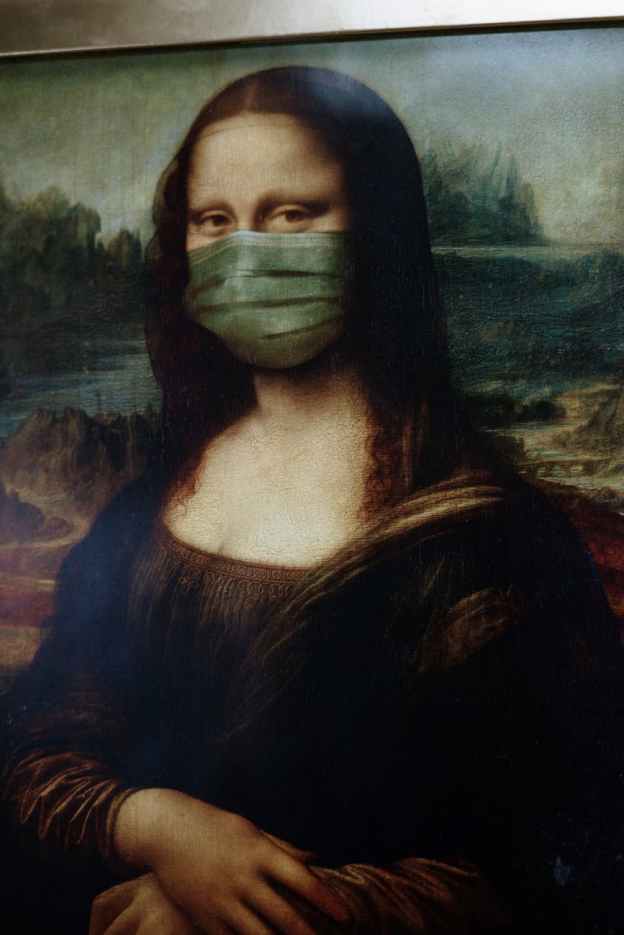
Today’s COVID-19 Practical Tip: Masks


Well, it’s pretty much official here in the US: Wear a mask when venturing out near other people. (Better yet, stay home and have your groceries, drugstore items and booze delivered.)

It’s all very surreal, so I prefer to think of this as an everyday masked ball.  Perhaps powdered wigs will be next, to protect our hair from this nasty virus… anyone else feeling all Marie Antoinette/Louis XVI?

Should you be inclined, here’s a link on how to make your own mask at home.  Feel free to decorate it with cheery personal elements. Since no one will get close enough to view your handiwork, it won’t matter if it’s a little wonky or your stitches are uneven.

Be safe and enjoy another shelter-in-place weekend. xx Alisa

costume-3157451_640


Hot Stuff

I’m finding cooking to be a major antidote to boredom and anxiety during these trying times.  (Unfortunately, so is eating… but that’s a topic for another time.) Recently, our daughter B suggested I write about mustard. Can’t remember what prompted this, but here goes.

Did you know that mustard is one of the world’s oldest condiments? According to my “deep” Internet dive, the Romans used to grind mustard seeds with grape juice (called must) to create a spicy paste known as mustum ardens (“burning must”) in Latin. Travelers brought mustard seeds to Gaul, where they were planted in vineyards alongside the grapes. French monasteries cultivated and sold mustard as early as the ninth century, and the condiment was available in Paris by the 13th century.

autumn-4568733_640

Very simply, mustard is a combination of the ground seeds of the mustard plant and some form of liquid such as water, vinegar, lemon juice, or wine. Different types of each create different varieties: some sweet, some spicy, some eye-wateringly hot. While the level of heat is mostly related to the style of seed—yellow seeds are mild, while brown and black seeds are spicier— it’s the liquid that activates their natural enzymes and determines a mustard’s potency.

These enzymes convert to mustard oil once the seed is broken. The more acidic the liquid, the longer lasting the burn will be; less acidic mustards tend to be quite pungent at first, but quickly lose their punch.

Generally low calorie, especially compared with condiments like mayonnaise, mustard also provides important nutrients. Mustard leaves contain significant amounts of calcium, vitamins A, C, K, and copper, while the seeds are rich in fiber, selenium, magnesium, and manganese.

shelf-4499973_640

What follows is adapted from an article at spoonuniversity.com, which includes recipe suggestions.

YELLOW mustard (aka ballpark mustard) is the most basic. Made from yellow mustard seeds and vinegar, it gets its yellow color from turmeric. It’s one of the mildest types of mustard, popular on hot dogs and other sandwiches.  I think of it as “starter” mustard.

DIJON takes mustard to the next level. White wine is used instead of vinegar, and the seeds are brown rather than yellow.  This results in a complex flavor with more of a bite, perfect for salad dressing, potato salad, and sauces for fish and chicken.

SPICY BROWN mustard is made with coarsely-ground brown mustard seeds that offer more heat than classic yellow or Dijon, along with turmeric and a combination of spices such as allspice, ginger, cinnamon, and nutmeg. Commonly found in delis, the warm flavor goes beautifully with meat.

Too tame? HORSERADISH MUSTARD packs even more heat.

HOT MUSTARD You’ll find this searingly hot mustard in most Chinese restaurants. What makes it so brutally strong is that brown or black mustard seeds are mixed with water. These seeds are naturally more pungent than yellow seeds, due to their alkaline nature. An acidic liquid– like the vinegar used in yellow mustard — would calm that natural heat, while water’s neutral ph lets it go roaring forth.  Your sinuses know what I’m talking about.

WHOLE GRAIN This is more of a manufacturing process than a type of mustard—as the name suggests, the seeds are essentially whole. Type of seeds and mixing liquid can vary, with most brands available in the store featuring brown mustard seeds mixed with white wine.  Expect a flavor similar to that of Dijon with a coarser texture that pairs well with cheese, potato salad, and sandwiches.

STONE GROUND mustard is the middle ground between smooth Dijon and the chewiness of whole grain. Most commonly, brown seeds are ground between two stones in the form of a mortar and pestle. This type of mustard is typically made with vinegar, and has a little more heat than yellow mustard with less spice than brown mustard.

HONEY MUSTARD is both sweet and tangy and works well in salad dressing, especially to soften the taste of bitter greens such as kale. You can whip some up yourself by mixing your mustard of choice with honey in a 1:1 ratio. Use half as much honey if you prefer less sweetness than commercial brands.

Do you have a favorite type? Or a recipe to share?


Who Knew?

If, like me, you can use all the distraction you can get, you’ll enjoy this article, reprinted from AllTimeLists.com:

Lies We Accept As Truth

Juliet Window

How many things do we accept in life without demanding proof? There’s that old tale of the little girl asking Mommy why she cut the legs off the Thanksgiving turkey before putting it in the oven, and Mommy saying, “because that’s what my Mommy did” and it turns out that 11 generations earlier, the oven was too small for the whole bird, so the legs were cut off so it would fit. And for 11 generations, no one questioned anything, but just cut the legs off before putting the 12-pound turkey into the behemoth of a modern oven.

We do that stuff all the time, even with our favorite movies. There’s a real chance that your favorite movie scene never actually happened. No, calm down, you haven’t “slid” into a dimension where The Simpsons never happened. It’s simply our collective memory messing with us yet again. We’ve talked about this before, but we assume you’ve already forgotten about it, or got it all twisted around in your head, so here’s a brand-new batch of cultural milestones that never existed.

The Monopoly Man Never Had A Monocle

Monopoly MonocleYou know Rich Uncle Pennybags, the Monopoly man — white mustache, top hat, tuxedo, cane, monocle, unearned sense of smug superiority. He’s downright iconic. Just look at all these Monopoly men, women, and children …

But here’s the weird thing: Rich Uncle Pennybags never had a monocle. Seriously, go to your closet and dig up the Monopoly box inevitably buried near the back. And before you ask, no, his design hasn’t changed at all since he was introduced in Monopoly’s Community and Chance cards in 1936:

The most likely explanation for this widespread confusion is the existence of another popular monocle-wearing mascot who shares many traits with Pennybags (the cane, the top hat, the air of douche-ness), but has two important differences:

One, he does have a monocle, and two, he’s a mutant peanut.

You’d think that last thing would keep confusion at bay, but toss on a top hat and cane, and they’re all the same to us, anthropomorphic nuts be damned.

There’s No Balcony Scene In Romeo And Juliet

Juliet BalconyPicture a scene from William Shakespeare’s Romeo And Juliet, perhaps the least accurate teen romance ever written. (Not a single breakdancing scene! Not one!) Chances are you imagined a wistful Juliet on a balcony, wondering wherefore her beloved Romeo could be, before he reveals that he’s been right there the whole time, spying on her like a creep.

The balcony has shown up in every single movie adaptation of Shakespeare’s play, from the one with Leonardo DiCaprio and Claire Danes to the one starring a bunch of CGI gnomes, for some reason. In fact, that scene is so embedded in our collective psyche that it has transcended art, and now there’s a type of balcony known as a “Juliet.”

Only one problem: Shakespeare never wrote a balcony scene. His script (the one they forced you to read in high school) only mentions Juliet looking out of a window, with no balconies, porches, fire escapes, or anything of the sort.

In fact, Shakespeare couldn’t have written a balcony scene in this or any play, because balconies weren’t a thing in England during his lifetime. This exotic architectural innovation didn’t make its way to the country until decades after Shakespeare’s death. Romeo may as well have rolled up in an Uber, as far as chronology is concerned.

We owe this iconic moment to plagiarism, the unsung hero of history. In 1679, Thomas Otway put on a play under the self-spoiling title of The History And Fall Of Caius Marius. A more accurate one would have been “Romeo And Juliet, Except In Ancient Rome.” One scene even features the heroine calling out, “Marius, Marius, wherefore art thou, Marius?”

But Otway did make one enormous contribution to the scene: He set it in a balcony. This struck such a chord with audiences that it began to show up in versions of Romeo And Juliet, and this never stopped. It’s like if Michael Bay borrowed a plot point from a Transmorphers movie … which is an improvement, now that we think about it.

There Isn’t A Painting Of Henry VIII Holding A Turkey Leg

Henry ViiiAnyone with a modicum of historical awareness knows Henry VIII by his trademark goofy hat, weak beard, funny-looking legs, and massive gut. And how did he get that gut? It probably had to do with the turkey leg he always had in his hand, as is seen in virtually every modern depiction of him. From children’s books, to shows like The Simpsons, to whatever a “mad magazine” is supposed to be.

Henry VIII loved his turkey almost as much as he hated wedding anniversaries. Obviously, this reputation for meat-guzzling comes from the classic painting depicting him with a turkey leg in his hand. You know, the one by … uh, give us a second … come on, Wikipedia … ah, here it is! No, wait, that’s a glove.

The shocking truth is that no such painting exists. In fact, there are no classic paintings that depict King Henry VIII with any piece of food in his hand, nor of him eating at all. Other than the unsubstantiated claim that he was the first English king to eat turkey, there’s also no evidence that Henry liked or even encountered this type of meat. As far as anyone can tell, the image of Henry as the bane of flightless birds comes from a 1933 film, which devotes a full minute and a half to him disappearing a chicken into his gut. That, or it’s a scheme by Big Turkey to promote their product as the snack of kings. It could go either way.

Hannibal Lecter Never Said “Hello, Clarice”

HannibalIt’s the single most famous moment in The Silence Of The Lambs. Clarice Starling stands in front of Hannibal Lecter’s cell, him looking at her through the bulletproof glass all creepy calm, sneering: “Hello, Clarice.”

That’s our intro to the character, and it’s a great one. Anthony Hopkins is so damn intimidating that he can turn a simple greeting into an endlessly layered threat. The scene became iconic for a reason. We can hear the words right now, their exact inflection. You read this in his voice: “Hello, Clarice.”

CommentThose two words have since become the go-to reference line, from fan fiction sites to newspapers. They made it into posters, T-shirts, and even cute animal memes. But that line doesn’t appear in the film. In fact, it can’t. In the scene you’re picturing, Hannibal is meeting Clarice for the first time, and eating people doesn’t grant you psychic powers (though that would be an interesting twist in the series). He never even says “hello.” The closest he comes to the line is at the end of the movie, when he phones Clarice about his recent escape and begins the conversation with “Well, Clarice, have the lambs stopped screaming?” Which is far more unsettling, but doesn’t fit on an image macro as well.