Author Archives: adguru101

Unknown's avatar

About adguru101

Formerly a creative director and writer at NY and NJ ad agencies, I'm now retired and living in Oregon, USA, with my husband and countless dust balls. With this blog, I specifically hope to reach "mid-century moderns" -- women born in the '50's -- with content and observations about the issues we deal with every day. But I welcome all readers of any age, sex, orientation, etc… you youngsters will eventually be my age too, and I love reading everyone’s comments!

A Productive Day

The older I get — and the longer COVID drags on — the more content I feel with small accomplishments. Here’s my list; what’s yours?

  • Cook something
  • Clean something
  • Plan something
  • Go somewhere
  • Write something
  • Read something
  • Fix something
  • Toss something
  • Learn something
  • Solve something
  • Contact someone — phone, text or email; bonus points for an in-person visit!
Photo by Pixabay on Pexels.com

Good News Monday: Hobbits Were Real

Well, sort of, according to this article on StudyFinds.com:


‘Hobbit’ creature discovered in North America, rewriting history of mammals after dinosaur era

by Chris Melore

BOULDER, Colo. — Fossils of a creature which researchers compare to the character Beorn from “The Hobbit” may change how scientists look at the evolution of mammals following the extinction of the dinosaurs. The prehistoric mammal is one of three new species a team from the University of Colorado-Boulder have discovered that they say roamed North America shortly after the age of dinosaurs.

Paleontologists generally accept that the end of the dinosaurs is also the dawn of modern mammals on Earth. However, scientists have assumed that there was very little diversity in mammal species during the earliest Paleocene Epoch — a geological period roughly 56 to 66 million years ago. This new discovery suggests that mammals actually diversified much quicker after dinosaurs left the planet.

The three new species — Miniconus jeanninaeConacodon hettingeri, and Beornus honeyi — range in size from rat-sized mammals to modern house cats. At the largest end of the spectrum, these creatures would be much larger than their fellow mammals living alongside the dinosaurs at the time.

A smile made for the movies

Researchers say each of these animals have unique dental features which reveal them to be separate species. In the case of Beornus honeyi, its inflated molars (or puffy cheek teeth) give it the appearance of being like Beorn from “The Hobbit” — hence its colorful name.

All three mammals belong to a group called archaic ungulates (or condylarths), which are the primitive ancestors to today’s hoofed mammals such as horses, elephants, cows, and hippos. The findings come from an analysis of unearthed lower jaw bones and teeth. These fossils provide insight into an animal’s lifestyle and body size.

The team’s examination points to the animals being omnivores who could grind up both plants and meat. Despite this, scientists can’t rule out that these early mammals only ate plants during this period. One thing is certain though, mammal life took off roughly 66 millions ago following the mass extinction event that wiped out the final era of their reptilian neighbors.

“When the dinosaurs went extinct, access to different foods and environments enabled mammals to flourish and diversify rapidly in their tooth anatomy and evolve larger body size. They clearly took advantage of this opportunity, as we can see from the radiation of new mammal species that took place in a relatively short amount of time following the mass extinction,” explains lead author Madelaine Atteberry from the University of Colorado Geological Sciences Department, in a media release.

North America had a diverse rodent population?

Atteberry and co-author Jaelyn Eberle analyzed the jaw bone fossils of 29 condylarth species to determine the anatomical differences between each animal. Using phylogenetic techniques, they assessed how each species compared to other early Paleocene condylarths living in the present day western United States.

From those studies, the team believes they have unearthed three completely new species from those first years following the demise of dinosaur life. Results also show that Beornus honeyi appears to be the largest of the three, measuring about the size of a modern feline.

While Conacodon hettingeri and Miniconus jeanninae are similar in size to other rodent-like early mammals, they differ in the shape and form of their last molars.

“Previous studies suggest that in the first few hundred thousand years after the dinosaur extinction (what is known in North America as the early Puercan) there was relatively low mammal species diversity across the Western Interior of North America, but the discovery of three new species in the Great Divide Basin suggests rapid diversification following the extinction,” says Atteberry. “These new periptychid ‘condylarths’ make up just a small percentage of the more than 420 mammalian fossils uncovered at this site. We haven’t yet fully captured the extent of mammalian diversity in the earliest Paleocene, and predict that several more new species will be described.”

The findings appear in the Journal of Systematic Palaeontology.

A Week Away

Back in June, when it was becoming impossibly hot and boring living in our rental apartment (with molasses-slow progress on our home renovation), Dear Husband and I decided to brave the outside world and travel out of the country.

Armed with passports, vaccination cards, entry documents, and recent COVID tests, DH and I embarked on a short Viking river cruise to Lyon and Provence. The tipping point was their excellent health and safety program, in which every crew member and passenger takes a short, non-invasive COVID test daily. At least we’d be protected within our bubble.

A few highlights, as this is by no means a comprehensive travelogue:

  • Watching the world flow by from our little balcony
  • Cocktail hour with witty and cultured new friends K and S
  • Breathtaking mountain views of the countryside
  • Strolling through Arles
  • Morning croissants and coffee
  • A day on our own in Avignon visiting two museums (classic and contemporary) and finding a terrific place for lunch
  • The uniformly excellent food, wine, service and crew on board

And a couple of lowlights:

  • The airports in Marseilles and Frankfurt (our connection), which were overcrowded and understaffed, with insuffient time to check all passengers’ COVID documents
  • Not enough time in Lyon; we will have to return!
Tournon-sur-Rhône
Les Baux-de-Provence (from the bus)
Tournon
Just drifting along
Saint-Barthelemy-le-Plain
Soon to be sunflower oil
Arles
Arles Arena
One family’s multi-generational olive oil mill in Fontvielle

Damocles

How long is it before procrastination takes on the mythical proportions of an Impossible Hurdle? My plan to write about our recent excursion to France has turned into a post about NOT writing it (“for now”, says the procrastinator-at-large).

So what is the origin of the story (also the phrase, “hanging by a thread” to denote looming disaster or apprehension)? The History website enlightens, as follows:

History Stories

What was the sword of Damocles?

What was the sword of Damocles?

EVAN ANDREWS

The famed “sword of Damocles” dates back to an ancient moral parable popularized by the Roman philosopher Cicero in his 45 B.C. book “Tusculan Disputations.” Cicero’s version of the tale centers on Dionysius II, a tyrannical king who once ruled over the Sicilian city of Syracuse during the fourth and fifth centuries B.C. Though rich and powerful, Dionysius was supremely unhappy. His iron-fisted rule had made him many enemies, and he was tormented by fears of assassination—so much so that he slept in a bedchamber surrounded by a moat and only trusted his daughters to shave his beard with a razor.

As Cicero tells it, the king’s dissatisfaction came to a head one day after a court flatterer named Damocles showered him with compliments and remarked how blissful his life must be. “Since this life delights you,” an annoyed Dionysius replied, “do you wish to taste it yourself and make a trial of my good fortune?” When Damocles agreed, Dionysius seated him on a golden couch and ordered a host of servants wait on him. He was treated to succulent cuts of meat and lavished with scented perfumes and ointments. Damocles couldn’t believe his luck, but just as he was starting to enjoy the life of a king, he noticed that Dionysius had also hung a razor-sharp sword from the ceiling. It was positioned over Damocles’ head, suspended only by a single strand of horsehair. From then on, the courtier’s fear for his life made it impossible for him to savor the opulence of the feast or enjoy the servants. After casting several nervous glances at the blade dangling above him, he asked to be excused, saying he no longer wished to be so fortunate.

For Cicero, the tale of Dionysius and Damocles represented the idea that those in power always labor under the specter of anxiety and death, and that “there can be no happiness for one who is under constant apprehensions.” The parable later became a common motif in medieval literature, and the phrase “sword of Damocles” is now commonly used as a catchall term to describe a looming danger. Likewise, the saying “hanging by a thread” has become shorthand for a fraught or precarious situation. One of its more famous uses came in 1961 during the Cold War, when President John F. Kennedy gave a speech before the United Nations in which he said that “Every man, woman and child lives under a nuclear sword of Damocles, hanging by the slenderest of threads, capable of being cut at any moment by accident or miscalculation or by madness.”

Quick Bites: Pizza Provençale

We’ve been back from France for nearly two weeks — another post for another time — and have been craving Provençale dishes. This had led to some delicious experiments with tapenade.

Tapenade — like pesto — is one of those basic ingredients worth keeping on hand because you can whip up dinner in no time. The complex flavor adds richness to pasta, fish or chicken (spread a layer on top before baking), or dab it on sliced rounds of crusty toasted bread. Here’s my favorite recipe:

In a food processor, blend: 1 cup pitted brined kalamata olives; 2 anchovy fillets; 1 large garlic clove, roughly chopped; 1 tablespoon capers; 2 tablespoons lemon juice (genius time saver: Minute Maid frozen lemon juice); 3 tablespoons extra virgin olive oil; 1/4 tsp herbes de Provence; 1/4 teaspoon cayenne; freshly ground black pepper to taste.

Last night I tried it on pizza. Whenever I make this dough (a half-recipe is enough for two large pies) I keep one portion in the freezer for the next time we need a quick meal. The result was somewhere between a traditional pizza and a more labor-intensive pissaladière. Note: You can use nearly any type of crust or even puff pastry if you’re feeling decadent and go more traditional with a rectangular baking sheet.

Directions:

  • Preheat oven to 500 degrees F, or your hottest setting.
  • Slice 1 1/2 large yellow onion into thin slices.
  • Prepare pizza pan by oiling it and sprinkling with corn meal. I used a 14″ round.
  • Shape pizza dough (this recipe’s a stand-out).
  • Prebake the dough until it starts to turn light brown.
  • Remove from oven and let cool. Lower oven temperature to 450 degrees F.
  • Spread dough with a generous layer of tapenade.
  • Cover evenly with the sliced onions.
  • Top with a few sliced kalamata olives.
  • Sprinkle with additional olive oil and herbes de Provence.
  • Bake until onions soften, about 15 minutes.
  • Cool slightly, slice, eat. Extra delicious with a glass of chilled Rosé.
Bon appetit!

Good News Monday: The Upside of Bad Cholesterol

Not that this is license to eat vast quantities of Brie, but it’s reassuring to know that if you take medicine for cholesterol management one surprising benefit is that it also seems to reduce COVID severity.

In a new study, researchers found that patients taking statin medications had a 41% lower risk of in-hospital death from COVID-19. Confirming their earlier hypothesis, statins have anti-inflammatory effects and binding capabilities, which could explain how they stop progression of the virus.

Photo by cottonbro on Pexels.com

How Do You Remember?

After many years together, I’ve recently discovered that my dear husband (DH) and I have very different ways of recalling events that have happened to us. This isn’t about what we remember (or block out, as the case may be!) but how we recreate those situations in our minds.

DH, who is an artist, remembers as if he were watching a movie. It is completely visual.

I, on the other hand, remember as if I were reading a novel; that is, while I might visualize certain aspects of the story, the narrative is generally descriptive and verbal.

I found this quite fascinating, and it makes me wonder how you, my dear readers and bloggers, remember things. SInce most of you are writers, do you also imagine a story being told to you? Or do you conjure up vivid pictures?

Dreams are quite different, I think, as they seem to always be visual, whether we are involved as characters or as onlookers. Is this true for you? Do share!

Photo by Luis Quintero on Pexels.com

Good News Monday: A Wild Comeback

As reported by the World Wildlife Fund:

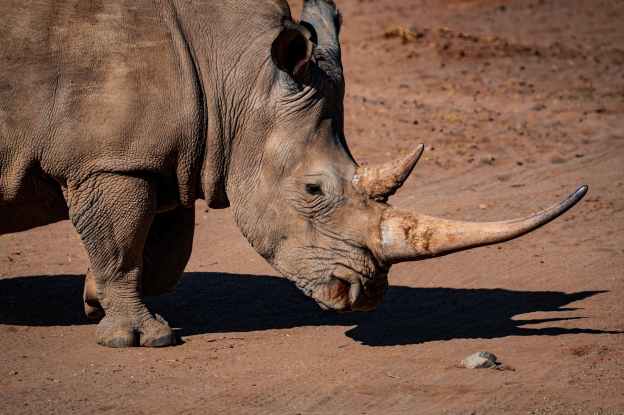
The greater one-horned rhinos in India’s Manas National Park — their population once completely decimated by poaching — are making a comeback thanks to joint conservation efforts under the Indian Rhino Vision 2020 initiative.

Today, there are 44 rhinos in Manas NP and a total of around 3,700 greater one-horned rhinos in Asia, up from only 200 at the beginning of the 20th century.

Photo by Frans Van Heerden on Pexels.com

The Nature of Friendship

With some of my favorite people about to move out of the neighborhood, I’ve been realizing that friendship is largely situational.

In childhood, we make friends through chance commonalities. We may live on the same street. Go to the same school — where we often become friends with the person who sits next to us because their name starts with the same letter — or play the same sport. Or fidget through the same religious services.

As adults, we might meet because our children know each other. Become friends with our co-workers. Live near each other. Volunteer for the same causes; attend the same church, mosque or synagogue; chat on a trip; or detest a common enemy.

Many connections fade without the proximity that is friendship’s oxygen. And that’s ok: they enriched our lives while we shared common experiences.

But if we’re lucky, a special few survive geographical separation because our deeper interests and affection forge a long-term bond.

So, in honor of all our besties, some wise quotes:


“An old friend will help you move. A good friend will help you move a dead body.”
Jim Hayes

“It is one of the blessings of old friends that you can afford to be stupid with them.”
Ralph Waldo Emerson

“The holy passion of Friendship is of so sweet and steady and loyal and enduring a nature that it will last through a whole lifetime, if not asked to lend money.” Mark Twain


“There is nothing like puking with somebody to make you into old friends.”
Sylvia Plath

“Friends give you a shoulder to cry on. But best friends are ready with a shovel to hurt the person who made you cry.”
Unknown


“It is more fun to talk with someone who doesn’t use long, difficult words but rather short, easy words like ‘What about lunch?’”
A. A. Milne

Image by Free-Photos from Pixabay

Good News Monday: The Pen IS Mightier

Of course, writers intuitively know this.

Handwriting leads to faster learning than typing or watching videos

StudyFinds.com

by John Anderer

Photo by Sarah Chai on Pexels.com

BALTIMORE, Md. — Taking notes with a plain old pen and paper is becoming more antiquated by the day. However, a new study finds handwriting is actually the superior learning option, beating out both typing and watching videos when it comes to quickly picking up new information. Researchers from Johns Hopkins University report that handwriting is “surprisingly faster and significantly better” for learning certain skills.

“The question out there for parents and educators is why should our kids spend any time doing handwriting,” says senior author Brenda Rapp, a Johns Hopkins professor of cognitive science, in a university release. “Obviously, you’re going to be a better hand-writer if you practice it. But since people are handwriting less then maybe who cares? The real question is: Are there other benefits to handwriting that have to do with reading and spelling and understanding? We find there most definitely are.”

Pen and paper triples learning speed?

A group of 42 participants took part in the study. Researchers taught each person the Arabic alphabet after separating them into three learning groups: pen and paper, typing, and video watching. After all participants had been “introduced” to an Arabic letter via a short video, subjects had to attempt to absorb the new information according to their assigned learning group. The typing group had to find the letter they just saw on a keyboard. The video group saw an on-screen flash of a letter and had to answer if it was the same letter they had just seen. The handwriting group had to copy the letter with pen and paper.

By the time participants across all three groups had finished six “learning sessions,” pretty much everyone was able to recognize the letters. However, the writing group reached this level much faster than the other two groups, after an average of just two learning sessions.

Next, study authors set out to see if any of the groups could “generalize” their new knowledge. In simpler terms, while it’s great that they could identify the Arabic letters they had just learned, could they actually use them to write, spell new words, and recognize unfamiliar words? The writing group excelled in all three of those categories to a much larger degree than either the typing or watching groups.

“The main lesson is that even though they were all good at recognizing letters, the writing training was the best at every other measure. And they required less time to get there,” explains lead author Robert Wiley, a former Johns Hopkins University Ph.D. student who is now a professor at the University of North Carolina, Greensboro.

Ultimately, the handwriting group showed far more of the skills necessary for expert adult-level Arabic reading and spelling.

Why do our brains react so well to paper?

As far as why handwriting is a cut above when it comes to learning, study authors believe it is because writing reinforces both visual and aural lessons. More specifically, they say that the very act of writing something down creates a “perceptual-motor experience” that fosters “richer knowledge and fuller, true learning.”

“With writing, you’re getting a stronger representation in your mind that lets you scaffold toward these other types of tasks that don’t in any way involve handwriting,” Wiley adds.

While these findings involved only adults, researchers are confident their work applies to children as well.

“I have three nieces and a nephew right now and my siblings ask me should we get them crayons and pens? I say yes, let them just play with the letters and start writing them and write them all the time,” Wiley concludes.

The study appears in the journal Psychological Science.