To make up for missing Good News Monday this week, here is a wonderful story of a trapped whale being rescued.

Photo by Francesco Ungaro on Pexels.com

To make up for missing Good News Monday this week, here is a wonderful story of a trapped whale being rescued.
Photo by Francesco Ungaro on Pexels.com

Ever wished your partner would spend more time with you? How quaint! This is the universe’s way of testing our relationships. And if the data from China is any indication, we’ll be seeing a wave of divorces once people can get to their lawyers.
Not me, though; one nasty divorce was enough for a lifetime. But since 24-hour togetherness can strain any partnership, I’m trying to follow a few rules.
My mantra: “Whatever doesn’t make you want to kill your partner makes you stronger.”

Photo by freestocks.org on Pexels.com

Sharing a wonderful piece by NY Times culture writer Amanda Hess, about how incredibly annoying it is to see celebrity “news” about how hard it is for them to cope with the current crisis by sheltering in place in their ginormous houses.
Aw, boo-freakin’-hoo. Was there ever a time that celebrities were less relevant?!?

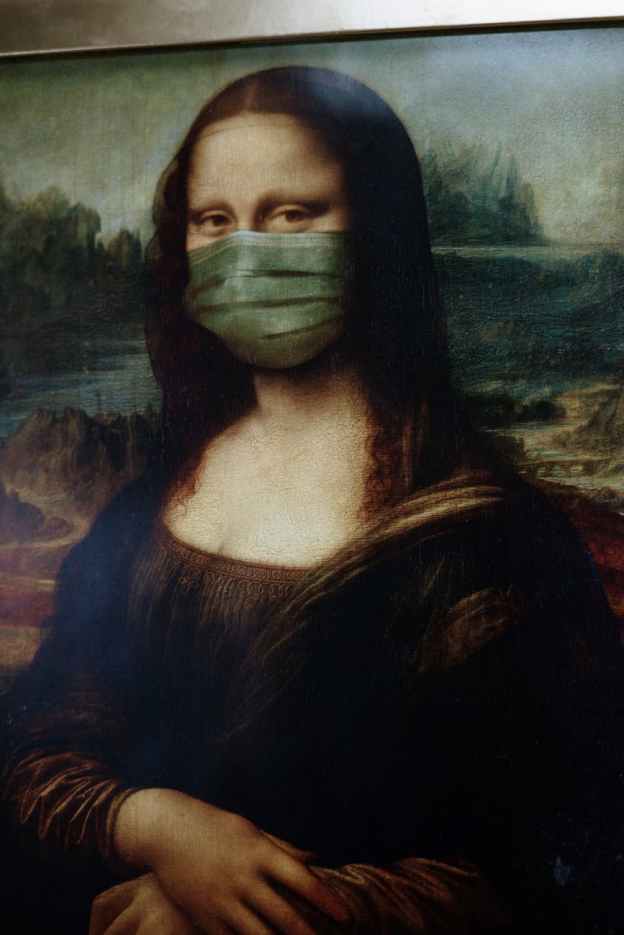
Well, it’s pretty much official here in the US: Wear a mask when venturing out near other people. (Better yet, stay home and have your groceries, drugstore items and booze delivered.)
It’s all very surreal, so I prefer to think of this as an everyday masked ball. Perhaps powdered wigs will be next, to protect our hair from this nasty virus… anyone else feeling all Marie Antoinette/Louis XVI?
Should you be inclined, here’s a link on how to make your own mask at home. Feel free to decorate it with cheery personal elements. Since no one will get close enough to view your handiwork, it won’t matter if it’s a little wonky or your stitches are uneven.
Be safe and enjoy another shelter-in-place weekend. xx Alisa


I’m finding cooking to be a major antidote to boredom and anxiety during these trying times. (Unfortunately, so is eating… but that’s a topic for another time.) Recently, our daughter B suggested I write about mustard. Can’t remember what prompted this, but here goes.
Did you know that mustard is one of the world’s oldest condiments? According to my “deep” Internet dive, the Romans used to grind mustard seeds with grape juice (called must) to create a spicy paste known as mustum ardens (“burning must”) in Latin. Travelers brought mustard seeds to Gaul, where they were planted in vineyards alongside the grapes. French monasteries cultivated and sold mustard as early as the ninth century, and the condiment was available in Paris by the 13th century.

Very simply, mustard is a combination of the ground seeds of the mustard plant and some form of liquid such as water, vinegar, lemon juice, or wine. Different types of each create different varieties: some sweet, some spicy, some eye-wateringly hot. While the level of heat is mostly related to the style of seed—yellow seeds are mild, while brown and black seeds are spicier— it’s the liquid that activates their natural enzymes and determines a mustard’s potency.
These enzymes convert to mustard oil once the seed is broken. The more acidic the liquid, the longer lasting the burn will be; less acidic mustards tend to be quite pungent at first, but quickly lose their punch.
Generally low calorie, especially compared with condiments like mayonnaise, mustard also provides important nutrients. Mustard leaves contain significant amounts of calcium, vitamins A, C, K, and copper, while the seeds are rich in fiber, selenium, magnesium, and manganese.

What follows is adapted from an article at spoonuniversity.com, which includes recipe suggestions.
YELLOW mustard (aka ballpark mustard) is the most basic. Made from yellow mustard seeds and vinegar, it gets its yellow color from turmeric. It’s one of the mildest types of mustard, popular on hot dogs and other sandwiches. I think of it as “starter” mustard.
DIJON takes mustard to the next level. White wine is used instead of vinegar, and the seeds are brown rather than yellow. This results in a complex flavor with more of a bite, perfect for salad dressing, potato salad, and sauces for fish and chicken.
SPICY BROWN mustard is made with coarsely-ground brown mustard seeds that offer more heat than classic yellow or Dijon, along with turmeric and a combination of spices such as allspice, ginger, cinnamon, and nutmeg. Commonly found in delis, the warm flavor goes beautifully with meat.
Too tame? HORSERADISH MUSTARD packs even more heat.
HOT MUSTARD You’ll find this searingly hot mustard in most Chinese restaurants. What makes it so brutally strong is that brown or black mustard seeds are mixed with water. These seeds are naturally more pungent than yellow seeds, due to their alkaline nature. An acidic liquid– like the vinegar used in yellow mustard — would calm that natural heat, while water’s neutral ph lets it go roaring forth. Your sinuses know what I’m talking about.
WHOLE GRAIN This is more of a manufacturing process than a type of mustard—as the name suggests, the seeds are essentially whole. Type of seeds and mixing liquid can vary, with most brands available in the store featuring brown mustard seeds mixed with white wine. Expect a flavor similar to that of Dijon with a coarser texture that pairs well with cheese, potato salad, and sandwiches.
STONE GROUND mustard is the middle ground between smooth Dijon and the chewiness of whole grain. Most commonly, brown seeds are ground between two stones in the form of a mortar and pestle. This type of mustard is typically made with vinegar, and has a little more heat than yellow mustard with less spice than brown mustard.
HONEY MUSTARD is both sweet and tangy and works well in salad dressing, especially to soften the taste of bitter greens such as kale. You can whip some up yourself by mixing your mustard of choice with honey in a 1:1 ratio. Use half as much honey if you prefer less sweetness than commercial brands.
Do you have a favorite type? Or a recipe to share?

If, like me, you can use all the distraction you can get, you’ll enjoy this article, reprinted from AllTimeLists.com:

How many things do we accept in life without demanding proof? There’s that old tale of the little girl asking Mommy why she cut the legs off the Thanksgiving turkey before putting it in the oven, and Mommy saying, “because that’s what my Mommy did” and it turns out that 11 generations earlier, the oven was too small for the whole bird, so the legs were cut off so it would fit. And for 11 generations, no one questioned anything, but just cut the legs off before putting the 12-pound turkey into the behemoth of a modern oven.
We do that stuff all the time, even with our favorite movies. There’s a real chance that your favorite movie scene never actually happened. No, calm down, you haven’t “slid” into a dimension where The Simpsons never happened. It’s simply our collective memory messing with us yet again. We’ve talked about this before, but we assume you’ve already forgotten about it, or got it all twisted around in your head, so here’s a brand-new batch of cultural milestones that never existed.
 You know Rich Uncle Pennybags, the Monopoly man — white mustache, top hat, tuxedo, cane, monocle, unearned sense of smug superiority. He’s downright iconic. Just look at all these Monopoly men, women, and children …
But here’s the weird thing: Rich Uncle Pennybags never had a monocle. Seriously, go to your closet and dig up the Monopoly box inevitably buried near the back. And before you ask, no, his design hasn’t changed at all since he was introduced in Monopoly’s Community and Chance cards in 1936:
The most likely explanation for this widespread confusion is the existence of another popular monocle-wearing mascot who shares many traits with Pennybags (the cane, the top hat, the air of douche-ness), but has two important differences:
One, he does have a monocle, and two, he’s a mutant peanut.
You’d think that last thing would keep confusion at bay, but toss on a top hat and cane, and they’re all the same to us, anthropomorphic nuts be damned.
 Picture a scene from William Shakespeare’s Romeo And Juliet, perhaps the least accurate teen romance ever written. (Not a single breakdancing scene! Not one!) Chances are you imagined a wistful Juliet on a balcony, wondering wherefore her beloved Romeo could be, before he reveals that he’s been right there the whole time, spying on her like a creep.
The balcony has shown up in every single movie adaptation of Shakespeare’s play, from the one with Leonardo DiCaprio and Claire Danes to the one starring a bunch of CGI gnomes, for some reason. In fact, that scene is so embedded in our collective psyche that it has transcended art, and now there’s a type of balcony known as a “Juliet.”
Only one problem: Shakespeare never wrote a balcony scene. His script (the one they forced you to read in high school) only mentions Juliet looking out of a window, with no balconies, porches, fire escapes, or anything of the sort.
In fact, Shakespeare couldn’t have written a balcony scene in this or any play, because balconies weren’t a thing in England during his lifetime. This exotic architectural innovation didn’t make its way to the country until decades after Shakespeare’s death. Romeo may as well have rolled up in an Uber, as far as chronology is concerned.
We owe this iconic moment to plagiarism, the unsung hero of history. In 1679, Thomas Otway put on a play under the self-spoiling title of The History And Fall Of Caius Marius. A more accurate one would have been “Romeo And Juliet, Except In Ancient Rome.” One scene even features the heroine calling out, “Marius, Marius, wherefore art thou, Marius?”
But Otway did make one enormous contribution to the scene: He set it in a balcony. This struck such a chord with audiences that it began to show up in versions of Romeo And Juliet, and this never stopped. It’s like if Michael Bay borrowed a plot point from a Transmorphers movie … which is an improvement, now that we think about it.
 Anyone with a modicum of historical awareness knows Henry VIII by his trademark goofy hat, weak beard, funny-looking legs, and massive gut. And how did he get that gut? It probably had to do with the turkey leg he always had in his hand, as is seen in virtually every modern depiction of him. From children’s books, to shows like The Simpsons, to whatever a “mad magazine” is supposed to be.
Henry VIII loved his turkey almost as much as he hated wedding anniversaries. Obviously, this reputation for meat-guzzling comes from the classic painting depicting him with a turkey leg in his hand. You know, the one by … uh, give us a second … come on, Wikipedia … ah, here it is! No, wait, that’s a glove.
The shocking truth is that no such painting exists. In fact, there are no classic paintings that depict King Henry VIII with any piece of food in his hand, nor of him eating at all. Other than the unsubstantiated claim that he was the first English king to eat turkey, there’s also no evidence that Henry liked or even encountered this type of meat. As far as anyone can tell, the image of Henry as the bane of flightless birds comes from a 1933 film, which devotes a full minute and a half to him disappearing a chicken into his gut. That, or it’s a scheme by Big Turkey to promote their product as the snack of kings. It could go either way.
 It’s the single most famous moment in The Silence Of The Lambs. Clarice Starling stands in front of Hannibal Lecter’s cell, him looking at her through the bulletproof glass all creepy calm, sneering: “Hello, Clarice.”
That’s our intro to the character, and it’s a great one. Anthony Hopkins is so damn intimidating that he can turn a simple greeting into an endlessly layered threat. The scene became iconic for a reason. We can hear the words right now, their exact inflection. You read this in his voice: “Hello, Clarice.”
CommentThose two words have since become the go-to reference line, from fan fiction sites to newspapers. They made it into posters, T-shirts, and even cute animal memes. But that line doesn’t appear in the film. In fact, it can’t. In the scene you’re picturing, Hannibal is meeting Clarice for the first time, and eating people doesn’t grant you psychic powers (though that would be an interesting twist in the series). He never even says “hello.” The closest he comes to the line is at the end of the movie, when he phones Clarice about his recent escape and begins the conversation with “Well, Clarice, have the lambs stopped screaming?” Which is far more unsettling, but doesn’t fit on an image macro as well.
London living with lady Sarah
Tales of Mystery and the Supernatural
aka operasandcycling.com
Mit Wohnmobil und Kamera auf den Spuren der Natur
Tale of Net Cancer
Exploring the History and Beauty of the Iconic Carré: Interesting Facts, History, Photos and Shop.
Whatever That May Be
by Cherie White, Author and Anti-Bullying Advocate
Travel and Lifestyle Blog
Traveling to experience places not just visit them!
Rachel McAlpine writes, blogs, draws and podcasts here
Ramblings of a retiree in France
A personal blog that shares writing & positivity
For when France seems too far away. Shop for inspiring images of France and discover travel tips, packing advice, recipes, book reviews and more.
Art from the Earth
Random musings on style and substance
Life in islamic point of view
 olderfatterhappierdotcom