Tag Archives: Travel

Musings Du Jour

I’ve neglected this blog for too long, as there’s been a lot going on: Health issues with my husband, leading to many medical appointments, endless phone calls, and the usual snafus with insurance.

Happily, we are about to travel: just a week in France on a Viking river cruise, barely in Paris so I hope to skip Olympics madness. Very much looking forward to 8 days when I will not have to cook, clean, or deal with bills.

And, although this blog is not supposed to address politics, thank you Joe for finally stepping aside. Kamala isn’t perfect — not too thrilled with her position on Israel — but anything/anyone is better than that dangerous criminal orange cheeseball so I am cautiously optimistic about the future.

The following piece caught my eye and I think is a good explanation of the ways that otherwise good people are being led astray by so-called progressive rhetoric.

A non-Jew’s Perspective on Antisemitism and ‘Anti-Zionism’

Here are my 15 things to consider about antisemitism and “anti-Zionism.”

An essay by Pat Johnson of Pat’s Substack.

Share

There is an elephant in the room and we need to address it.

It is the relationship between antisemitism and “anti-Zionism.”

I am not Jewish. So, on the one hand, should I be the one defining the problem and offering solutions? On the other hand, why is it always left to Jewish people to make this case?

It is time for allies to stand up.

Here are my 15 things to consider about antisemitism and “anti-Zionism.”

1. Stop saying, ‘Anti-Zionism is not antisemitism.’

This is a deeply problematic statement. The idea that Jewish people and their allies scream “Antisemitism!” when confronted with “anti-Zionism” is a deflection and a projection.

The statement “anti-Zionism is not antisemitism” is used to avoid confronting the possible (in fact, undeniable) presence of antisemitism in the anti-Zionist movement.

They accuse Jews and their allies of deflecting real concerns about Israel by crying antisemitism. It is they, though, who deflect real concerns about antisemitism by cry-bullying about Zionists “silencing” them.

2. Start acting like anti-racists. Stop acting like racists.

We might expect this behavior from Right-wing extremists, who deny the presence of racism and dismiss invitations to self-examination. But it is (mostly) not coming from those people.

This atrocious deflection is coming overwhelmingly from “progressive,” self-declared anti-racism activists who, when faced with the remotest suggestion that they might be exhibiting any form of prejudice, always respond respectfully and engage in introspection.

Except when it comes to Jews and antisemitism.

Instead, not only will they not engage in self-reflection in this sole instance, they double down and accuse Jewish people of manipulating their experiences with prejudice to “silence” criticism of Israel.

In other words, they invoke antisemitic ideas of Jewish deviousness to avoid addressing their own antisemitism. This is obviously among the most unprogressive responses imaginable.

3. Be clear on nomenclature.

Anti-Zionism is not “criticism of Israel.” Anti-Zionism is the idea that Jewish people do not have the right to self-determination. It is a call for the eradication of the State of Israel.

The (very different) statement “criticism of Israel is not antisemitic” is probably fair (though it depends on the language and imagery we use and on our motivations). But anti-Zionism means something very specific.

And if Jewish people are the only people whose right to self-determination we oppose — indeed, if the only country in the world we seek to eradicate is the Jewish one  — well, excuse me for concluding the blatantly obvious.

4. Understand your biases.

We might conclude that we do not “hate” Jews, therefore we are not “antisemitic.” The terminology is problematic, I admit that. The prefix “anti-” suggests active antipathy. That exists, but it is probably not the most significant factor here.

We are not suggesting that people hate Jews, therefore they hate Israel. That’s not how this works. What is happening is that we hear allegations against Israel that dovetail with prejudices about Jews that have been handed down to us through generations of Western civilization and we are predisposed to believe them.

The most obvious example is the idea that Israelis steal Arab land. The fact is that Israel has given away proportionately more land in peacetime than any country in human history. Israel abandoned the Sinai Peninsula — giving up 75 percent of its landmass and its only hope for oil self-sufficiency — in the faint hope of a cold peace within Egypt.

Israel unilaterally disengaged from Gaza in 2005. Israel offered the Palestinian Authority control over the West Bank through the Oslo Accords peace process — and then-Palestinian leader Yasser Arafat overthrew the negotiating table and launched the Second Intifada.

Despite all the evidence, much of the world still adheres to a false narrative that Israelis (that is, Jews) take what is not theirs.

How does this happen?

Inherent prejudices and confirmation bias. We encounter allegations that Israel is taking stuff from Arabs and we hear echoes of our grandparents’ warnings about “those people” and their greed.

There are scores of examples like these, in which accusations against Israel dovetail with received prejudices about Jews — and the soils tilled by generations of anti-Jewish bias allow anti-Israel allegations (some with a seed of truth, some completely fabricated) to flourish.

5. You are criticizing Israel. Your words are heard by Jews.

The defense that most “pro-Palestinian” activists make today is that they are not criticizing Jews, just Israel. This is profoundly naive and disingenuous.

Here’s why: There are about 15 million Jews in the world. About half live in Israel. It is simply not sustainable to think that decent, empathetic people could condemn in the most violent, hateful terms possible the one Jewish country in the world, home to half the world’s Jewish people, with no emotional impact whatsoever on the other half of the Jewish people.

Outcome matters more than intent. You may heap hatred on Israel but Israelis do not hear it. The Jews who live in the Diaspora do. And they know what antisemitism-fueled discourse looks like, even if you do not.

6. Understand the Jews’ connections to Israel.

Regardless of the sheer numerical importance of Israel, almost every Jewish person in the world has a deep personal, familial, spiritual, religious, historical and/or cultural connection to the land of Israel.

Any expression whatsoever that diminishes or dismisses that connection — and such expressions are ubiquitous in the “pro-Palestinian” movement — is an absolute abrogation of the core identity of almost every Jew in the world.

Is that antisemitism?

Really, who cares what we call it.

7. Act in good faith.

The Holocaust is a huge issue (and a huge problem) in this dialogue. If your reaction to even bringing up this history is to roll your eyes, sigh or in any other way dismiss this as absolutely central, you lack the empathy and good faith to be engaged in this discussion.

8. Know your history.

The relationship between the Holocaust, Israel, and Zionism is complex. I cannot possibly do it justice in this brief space.

But the least you need to know is this: The Holocaust happened because of the Nazis, yes.

However, it was allowed to occur, in the scope that it did, killing more than one-third of the Jewish people in the world, because every other country outside of Germany was complicit.

At the Evian Conference of 1938, the entire “civilized world” voted as one to reject sanctuary to the imperiled Jews of Europe. Democratic countries, led by the United States, but enthusiastically endorsed by Canada, Australia, and every free European country, refused to take any Jewish refugees.

The Holocaust happened because the entire world turned their back on the Jews. The existence of Israel is the Jewish People’s answer not only to the Holocaust, but to the Evian Conference. It is the recognition that Jews can count on nobody but themselves at the most existential moment. If you don’t get that, you get nothing.

9. Know the centrality of Israel.

Because of this, the appealing, naive, preposterous idea of a “one-state solution” (which is, to be extremely generous, the least genocidal interpretation of the phrase “From the river to the sea”) denies the core reason Israel exists: So that, no matter what, there will always be one country in the world whose immigration policy welcomes endangered Jews.

10. Recognize the right to Jewish self-determination.

All of these (entirely legitimate) arguments for Israel’s right to exist are (or, at least, should be) irrelevant. The Jewish People have a right to national self-determination. If you think that the Palestinian people have a right to national self-determination, but Jewish people do not, you need to take a deep look into yourself and your biases.

11. Don’t (mis)define Jews.

If, however, you buy into the argument that Jewish people do not deserve self-determination because they are a “religion” rather than a “race,” you lack the knowledge to be engaged in this discussion.

Judaism is a religion. But Jewishness is something broader, with Judaism at its core. Jews are a people, an ethnocultural group, a nation. Yes, Jewishness is different than how most other identities are constituted.

But the fact that you do not understand the nuances of what makes a Jew a Jew, or who the Jewish People are, does not justify abrogating their right to national self-determination. Why should Jewish people suffer for your ignorance?

12. Understand that Jews are deeply invested in Israel.

Another Holocaust related point: as the magnitude of the Shoah slowly dawned on Jewish (and non-Jewish) people, in the years after 1945, it would have been completely understandable for the surviving Jews in the world to have plummeted into an unprecedented collective depression, to have given up all hope of redemption or belief in the humanity of their fellow beings.

Instead, in ways that dumbfound me as a non-Jew and a student of history, the Jewish People engaged in what is one of history’s most profoundly inspiring and redeeming experiments in rebirth and renewal.

Whether they chose to move to Israel or not, whether they signed up as foreign volunteers to defend Israel when it was attacked by its combined neighbors at the moment of its birth, whether they sold the family silver and sent the money the new state, whatever they did, almost every single Jew in the world took hope and invested their emotional, spiritual and financial resources into building the Jewish state.

That personal and familial connection remains — even among Jews who have never set foot in Israel.

This is what you spit on when you spit on Israel.

13. Israel is a testament to the past and a guarantee of the future.

Political Zionism was invented in the 19th century, but after the Holocaust, it became an almost-universal Jewish value, and the closest thing that could exist to an antidote to the Holocaust. Nothing — nothing — could undo what the Nazis did (with the complicity of the entire world).

But the universal Jewish commitment to creating, building and sustaining the Jewish state is viewed by almost all Jews as both a tragically belated testament to the memory of those murdered (if Israel had existed 10 years earlier, six million might not have died) but also a promise to the future, the greatest fulfillment of the crucial words: “Never again!”

14. Israel does not guarantee Jewish survival. But it is the best bet.

This raises two additional questions: Does the existence of Israel guarantee the security of the Jewish people?

October 7th said, clearly not, and that was only a reiteration of decades of genocidal attacks against the Jewish people in Israel by state actors and terrorist organizations.

It is, nevertheless, the surest guarantee that Jews will never again lack a coordinated defense against those who seek their destruction.

15. Don’t be cavalier about genocide.

The other question this raises may be (we know this from far-too-common statements): Isn’t it a bit paranoid to think that Jews could face another Holocaust? Is this not evidence of a particularly Jewish “persecution complex”?

If this idea so much as enters your mind as a legitimate argument, you lack both knowledge of the world and empathy for the Jewish experience.

Plenty of voices have called, and continue to call, for the annihilation of the entire Jewish People — voices not only in the darkest recesses of the Internet, but from leading religious, political and social figures around the world, including the government of Iran, which is nearing the capability to eradicate at least half the Jewish people in the world with nuclear weapons.

Even if there were no chance of a future genocide — there is, and your dismissal of the possibility is one of the reasons for your Jewish neighbors’ anxieties right now — the fears among Jewish people of a repetition of that unimaginable history is absolutely legitimate.

How could it not be?

Their grandparents thought they were integrated, welcome citizens in their “civilized” societies. Now the world is dogpiling in ways that have resonance for anyone with knowledge of that history.

It is impossible in this short space to thoroughly itemize the connections that Jewish people worldwide have with the people, land, and state of Israel and that, by extension, help explain why the words you may intend as “only directed toward Israel” have impacts on Jews that many perceive as antisemitic. 

But that complexity, if nothing else, should encourage any person of goodwill to exercise some degree of humility and empathy when approaching this subject.

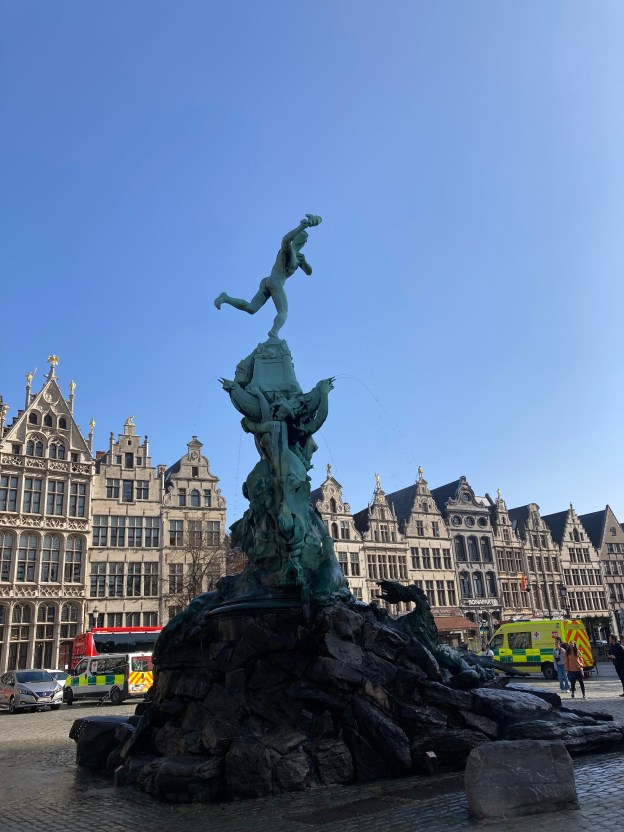
Photo by James Wheeler on Pexels.com

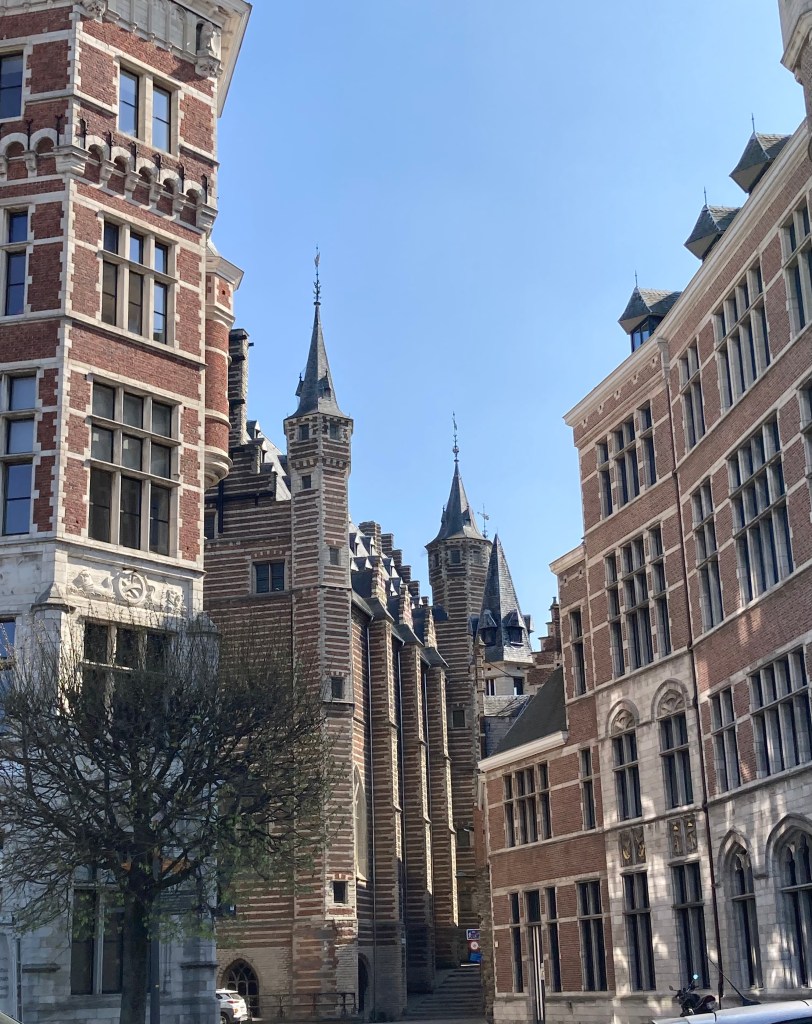
Snapshot: Antwerp

Greetings from Belgium! Today we’re in Antwerp, which seems to have more chocolate boutiques per square foot than anywhere else on the planet. Luckily for me, they are all closed at the moment. Antwerp is also famous for diamonds, should you need a bauble or two.


This magnificent lion welcomes you at the harbor
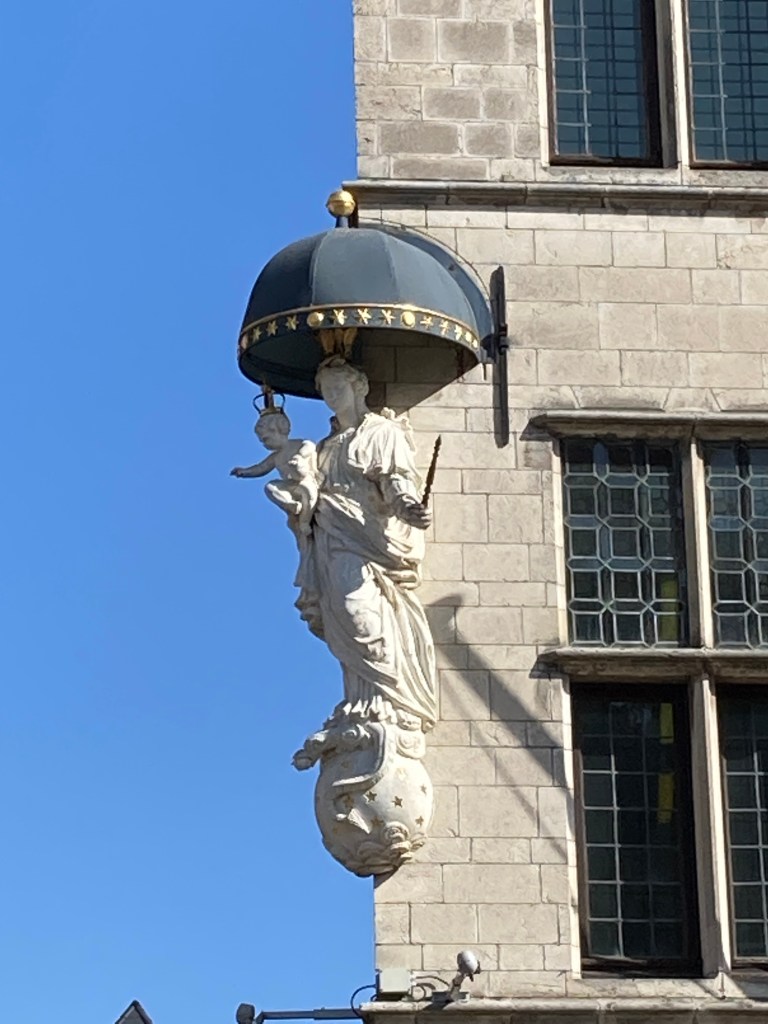
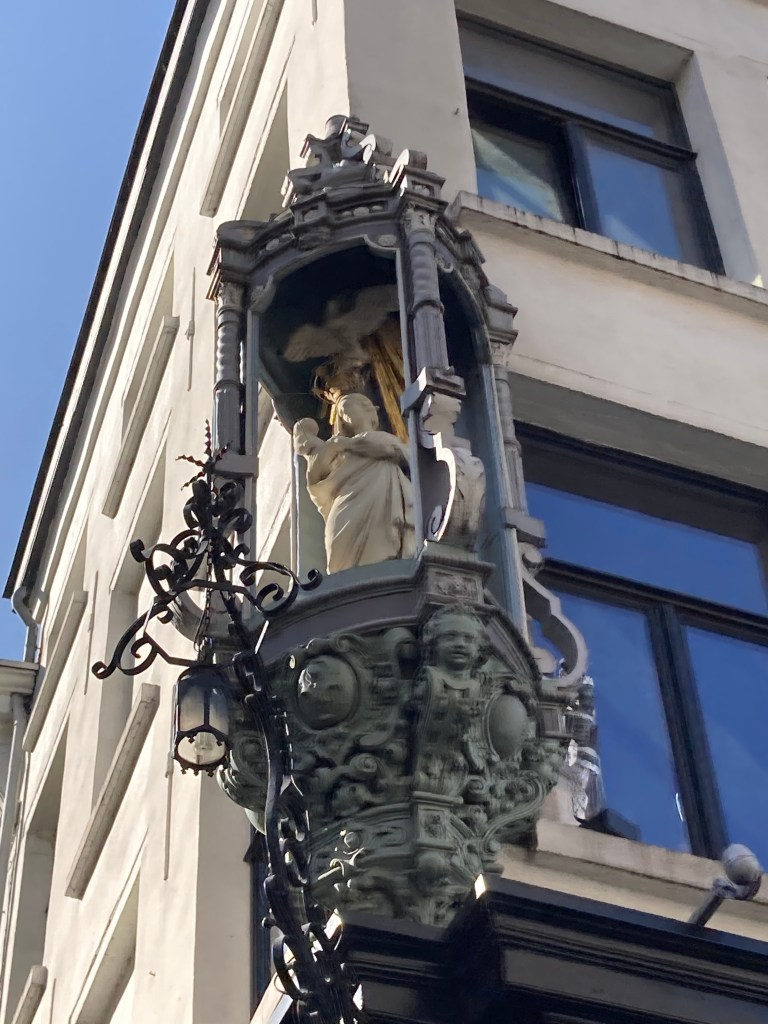
Wealthy merchants often displayed images of the Madonna outside their homes
Grote Markt
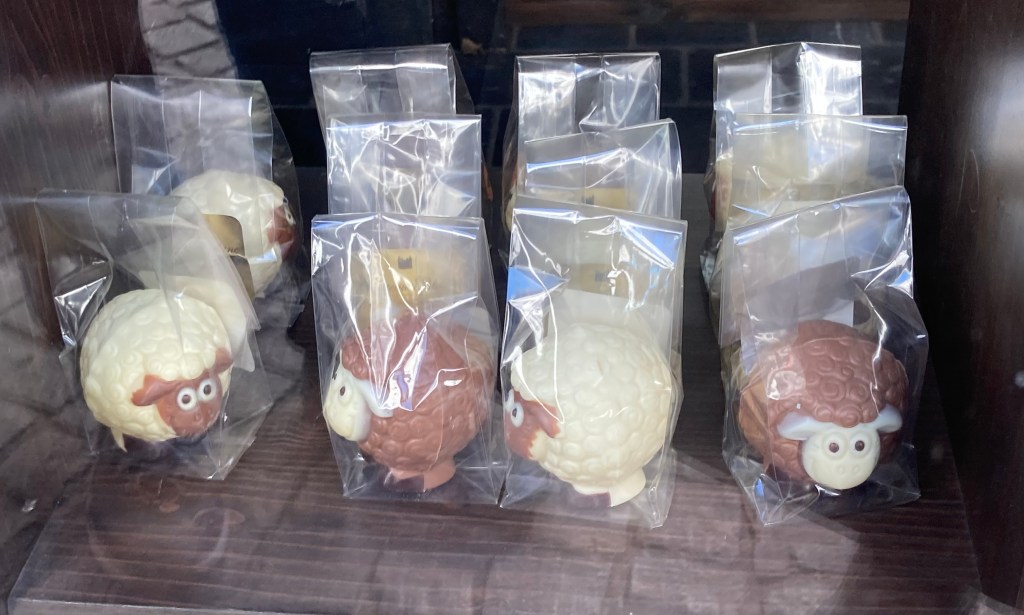
How cute are these little lambs!

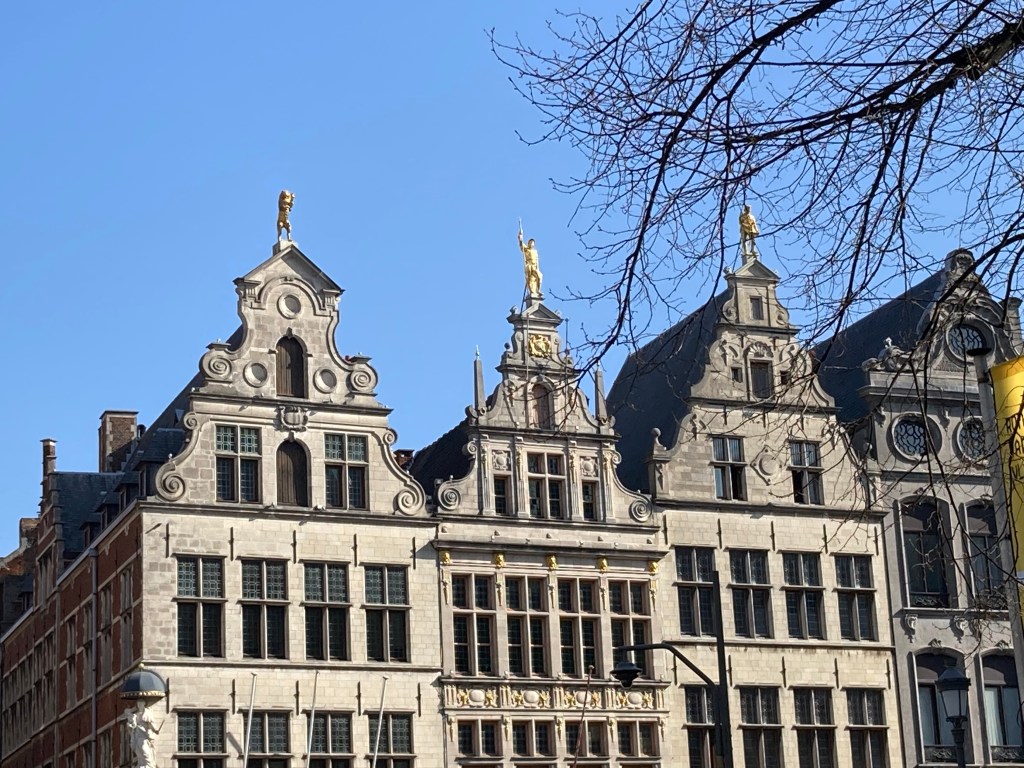
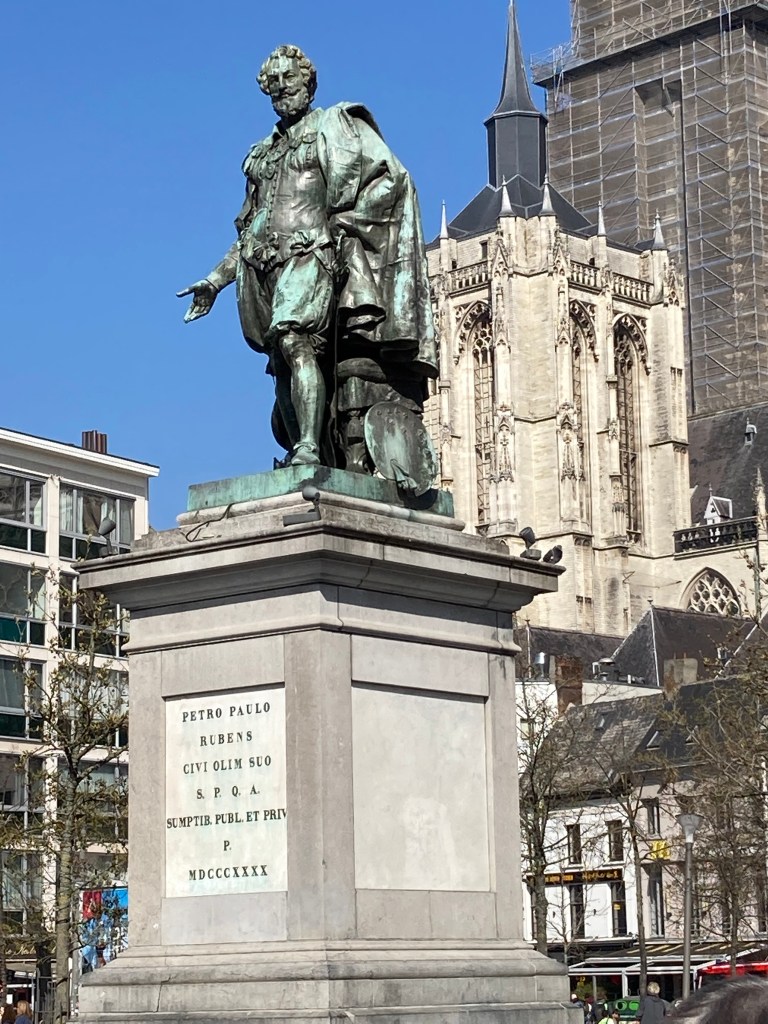
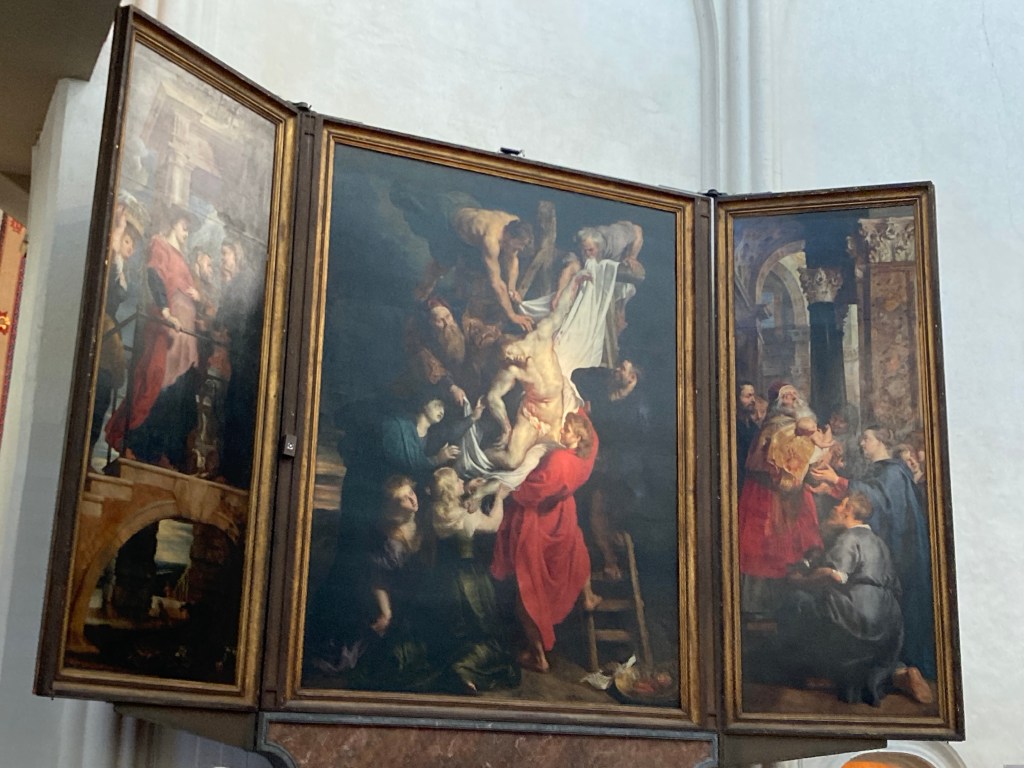
Antwerp was the home of Peter Paul Rubens, and you can see his 17th century masterpieces in the beautiful Gothic cathedral (Cathedral of Our Lady) in the main square. The medieval guild houses are quite stunning as well.

Cathedral of Our Lady
One of the Rubens triptychs
And the other one
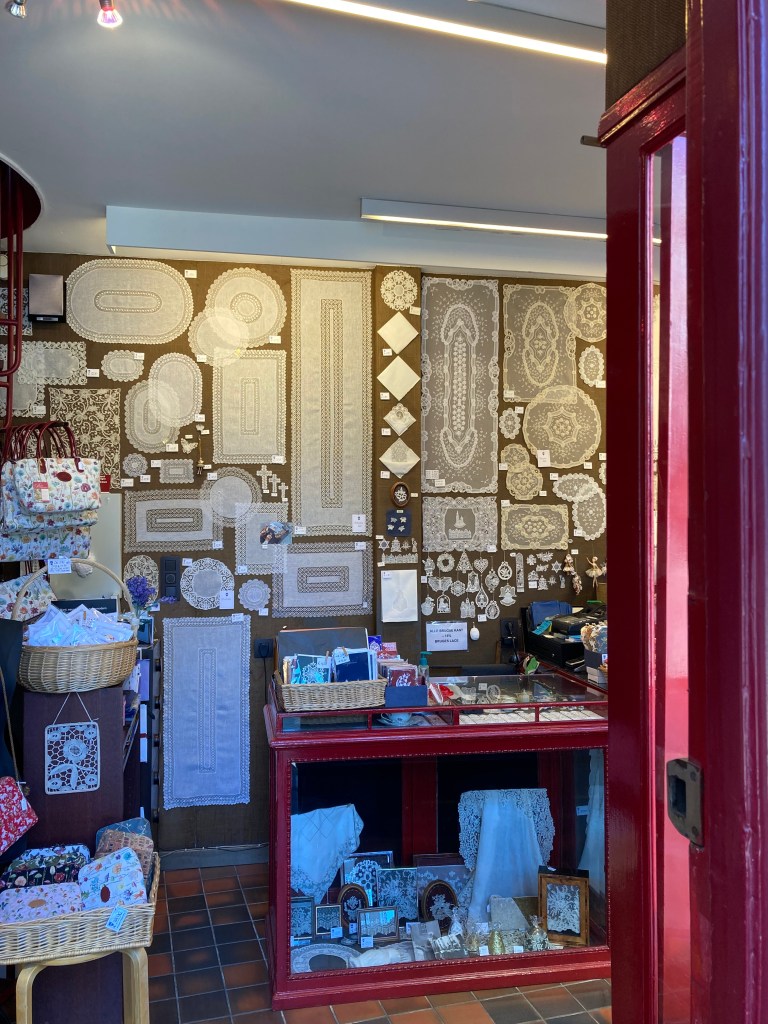
Belgian lace: another art form
Another view at the harbor
And one more street scene

A Brief Vacation

Greetings, dear readers, from The Netherlands, where my Dear Husband and I are attempting to escape world events with a delightful Viking cruise. My own photos to follow, but so far we have spent time in Amsterdam, Arnhem, Kinderdijk, and other locations. Also, I just finished reading Dear Mrs. Bird, about life in WWII-era London; charming and recommended, but all too evocative of a troubling time.

How are all of you coping? Resilience? Denial? Resolute Optimism?

Photo by Tom Swinnen on Pexels.com

French Fashion Update

While at FSH, a sales associate showed this to multiple customers

Happy weekend, everyone! I’m so delinquent in posting but here are some quick style observations from our recent trip to Paris and Bordeaux.

  • Almost everyone wears scarves, all nonchalantly slung about the neck
  • Patterned tights, no opaques
  • Ankle boots are popular, especially worn with short skirts (if you’re young, that is)
  • The Right Bank of Paris seemed to be mobbed with frenzied shoppers. Is this due to being sprung from the pandemic jail and finally being able to travel? Many post-pandemic events requiring new wardrobes? A lack of interest in museums, restaurants or architecture?
  • Black, black and more black. Except for head-to-toe camel. Or grey.
  • For that casual, old-money look, a battered Kelly looks far more chic than the brand new version
  • Big Birkins still look like suitcases
  • Lots of hats, e.g. cloches, but not berets.
  • Jewelry: The look is several delicate chains layered together. Women of every age wear multiple rings — especially on the second and fourth fingers. No big diamonds or other flashy pieces — the French prefer understatement

As some of you may know, I am a sucker for almost anything Hermès. Though I was dismayed by the crazy mob of shoppers at the Rue Faubourg flagship: Nearly every woman was sporting either a Birkin or a Kelly and it seemed to be the necessary accessory to get anyone to pay attention to you. Although the sales assistants have explained that production of the most in-demand styles is down due to Covid so that “nothing” is available, I did spot one woman purchasing both a Constance and a Kelly, with a stack of boxes suggesting that she was just getting started.

I did buy a lipstick.

Luckily, there is the secondary market. And if you already have more than enough bags and baubles, the following item is available online at Ann’s Fabulous Finds for a very reasonable $5,500. Surely this will be snapped up ASAP!

Yes, a designer hard hat.

Meanwhile, the flagship Chanel still boasts the original staircase, which is worth a visit even if you’re not shopping.

Good News Monday: A Little Goes a Long Way

Finally back home after three weeks of travels. Now that I’m not taking long walks through Paris, etc., and the weather’s turned rainy, I’m heartened by the following article.

Photo by Los Muertos Crew on Pexels.com

Just 5 minutes of movement every hour can undo harms from inactivity

OCTOBER 29, 2021 by Study Finds

LONDON — Has life indoors during the pandemic left you more inactive and fighting off the “COVID 15”? You’re not alone. COVID quarantines have dramatically lowered the amount of physical activity many people usually get through simply socializing outdoors or by going to work. Now, researchers from King’s College London say getting up and moving around for just five minutes every hour can help people shake off their pandemic inactivity.

The team compared the levels of physical activity in people suffering from genetic muscle disorders, such as muscular dystrophy, prior to and toward the end of quarantine. The participants consisted of adults with a variety of physical capacities, ranging from very mobile to needing assistance to move. The study also included 41 people in wheelchairs, who studies frequently overlook, according to the team. The results, according to the researchers, are applicable to people with a variety of capabilities since COVID isolation or switching to remote work disrupted many individuals’ normal schedules.

During the year-long assessment, accelerometers gauged the level of physical activity prior to quarantine in 2019 until the end of quarantine in 2020. These sensors recorded the duration, regularity, and degree of movement in four different categories: robust, mild, low, and sedentary.

Throughout the pandemic, results showed a considerable drop in the degree of physical activity participants got each day. Individuals, on average, were engaging in nearly an hour and a half of mild exercise each day prior to quarantine. As a result of the confinement, people spent an average of 25 minutes less each day on low activity tasks and moved less often (11% less per hour) during the day.

Being physically active is about more than just working out

Due to last year’s restrictions on traveling, outdoor recreational activities, and large gatherings, the study finds people spent less time doing light activities and moved less often in general. Since this daily light activity isn’t necessarily exercise, it’s hard for people to notice these minuscule changes in daily light activity. Despite one’s health status, moderate exercise and frequent activity during the day both play a role in better health outcomes.

“Even people who don’t do much exercise have been impacted by lockdown inactivity. During COVID-19 lockdown, our study detected an extra hour per day of inactivity in disabled and independent adults with neuromuscular diseases. Moving less is detrimental to health. Reduced activity can be especially harmful for those with neuromuscular conditions, disabilities or advanced age,” says lead author and neurological physiotherapist Sarah Roberts-Lewis in a university release.

“The reduction in light activity measured in this study is likely to be similar for anybody whose daily routine has been restricted by lockdown. Based on our findings, we suggest people move their bodies for 5 minutes each hour during the day. Additionally, spend 30 minutes each day doing some extra light activity, like yoga or chair exercises. The World Health Organization activity guidelines state ‘every move counts’; they provide suggestions about light activities suitable for all abilities. Simple changes can help with reconditioning during and after lockdown,” Roberts-Lewis concludes.

This study appears in the journal BMJ Neurology Open.

A Week Away

Back in June, when it was becoming impossibly hot and boring living in our rental apartment (with molasses-slow progress on our home renovation), Dear Husband and I decided to brave the outside world and travel out of the country.

Armed with passports, vaccination cards, entry documents, and recent COVID tests, DH and I embarked on a short Viking river cruise to Lyon and Provence. The tipping point was their excellent health and safety program, in which every crew member and passenger takes a short, non-invasive COVID test daily. At least we’d be protected within our bubble.

A few highlights, as this is by no means a comprehensive travelogue:

  • Watching the world flow by from our little balcony
  • Cocktail hour with witty and cultured new friends K and S
  • Breathtaking mountain views of the countryside
  • Strolling through Arles
  • Morning croissants and coffee
  • A day on our own in Avignon visiting two museums (classic and contemporary) and finding a terrific place for lunch
  • The uniformly excellent food, wine, service and crew on board

And a couple of lowlights:

  • The airports in Marseilles and Frankfurt (our connection), which were overcrowded and understaffed, with insuffient time to check all passengers’ COVID documents
  • Not enough time in Lyon; we will have to return!
Tournon-sur-Rhône
Les Baux-de-Provence (from the bus)
Tournon
Just drifting along
Saint-Barthelemy-le-Plain
Soon to be sunflower oil
Arles
Arles Arena
One family’s multi-generational olive oil mill in Fontvielle

Wistful Thinking

There are so many things I miss these days, from the prosaic to the profound.  Among them:

  • Free samples at Costco and Trader Joe’s
  • Visiting with my kids
  • Dinner out with friends
  • Responsible government leadership
  • A proper haircut
  • A decent pedicure
  • My group exercise class
  • Anxiety-free sleep
  • News that’s actually news
  • Space to roam
  • My waistline

But perhaps the one thing I miss most of all is the anticipation of upcoming travel.  For those of us who love a change of scenery — whether exotic or familiar — there is something deeply satisfying about planning a trip down to the last detail, while leaving lots of room for unexpected developments. (The good kind, not the “oh s*** I’m suddenly quarantined in a foreign country” kind.)

I’m enjoying vicarious adventures through other bloggers’ posts, but we all know it’s hardly the same.  Having cancelled our London trip planned for March, and now deciding not to play “beat the odds” with the trip to France we’d scheduled for this summer, I feel a bit adrift.

And wondering… what do YOU miss most these days?

airplane window view of airplane wing and clouds

Photo by Chait Goli on Pexels.com

Good News Monday: Flu Fighters


Cold and flu season is upon us.  And although experts note that “strengthening your immune system” isn’t a quick fix — after all, it is a system with multiple components — there are common sense things that can help.

  1. Get your flu shot.  It’s never a guarantee, but studies have shown it can lessen the severity of illness if you do get sick.
  2. Wash your hands often, and use antibacterial wipes when you’re out and about.
  3. Regular chiropractic adjustments can relieve compression in nerve pathways.
  4. Reduce your intake of sugar, caffeine, alcohol and processed foods.
  5. Eat plenty of colorful fruits and veggies to boost vitamin C and other nutrients.
  6. Get extra sleep.
  7. Identify causes of chronic stress in your life, and try to address them.
  8. Drink plenty of water, more than normal.
  9. Take in more Vitamin D. 15 minutes of daily sun exposure on unprotected skin is all you need; then apply that sunblock!
  10. Apple cider vinegar thins out mucus in the throat, moving it out of your respiratory system. Hate the taste, or worry about direct contact of acid with your teeth? It’s available in capsules (Amazon has a lot of options) and may help with weight loss.
  11. Exercise regularly.
  12. Don’t smoke. (Did you really need another reason?!)
    1. food salad healthy summerPhoto by Pixabay on Pexels.com


A Day in Victoria BC

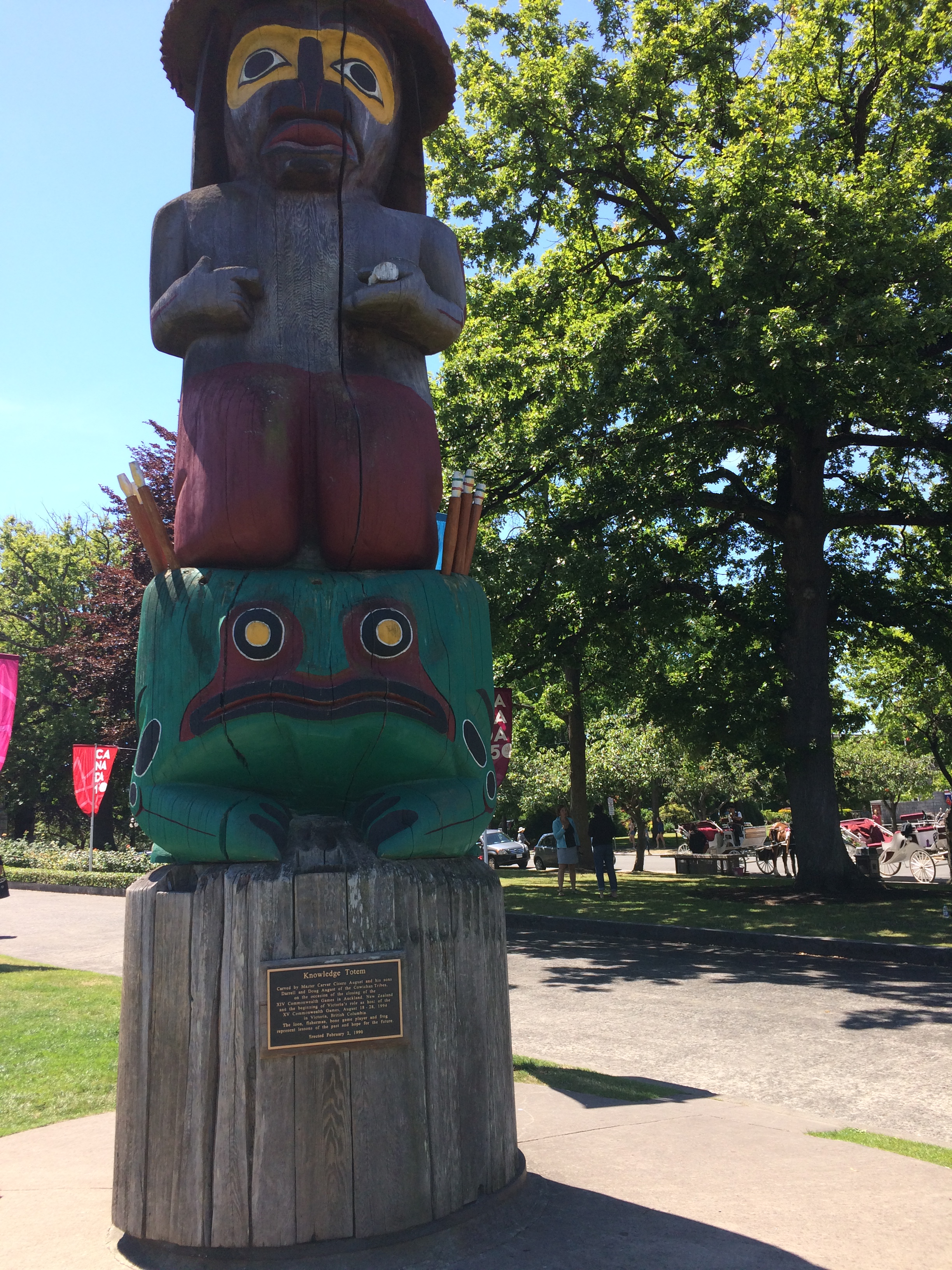
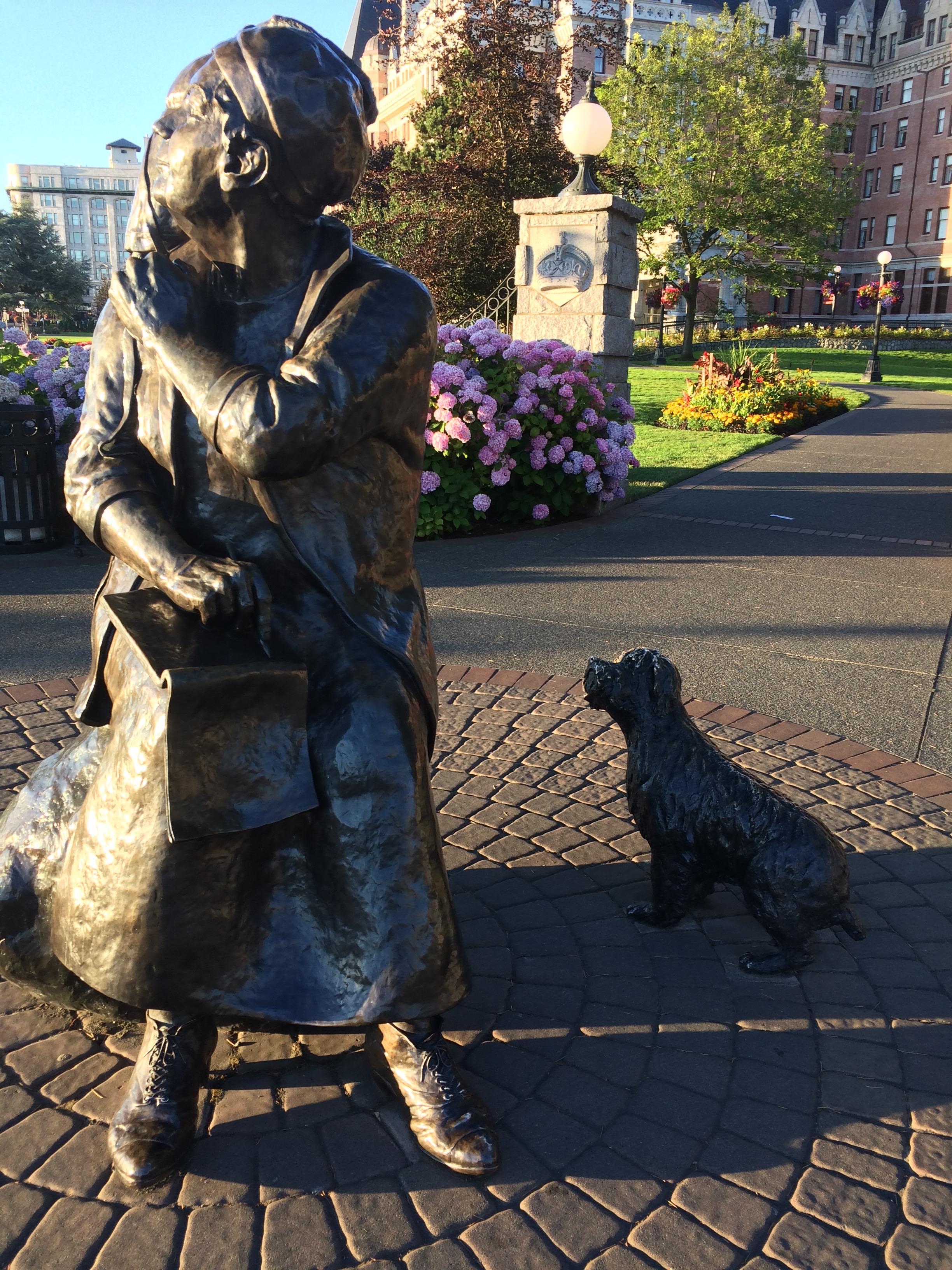
Well, it’s been two months since we took this trip but my excuse is that you may find it more enjoyable to visit now that the summer high season has ended. (How’s that for turning procrastination into a benefit?) Fewer tourists and cruise ships make it a lot nicer to maneuver through downtown. On the minus side, though, it’s more likely to rain so the crossing could get a bit rough.

I won’t begin to attempt a comprehensive travelogue, especially at this late date. There’s a ton of info online, after all. The lovely thing about Victoria is that you leave the very American city of Seattle and three hours later it feels as though you’re in Europe. Heaven for an Anglophile like me.

We stayed in Seattle the day before and the day after, which made for a nice little getaway. There’s plenty to do in both cities if you have time.

But if you only have 24 hours, as we did, here’s a quick snapshot.

We board the Victoria Clipper ferry in downtown Seattle. Food and drink options, plus a basket of free chewable Dramamine. Because who wants to be sitting near someone who’s seasick for three hours? (Tip: half a tablet keeps your stomach calm without making you too sleepy.)

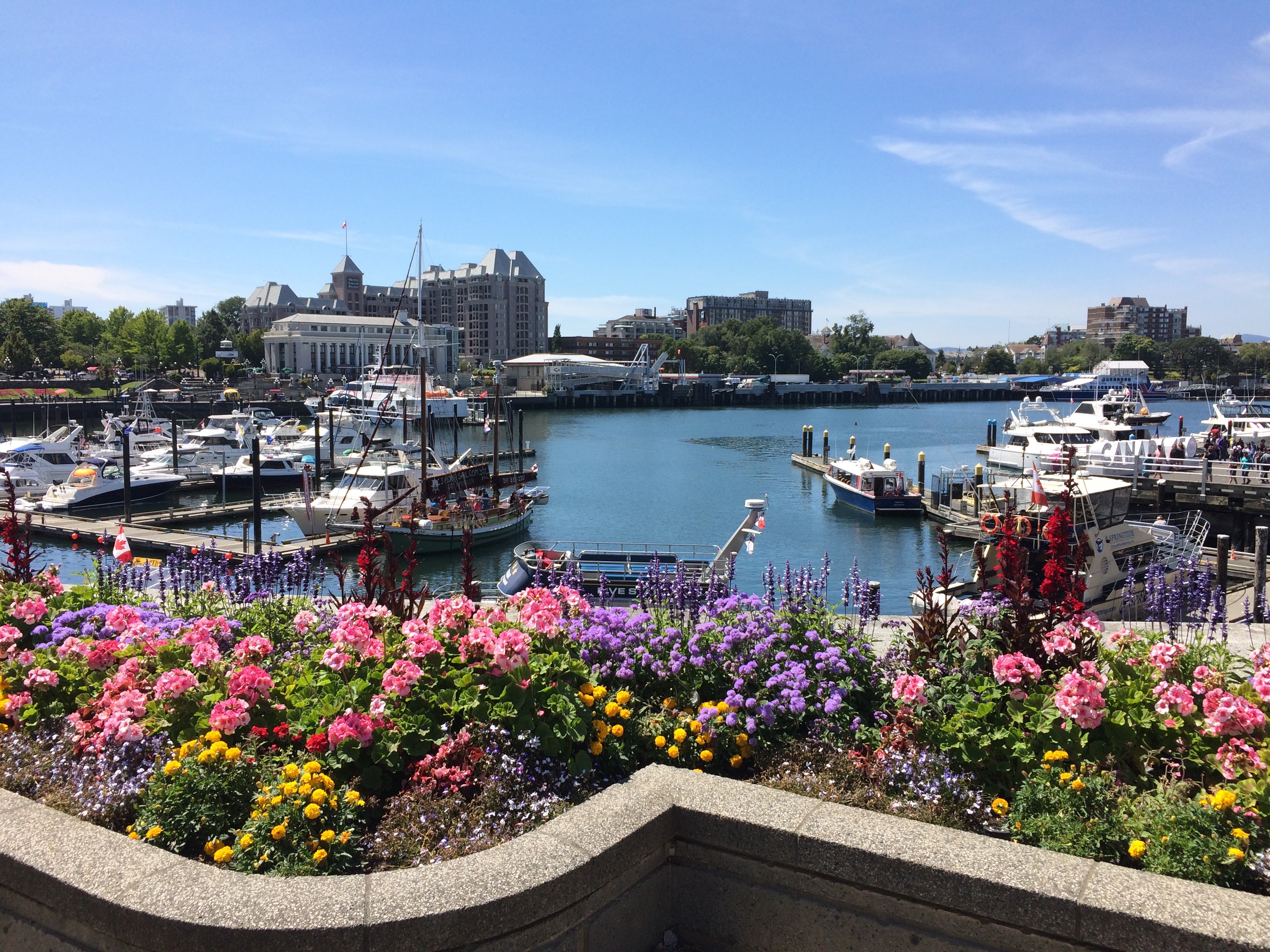
(Can we say “Bad hair day?!?”) Arrive at Victoria’s Inner Harbour around noon. Check in at our hotel, the Grand Pacific, which is modern and spacious.)

Lunch: Steamship Grill and Bar. Waterfront views and delicious seafood in a beautiful Beaux Arts building. A glass of wine and now I really feel that I’m on vacation. Check out this adorable water taxi!

IMG-2587.JPG

Walk off lunch: Victoria’s easy to get around on foot. Other attractions, such as the famous and gorgeous Butchart Gardens, are a short ride away.

IMG-2548

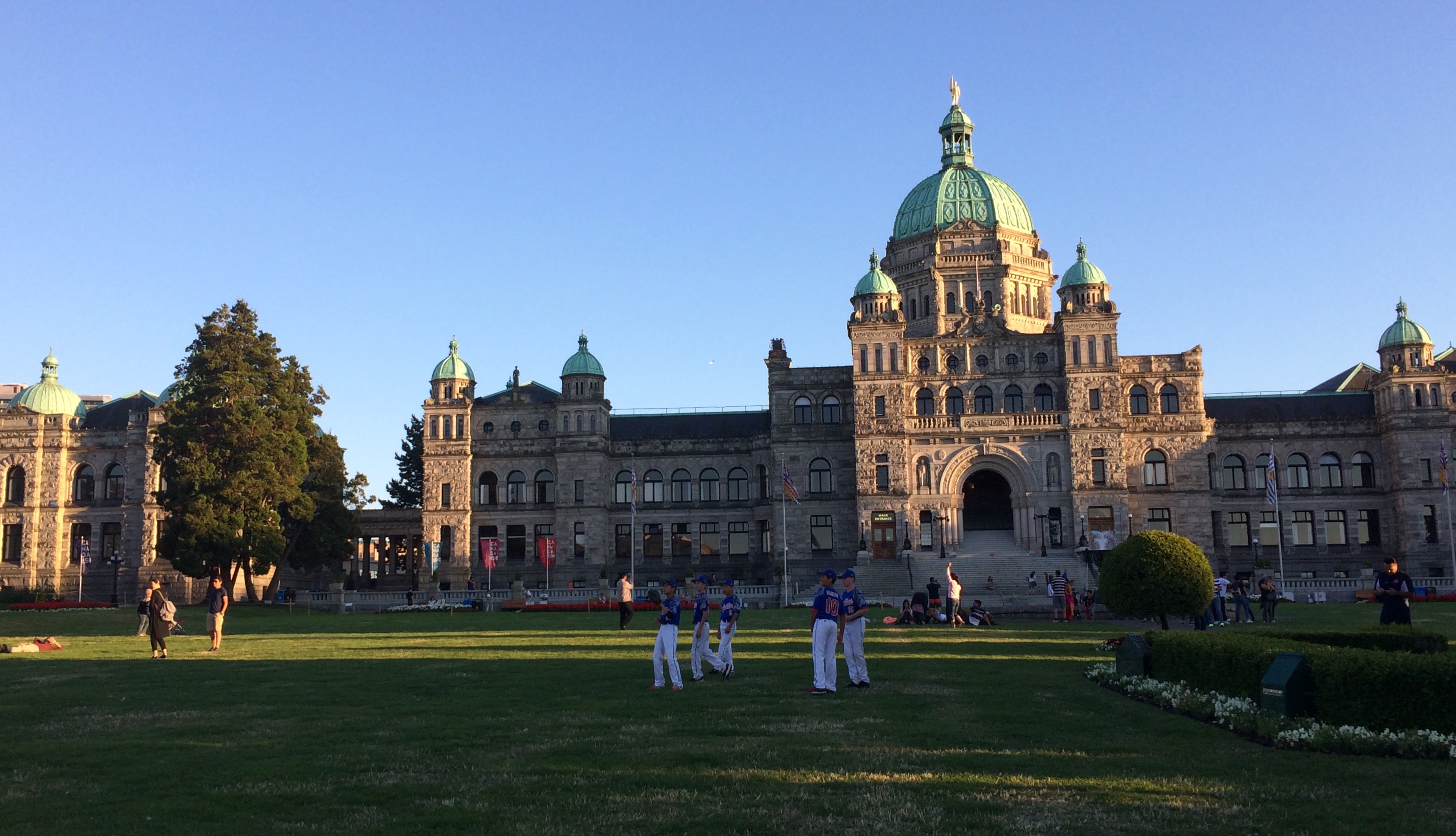
IMG_2573Up Government Street past Parliament and Royal BC Museum…

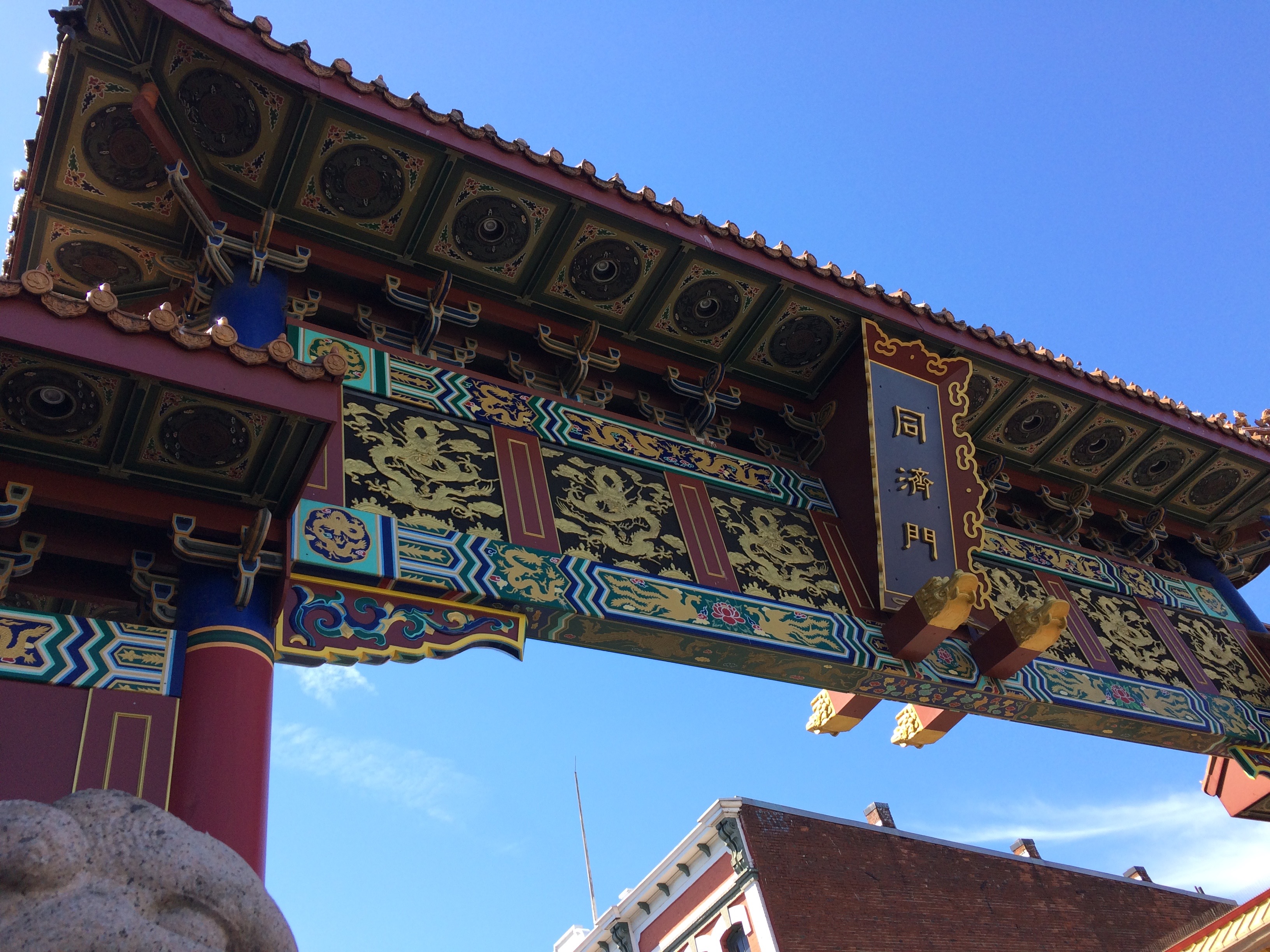
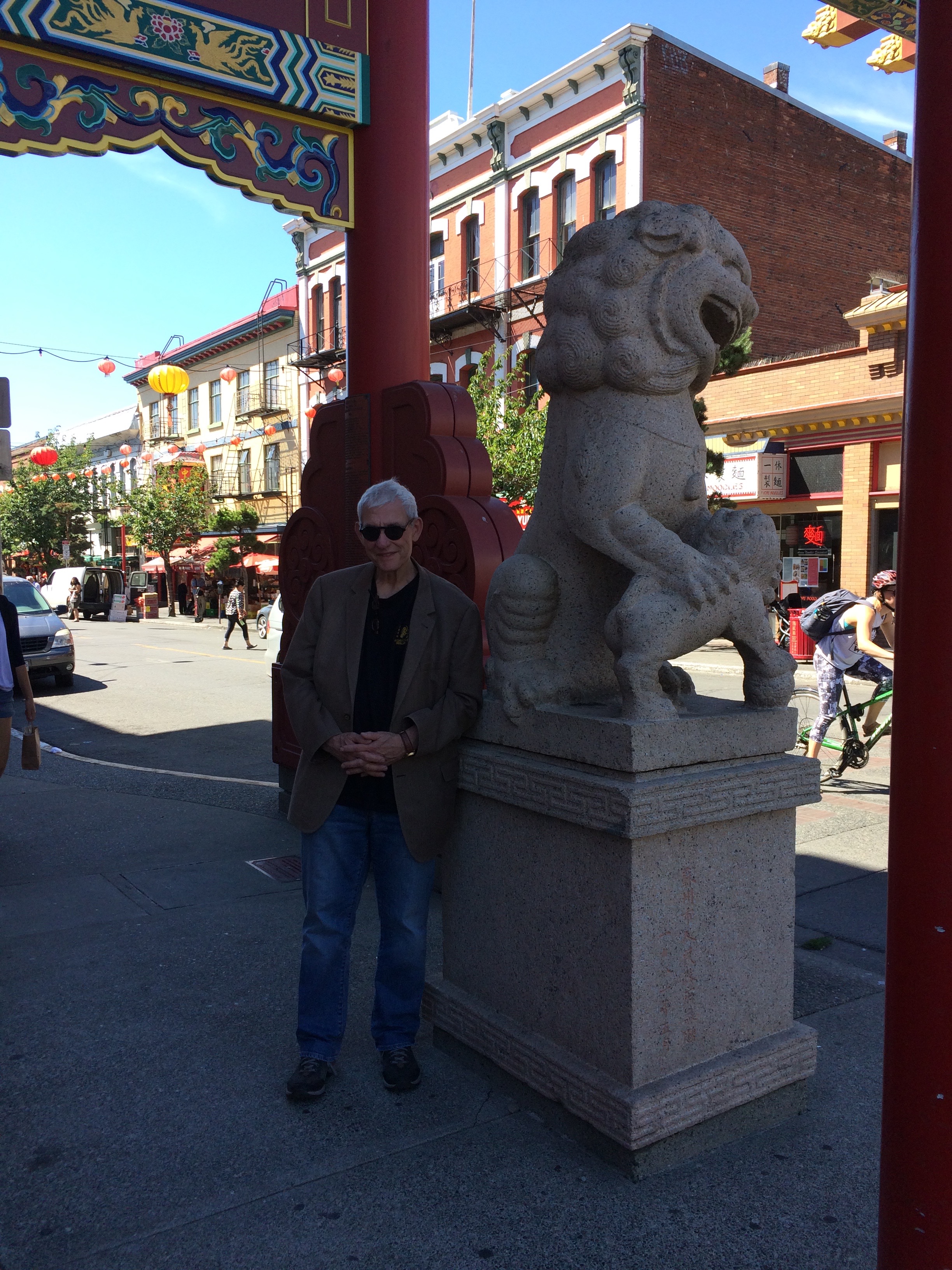
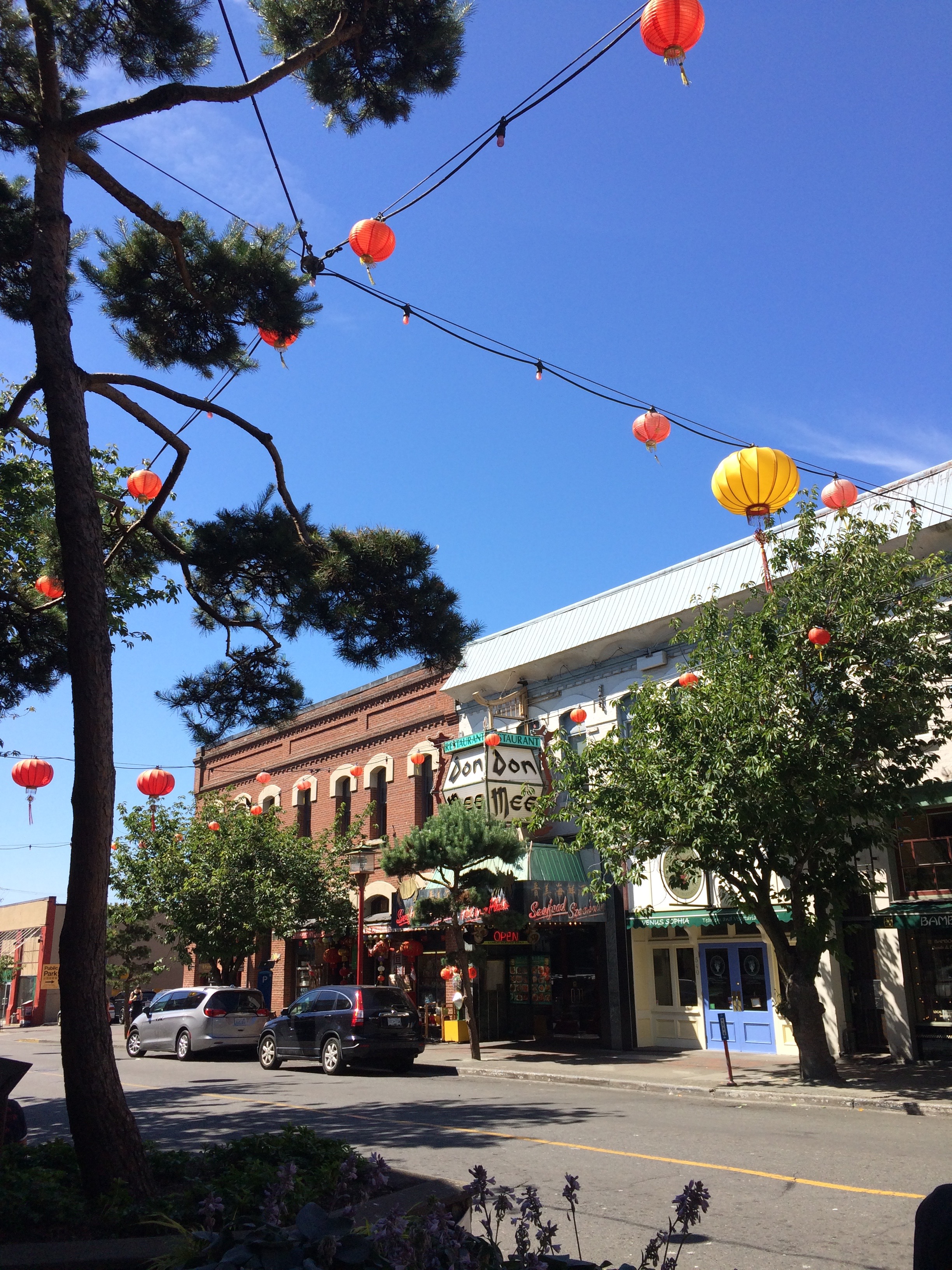
FullSizeRender (3)to Market Square, lower Johnson St. shopping area (LoJo to the locals) and Canada’s oldest Chinatown.
IMG_2559


After sampling a couple of chocolate shops, my recco is Pure Lovin’ Chocolate in twisty, cramped, Dickensian Fan Tan Alley, named after a popular gambling game from the 1940s.

IMG_2555.jpg

Rare photo of husband looking relaxed!

IMG_2561 (1).jpgThere are flowers everywhere!

IMG_2554 (1).jpg

Amble back to hotel via Wharf Street to enjoy views of ferries and seaplanes.

FullSizeRender (2)

Cocktails and dinner: If you don’t opt for the Empress Hotel’s lavish and pricey afternoon tea — or aren’t staying there — grab a drink before dinner in the Q bar and scarf down their yummy charcoal-dusted popcorn.

IMG-2562

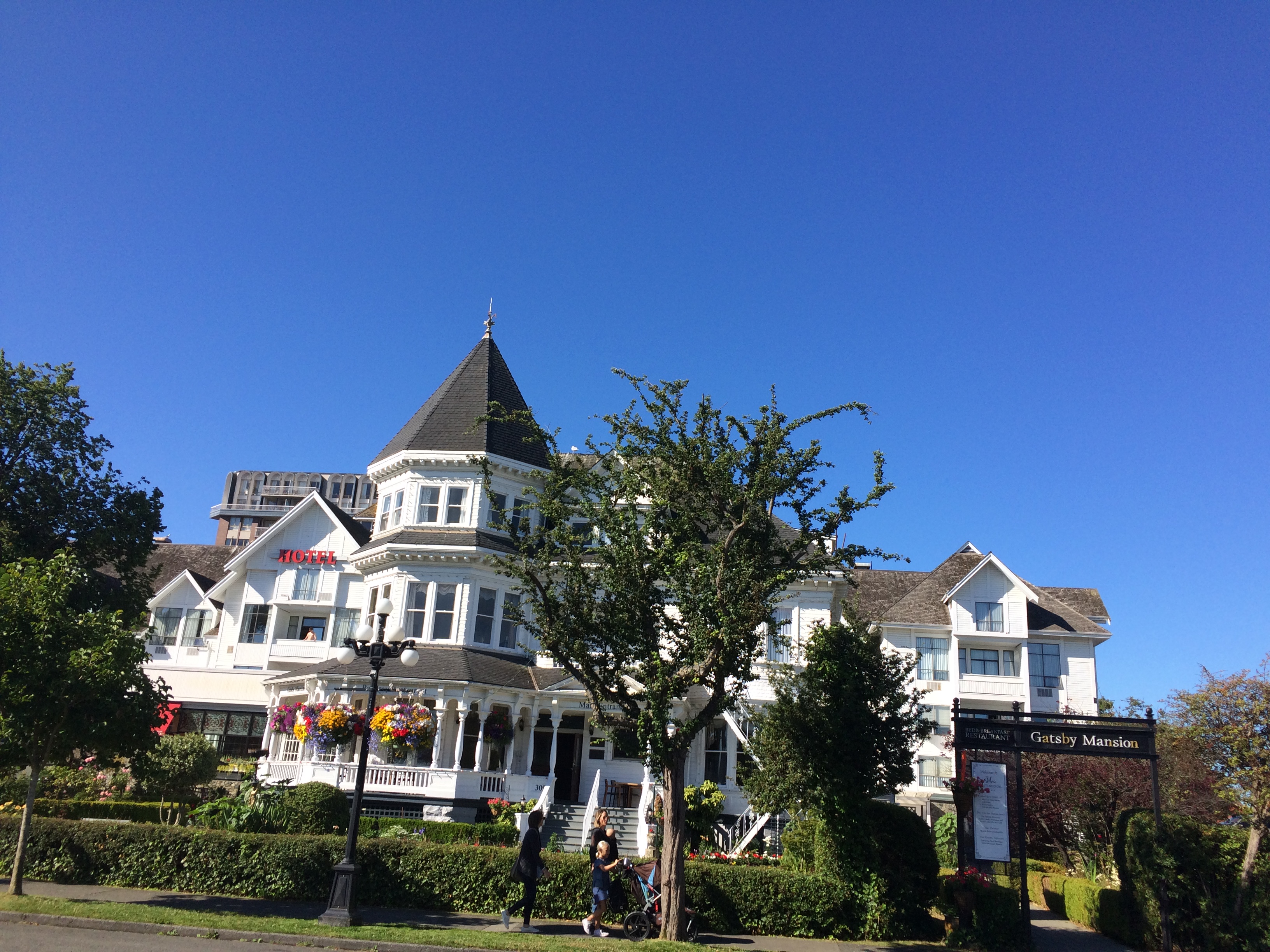
IMG-2563The restaurant is good too.IMG_2567.jpgIMG_2569.jpg


After dinner, stroll through the public spaces and lavish grounds of this venerable grande dame, and see the government buildings all lit up.

86A04687-4D2F-4376-B905-6BDA65F38E32

The next morning, we grab some coffee and explore the neighborhood, which is quiet and peaceful. IMG-2578IMG-2577Winding up with a scenic walk along the Foster pathway, named for (and presumably funded by) David Foster, Canadian musician and ex-husband of Real Housewives of Beverly Hills’ Yolanda.

We catch the 11:30 ferry back to Seattle, which arrives at 2:15 pm — time to enjoy the city!

Do’s and Don’ts for Your Visit to Lisbon, Porto and Beyond

For my last post about our recent trip to Portugal, I was inspired by the wonderful photography and stories of blogger The Insatiable Traveler and want to share some of my photos along with a few suggestions and observations.

DO pack hiking boots or sturdy shoes to manage the steep hills. I can’t say this enough!

DO eat a hearty breakfast. All our hotels included lavish buffets in the room rate, which set us up perfectly for a day of exploring.

IMG_0885

DON’T be intimidated if you don’t speak Portuguese. Learn a few key phrases and politely ask someone if he or she speaks English. Most do, especially in the larger cities.

DON’T speak Spanish instead. There’s a long history of discord with Spain, and Portuguese is not a dialect but its own distinct language.

DO venture into grocery stores. I love seeing how local products are different from the brands I get at home, and people are friendly and helpful.

DO rent a car and tour the beautiful countryside.

IMG_0931

DON’T expect world-class museums. If you’re used to the Louvre, Prado, British Museum, Met or Uffizi, you’ll find museums in Lisbon to be charming but not on the same level.

DON’T forget to look up, down and sideways. Many buildings still retain their original azulejos (tiles) and the cobbled streets often have intricate designs.

DON’T you wish your commute was this stunning? The São Bento train station in Porto is covered with tiles depicting festivals, transportation and historic scenes.

DO visit the port lodges in Vila Nova de Gaia and go wine tasting in the Douro Valley.

IMG_0893

DO try vinho verde, the light, refreshing “green” wine that’s young and slightly effervescent.

DON’T expect high-end shopping. Instead, splurge on local crafts and designers.

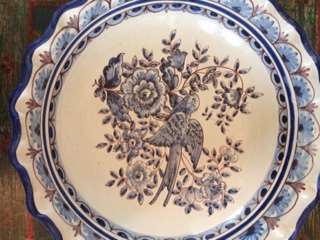
DO bring home some hand-painted pottery. Prices are way lower than in the States and the quality is magnificent.

IMG_0966

DO have lunch at Casa do Leão when you’re exploring the Castel São Jorge in Lisbon. The food is good and the view over the city is spectacular.

DO visit historic Coimbra, a short drive from Lisbon. It’s home to one of the world’s oldest universities — worth the trip for the ornate chapel and examination hall, medieval library (which maintains a bat colony to eat insects that could destroy the books) and academic prison, where misbehaving students served time. (Good thing this wasn’t my alma mater!)

DO try local specialties, such as porco à alentejana, an unlikely but delicious combination of chopped pork and tiny clams.

DO ride the tram (especially #28), an inexpensive way to tour Lisbon. However, DON’T bother with the pedi-cabs unless you negotiate a price; they can be more costly than a taxi.

DO visit the markets for the vast array of produce, snacks or lunch among the locals, and great people watching.

DO be aware that tips aren’t generally included in the bill. Leave 10%.

DON’T plan on eating dinner early, though it won’t be as late as in Spain. Most restaurants, even in hotels, open around 7:30 p.m.

DO have a fantastic trip and tell us all about it!