Category Archives: Aging

Old Before Your Time?

They say, “You’re only as young as you feel”.  Is the opposite, “You’re only as old as you look”? While aging is inevitable, some little things we do every day can make us look older than we have to. Luckily, they’re easily avoided; no medical intervention necessary!

Commuting. If you spend a lot of time in the car, the left side of your face gets extra sun exposure – the #1 cause of old-looking skin. Slather on the sunscreen, and don’t neglect the backs of your hands.

car-1576894_640

Stress. Whether from road rage or other causes, chronic stress accelerates premature aging by shortening telomeres, the specialized DNA sequences and associated proteins that maintain the integrity of our chromosomes. Whole books have now been written about harnessing the power of telomerase, the enzyme that protects telomeres. If you don’t feel like reading all that, meditation, deep breathing, exercise, vodka and Xanax are also highly effective.

headache-1910649_640

Tech neck. Did you know that constantly looking down at our devices and computers encourages slackening of our jaw and neck muscles? Obviously we’re not about to give them up but people who care about these things suggest we keep them at eye level whenever possible.
smartphone-149622_640

Sleep. Sleeping is good. Smooshing our face into the pillow is not so good, leading to additional wrinkling. If you can’t sleep on your back – and many can’t – try a silk or satin pillowcase, or use a sleep mask.

bed-945881_640

Dry Climate. Dryness saps moisture from your skin. Use a humidifier, especially during the night. If you live in Texas, buy two.

soil-1551337_640

Straws. I was all about drinking my coffee through a straw to minimize staining my teeth until I realized that pursed lips accelerate wrinkles around the mouth. (Look at any chronic smoker.) And if you drink a lot of bottled water, you might want to pour it into a glass with a wider opening.

beautiful-1867178_640

Inactivity. According to a 2010 Australian study, every hour spent watching TV after age 25 cuts almost 22 minutes off the viewer’s lifespan. Yikes. Does my pounding heartbeat when I watch a show like The Americans or Man in The High Castle count as exercise, though?

monitor-32743_640

City Living. Here’s something interesting from a Harvard School of Public Health study: Women living in the greenest areas, as measured by satellite, were 34 percent less likely to die from a respiratory illness than women living in the most paved-over areas. And women living amidst greenery were 13 percent less likely to die of cancer. If you live in a city, get some houseplants!

fern-195876_640

Sugar. Really want to wreck your skin? Eat sugar! It causes inflammation, which breaks down collagen and elastin, the building blocks of healthy, plump skin.

berry-1851349_640

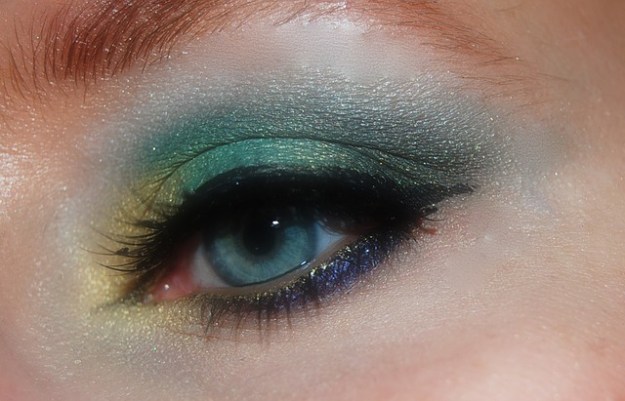
Heavy makeup. Kind of a no-brainer, but wearing more makeup as we age is actually, well, aging. Go easy on foundation, substituting a tinted moisturizer with a broad-spectrum sunblock, dab a little concealer only where you need it, and skip under-eye liner and mascara, which cast a shadow and make older eyes look tired.
makeup-402533_640

How about a quick way to look younger? Every year our skin and hair tones change subtly, so what used to be flattering may not look as good now. Color experts recommend wearing one of these four universally flattering shades.

NEW BLACK Black is my go-to. But I admit it’s often too severe for mature skin, making fine lines, under-eye circles and wrinkles more obvious. Much more flattering are softer shades like charcoal grey and navy. And when you do wear black, consider adding a scarf to bring color near your face.

PERIWINKLE Even the name is charming! Hair and skin tones become “cooler” as we age, so one color that looks pretty on most women is this medium blue with a touch of violet or purple.

TURQUOISE Turquoise looks great against every skin tone. To figure out whether to go bluer or greener, one color expert suggests looking at the veins in your wrist and choosing a shade that leans in that direction. On medium to darker skin, either will be beautiful.

RED VIOLET This vibrant color is more flattering than pastel pink, especially on lighter skin. Fuchsia, raspberry and magenta can brighten your face and still look sophisticated.

Where to Retire: US Edition

A friend sent me this helpful guide the other day. Author unknown.

You can retire to Phoenix, Arizona where…

1.  You are willing to park three blocks away from your house because you found shade.
2.  You’ve experienced condensation on your rear-end from the hot water in the toilet bowl.
3.  You can drive for four hours in one direction and never leave town.
4.  You have over 100 recipes for Mexican food.
5.  You know that “dry heat” is comparable to what hits you in the face when you open your oven door at 500 degrees.
6.  The four seasons are: tolerable, hot, really hot, and ARE YOU KIDDING ME??

OR

You can retire to California where…

1.  You make over $450,000 and you still can’t afford to buy a house.
2.  The fastest part of your commute is going down your driveway.
3.  You know how to eat an artichoke.
4.  When someone asks you how far something is, you tell them how long it will take to get there rather than how many miles away it is.
5.  The four seasons are:  Fire, Flood, Mud and Drought.

OR

You can retire to New York City where…

1   You say “the city” and expect everyone to know you mean Manhattan.
2.  You can get into a four-hour argument about how to get from Columbus Circle to Battery Park, but can’t find Wisconsin on a map.
3.  You think Central Park is “nature.”
4.  You believe that being able to swear at people in their own language makes you multilingual.
5.  You’ve worn out a car horn.  (IF you have a car.)
6.  You think eye contact is an act of aggression.

OR

You can retire to Minnesota where…

1.  You only have three spices:  salt, pepper and ketchup.
2.  Halloween costumes have to fit over parkas.
3.  You have seventeen recipes for casserole.
4.  Sexy lingerie is anything flannel with less than eight buttons.
5.  The four seasons are:  almost winter, winter, still winter, and road repair.
6.  The highest level of criticism is “He is different,”  “She is different,” or “It was different!”

OR

You can retire to The Deep South where…
1.  You can rent a movie and buy bait in the same store.
2  “Y’all” is singular and “all y’all” is plural.
3.  “He needed killin” is a valid defense.
4.  Everyone has two first names:  Billy Bob, Jimmy Bob, Joe Bob, Betty Jean, Mary Beth, etc.
5.  Everything is either:  “in yonder,”  “over yonder”  or “out yonder.”

6. You can say anything about anyone, as long as you say “Bless his heart” at the end.

OR

You can move to Colorado where…
1.  You carry your $3,000 mountain bike atop your $500 car.
2.  You tell your husband to pick up Granola on his way home, so he stops at the day care center.
3.  A pass does not involve a football or dating.
4.  The top of your head is bald, but you still have a ponytail.

OR

You can retire to Nebraska or Kansas where…
1.  You’ve never met any celebrities, but the mayor knows your name.
2.  Your idea of a traffic jam is three cars waiting to pass a tractor.
3.  You have had to switch from “heat” to “A/C” on the same day.
4.  You end sentences with a preposition: “Where’s my coat at?”

OR FINALLY

You can retire to Florida where…
1.  You eat dinner at 3:15 in the afternoon.
2.  All purchases include a coupon of some kind – even houses and cars.
3.  Everyone can recommend an excellent cardiologist, dermatologist, proctologist, podiatrist, or orthopedist.
4.  Road construction never ends anywhere in the state.
5.  Cars in front of you often appear to be driven by headless people.


There’s No Place Like Home(s)

I was born with wanderlust in my heart. I emerged not head first, but with an outstretched arm. Although this was widely interpreted as a sign of friendliness (quickly disproven, as I was a shy and introverted child) I believe it was a deliberate reaching-out for someone to grab my hand and get me out of the womb as quickly as possible so I could explore somewhere new.

As my husband and I (and many of our friends) approach retirement, one of the big questions we’re debating is: Where will we live once we’re not tied to a job? For many, there’s a desire to return to their childhood hometown. I envy those of you who have a clear vision, because I can’t picture any single destination that feels like the perfect fit.

I come by this schizophrenia naturally, having grown up in two places. My family lived in Manhattan (and, later, Long Island) for nine months of the year but spent every summer on Cape Cod as my father, a professor, had summers off. Although we were only there from June until Labor Day, the Cape felt like my true home. I was just marking time the rest of the year until I could return.

These days, I feel the same impatience to begin the summer in coastal Oregon. It’s the pull of the ocean: the smells and sounds of the waves as we fall asleep, the cool temperatures, and a pervasive sense of relaxation.

At the same time, though, I wouldn’t want to live there year round. It’s too remote and too far from a city; I’m still a New Yorker at heart. But which city? I have no desire to move back to Manhattan, so the conversation goes round and round as we keep exploring where to spend those other 6-7 months.

Maybe I’ll never find that one perfect place. And maybe that’s ok. As the cliché goes, home(s) is where the heart is.

Scents and Sensibility

Smell is one of our most powerful senses. The scent of vanilla sparks feelings of comfort, associated since childhood with freshly baked cookies. That’s because your olfactory system is directly wired to the limbic center, the emotional “heartland” of the brain. A whiff of perfume may either remind you of something positive – say, April in Provence – or recall the unwanted memory of an ex or toxic co-worker who used to wear that brand.

As we get older, especially after age 70, our sense of smell tends to diminish. Some reasons are physiological but disease, smoking, and exposure to harmful particles in the air also play a role. Losing your sense of smell not only lessens pleasures such as eating, it can be dangerous — if, for example, you can’t smell smoke from a fire or a build-up of natural gas.clown-362155_640

By the way, “old people smell” is a real thing, and has nothing to do with cleanliness. That grassy or greasy odor, called nonenal, is a natural result of the aging process, resulting from deterioration of the skin’s antioxidant defenses. Both men and women begin producing nonenal around age 40 and hormonal changes such as menopause can make it worse. Since it isn’t water soluble, nonenal stays on the skin no matter how hard you scrub. The good news? You can reduce odor by eating a healthy diet, exercising regularly, getting plenty of rest, avoiding stress, not smoking, and drinking alcohol in moderation.

What NOT to do? Overdoing perfume to compensate, especially if you can’t tell how much is too much!

Certain scents are known to improve your sleep, boost your mood, relieve stress and make you smarter.

LAVENDER: Cooperation and Relaxation. A bath or shower with lavender-scented gel can send you off to dreamland. A lavender room spray may “encourage” meetings to run more smoothly. (I’ve tried this, and it may be coincidence but it worked!)lavender-1117275_640

LEMON: Brain boosting. Got a big presentation? A UK study found that cognitive performance and mood improved when wearing participants rubbed lemon balm on the inside of their wrists.lemon-1117568_640

ORANGE: Stress, Anxiety, Digestion. Citrus aromas are often useful for curbing stress and anxiety, as well as helping with nausea and digestion. Massage therapists and acupuncturists at the Mayo Clinic augment therapies with mandarin essential oil. Could work for you, too!orange-15046_640

ROSE: Anxiety. From calming the nervous system to improving mental strength, inhaling a rose scent produces an anti-anxiety effect similar to diazepam.

rose-113735_640SANDALWOOD: De-Stressing. Recent studies have confirmed that this traditional meditative aid and natural sedative also reduces anxiety.

VANILLA: Mood Improvement. There’s a reason we find it so soothing. Scientists have found that this warm, sweet scent activates the limbic system in our brains, conjuring restful emotions and relieving stress and anxiety.

JASMINE: Sleep. This scent increases brain waves associated with deep sleep. That can mean a more restful night and greater alertness the following day.flower-363278_640

GRAPEFRUIT – The Multi-Tasker Studies have shown the women wearing a grapefruit scent were perceived to be much younger than their chronological age. Other evidence suggests that the aroma can help curb depression and enhance memory. And researchers at Osaka University in Japan found that sniffing grapefruit reduces food cravings and boosts metabolism. Maybe that’s why that “grapefruit diet” has been so popular!grapefruit-1647688_640

A few tips about candlescandle-1039538_640

Do you love scented candles, but hate the way they sink down in the middle or leave dark marks on your container or wall? There’s a simple explanation: If the wick gets too long, the flame produces black smoke and the glass your candle’s in can overheat.

Here’s how to get the most from your expensive candles:

  • BURN IT EVENLY: The first time you light your candle, let it burn for two hours to ensure that the top is entirely melted and then put it out. Any hardened wax around the sides will tunnel downwards the next time you light it.
  • TRIM THE WICK: Use a wick trimmer to keep the wick short – only a few millimeters in length.
  • CENTER THE WICK: When you put out the candle (and while the wax is still liquid) re-center the wick. This will prevent it from blackening the container the next time you light it.
  • FIX TUNNELING: If a tunnel begins to form, burn the candle for 30 minutes until the edges are soft, then put it out. Allow the wax to cool a bit; then gently push it down with your finger. Re-light and allow the candle to burn for one to two hours to level the wax.

The Bunion Diaries – First Month

Now that I’m at one month post-surgery, I can tell anyone who’s contemplating a bunionectomy what to expect. Warning: gnarly photos ahead; not for the squeamish (this means you, dear husband)!!

Day of surgery 

We arrive at the facility at 7 a.m., where the TV in the waiting room is endlessly replaying recaps of last night’s endless presidential debate at top volume. This is one time I would give anything for Keeping Up with the Kardashians or any of the Real Housewives.

I’m prepped, changed into a gigantic dressing gown and stuck with IVs and other stuff to measure my vital signs. My blood pressure is very low (100/70) so I am either actually relaxed or a zombie, not sure. Luckily, hearing Trump did not spike my BP to lasting effect.

We talk to the anesthesiologist, who is extremely thorough and asks detailed questions nobody else has. I see my doc and it’s off to dreamland from about 9 to 12, when I emerge in the usual post-surgical fog. (Note: they use a general anesthetic since they literally don’t want you to move a muscle.)

Here’s my “before” photo. Pretty ugly, I know. That’s why I’m here.

img_1525

Once home, I settle into bed with the following:

  • Wedge pillow plus another old pillow under leg to keep elevated (also brought to surgical center for the ride home)
  • Computer and cell phone
  • Glass of 7:1 water/orange juice to stay hydrated
  • Meds and saltines to avert opiate-related nausea
  • Stack of magazines and book (the latest from the excellent Alan Furst)
  • Rented knee roll-about scooter (mine’s a nice shiny red) and crutches for tomorrow.  img_1567

Today’s about resting, following multiple instruction sheets, eating mild food and sleeping. Lots of sleeping.

Day 2

No pain yet so nerve block must still be working. I take pain meds prophylactically every four hours to avoid it though. My main job is to alternate ice on/off every 30 minutes and keep moving my legs and rotating my ankle to prevent blood clots.

I’m not at all hungry until dinnertime, and still in a drug fog most of day. My poor husband has to do all cooking/cleanup/etc. and it’s going to be a long slog until I can contribute.

Day 5

My foot is bandaged like The Mummy, and just about as shapeless.

img_1537

I’m now taking ibuprofen only if needed. The pain block (Exparel) lasted 4 days and is a bona fide miracle drug.  Getting around on the scooter is quite a production. It doesn’t have much of a turning radius and I have to keep locking the brake so it won’t slip. Once locked in position, it gives me a secure place to rest my leg.

Crutches require upper body strength so I’m lifting hand weights to help. I can touch down with my operative foot (partial weight is ok) which is better than hopping. But it’s a pretty exhausting way to get around.

I’m officially allowed to shower, which is a multi-step process beginning by removing my safety shoe and encasing my foot in a knee-high plastic bag that looks like a giant condom.

fullsizerender-18

Funny, I never noticed before how high the “lip” of the shower is; trying to get over it with one leg is quite a challenge. My DH (dear husband) helps lift me in; once in, I’m fine. His back, not so much. We don’t attempt this again– back to sponge baths!

Day 6

My heel and the sole of my foot are quite bruised. I resume taking oral arnica, which I stopped a few days ago, and start applying topical arnica too. Hope this helps.

img_1575

First post-op visit

It’s 8 days after surgery. DH drives me and the scooter over to the doctor’s office. His nurse removes the bandages. The top of my foot is swollen and my toes look like fat little sausages. She tells me that swelling can take 6 months to a year to fully resolve. Oh joy. The incision is about 3″ long and is healing well but I can’t transition to a walking boot yet; the bone a little softer than ideal for full weight-bearing so I’ll have to wait and hopefully get the boot next week.

img_1538

Week 1: Who are you and what have you done with my ankles?!

I bump up my calcium intake to 600 mg twice a day, having slacked off to once a day during the previous month. (Note to those of you anticipating having this procedure: Make sure to increase weight bearing exercise and check your vitamin D levels well before surgery since vitamin D is needed for calcium absorption.)

Pain is low level but I experience occasional throbbing. Ibuprofen at normal levels (a 200 mg tablet every 4-6 hrs as needed) is helpful. Sleep is more challenging.

By now I have mastered the multi-step shower dance: first, DH places a chair outside the shower so I can use the chair back as support. I ease in and sit on the shower bench and then DH moves the chair so the door can close. You do not want to be in a rush for this one!  If my shower didn’t have a built-in seat this would not work, since I can’t balance on my left heel for the time it takes to shower and do my hair. Best plan is to alternate with sponge bathing for now.

2nd Post Op Visit

Big disappointment at Week Two:  Although everything is healing well, my nice doctor wants me to stay off my foot for another two weeks to be on the safe side. We do not want the pins in there shifting around. Ergo, still stuck with the scooter. On the plus side, my triceps are tightening up from lifting and repositioning the damn thing every few minutes.  And since the incision is almost fully healed, except for a couple of steri strips, I have a new cleaning option (sans giant leg condom): the tub!

fullsizerender-14

Week 2

This is way easier: position the scooter next to the tub, step in with my good leg, then lower the other one, making sure not to step down. All good.

Weeks 3 & 4

Continue to heal, no pain although bruised areas are still sore, and finally when I see my doctor at Week 4 he lets me transition to a walking boot. It’s very space-age, with a pump to inflate and deflate pressure. Unfortunately, the sole of the boot is 2″ higher than my regular shoe, so I am listing like a drunken sailor. But, I’m ambulatory! BTW, you can order a sort of platform thingy from Amazon called EvenUp. It looks a bit like a snowshoe and adds 1/2″-3/4″ height to your normal shoe or sneaker. My hiking boot is almost the right height so I’m not too uneven for the two days I wait for Amazon delivery.

Week 4

My tasks at home are to exercise the toe by bending it forwards and backwards (ouch) to keep it flexible (3 sets of 10 reps, twice a day) and to cover the scar with ScarAway, a silicone patch you cut to whatever size you need to help prevent and flatten the incision. So far, I’ve taken four baths and it hasn’t budged.

Wrap-up

After 4 weeks I’m still swollen around the ankles as well as the ball and top of my foot (an ace bandage leaves indentations) but I can already see improvement. Best of all, I’m now cleared to drive so I feel much more independent.  Come spring, I might even splurge on some Jimmy Choos!

Quiz-ical

The other day I took an online Jungian personality quiz three times until I got the personality that felt the most accurate. (If you guessed “obsessive”, you are correct!!)

I’ve been obsessed with quizzes as long as I can remember: “Which Beatle is your soul mate?” “Is your boyfriend cheating on you?” “What’s the most flattering hair style for your face?” “Are you doing everything you can for perfect skin?”

I loved magazines – still do – and the quizzes were some of my favorite features. Nowadays, online quizzes serve a similar function, and challenge my ever-weakening memory: “How many of these 90’s movie scenes can you identify?” (I was so excited to get 100% until I realized everyone gets 100% regardless of their answers.) “Only geniuses will answer this math quiz correctly.” (Not on the first try, because I’m sure there are at least two correct answers. Creativity and math don’t usually go together.)

Quizzes are mini wake-up calls, reassurances that we’re in step with the zeitgeist the way we think we are, ways to bond with other members of our “tribe” (“Your score indicates that you are a Problem Solver!”) and reminders to take stock of things we might otherwise neglect (“Do you take your spouse for granted?”).

They’re often a quick way to learn something new, too. “Can you identify the 5 leading causes of depression?” Or, “Do you know why sugar’s bad for you?”

Back in school, I always did better on multiple-choice tests, vs. an essay test where you had to remember the information without any hints. Even if I had only a vague memory of the chapter we’d studied, once I saw the answer sitting in front of me it would trigger some deep sense of familiarity and I would seize on it like a drowning person reaching for an outstretched log.

My mind is a steel trap when it comes to arcane facts about minor celebrities, fashion trends and other trivia. It’s a sieve regarding most items of significance. I suspect this is because I can only process small pieces of (usually useless) information at a time. Then they rattle around in the back of my brain until shaken loose. Facts about my own life experiences, however, often elude me.

I couldn’t tell you who taught my freshman French class if someone put a gun to my head. Or the names of my kids’ teachers. Or pretty much anything that has to do with geography. Never could.

But show me a list of possible options and I might stumble onto the right choice.

So the next time I can’t remember what the new neighbor does for a living, give me a quiz: It’s either a) doorman, b) Chippendale’s dancer, c) surgeon or d) chef. God help me if the answer is, “None of the above”.


Diary of a Photo Facial

If time has etched its passage with dark spots, broken capillaries and other evidence of sun damage, you may want to consider having a photo facial at your dermatologist or plastic surgeon’s office. I’ve been going every six months for a couple of years and, while it’s not what anyone would call a relaxing spa treatment, it’s definitely effective.

There are several different types of machines; each delivers targeted heat and light to pigmented areas. Stephanie, my esthetician, explained that her office uses BBL (Broad Band Light, made by Siton) because it provides a full range of options for true customization. Many other machines are pre-set, making them somewhat more limited.

Photo facials target the pigment in the skin to lighten areas of damage. The combination of light and heat also strengthens and builds collagen, the main protein in your body that supports your skin and diminishes over time.

Different skin colors require different treatment, and in fact African American skin, which obviously has the most pigment, would burn if subjected to pulsed light. The darker your skin, the more conservative your facialist will be with the setting. Pale and freckled skin like mine can tolerate the strongest heat and often has the most visible results because the initial contrast is so noticeable.

Make sure to discontinue the use of retinol a week before treatment, as it will make your skin overly sensitive. You may also want to stop using glycolic acid, although that’s less of an issue. I also recommend taking acetaminophen before your session.

Here’s what happens:

  1. Stephanie takes a “before” photo with all my spots on display. Depressing!
  2. I lie down on the padded bench and tuck in my shirt collar since she’s going to zap my neck and chest. (Your derm might have you take off your top and cover you with a towel.)
  3. After cleansing my skin to remove all traces of sunblock, moisturizer etc., she puts eyeshades on my eyes to protect them from the intense light.
  4. She then spreads ultrasound gel (cold and thick) on the areas to be treated. The gel acts as both a heat conductor and protector against burning.
  5. YOWZA!! Stephanie carefully, thoroughly and painfully zaps each spot with a pinprick of bright light. Some people describe it as like a rubber band snapping against your skin. I won’t lie… it hurts, though some places are less sensitive than others and the sensation lasts a fraction of a second. Again, depending on your skin tone and texture, it might not be as uncomfortable for you as it is for me. For instance, it doesn’t hurt much on my chest or hands.

When the session is done, Stephanie wipes off the ultrasound gook and lightly spreads on a soothing lotion. My face is a bit red and swollen, so I pop some oral arnica tablets and apply arnica lotion when I get home (make sure you don’t go near your eyes since the fumes are strong.) When more heat is used, the more swelling you can expect; it will subside after a few days at the most. Cool compresses help too.

Spots are darker immediately after treatment, but you can easily cover them with makeup. The first time I did this I was noticeably blotchy, especially on my hands; with regular sessions it’s not nearly as obvious. Don’t expect to see results for at least three or four weeks. The dark spots will crust over and fall off on their own. Meanwhile, be extra vigilant about using a broad-spectrum sunblock (at least 30 SPF)– which you already know you should do anyway, right?

By the way, pulsed light doesn’t go deeper than the top layer of skin, so it will not affect fillers or other deep-layer injectables.

Don’t expect miracles and I think you’ll be pleasantly surprised at how nice you look with fewer of those nasty age spots!

Hype and Hypochondria

Are you starting to wonder if every ache and pain is an indication of something more serious? I blame the evening news.

As if climate change, screeching political candidates, the ricocheting stock market, and dwindling honeybees aren’t troubling enough, within the space of an hour’s broadcast you’ll see at least a dozen dramatic commercials for symptoms you might have, symptoms you probably have, or diseases with cute initials you’d never heard of but are now sure you definitely have.

It’s enough to give anyone chronic constipation or diarrhea or at least a migraine.

I’m not really a hypochondriac; I’m more the Queen of De’Nile type, blindly optimistic that my test results will turn out fine. My husband, on the other hand, is easily persuaded that anything “off” is symptomatic of something dire and dangerous.

Bear in mind, he’s an empathetic guy. But these days he identifies a little too closely with the suffering actors on TV. When he wakes up with elbow pain does he think, “That’s because I slept with my arm sticking over the headboard” or “Too much time at the driving range”? Nope, he’s positive it’s elbow cancer. Could his back pain have any connection to lack of exercise or an overly-soft mattress? Nah. Can’t find his keys? Don’t blame his messy desk. Must be early onset Alzheimer’s.

I don’t mean to be flip; all too often, warning signs are ignored and illnesses that could have been caught early are allowed to progress. But maybe we’ve all become a little too educated and need to find a happy and healthy balance between sticking our heads in the sand (as in, ignoring a mole that’s changing) and paranoia that every minor ailment is life-threatening.

Here are the commercials that got him hyperventilating last night:

  • Macular degeneration
  • Toenail fungus
  • Laxatives
  • ED
  • RA
  • Circadian Rhythm Disorder (no, I did not make that up!)
  • Fibromyalgia
  • COPD
  • IBS
  • Joint pain
  • Psoriasis
  • Dry eyes
  • Memory loss
  • High BP
  • Depends

I swear, a Midol ad could probably convince him that his post-burrito bellyache was menstrual cramps.

Hypochondria must be a modern development. After all, ancient civilizations had bigger fish to fry– like worrying about pestilence, famine and rampant body odor.

Consider the original Paleo Diet. Who had time to fret about high cholesterol when your dinner might eat YOU first? Did cave mamas make sure everyone ate five servings a day of ferns and cattails to stay regular? I think not.

Fun fact: When ancient Vikings failed to attract the ladies they didn’t yammer on about erectile dysfunction; they bleached their hair and beards blonde with strong, lye-based soap so they’d look hot. As a bonus, this also helped kill off head lice. Win-win!

And I’ll bet that if you lived through the Inquisition, a little memory loss helped you sleep better at night.

My conclusion: Stay informed, watch the news if it doesn’t give you indigestion, and remember to toss your sweaty socks in the laundry bin so your toes don’t rot. But just in case you’re currently in good health (knock wood) keep your fingers crossed, say a kinehora to ward off the evil eye and turn to the right when you sneeze. You can never be too careful.

Aging Gratefully

Lately I’ve been hearing more and more people—and you know who you are—complain, however humorously, about being “old”. This may seem benign, but it encourages a mindset that dwells on the negative and that’s never healthy.

So I’m dedicating this post to my delightful, vibrant and beautiful cousin Helen (shown above), who is 93 years young. Helen has had her share of challenges in life, but she faces every day with energy, enthusiasm and passion. She still lives in Manhattan, where she traipses about the city to museums, lectures and the symphony; she also works and travels the world for the UN, raising awareness of the needs and contributions of the elderly. Check out this inspiring video.

I’m not in denial about the passage of time, but here’s the thing: We may be grayer, wider, gassier and slower, but don’t think for a minute that our best years are behind us! Kiss that rosy glow of nostalgia goodbye and do a happy dance that these (and more) are in the past:

  • Gym class
  • Tie-dye anything
  • Canned spaghetti
  • “Second base” in the back of a Chevy
  • Ironing our hair
  • Avocado and harvest gold appliances
  • Hot pants
  • Ripple, Boone’s Farm, Cold Duck, Thunderbird and Wild Irish Rose
  • Learning to parallel-park
  • Songs like “Feelings”, “I Honestly Love You” and “Billy, Don’t Be a Hero”
  • First job jitters
  • Paisley shirts, especially on men
  • The Thighmaster

And let’s look ahead to what the future holds:

  • Legalized pot across the U.S. —who’d a thunk it??
  • Retirement, a.k.a. time to read War and Peace, learn new languages or binge-watch every episode of The Real Housewives
  • Space travel (Can I book a one-way ticket for my ex?)
  • The Rolling Stones’ 75th Anniversary tour
  • Seaweed that tastes like bacon
  • Your daughter acknowledging how hard motherhood is
  • Finally being considered “wise”

Of course we’ve all got stuff to worry about, but it’s easier to cope if we keep reminding ourselves of everything good in our lives: friends, family (well, perhaps not all of them), pinot noir, music, and the roof over our heads—even if it needs to be painted and maybe leaks a little.

Life wasn’t perfect even in the “good old days”. Besides, if you think you’re old now, just wait another ten years.


Hair Apparent

Here’s what I’m obsessing about today:
Why are my eyelashes disappearing but hair is sprouting on my chin? And what’s with that one sharp white eyebrow hair the size of my forearm?

The happy answer: aging. But, as my mother used to say, “Consider the alternative”. As you may have noticed the week before your colorist appointment, gray hair is coarser. So, compared to normal eyebrow hairs, the weird ones are thicker.

(As a side note, can anyone explain why your hair miraculously looks perfect on the day you’ve scheduled a haircut? Is this the same cosmic joke as feeling 100% better the day of a doctor’s appointment?)

Good news: it’s not as bad for women as older men, who seem to grow more hair in their ears, noses, pubes and eyebrows because of testosterone. (Since we have to look at them, now is a good time to teach your guy about “manscaping” – or do it for him — before things gets even worse!)

So far, I’ve been lucky to avoid thinning hair. Forty percent of us have visible hair loss by age 40, according to the American Academy of Dermatology. Not surprisingly, the most common culprit is the loss of estrogen that begins before menopause, though hair loss can result from illness and other factors.

A zig-zag part not only disguises roots but makes hair look thicker. So does parting your hair on the opposite side, since it won’t lie as flat that way. There are tons of thickening products out there and you undoubtedly have your faves. I’m partial to Aveda’s Pure Abundance style-prep because most products weigh my hair down and feel greasy the next day.

If hair loss is serious, your doctor will be your best resource. Hormone adjustments may be recommended, or he/she may suggest Rogaine (minoxidil), the only FDA-approved topical treatment. Remember: it only works if used daily as directed.

Back to brows. The woman who shapes mine also dyes them (they are white-blond and invisible otherwise) and I personally wouldn’t try dyeing them at home although people do. Regardless of trends, thin brows on older women are aging, as are extreme arches. So lay off the tweezers and find someone you trust to groom them for a natural look. As they grow in, you can fill in and cover bald spots with pencil: Bobbi Brown makes a nice one.

For thin, short eyelashes, I’m a fan of Latisse even though it’s eye-wateringly expensive. Your derm can give you a prescription. Like Rogaine, it has to be used consistently. Dyeing lashes also seems to make them thicker. Definitely do NOT try this at home.

And never underestimate the power of a good pair of sunglasses!