Author Archives: adguru101

Unknown's avatar

About adguru101

Formerly a creative director and writer at NY and NJ ad agencies, I'm now retired and living in Oregon, USA, with my husband and countless dust balls. With this blog, I specifically hope to reach "mid-century moderns" -- women born in the '50's -- with content and observations about the issues we deal with every day. But I welcome all readers of any age, sex, orientation, etc… you youngsters will eventually be my age too, and I love reading everyone’s comments!

Shopping As an Act of Optimism

It’s sale season, and that means each time I sit down at my computer I’m bombarded by urgent messages to take advantage of every markdown.

Buy now! Going fast! Last chance!

As I was feeling vaguely annoyed by all the hysteria, it occurred to me that shopping is a profound act of faith. One that has nothing to do with the economy.

Please bear with me.

We buy last season’s markdowns in the belief that we’ll be around to wear them next year.

We buy for the person or size we aspire to be.

We buy for the happy occasion in our future that we plan to attend.

We buy maternity clothes much too early; shoes that await a dinner invitation; the house where we hope to grow old.

Whether we’re shopping for something big or small – the car we plan to keep until it hits 50,000 miles or the coat we buy in October when it won’t be cold until January – it’s with an unspoken confidence that we’ll remain in good health long enough to enjoy it.

Call it our bargain with the universe.

On a rational level, we know we can’t always control our future. But isn’t there something wonderfully hopeful about acting as though we can?

I’ve been thinking a lot about a friend of a friend who was recently diagnosed with cancer. I don’t really know her or what she’s going through but I imagine she’s a lot more focused on actual therapy than on retail therapy.

Still, along with doctor visits, chemo, radiation and all the serious things she has to worry about, I wish she’d do a little shopping.

Not because she necessarily needs a new dress or sexy sandals right this minute. But because I’m optimistic that she’ll be wearing those summer splurges next year, and the summer after that.

And I hope she is, too.

That’s what “shoptimism” is all about.

You Say Zucchini Flower, I Say Squash Blossom

After the excitement of the season’s first tomatoes, blueberries and strawberries, the big draw for me at the local farmers’ market is the arrival of squash blossoms. They begin showing up in late June but the crop is small so you may have to arrive early to snag some. Be bold and elbow people out of the way if you must. (My husband was elbowed out of some early tomatoes last month; it’s payback time.)

I’d never eaten squash blossoms (or zucchini flowers — they seem to be interchangeable terms) until I had them on a trip to Rome a couple of years ago. What a revelation! I waited impatiently for the summer markets (the flowers are much too delicate to ship to a grocery store), looked up some recipes and — voilà/eureka/holy swearword! — discovered that they are super easy to recreate, minus the cute Italian waiter.

A quick Internet search revealed that squash plants have both male and female flowers, which (natch) are pollinated by bees. There are many more male squash blossoms than female and they’re the first to bloom, so that’s probably what’s at your local produce stand.

I won’t lie, the preparation is a bit time-consuming, but they are absolutely worth it!

First, snip off the stem and twist off the stamen – that fuzzy little penis-like thing in the center. Ladies, think of that creep who done you wrong and this won’t seem nearly as tedious! Gents, stop squirming… didn’t you have a horrible boss you can fantasize about? See?… fun!

IMG_1282

Incidentally, the stamen (or pistil in female plants) is apparently edible, but that’s a whole new level of weird.

Moving on…

Gently rinse the blossoms and set them down on a paper towel to dry.

While you’re waiting, cut some fresh mozzarella and anchovies into small pieces.

IMG_1288

If you think you don’t like anchovies I implore you to try them just this once. They will melt into the cheese and add a briny saltiness that will bring tears to your eyes.

Stuff the inside of each blossom (very gently, so you don’t tear the petals – but don’t worry if you do) with one piece of each, and twist the petals together to keep the cheese and anchovy inside. If you’ve ripped any petals, the twisting action will cover everything up and keep them together.

Next, make your batter. The following proportions should coat about 10-20 blossoms, depending on their size and whether or not you thin the batter, as I do. Dump whatever you don’t use.

Ingredients

  • ½ cup all-purpose flour
  • ½ tsp salt and ¼ tsp ground pepper
  • 1 egg
  • ½ tbsp. olive oil
  • ¼ cup cold sparkling water or seltzer
  • Grapeseed (or other vegetable) oil for frying

Directions

  • Stir flour and salt together in a small bowl. Add the egg, sparking water and olive oil and whisk until blended. Add more seltzer if the batter is too thick.
  • In a heavy pan, pour in grapeseed oil to about 1″ depth and heat until a drop of batter sizzles when it’s dropped into the pan.
  • Dip the flowers into the batter, let the excess drip off, and put into the pan of hot oil, a few at a time. Fry until golden on both sides, about 4 minutes.
  • Drain on a plate covered with a paper towel.
  • Sprinkle with coarse salt and a squeeze of lemon juice.
  • Serve with lemon wedges. Devour.


Even In the Wake of Tragedy, Four of the Many Reasons to Visit Istanbul

Had to share Susan Portnoy’s wonderful post:

The recent terrorist attacks have once again put the world on edge. Finding oneself caught in the haze of fear and destruction, or worse, part of the body count, no longer seems like a distant conc…

Source: Even In the Wake of Tragedy, Four of the Many Reasons to Visit Istanbul

Winning Wines

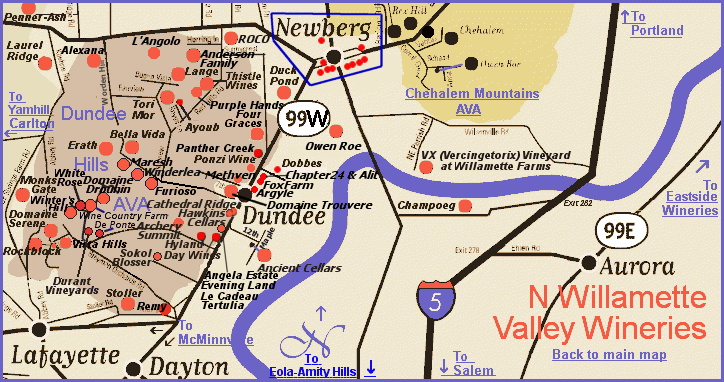
Oregon has nearly 700 wineries and I’m making it my personal mission to go to every one of them. It’s my literal (spit-) bucket list.

I’m certainly no expert but I’ve had a lot of experience drinking and that should count for something, right?

The first full summer we spent out here on the coast was the year I fractured my pelvis in a freak accident falling off some seaweed-covered rocks near the tide pools. After being carried off the beach up a very steep hill on a stretcher, transported 2+ hours away to Portland for complex surgery only two doctors in the state can perform, and finally getting back to the coast, I discovered something useful: Wine tasting is a sport you can enjoy even if you’re on crutches. Yippee!

Anyway, over the past four years, my husband and I have driven to wineries north near Portland, further north to the Columbia Gorge (both Oregon and Washington vineyards), south near Eugene, and closest to home in the McMinnville AVA, one of the six micro-climates of the Willamette Valley.

In case you were wondering, Oregon has 18 approved winegrowing regions, and more than 1000 vineyards utilizing 72 varieties of grapes. The Willamette Valley’s climate (cool, wet winters; warm, dry summers) is especially well suited to the early-ripening Pinot Noir grape, for which Oregon wineries are deservedly famous.

Turns out, McMinnville boasts one of our favorites.

IMG_1187

Yamhill Valley Vineyards is the oldest winery in the McMinnville AVA, established in 1983. They grow, produce and bottle all their own grapes on a beautiful 150-acre estate in the rolling foothills of Oregon’s Coast Range Mountains–an hour southwest of Portland–with a focus on Pinot Noir, Pinot Gris, Pinot Blanc, Chardonnay and Riesling.

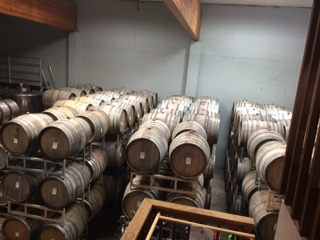
True oenophiles will want to know about their plantings (200-700’ elevation), soil (marine sedimentary and volcanic soils), capacity (20,000 cases), barrels (produced in France and Oregon and never more than 20% new oak), climate (35” annual rainfall), awards (many; beginning with their 1983 Pinot Noir, the first place preference at New York City’s famous Wine Center) and so forth.

IMG_1185

Here’s my more lowbrow description:

Yamhill Valley offers several delicious wines (currently, eight — also available online) in a remarkably peaceful and relaxing setting. They have a range of prices (from about $18-$75), so if wine isn’t your idea of a serious investment you can still find something yummy without breaking the bank. Compared to some other wineries we’ve visited, a tasting flight is generous and reasonably priced, too.

IMG_1192IMG_1188

You can take your wine outside to the patio and gaze at the vineyards, or stay inside and chat with Linda Arnold, the delightful tasting room manager. Linda is warm, funny, and knowledgeable and you’ll feel like a dear friend on your first visit. (If you’ve ever had the experience of dealing with a snooty wine sommelier, you’ll appreciate her down-to-earth approach.)

Another thing I appreciate: Their tasting sheet doesn’t just clue you in on flavors and aromas, it also explains why certain wines have specific characteristics and suggests appropriate food pairings. All in all, Yamhill Valley is a sophisticated experience that doesn’t take itself too seriously. My kind of place.

If you’re up in Portland, drop in to another place that doesn’t take itself too seriously: Jeff Weissler’s Pairings wine shop, bar and classroom. Pairings’ mission is to make learning about wine fun and approachable, so they offer classes and events as well as shopping options that match wine “personalities” with everything from food to movie characters, moods, animals or astrological signs. Good wines, good times… and lots of laughs while you’re learning from the experts.

Cheers! [As always, not a sponsored post.]

Road Trip!

We’re headed north for a few days. These are some of the reasons I’m glad we’re driving instead of flying:

  • I can pack all the shoes I might “need”
  • There are no fidgety kids kicking my seat from behind
  • I can open a window without being sucked out into space
  • I can take normal size shampoo, conditioner, shower gel, lotion, contact lens solution, moisturizer, sunblock and makeup without having to decant it into leaky little bottles
  • Nobody will be bringing stinky food on board (doesn’t that just frost your cupcake?!)
  • My suitcase can’t fall on my head

Have a great weekend!

The Five Best Things About Living With An Artist

This Father’s Day post is dedicated to my husband, who has sketched and painted all his life. Although “artist” is not his official job title, that’s fundamentally who he is. He also happens to be a wonderful father to his two daughters and a terrific stepfather to my daughter and son — an art unto itself.

Lest we get overly sentimental, I would like to point out that living with an artist is not all beer and skittles, as my mother used to say. Bear in mind that certain sacrifices are called for.

The five worst things about living with an artist:

  1. There’s at least one sink that is never clean
  2. It’s really hard to wash dry paint off someone’s clothes
  3. You have to be diplomatic if they create something you hate – and then you still have to live with it
  4. You have to learn to interpret grunts as conversation when they’re in the middle of working
  5. Painting the bathroom (or anywhere else in the house) holds no allure whatsoever

But on the plus side,

  1. You always have beautiful work around you
  2. Your partner understands the value of alone time
  3. An artist finds an aging person interesting rather than repellant
  4. An artist appreciates silence
  5. An artist is inspired by variety so he or she is never boring

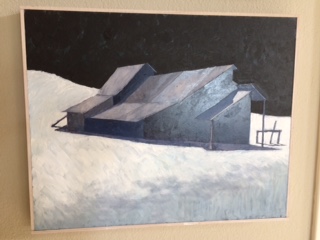
Some recent work, featuring “unloved buildings”:

IMG_1219IMG_1218

IMG_1217IMG_1216


IMG_1220 (1)IMG_1215IMG_1214

Happy Father’s Day to all the inspiring men in our lives!

L.A. Confidential

After a whirlwind few days in Los Angeles (my husband had a work-related event), it’s nice to be back in Oregon.

The two places couldn’t be more different. So in honor of the recent primary, I’d like to share some observations. In the tradition of all the news shows, the following statistics are entirely made up:

  • Percentage of people wearing flannel shirts in L.A.: 0%
  • Percentage of people wearing flannel shirts in coastal Oregon: 93%
  • Percentage of women in Beverly Hills who have had visible work done: 95.7%
  • Percentage of women in coastal Oregon who have had visible work done: 1%
  • Percentage of men in L.A. who color their hair: 88%
  • Percentage of men in coastal Oregon who color their hair: 0.25% (and only because they accidentally splashed some bleach on it while cleaning the garage)

Beverly Hills in particular is its own little world. It’s always fun to hang out, do a little cultural anthropology (i.e., shopping) and catch up with friends and family in the area. A few weekend highlights:

Discovered a wonderful Italian restaurant I have to recommend to you: Sfixio at 9737 Santa Monica Blvd. in Beverly Hills. We had dinner there on Friday, when the place was uncharacteristically deserted – everyone was apparently glued to their TV watching the NBA playoffs – so it was like dining at a very chic friend’s house whose husband happens to be an incredible cook.

IMG_1172

Mara, the hostess, hails from Milan and her husband, Chef Massimo from Florence, is the gifted visionary in the kitchen. The menu proudly proclaims that the restaurant has no freezer, and you can tell from the bright fresh flavors of the food that everything has been purchased and prepared only moments ago.

We ordered a lot (portions are comfortable but not huge) so we could share everything, including a luscious bottle of wine that Mara suggested. First up, a delicious artichoke salad of thin-sliced baby artichokes (hand sliced by Massimo; no fancy-schmancy mandoline for this purist!) and baby arugula dressed with a light touch of lemon, zingy olive oil and shaved parmegiano reggiano.

Our other appetizer was an eggplant parmigiana that will make you re-think all the gloppy Americanized eggplant parm you’ve ever tasted. Chef Massimo elevates this dish by simplifying its preparation. Super-fresh thin slices of eggplant are tender and flavorful with no hint of bitterness, sauced with beautiful, lightly seasoned crushed tomatoes and a luxurious helping of velvety burrata.

We followed up with a gorgeously fresh grilled branzino and a mixed seafood grill – again, skillfully prepared, deceptively simple and phenomenally delicious. No dessert, just some of Mara’s own homemade limoncello – also fantastic.

I’m no expert or even a serious foodie, but I’ve eaten some great meals around the world and this was one to remember. Can’t wait to return next time we’re in L.A. Check out Sfixio’s reviews on yelp and tripadvisor when you’re in the area.

Above: the wine Mara recommended

Saturday, my husband was working and I had the day to myself. Surprise – I went shopping. One of my favorite things to do in Beverly Hills is roam around the department stores (Neiman Marcus, Barney’s, Saks), marvel at bad wind-tunnel plastic surgery, and eavesdrop on conversations.

The best snapshot of the day – a conversation I heard only part of – consisted of one woman telling her two companions about a couple she’d seen:

“…The bride and groom were on scooters, and they were both wearing Mickey Mouse hats and T-shirts. He had on black socks….” For the rest of the day I wondered if the newlyweds were on their way to the chapel, had actually gotten married in those outfits, or dress like this all the time. And, mostly, were these famous Mouseketeers or just fanatics?

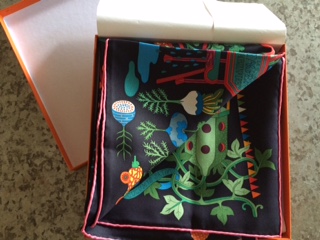
Anyway, back to shopping. I “had” to drop by Hermès to check out scarves (you know how I love my scarves) and spent about two hours prowling around the store and chatting with my completely charming Belgian sales associate, Olivier. Should you be in the market for Hermès anything and happen to be in Beverly Hills, he’s your guy!

IMG_1207

Besides being extremely personable and patient, Olivier shared interesting stories about the brand so I completely justify my shopping as having been an educational experience.

I learned, for instance, that every bag comes with an assigned box and even if it’s dented or imperfect they do not have extras. This is, I assume, a very smart strategy to make sure nobody asks for one and then goes off to sell a replica purse in an authentic box. Olivier also told me that Hermès stores cannot order or ship bags (or anything? I forgot to qualify) unless the products are purchased in store. Every store maintains its own inventory so the sales associate can’t, for instance, look in the system and find you another color somewhere else. Who knew? Good thing there’s a website.

The rest of the weekend was spent socializing, checking out LACMA (the Los Angeles County Museum of Art) and the Getty Museum (both currently have exhibits of Robert Mapplethorpe’s photography including the S&M stuff), visiting with my daughter and her boyfriend who’d just spent time in Ecuador and Peru and, naturally, eating.

Ray’s/Stark at LACMA is quite excellent, especially for a museum restaurant. Check out their salad of black kale, grapefruit, golden raisins, ricotta salata and creamy lemon vinaigrette – or create it yourself at home. (I’m doing that later.)

Sunday night provided an opportunity to catch up with friends in our age group – a casual dinner for four in their art-filled downtown loft. After all the frou-frou of Beverly Hills, it was particularly refreshing to have a no-bullshit, down-to-earth conversation.

You know how when you’re younger, a friend might say, “Your hair looks great”? At our age, my friend says, “I love your hair color”. Because, who are we kidding… there’s no use pretending I come by these highlights naturally!

The conversation inevitably turned to the big issues: retirement, where do we all want to live, aging parents and our travel bucket lists. Our friends are off to Japan and Vietnam next week; after all the rushing around (and fighting L.A. traffic), we were happy to get on a plane and return to the land of flannel.

Possibly the World’s Best Caramels

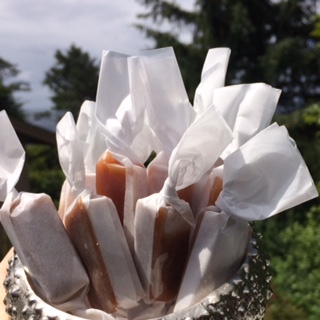
Dear Readers, I’d like to introduce you all to my current obsession: the insanely delicious caramels made right here on the Oregon coast and sold online by a young couple with a passion for sweets. If you’ve ever shied away from eating caramels because you found them too sticky, too chewy or were afraid they’d pull out your dental work, I can promise you that these are a perfect, buttery smooth, melt-in-your-mouth consistency.

I asked Skott and Jodi, the creators of Botanical Sweets and Treats, to tell me more about their luscious candy.

basic (18)

How did you get started? “Early on in our relationship, one of our favorite places to visit was Pike Place market in Seattle. We saw past the tourist side of it and enjoyed arriving early and watching the market come to life. We have always loved farmers’ markets and talked about selling at them one day.

We got started almost by accident.

We were visiting family in Idaho and we went to see Skott’s dear Aunt Hazel, the sister to his grandmother (who raised him and was like a mother to him). We told her about our lives on the coast and somehow the conversation turned to all the candy and taffy shops. We started talking about our favorite candy and Aunt Hazel said she loved caramels, but didn’t like chocolate. We asked her if she’d ever had a caramel with sea salt on it. She hadn’t and was very curious about the idea. We told her we would find some at a candy shop when we got home and mail them to her.

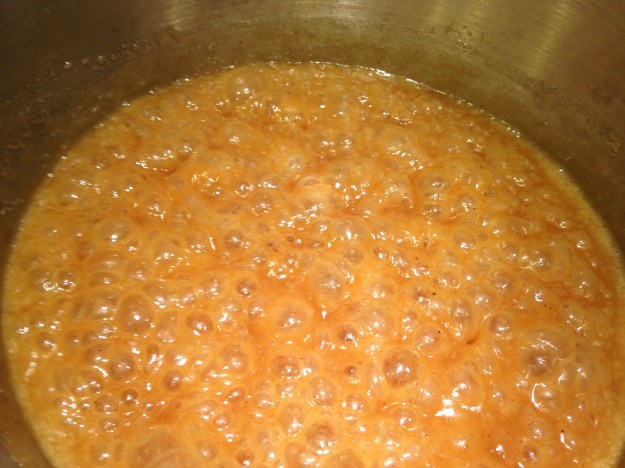
When we arrived back in Oregon, we searched everywhere and couldn’t find any salted caramels that weren’t coated in chocolate. I‘d (Jodi) grown up on a dairy and made caramels for many years in my youth. I decided I would dig out the old family recipe and give it a try. I quickly remembered how much I enjoyed making caramels: cooking that sugar until it seemed it was going to burn, then incorporating cream and smelling those wonderful aromas as the house filled with the sweet smell of caramel.

IMG_1293

We sent salted caramels to Aunt Hazel and brought the rest to work to share with our co-workers. Everyone loved them and wanted more.”

Who does what? “We make a good team. Skott is the creative recipe guy and I (Jodi) manage the business side.”

Your flavors are so unusual! Which are most popular? “We started making our own infusions/concentrates/extracts using dried botanicals such as hibiscus, Earl Grey tea, dried Oregon chai tea, rose petals, lavender buds, and the like. Sea Salt is by far our best seller. We have seasonal flavors that we rotate in and out as well.

Last summer’s best seasonal seller was Cherry w/Lime Salt and our best winter seasonal was Pumpkin Pecan Pie. All of our Christmas flavors sell really well: Candy Cane Crunch, Hot Buttered Rum, and Apple Cider. We introduced Irish Cream last year and that was a big hit, along with Cocoa-dusted Bourbon. Christmas is our busiest season, although we are getting more wedding orders this summer as well.”

IMG_1108

How long have you been in business? “We opened our Etsy shop in November 2013, and did our first show the following April 2014. We have a second Etsy shop (beachwalkerz) and now sell exclusively online.

The response we got at our first show was amazing. We quickly learned that people were not expecting caramels to come in such a variety of flavors, and got asked countless times “What is this, soap?” With the name “Botanical Sweets and Treats” and a green logo background, we quickly realized we needed a major rebranding overhaul. We hired a new logo designer and changed our packaging that first summer. Things went much better after that.FullSizeRender (3)


From day one, the markets were fantastic. We have always loved the energy found at a farmers’ market—the sounds, the smells, the patrons’ excitement as they wander the booths. Skott especially enjoyed talking to the regular customers, the other vendors, and the little kids who would save up their allowance to buy a bag of caramels (he always cut those kids a special deal). He met people from many countries who bought caramels to take back to their families. It’s very exciting to think of the places our caramels have traveled!

The biggest challenge to doing markets along the Oregon coast is the weather. Skott has quite a few memories of people huddled in the booth, waiting out the rain, everyone sampling caramels, laughing, talking, sharing experiences.”

beachwalkerz

Did you ever try something that just didn’t work? “We tried melting dark chocolate into the caramels (versus dipping them in chocolate) and making flavors such as Cherry Chocolate and Mexican Spiced Cocoa. We loved them, our friends loved them, but they just didn’t sell well, especially online. A big challenge with online sales is that people can’t sample before they buy, so they are hesitant to purchase the unknown, funky flavors.

We found out (the hard way), that a beer-flavored caramel is NOT good :-). We tried reducing stout beer and adding it into a caramel. It produces a really sweet, beef-bouillon-flavored candy. Blech! We also tried doing some two-layered caramels like Rum & Cola, and Peanut Butter & Jelly. They were fun to make but very time consuming.

One of our Etsy customers requested a Peanut Butter and Banana flavored caramel. We used peanuts to make an extract, boiled banana in water and made an amazing Elvis-inspired caramel. It was actually quite delicious!”

What are your plans for the future as you become more successful? “We have worked very hard to get back and live at the coast that we love so dearly (we relocated here from Wisconsin five years ago) and we don’t want to leave the area. This poses many challenges from a business standpoint, the main ones being commercial kitchen availability and distribution.

Last year we really maxed out on production capabilities. We cook in small batches. We cut, wrap, and bag all by hand. Our online sales have continued to grow, to the point that we’ve stopped attending the markets.

IMG_2009

After meeting with a local investment group we’ve decided that we want to keep control of our company, even if that means keeping it smaller at this point. Caramels are best when fresh; they don’t have a super long shelf life. Even though they never really “go bad”, they lose their brightness after 3-4 months. And we don’t want to start adding a bunch of chemicals to increase shelf life!

So in a nutshell, our plans are to continue to grow our online sales via Etsy and maintain our handcrafted quality rather than becoming automated. We have a lot of fun making caramels together!”

Special Offer Just for OFH Readers! I promise you’ll have at least as much fun eating these caramels as Skott and Jodi have making them. They’ve generously offered us a special discount coupon to use when you shop online. Enter BLOG10  at checkout to save 10% on your order.

My personal recommendations are Original, Sea Salt, and whichever coffee flavor is available. But honestly, they are all wonderful!! (And, by the way, this is not a sponsored post; I’m just a fan!)

Bullies, Then and Now

I’d already started writing this when a wonderful blog landed in my Inbox. I’d been thinking about the ways life keeps tossing bullies in our path – just when we’re beginning to believe we’ve outgrown the past. Clearly, I’m not alone.

Back in 7th grade, I was frequently tormented by the mean and massive football player who sat next to me in Homeroom. I was shy, bookish and definitely not cool, having parents who eschewed everything that was considered fashionable in the 1960’s.

In junior high on Long Island, you had to have Pappagallos, low-cut flats that came in a rainbow of colors, were worn by all the popular girls, and that I was not allowed to wear because, according to my mother, they didn’t give my feet enough “support”. Instead I was doomed to clunky Mary Janes, which prompted endless witticisms from “Football Fred” ridiculing my old-lady clodhoppers.

Adding to my not-coolness was not being allowed to shave my legs. Having sparse, white-blond body hair I thought I could get away with this, but Fred never missed an opportunity to drop a pencil or notebook under my desk and retrieve it with a snarky whisper about my “spider legs”.

Happily, life goes on and we all grow up. Sort of. Because at my first job, I discovered a new species: the work bully.

My first boss, “Andy”, was an affable ex-military guy whose management style was a type of hazing designed to toughen me up. Although Andy wasn’t overtly insulting, he often withheld information that could make my job easier or more efficient. This resulted in a colossal waste of time and energy that, more than once, reduced me to tears of fury in the ladies’ room.

One of my early tasks as a junior art director was to recommend which artists we should contact for a particular job. I had no idea how to begin looking, and there was no Internet with which to research this. I asked Andy for direction and he told me to go figure it out. I suggested that if he’d simply tell me where the information was I’d never have to ask him a second time, but he walked away.

Hours later, I discovered that Andy already had files of cards from all the artists’ representatives, neatly catalogued by style from realistic to cartoon. He must have thought sending me on a wild goose chase would build character. Instead, it built resentment. We did, in the end, become good friends—once I was no longer working for him.

I next crossed swords with a burly, perpetually scowling television producer I’ll call Phil, who refused to partner with me on a commercial because I was too “junior”– never mind that it was one I’d written and it was therefore my responsibility to follow through.

Phil insisted he’d only work with my boss. After running up and down the stairs multiple times to relay this to my supervisor, who kept sending me back to negotiate further, I finally closed the door (hard!) to Phil’s office and said, “Look, I don’t want to work with you any more than you want to work with me, but we have a job to do so let’s get on with it.”

I never had trouble with him again – and I learned the important lesson that the only way to get someone to stop bullying you is to stand up to him or her and show them they don’t intimidate you. Even if you’re in your twenties.

I wish I could say that those were the only bullies I ever encountered. One of the worst was a poisonous co-worker at my last agency job. She ruled her stable of sycophants not by fear or obvious intimidation – she appeared to be friendly and fun – but by creating a merciless clique of who was “in” and who was frozen out. You could get on her s***list in a nanosecond for politely declining to drink on the job, as she did every afternoon beginning at 4 pm. Those who were “out” were viciously gossiped about, maligned to senior management and made so miserable that, years later, they still shudder when they hear her name.

Bullies, of course, reside in everyday life outside of work, too. There’s the woman who makes some guy’s life hell when he tries to end a relationship. The receptionist who won’t let you speak to your doctor. The guy in the Homeowners’ Association who insists you can’t replace so much as a doorknob without his permission. And the supermom at the PTO who tries to guilt you into doing her bidding by making you feel like a bad parent just because you have a full-time job.

Moral: Life is eternally 7th grade. But now you have the tools—wisdom, kindness, a good lawyer on speed dial—to fight back. And sometimes, growing up really is the best revenge.

Sweet on Sourdough

As soon as we arrive at our summer place in coastal Oregon, I’m seized with an uncontrollable urge to bake. I don’t know if it’s the tang of the sea air, the crisp nights, or the mist that makes everything look a bit magical, but something makes me want to light a fire, curl up with a good book and wait for dough to rise.

Every summer begins with a new batch of sourdough starter; it’s one of the first things I do after dusting away the winter cobwebs. This is part ritual, part challenge (every loaf is a little different because I’m truly an amateur) and partly the desire to fill the house with the intoxicating aroma of fresh bread.

Sourdough is one of the oldest types of bread, dating back to the Egyptians in 1500 BC. French bakers brought sourdough to California during the Gold Rush and it’s been associated with San Francisco ever since. When you mix flour with water and expose it to air, wild yeasts join the party, converting the natural sugars in flour to acids that impart a sour flavor. As the yeast interacts with the flour mixture it produces carbon dioxide, the cause of the active bubbles that make bread rise and create its distinctive holes.

Like a beloved pet or houseplant, sourdough starter needs to be “fed” regularly; otherwise it gets stale and dies. Since we’re only here for four months a year, I can’t keep mine going indefinitely. (I don’t suppose TSA would be too thrilled if I brought a jar on plane rides back and forth!) Plus, I sometimes want to eat something else. But if you’re willing to feed it every few days, you should be able to keep your starter going for months or even years, as professional bakeries do.

The first bread you make will be rather mild; it will develop its unique-to-you flavor after a few batches, when the wild yeasts that grow in your climate have a chance to develop. It will also become more ragged and hole-y as the starter matures.

Every bakery (and baker) has a special recipe and process. I’ve combined and adapted elements of several recipes, including ideas from the wonderful The Best Bread Ever cookbook and the legendary Tartine’s. Although there are a number of steps and it takes awhile, the following is pretty much foolproof (though I’ve had some batches turn out mysteriously dense)– you’ll quickly develop a sense of how the dough should look and feel. Have fun!

What you’ll need:
• Flour (rice, whole wheat and bread flours)
• Container for starter, a food processor and a mixing bowl
• Cast iron pot with lid, about 10” diameter
• Thermometer that goes up to 220°F
• Spray mister (Pylones makes a cute one)

Sensational Sourdough

STEP ONE: Starter
In a clear container or bowl, mix 2 cups of unbleached bread flour with 1½ cups of warm water and stir well. (I use a rectangular container about 5” square wide and 6” tall because it stores well in the fridge.) Cover with cheesecloth and leave near an open window.

STEP TWO: Wait
Stir the mixture twice a day for 2-3 days; then add ½ cup of whole wheat flour, ½ cup of bread flour, and enough water to restore its original consistency. Continue stirring another day or two until the starter develops a layer of foam about an inch thick. The bubbles will be very active at this point and the starter will be stretchy and fluid.IMG_1059

STEP THREE: Dough (Warning: this is about a 5-hour process!)
1. In a food processor, combine 1 cup of starter, 1 cup of warm water, 3½ cups of bread flour and 1 teaspoon of salt. Pulse for 20 seconds, adding a bit more water if the dough doesn’t come together in a ball or seems dry and crumbly. Let it rest for 5 minutes, then pulse for another 25 seconds. Transfer the dough to a bowl and let it rise for 30 minutes in a warm or sunny part of the room.
2. Dip your hands in water and, going section by section, pull one quadrant of the dough to stretch it over the rest. Repeat the action for all four “edges” of the ball of dough. Put the ball back in the bowl, cover with a towel, and let it rest for 30 minutes.
3. Repeat the folding/stretching action every half hour for a total of 6 times (3 hours). By the end of the 3 hours, the dough will be much softer and should increase in volume about 20-30%. If not, continue the folding/rising process one or two more times.


4. Transfer the dough to a work surface and dust with flour. Flip the dough over so the floured side is on the bottom. Using a smooth rolling motion, pull the corners of the dough out and up towards the middle as you roll it into a taut round ball. Cover with a towel and let it rest for 30 minutes.
5. Line an 8-10” bowl with a fresh towel. Combine ½ cup each of whole-wheat and rice flours in a separate container and sprinkle the towel generously with some of the mixture. Reserve the rest.
6. Uncover your dough. Dust the top with whole-wheat flour and flip it over so that the floured side is on the bottom. This will become the crust.
7. Beginning with the side that’s facing you, pull out the bottom two “edges” of the ball and stretch them up to the middle of the dough. Next, pull the two “sides” of the ball and stretch them over the center. Finally, lift the top two “edges” and stretch them over the previous folds. (Imagine folding a piece of paper: bottom corners up, sides in, top down over everything)


8. Flip the dough over and roll it into a smooth, taut ball. All the folded sides will be on the bottom. Don’t worry that the seams are still visible!
9. Transfer the dough, seam side up, to the prepared bowl. Sprinkle some of the rice/whole wheat mixture on top, fold the towel lightly over the dough, and put it in the fridge.

STEP FOUR: Wait overnight.
Alternatively, let the dough rise in a warm (70-80°F) environment for 3-4 hours. But it tastes better after a long, slow rise of 12+ hours.

STEP FIVE: Bake.
1. Take the bowl out of the fridge and let the dough warm up to room temperature.
2. Put a cast-iron lidded pot (about 10” diameter) in a cold oven and preheat to 500° F. Wait 30 minutes after the oven reaches this temperature before proceeding.
3. Carefully take the dough out of its bowl, place it on a counter and dust the top with some of the rice/whole-wheat mixture. Using a sharp knife or razor blade, slash the top of the bread in a few places. This will allow air to escape as the dough rises in the oven. Be careful not to press down too hard; you want to maintain the round shape.


4. Using oven mitts, take the hot pot out of the oven, remove the lid and gently drop the dough into the pot. Replace the lid and put the covered pot back in the oven, reducing the heat to 450°F.
5. Bake for 20 minutes. Open the oven door, remove the lid and spritz the oven a couple of times with water to create some steam. Spritz again after another 2 minutes. Continue baking (uncovered) for about 20-25 minutes until the crust is a dark golden color. Check the internal temperature: the bread is fully baked when it’s 205° to 210°F at the thickest point.


6. Cool the bread on a wire rack for at least 15 minutes before slicing.

Yield: one large loaf.

Notes:
3 shallow, vertical slashes will create an oval shaped bread. A criss-cross pattern creates a round loaf.

Keep feeding your starter every few days to a week: Add 1 cup flour + warm water to maintain the original consistency.