Tag Archives: media

Hamas are terrorists not ‘militants’ – Why won’t the media get it right?

I don’t normally address politics in this blog but this is too important to ignore. The writer addresses some uncomfortable truths we all need to understand. I’ve highlighted some key points.

Hamas are terrorists not ‘militants’ – Why won’t the media get it right?

Hamas’ charter needs to be taken seriously, it calls for the obliteration of Israel and its replacement with an Islamic state and the obliteration of Jews.

By DAVID BREAKSTONE
The destruction caused by Hamas Militants in Kibbutz Be'eri, near the Israeli-Gaza border, in southern Israel, October 11, 2023. (photo credit: OREN BEN HAKOON/FLASH90)The destruction caused by Hamas Militants in Kibbutz Be’eri, near the Israeli-Gaza border, in southern Israel, October 11, 2023. (photo credit: OREN BEN HAKOON/FLASH90)

I just checked. For anyone harboring any doubts, the horror of 9/11 was perpetrated by terrorists. Every American newspaper and news station reported it that way. Curious, then, that so many of the world’s most respectable news outlets, including CNN and The New York Times, are now reporting that the barbarism recently visited upon Israel was perpetrated by militants.

Militants: those intensely devoted to a cause, promoting their beliefs with the full power of their convictions, but not generally violent. I may not be totally objective, but that doesn’t sound to me a particularly fitting description of those who indiscriminately butcher babies, rape women, slaughter young festival goers, murder children in front of their parents and parents in front of their children, pile handcuffed civilians upon one another and burn them alive, and ruthlessly abduct infants and the infirm along with everyone in-between.

The savagery and the numbers are staggering. The more than 1300 dead, 3600 wounded, and 199 hostages are proportionally far greater than the casualties of the heinous attack on the Twin Towers. Ten deaths for every million Americans back then; 140 for every million Israelis today. Why, then, the refusal to call out Hamas for being the heinous terrorist organization it is? Antisemitism is too easy an answer. There may be an element of that in the equation, but it is far from a sufficient explanation.

The reason may be better attributed to the inconceivably lingering perception of Hamas as a humanitarian organization, concerned with the welfare of the Palestinian people, which is how it presented itself to the world when it came to power in Gaza in 2007. That, along with the persistent perception that it is Israel and its policies that are the root cause of the sadistic violence that has now erupted with unprecedented depravity. As casualties in Gaza continue to mount and as the humanitarian crisis there continues to deepen, demands that Israel explain itself are going to become increasingly strident. That might not be fair, but it’s already happening.The destruction caused by Hamas Militants in Kibbutz Be'eri, near the Israeli-Gaza border, in southern Israel, October 14, 2023.  (credit: Omer Fichman/Flash90)The destruction caused by Hamas Militants in Kibbutz Be’eri, near the Israeli-Gaza border, in southern Israel, October 14, 2023. (credit: Omer Fichman/Flash90)

SOME QUESTIONS and answers, then, for those prepared to take on our detractors:

1. Isn’t Israel’s occupation of the West Bank the real reason for the Hamas invasion of Israel – and doesn’t the cycle of violence that Israel and Hamas have been caught up in for years suggest that one side is as much to blame as the other?

While Hamas indeed declares its aim is to end the “occupation,” the occupation it seeks to end is that of the entire State of Israel. Israel’s 1998 offer to withdraw from 96% of the West Bank as part of a comprehensive peace plan was summarily rejected by the Palestinians. Its 2005 unilateral withdrawal from Gaza, rather than being welcomed as a harbinger of peace, has been met with a 17-year barrage of tens of thousands of rockets targeting civilians.

Hamas’ charter needs to be taken seriously. It asserts that “Palestine is an Islamic Waqf, land consecrated for Muslim generations until Judgement Day” and calls for the obliteration of Israel and its replacement with an Islamic state extending from the Jordan River to the Mediterranean Sea (Article 11), an objective fueled by vitriolic hatred of the Jew. “The Day of Judgment will not come about until Muslims fight the Jews, when the Jew will hide behind stones and trees. The stones and trees will say, ‘O Muslim, O servant of Allah, there is a Jew behind me, come and kill him’” (Article 7), precisely the harrowing script played out on October 7.

Israel’s genuine desire for peace was signaled by its unilateral withdrawal from Gaza in 2005 and its ongoing efforts at rapprochement, which have been steadfastly rebuffed by Hamas who has remained true to its unequivocal declaration: “There is no solution for the Palestinian question except through armed struggle [and that] so-called peaceful solutions… are in contradiction to the principles of Hamas” (Article 13), decrying any attempt by Arab countries to enter into a peace agreement with Israel as a betrayal of Islam (Article 32).

In contrast, Israel has consistently advocated for a two-state solution to end the conflict. There is no case to be made for moral equivalency in judging the two sides joined in battle. Regardless, there is no justification for the war crimes committed by Hamas, deliberately targeting Israel’s civilian population while using its own as a human shield to deter Israeli retaliation.

2. Doesn’t Israel’s stranglehold on Gaza leave Hamas with no choice but to resort to violence?

After its 2005 withdrawal, Israel signed an Agreement on Movement and Access with the Palestinian Authority. It would have granted the Palestinians control over their own borders, allowed for imports and exports, and the construction of a seaport. Then came the 2006 elections in Gaza which brought Hamas to power after a bloody struggle that decimated the Palestinian Authority and rendered the accord obsolete. Nevertheless, Israel has continually facilitated the import of humanitarian aid and the supply of electricity and water. This continued even as Hamas channeled the massive amounts of building supplies and billions of dollars it received for construction of hospitals and schools into the construction of tunnels and the procurement of weapons for attacks against Israel’s civilian population rather than serving the needs of its own.

Still, right up until Hamas launched its brutal attack, Israel was allowing 18,000 Gazans daily to cross its border for work.

3. Even if Israel has a legitimate right to retaliate against the massacre of its citizens, doesn’t the death toll of Palestinians relative to the number of Israeli casualties indicate a disproportionate response on its part?

The death of every innocent Palestinian is a tragedy, and Israel, abiding by the rules of war, has been doing its utmost to avoid that. The problem is, that while Israel uses its weapons to defend its people, Hamas is using its people to defend its weapons. It not only launches rockets from schools, hospitals, and mosques, but endeavors to prevent civilians from evacuating areas Israel has expressly warned them to leave.

What does proportionality mean?

As to proportionality, what would that mean? Killing the same number of civilians in Gaza as Hamas slaughtered in Israel? That would be tit-for-tat, revenge, retribution. Israel has no interest in that. It wants only to render Hamas incapable of inflicting any further casualties on its citizenry. Ever. Its resolve in this regard is ironclad. Hamas will have to decide how many of its own civilians it is prepared to sacrifice in its attempt to save itself. In the meantime, Israel is doing what it can to mitigate the suffering of Gaza’s civilian population, having established a corridor for the safe passage between Gaza and Egypt of civilians and the humanitarian aid they require. These are all things the world needs to know. Words matter.

The Hamas Charter matters. Hamas’s actions matter even more. Its members are terrorists, not militants, and the victims of the October 7 massacre, and the entire enlightened world Hamas threatens, deserves to hear the story told as it is.

The writer is currently engaged in establishing the Navon Center for a Shared Society. He previously served as deputy chair of the Jewish Agency and World Zionist Organization and was the founding director of the Herzl Museum and Educational Center.  breakstonedavid@gmail.com
The Eye of the Beholder

Darn this new WordPress block editor… it suddenly trashed this post. Trying again, with apologies to those of you who will get this twice!

Sharing a fascinating post from The Enlightened Mind about how Jesus has been depicted over the centuries, and why that matters. Full article below:

 Painting depicting transfiguration of Jesus, a story in the New Testament when Jesus becomes radiant upon a mountain. Artist Raphael /Collections Hallwyl MuseumCC BY-SA

The portrayal of Jesus as a white, European man has come under renewed scrutiny during this period of introspection over the legacy of racism in society.

As protesters called for the removal of Confederate statues in the U.S., activist Shaun King went further, suggesting that murals and artwork depicting “white Jesus” should “come down.”

His concerns about the depiction of Christ and how it is used to uphold notions of white supremacy are not isolated. Prominent scholars and the archbishop of Canterbury have called to reconsider Jesus’ portrayal as a white man.

As a European Renaissance art historian, I study the evolving image of Jesus Christ from A.D. 1350 to 1600. Some of the best-known depictions of Christ, from Leonardo da Vinci’s “Last Supper” to Michelangelo’s “Last Judgment” in the Sistine Chapel, were produced during this period.

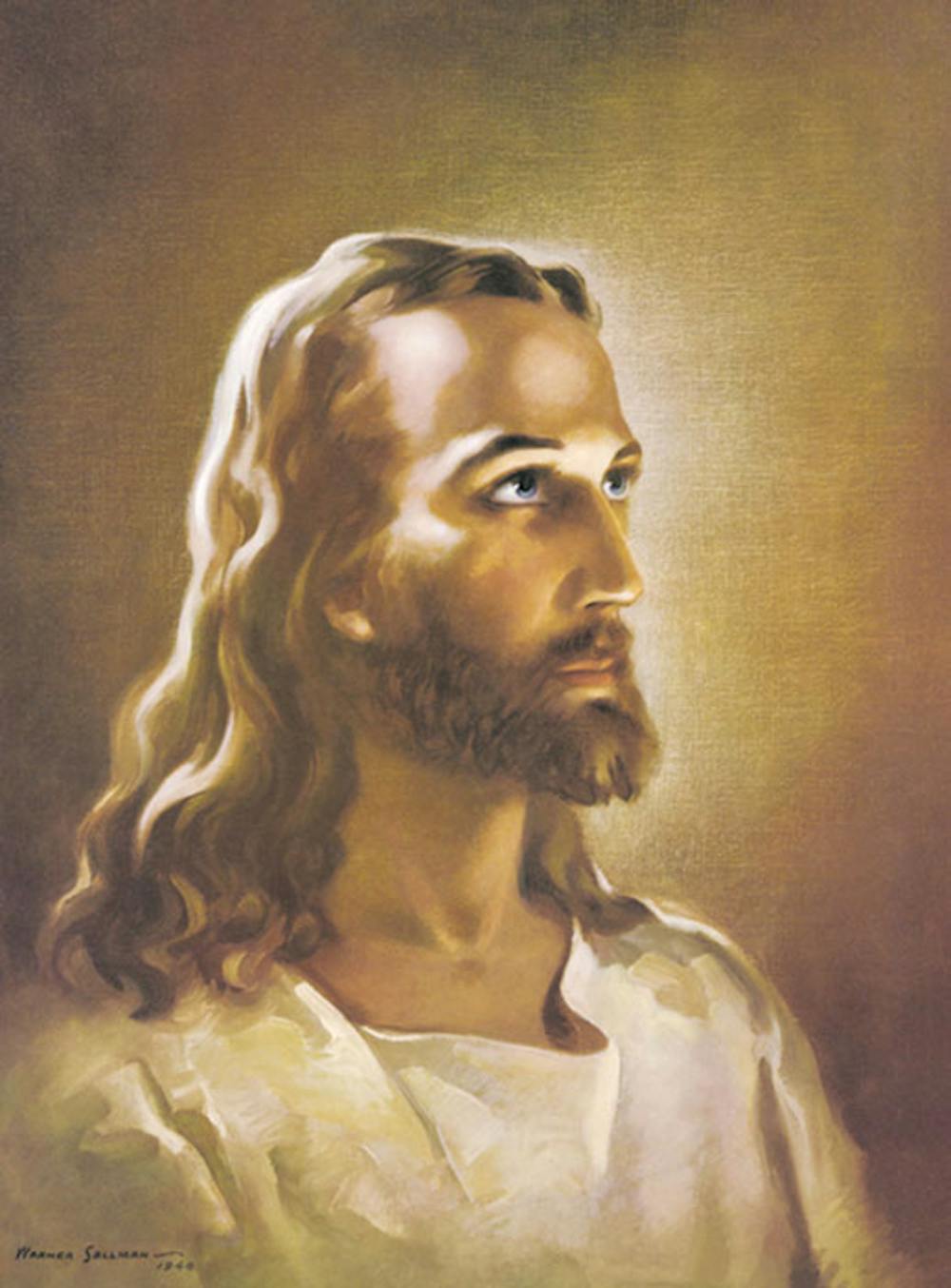
But the all-time most-reproduced image of Jesus comes from another period. It is Warner Sallman’s light-eyed, light-haired “Head of Christ” from 1940. Sallman, a former commercial artist who created art for advertising campaigns, successfully marketed this picture worldwide.

 Sallman’s ‘Head of Christ’

Through Sallman’s partnerships with two Christian publishing companies, one Protestant and one Catholic, the Head of Christ came to be included on everything from prayer cards to stained glass, faux oil paintings, calendars, hymnals and night lights.

Sallman’s painting culminates a long tradition of white Europeans creating and disseminating pictures of Christ made in their own image.

In search of the holy face

The historical Jesus likely had the brown eyes and skin of other first-century Jews from Galilee, a region in biblical Israel. But no one knows exactly what Jesus looked like. There are no known images of Jesus from his lifetime, and while the Old Testament Kings Saul and David are explicitly called tall and handsome in the Bible, there is little indication of Jesus’ appearance in the Old or New Testaments.

 ‘The Good Shepherd.’ Joseph Wilpert

Even these texts are contradictory: The Old Testament prophet Isaiah reads that the coming savior “had no beauty or majesty,” while the Book of Psalms claims he was “fairer than the children of men,” the word “fair” referring to physical beauty.

The earliest images of Jesus Christ emerged in the first through third centuries A.D., amidst concerns about idolatry. They were less about capturing the actual appearance of Christ than about clarifying his role as a ruler or as a savior.

To clearly indicate these roles, early Christian artists often relied on syncretism, meaning they combined visual formats from other cultures.

[Deep knowledge, daily. Sign up for The Conversation’s newsletter.]

Probably the most popular syncretic image is Christ as the Good Shepherd, a beardless, youthful figure based on pagan representations of Orpheus, Hermes and Apollo.

In other common depictions, Christ wears the toga or other attributes of the emperor. The theologian Richard Viladesau argues that the mature bearded Christ, with long hair in the “Syrian” style, combines characteristics of the Greek god Zeus and the Old Testament figure Samson, among others.

Christ as self-portraitist

The first portraits of Christ, in the sense of authoritative likenesses, were believed to be self-portraits: the miraculous “image not made by human hands,” or acheiropoietos.

 Acheiropoietos. Tretiakov Gallery, Moscow

This belief originated in the seventh century A.D., based on a legend that Christ healed King Abgar of Edessa in modern-day Urfa, Turkey, through a miraculous image of his face, now known as the Mandylion.

A similar legend adopted by Western Christianity between the 11th and 14th centuries recounts how, before his death by crucifixion, Christ left an impression of his face on the veil of Saint Veronica, an image known as the volto santo, or “Holy Face.”

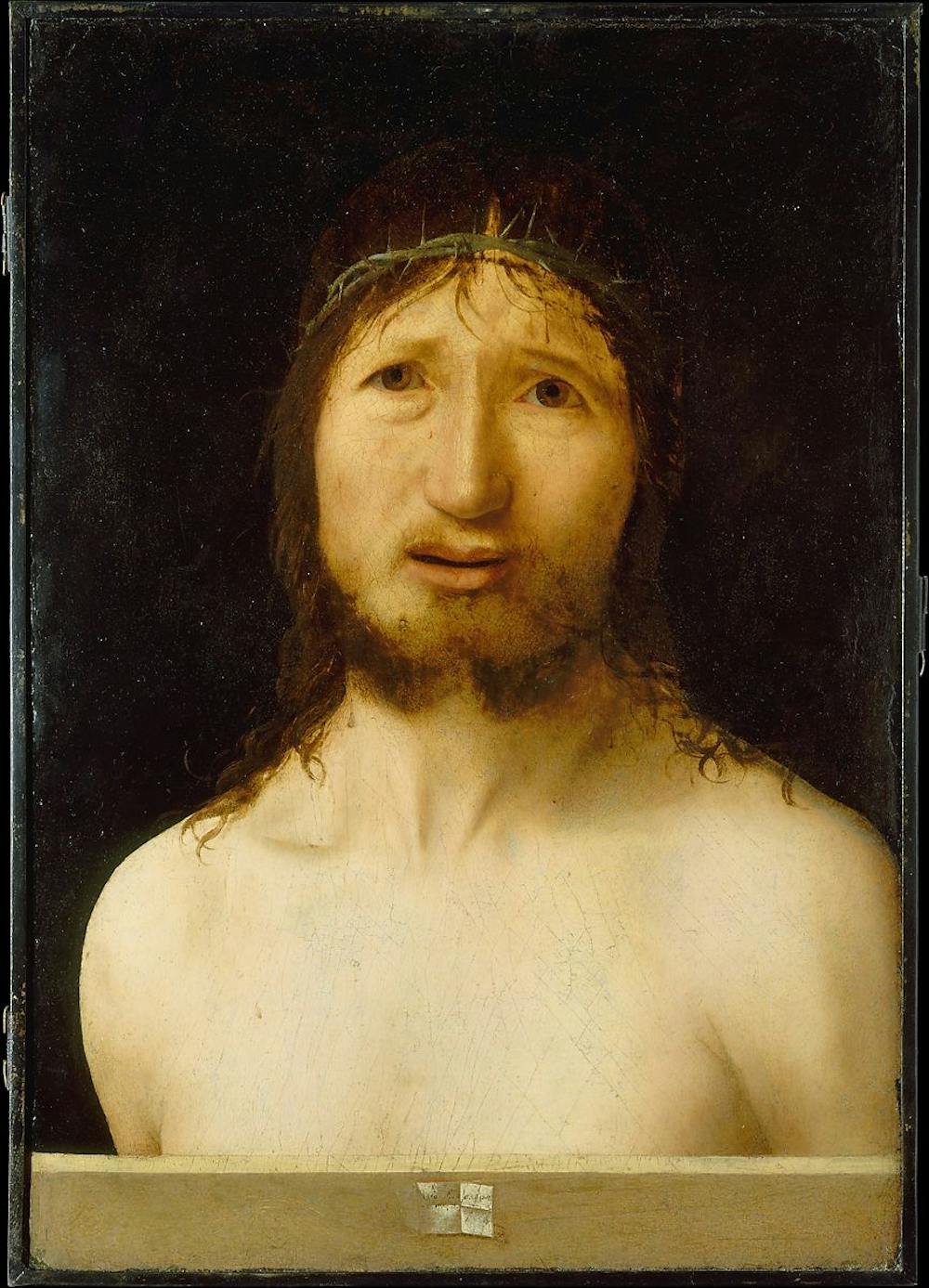
 Christ crowned with thorns. Artist Antonello da Messina. The Friedsam Collection, Bequest of Michael Friedsam, 1931, Metropolitan Museum, New York

These two images, along with other similar relics, have formed the basis of iconic traditions about the “true image” of Christ.

From the perspective of art history, these artifacts reinforced an already standardized image of a bearded Christ with shoulder-length, dark hair.

In the Renaissance, European artists began to combine the icon and the portrait, making Christ in their own likeness. This happened for a variety of reasons, from identifying with the human suffering of Christ to commenting on one’s own creative power.

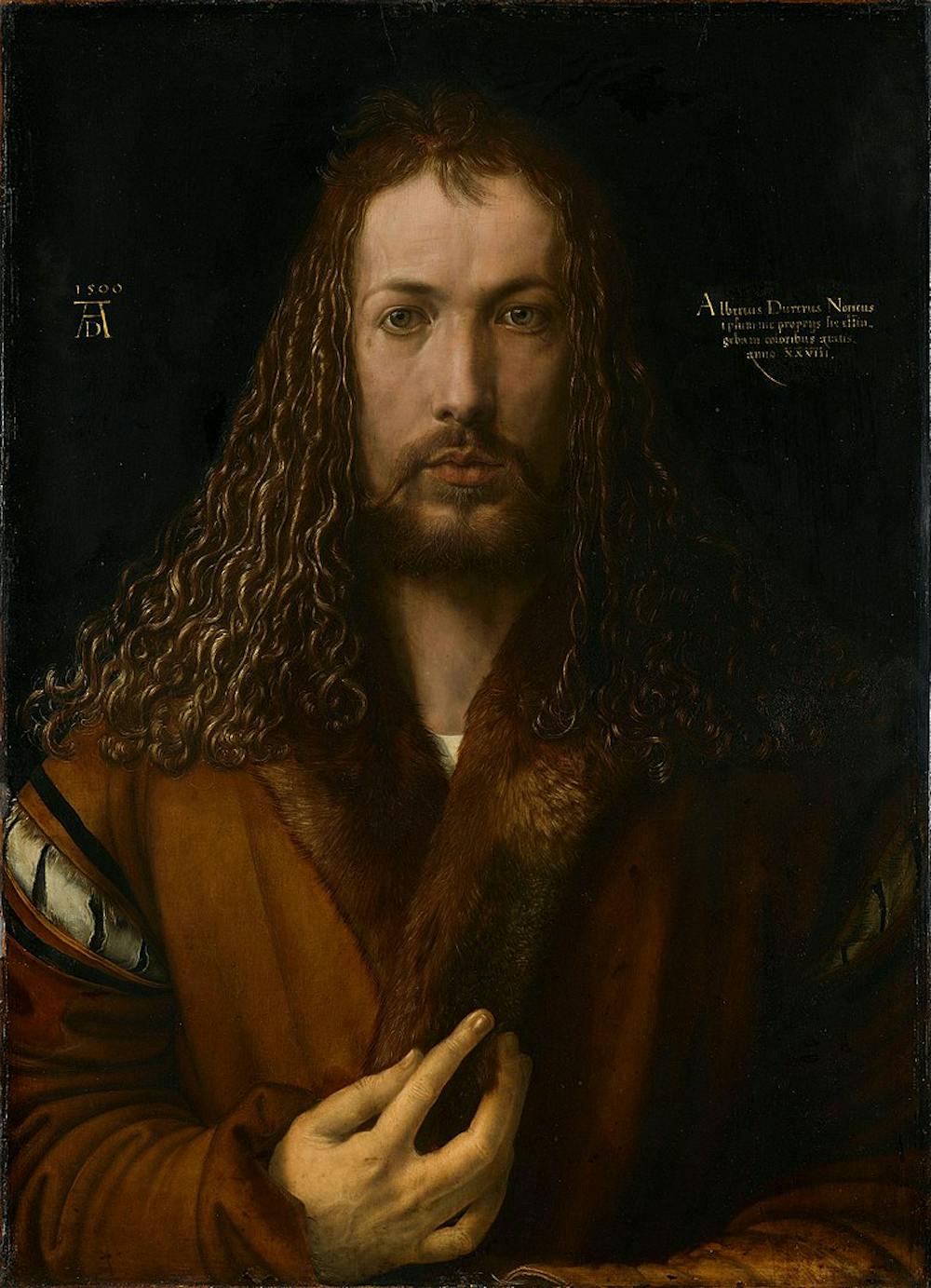
 Albrecht Dürer. Albrecht Dürer/Alte Pinakothek Collections

The 15th-century Sicilian painter Antonello da Messina, for example, painted small pictures of the suffering Christ formatted exactly like his portraits of regular people, with the subject positioned between a fictive parapet and a plain black background and signed “Antonello da Messina painted me.”

The 16th-century German artist Albrecht Dürer blurred the line between the holy face and his own image in a famous self-portrait of 1500. In this, he posed frontally like an icon, with his beard and luxuriant shoulder-length hair recalling Christ’s. The “AD” monogram could stand equally for “Albrecht Dürer” or “Anno Domini” – “in the year of our Lord.”

In whose image?

This phenomenon was not restricted to Europe: There are 16th- and 17th-century pictures of Jesus with, for example, Ethiopian and Indian features.

In Europe, however, the image of a light-skinned European Christ began to influence other parts of the world through European trade and colonization.

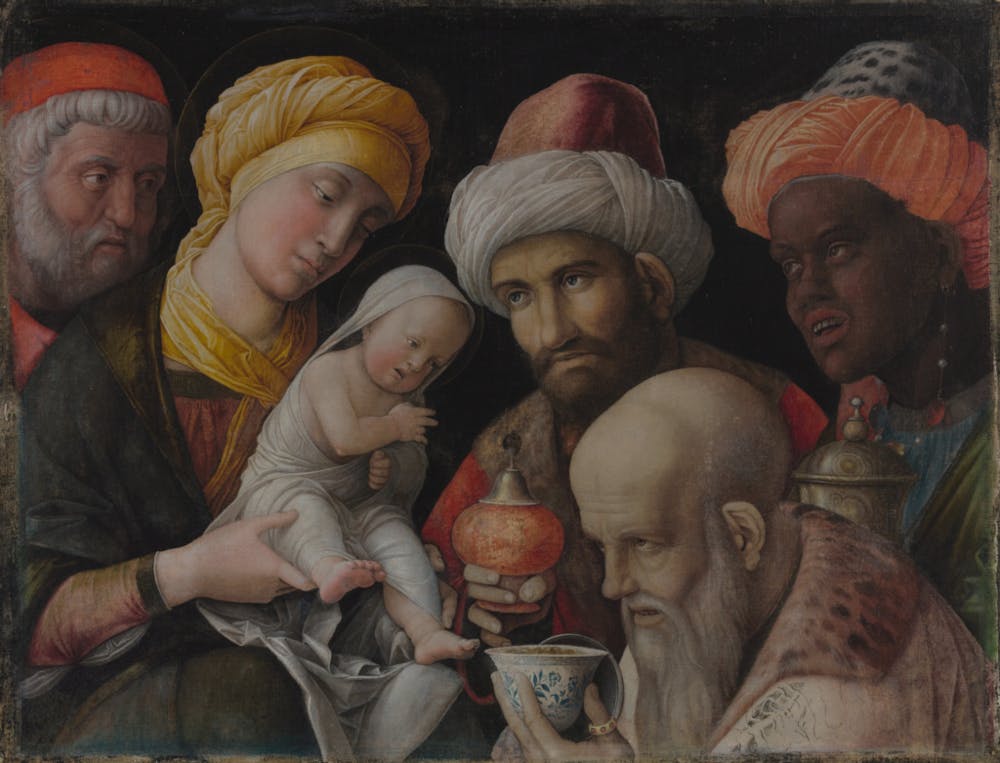
 ‘Adoration of the Magi.’ Artist Andrea Mantegna. The J. Paul Getty Museum

The Italian painter Andrea Mantegna’s “Adoration of the Magi” from A.D. 1505 features three distinct magi, who, according to one contemporary tradition, came from Africa, the Middle East and Asia. They present expensive objects of porcelain, agate and brass that would have been prized imports from China and the Persian and Ottoman empires.

But Jesus’ light skin and blues eyes suggest that he is not Middle Eastern but European-born. And the faux-Hebrew script embroidered on Mary’s cuffs and hemline belie a complicated relationship to the Judaism of the Holy Family.

In Mantegna’s Italy, anti-Semitic myths were already prevalent among the majority Christian population, with Jewish people often segregated to their own quarters of major cities.

Artists tried to distance Jesus and his parents from their Jewishness. Even seemingly small attributes like pierced ears – earrings were associated with Jewish women, their removal with a conversion to Christianity – could represent a transition toward the Christianity represented by Jesus.

Much later, anti-Semitic forces in Europe including the Nazis would attempt to divorce Jesus totally from his Judaism in favor of an Aryan stereotype.

White Jesus abroad

As Europeans colonized increasingly farther-flung lands, they brought a European Jesus with them. Jesuit missionaries established painting schools that taught new converts Christian art in a European mode.

small altarpiece made in the school of Giovanni Niccolò, the Italian Jesuit who founded the “Seminary of Painters” in Kumamoto, Japan, around 1590, combines a traditional Japanese gilt and mother-of-pearl shrine with a painting of a distinctly white, European Madonna and Child.

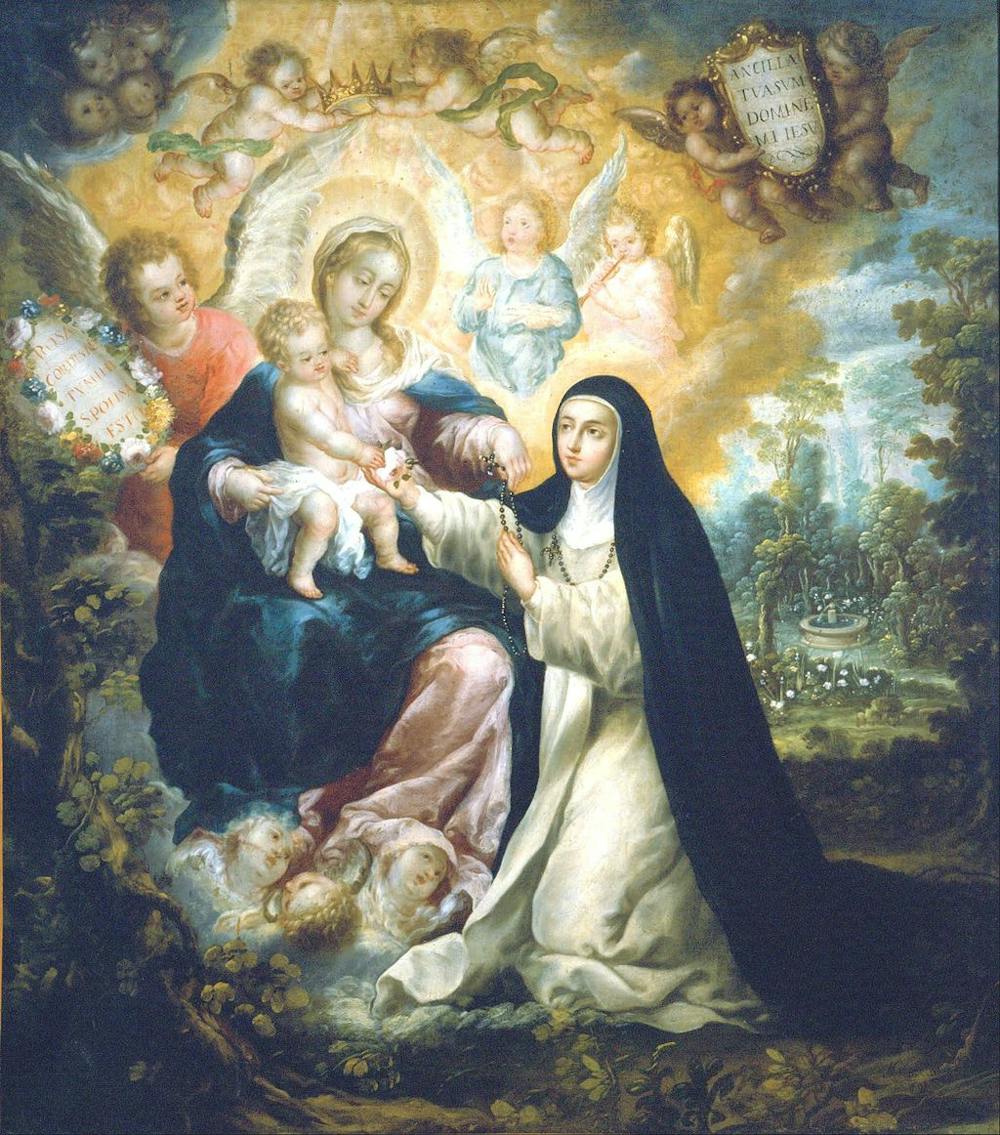
 Nicolas Correa’s ‘The Mystic Betrothal of Saint Rose of Lima.’ Museo Nacional de Arte

In colonial Latin America – called “New Spain” by European colonists – images of a white Jesus reinforced a caste system where white, Christian Europeans occupied the top tier, while those with darker skin from perceived intermixing with native populations ranked considerably lower.

Artist Nicolas Correa’s 1695 painting of Saint Rose of Lima, the first Catholic saint born in “New Spain,” shows her metaphorical marriage to a blond, light-skinned Christ.

Legacies of likeness

Scholar Edward J. Blum and Paul Harvey argue that in the centuries after European colonization of the Americas, the image of a white Christ associated him with the logic of empire and could be used to justify the oppression of Native and African Americans.

In a multiracial but unequal America, there was a disproportionate representation of a white Jesus in the media. It wasn’t only Warner Sallman’s Head of Christ that was depicted widely; a large proportion of actors who have played Jesus on television and film have been white with blue eyes.

Pictures of Jesus historically have served many purposes, from symbolically presenting his power to depicting his actual likeness. But representation matters, and viewers need to understand the complicated history of the images of Christ they consume.

Author: Anna Swartwood House
Assistant Professor of Art History, University of South Carolina

Why Lies Spread Faster Than the Truth

It’s not your imagination. Misinformation travels faster than a speeding bullet — or a potentially deadly virus — , making this video worth a look.

Thanks to the EnlightenedMind blog for the timely reminder.

white plane on the sky

Photo by Immortal shots on Pexels.com