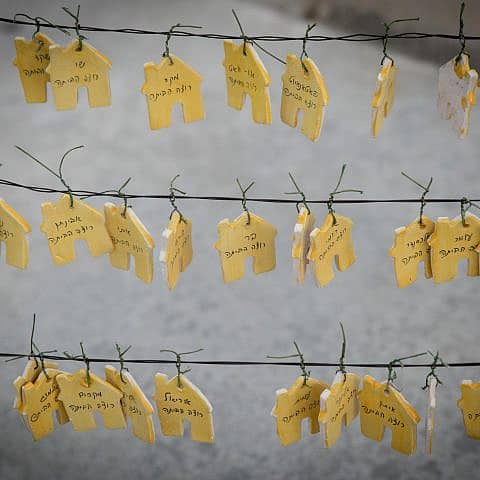
Tag Archives: Gaza

Musings Du Jour

I’ve neglected this blog for too long, as there’s been a lot going on: Health issues with my husband, leading to many medical appointments, endless phone calls, and the usual snafus with insurance.

Happily, we are about to travel: just a week in France on a Viking river cruise, barely in Paris so I hope to skip Olympics madness. Very much looking forward to 8 days when I will not have to cook, clean, or deal with bills.

And, although this blog is not supposed to address politics, thank you Joe for finally stepping aside. Kamala isn’t perfect — not too thrilled with her position on Israel — but anything/anyone is better than that dangerous criminal orange cheeseball so I am cautiously optimistic about the future.

The following piece caught my eye and I think is a good explanation of the ways that otherwise good people are being led astray by so-called progressive rhetoric.

A non-Jew’s Perspective on Antisemitism and ‘Anti-Zionism’

Here are my 15 things to consider about antisemitism and “anti-Zionism.”

An essay by Pat Johnson of Pat’s Substack.

Share

There is an elephant in the room and we need to address it.

It is the relationship between antisemitism and “anti-Zionism.”

I am not Jewish. So, on the one hand, should I be the one defining the problem and offering solutions? On the other hand, why is it always left to Jewish people to make this case?

It is time for allies to stand up.

Here are my 15 things to consider about antisemitism and “anti-Zionism.”

1. Stop saying, ‘Anti-Zionism is not antisemitism.’

This is a deeply problematic statement. The idea that Jewish people and their allies scream “Antisemitism!” when confronted with “anti-Zionism” is a deflection and a projection.

The statement “anti-Zionism is not antisemitism” is used to avoid confronting the possible (in fact, undeniable) presence of antisemitism in the anti-Zionist movement.

They accuse Jews and their allies of deflecting real concerns about Israel by crying antisemitism. It is they, though, who deflect real concerns about antisemitism by cry-bullying about Zionists “silencing” them.

2. Start acting like anti-racists. Stop acting like racists.

We might expect this behavior from Right-wing extremists, who deny the presence of racism and dismiss invitations to self-examination. But it is (mostly) not coming from those people.

This atrocious deflection is coming overwhelmingly from “progressive,” self-declared anti-racism activists who, when faced with the remotest suggestion that they might be exhibiting any form of prejudice, always respond respectfully and engage in introspection.

Except when it comes to Jews and antisemitism.

Instead, not only will they not engage in self-reflection in this sole instance, they double down and accuse Jewish people of manipulating their experiences with prejudice to “silence” criticism of Israel.

In other words, they invoke antisemitic ideas of Jewish deviousness to avoid addressing their own antisemitism. This is obviously among the most unprogressive responses imaginable.

3. Be clear on nomenclature.

Anti-Zionism is not “criticism of Israel.” Anti-Zionism is the idea that Jewish people do not have the right to self-determination. It is a call for the eradication of the State of Israel.

The (very different) statement “criticism of Israel is not antisemitic” is probably fair (though it depends on the language and imagery we use and on our motivations). But anti-Zionism means something very specific.

And if Jewish people are the only people whose right to self-determination we oppose — indeed, if the only country in the world we seek to eradicate is the Jewish one  — well, excuse me for concluding the blatantly obvious.

4. Understand your biases.

We might conclude that we do not “hate” Jews, therefore we are not “antisemitic.” The terminology is problematic, I admit that. The prefix “anti-” suggests active antipathy. That exists, but it is probably not the most significant factor here.

We are not suggesting that people hate Jews, therefore they hate Israel. That’s not how this works. What is happening is that we hear allegations against Israel that dovetail with prejudices about Jews that have been handed down to us through generations of Western civilization and we are predisposed to believe them.

The most obvious example is the idea that Israelis steal Arab land. The fact is that Israel has given away proportionately more land in peacetime than any country in human history. Israel abandoned the Sinai Peninsula — giving up 75 percent of its landmass and its only hope for oil self-sufficiency — in the faint hope of a cold peace within Egypt.

Israel unilaterally disengaged from Gaza in 2005. Israel offered the Palestinian Authority control over the West Bank through the Oslo Accords peace process — and then-Palestinian leader Yasser Arafat overthrew the negotiating table and launched the Second Intifada.

Despite all the evidence, much of the world still adheres to a false narrative that Israelis (that is, Jews) take what is not theirs.

How does this happen?

Inherent prejudices and confirmation bias. We encounter allegations that Israel is taking stuff from Arabs and we hear echoes of our grandparents’ warnings about “those people” and their greed.

There are scores of examples like these, in which accusations against Israel dovetail with received prejudices about Jews — and the soils tilled by generations of anti-Jewish bias allow anti-Israel allegations (some with a seed of truth, some completely fabricated) to flourish.

5. You are criticizing Israel. Your words are heard by Jews.

The defense that most “pro-Palestinian” activists make today is that they are not criticizing Jews, just Israel. This is profoundly naive and disingenuous.

Here’s why: There are about 15 million Jews in the world. About half live in Israel. It is simply not sustainable to think that decent, empathetic people could condemn in the most violent, hateful terms possible the one Jewish country in the world, home to half the world’s Jewish people, with no emotional impact whatsoever on the other half of the Jewish people.

Outcome matters more than intent. You may heap hatred on Israel but Israelis do not hear it. The Jews who live in the Diaspora do. And they know what antisemitism-fueled discourse looks like, even if you do not.

6. Understand the Jews’ connections to Israel.

Regardless of the sheer numerical importance of Israel, almost every Jewish person in the world has a deep personal, familial, spiritual, religious, historical and/or cultural connection to the land of Israel.

Any expression whatsoever that diminishes or dismisses that connection — and such expressions are ubiquitous in the “pro-Palestinian” movement — is an absolute abrogation of the core identity of almost every Jew in the world.

Is that antisemitism?

Really, who cares what we call it.

7. Act in good faith.

The Holocaust is a huge issue (and a huge problem) in this dialogue. If your reaction to even bringing up this history is to roll your eyes, sigh or in any other way dismiss this as absolutely central, you lack the empathy and good faith to be engaged in this discussion.

8. Know your history.

The relationship between the Holocaust, Israel, and Zionism is complex. I cannot possibly do it justice in this brief space.

But the least you need to know is this: The Holocaust happened because of the Nazis, yes.

However, it was allowed to occur, in the scope that it did, killing more than one-third of the Jewish people in the world, because every other country outside of Germany was complicit.

At the Evian Conference of 1938, the entire “civilized world” voted as one to reject sanctuary to the imperiled Jews of Europe. Democratic countries, led by the United States, but enthusiastically endorsed by Canada, Australia, and every free European country, refused to take any Jewish refugees.

The Holocaust happened because the entire world turned their back on the Jews. The existence of Israel is the Jewish People’s answer not only to the Holocaust, but to the Evian Conference. It is the recognition that Jews can count on nobody but themselves at the most existential moment. If you don’t get that, you get nothing.

9. Know the centrality of Israel.

Because of this, the appealing, naive, preposterous idea of a “one-state solution” (which is, to be extremely generous, the least genocidal interpretation of the phrase “From the river to the sea”) denies the core reason Israel exists: So that, no matter what, there will always be one country in the world whose immigration policy welcomes endangered Jews.

10. Recognize the right to Jewish self-determination.

All of these (entirely legitimate) arguments for Israel’s right to exist are (or, at least, should be) irrelevant. The Jewish People have a right to national self-determination. If you think that the Palestinian people have a right to national self-determination, but Jewish people do not, you need to take a deep look into yourself and your biases.

11. Don’t (mis)define Jews.

If, however, you buy into the argument that Jewish people do not deserve self-determination because they are a “religion” rather than a “race,” you lack the knowledge to be engaged in this discussion.

Judaism is a religion. But Jewishness is something broader, with Judaism at its core. Jews are a people, an ethnocultural group, a nation. Yes, Jewishness is different than how most other identities are constituted.

But the fact that you do not understand the nuances of what makes a Jew a Jew, or who the Jewish People are, does not justify abrogating their right to national self-determination. Why should Jewish people suffer for your ignorance?

12. Understand that Jews are deeply invested in Israel.

Another Holocaust related point: as the magnitude of the Shoah slowly dawned on Jewish (and non-Jewish) people, in the years after 1945, it would have been completely understandable for the surviving Jews in the world to have plummeted into an unprecedented collective depression, to have given up all hope of redemption or belief in the humanity of their fellow beings.

Instead, in ways that dumbfound me as a non-Jew and a student of history, the Jewish People engaged in what is one of history’s most profoundly inspiring and redeeming experiments in rebirth and renewal.

Whether they chose to move to Israel or not, whether they signed up as foreign volunteers to defend Israel when it was attacked by its combined neighbors at the moment of its birth, whether they sold the family silver and sent the money the new state, whatever they did, almost every single Jew in the world took hope and invested their emotional, spiritual and financial resources into building the Jewish state.

That personal and familial connection remains — even among Jews who have never set foot in Israel.

This is what you spit on when you spit on Israel.

13. Israel is a testament to the past and a guarantee of the future.

Political Zionism was invented in the 19th century, but after the Holocaust, it became an almost-universal Jewish value, and the closest thing that could exist to an antidote to the Holocaust. Nothing — nothing — could undo what the Nazis did (with the complicity of the entire world).

But the universal Jewish commitment to creating, building and sustaining the Jewish state is viewed by almost all Jews as both a tragically belated testament to the memory of those murdered (if Israel had existed 10 years earlier, six million might not have died) but also a promise to the future, the greatest fulfillment of the crucial words: “Never again!”

14. Israel does not guarantee Jewish survival. But it is the best bet.

This raises two additional questions: Does the existence of Israel guarantee the security of the Jewish people?

October 7th said, clearly not, and that was only a reiteration of decades of genocidal attacks against the Jewish people in Israel by state actors and terrorist organizations.

It is, nevertheless, the surest guarantee that Jews will never again lack a coordinated defense against those who seek their destruction.

15. Don’t be cavalier about genocide.

The other question this raises may be (we know this from far-too-common statements): Isn’t it a bit paranoid to think that Jews could face another Holocaust? Is this not evidence of a particularly Jewish “persecution complex”?

If this idea so much as enters your mind as a legitimate argument, you lack both knowledge of the world and empathy for the Jewish experience.

Plenty of voices have called, and continue to call, for the annihilation of the entire Jewish People — voices not only in the darkest recesses of the Internet, but from leading religious, political and social figures around the world, including the government of Iran, which is nearing the capability to eradicate at least half the Jewish people in the world with nuclear weapons.

Even if there were no chance of a future genocide — there is, and your dismissal of the possibility is one of the reasons for your Jewish neighbors’ anxieties right now — the fears among Jewish people of a repetition of that unimaginable history is absolutely legitimate.

How could it not be?

Their grandparents thought they were integrated, welcome citizens in their “civilized” societies. Now the world is dogpiling in ways that have resonance for anyone with knowledge of that history.

It is impossible in this short space to thoroughly itemize the connections that Jewish people worldwide have with the people, land, and state of Israel and that, by extension, help explain why the words you may intend as “only directed toward Israel” have impacts on Jews that many perceive as antisemitic. 

But that complexity, if nothing else, should encourage any person of goodwill to exercise some degree of humility and empathy when approaching this subject.


Photo by James Wheeler on Pexels.com

A Palestinian’s POV

Violating my self-imposed “rule” not to discuss politics but thought this was an important article to share. I’ve bolded some of his remarks.

The author, Bassem Eid, is a Palestinian human rights activist who lives in Judea and Samaria.  He published this article in Newsweek Magazine on March 5th and updated it on March 7th.

My Fellow Palestinians: Stop Blaming the Jews—Hamas Is Starving Our Brothers and Sisters in Gaza | Opinion

By Bassem Eid

How can we understand the terrible, self-imposed deprivation now gripping the people of Gaza? The heart-wrenching stampede that unfolded in Gaza last Thursday casts a stark light on the brutal reality of life under Hamas‘s rule. It is a somber reminder of the urgent need to address the suffering of Gaza’s people, but it also serves as a crucial moment to clarify the accountability for Gaza’s plight.

The chaos and desperation that led to this tragedy are direct outcomes of Hamas’s governance, which prioritizes violence and killing Jews over the welfare of its population. The stampede, occurring during an aid distribution, tragically underscores the severe humanitarian crisis in Gaza. Driven by sheer desperation, people found themselves in a deadly crush, a situation that should never occur.

To pave the way for peace and stability for my brothers and sisters in Gaza, it is essential to acknowledge the root causes of their suffering. Hamas’s diversion of resources, suppression of dissent, and neglect of civilian needs must end. The international community, along with the Palestinian people, must demand accountability and seek a future where governance prioritizes human dignity, economic opportunity, and peaceful coexistence. Only through addressing these fundamental issues can we hope to prevent such tragedies and build a brighter future for all Palestinians.

As a Palestinian human rights activist deeply sympathetic to the plight of the Palestinian people and the complexities of the Israeli-Palestinian conflict, I can tell you beyond the shadow of a doubt that the terrorist group Hamas is responsible for the suffering of Gazans.

Outside obfuscators often try to misplace blame for the suffering onto Israel’s “blockade” on the Strip, but a brief consideration of the timeline shows the absurdity of this conceit. Israel unilaterally withdrew all of its soldiers and settlers from Gaza in 2005. Within hours, Hamas-aligned looters had stripped bare and destroyed the greenhouses and farms Israel had left behind for local sustenance. In 2007, Hamas seized military control of the strip in a brutal local coup against the internationally recognized Palestinian Authority (PA), throwing its supporters off the roofs of buildings.  

Rape, torture, and bodily mutilation were reported on a systemic scale, and over 240 innocents were dragged back to Hamas’s terror emirate in Gaza as hostages. Hamas is still holding over 130 of these innocents hostage.  As a human rights activist and a human being, I recognize that it defies all rules of geopolitics, morality, and human nature to suggest that Israel not respond militarily to dismantle Hamas and rescue its people, who we now know are being raped and psychologically tortured in captivity.

And yet, amidst the intensity of the ongoing war, Israel has facilitated the transfer of international aid to Hamas-controlled territory—while Hamas has been seizing these essential supplies and transferring them for military purposes. Hamas has built a massive network of tunnels under the Strip that exceeds the New York subway system in length, where hostages have been kept underground without light and used as human shields to protect terrorist commanders. Hamas’s cannibalization of the civilian economy has gone so far as to dig up water pipes and convert them into makeshift rockets to fire into Israeli territory.

Beyond economic manipulation, Hamas’s rule in Gaza is marked by a severe crackdown on political dissent. Opposition and press voices are silenced, often violently, with human rights organizations reporting arbitrary arrests, torture, and extrajudicial killings. LGBTQ+ individuals, and anyone else who defies the harsh religious extremism governing all life in the Strip face torture and execution.

The real victims of Hamas’s governance are the ordinary people of Gaza, who endure the consequences of their rulers’ bloodthirsty actions. The youth, facing unemployment rates that are among the highest in the world, see their futures evaporate in an economy stifled by mismanagement and artificially exacerbated conflict. The sick suffer from a health care system in disarray, with hospitals overwhelmed and under-resourced, in part due to the diversion of medical supplies to serve Hamas’s fighters and the repurposing of these healing spaces into military command centers.

As a Palestinian human rights activist, my loyalty lies with the Palestinian people, whose rights and future have been compromised by a cruel leadership that prioritizes military and terrorist objectives over human welfare. For those of us caught in the middle, the path forward requires an honest confrontation with the reality of our situation.

The plight of Gaza is a wound at the heart of the Middle East, a testament to the failures of an international policy that has foolishly coddled a brutal tyrant and implacable foe. Only by dismantling the governing rule of the irredeemable Hamas can we begin to heal this wound and move toward a future where the rights and dignity of all Palestinians are upheld, and peace and economic development alongside our Israeli neighbors can at last bear fruit for both sides.

Photo by Jonathan Meyer on Pexels.com

The Reluctant Activist

I’ve considered myself a liberal all my life. I demonstrated for civil rights and against the Vietnam war. I believe that love is love, science is real, Black lives matter, and that a woman should make her own choices about her own body. (Don’t believe in abortion? Don’t have one!)

I deplore the meaningless loss of life that happens all too often: school shootings, attacks on young Black men who “dare” to venture into certain neighborhoods, and yes, Palestinian civilians too.

However, I’m disgusted and horrified by people on the New Left attempting to cloak their antisemitism as “concern” for Palestinians. And their refusal to acknowledge Hamas as the murderers and oppressors they’ve been since they started governing Gaza in 2007.

Where was all this “concern” when Hamas dug up water pipes in Gaza to make rockets, and diverted construction materials meant for Palestinian building projects to create tunnels for launching weapons into Israel?

Where was the outrage when Hamas began building terror units in/around/under civilian buildings such as hospitals, schools, mosques, and homes, knowing full well that this put Palestinian civilians at risk?

Where is the condemnation of Hamas when LGBT Palestinians face extreme ostracism, are sometimes forced to flee as refugees, and risk being kidnapped and beheaded?

Hamas authorities also ban the activities of LGBT rights groups. And it isn’t just LGBT Palestinians who are oppressed by Hamas in Gaza. The oppression of women is an intrinsic feature of Sharia law. Human rights researchers rank the Palestinian territories among the worst places in the world to be a woman.

Where are the pro-Palestinian voices protesting Lebanon (where Palestinians actually DO live under apartheid in segregated, impoverished refugee camps)?

And where were the voices protesting Syria, where Palestinians were forced to flee in 2011 from the Yarmouk refugee camps? Or when Iraq invaded Kuwait and Palestinians were targeted because Arafat sided with Hussein and many thousands of Palestinians were expelled from the region, resulting in a population decrease of about 95%?

If someone is only protesting against the Jews and Israel, do they really give a damn about Palestinians? Or only care when they get to blame the Jews instead?

Hamas commander Mahmoud Al-Zahar is quoted as saying, “Israel is only the first target. The entire planet will be under our rule.”

You don’t have to be Jewish to take that threat seriously. Remember 9/11?

So yes, let’s free Palestine. From Hamas.

Photo by Artem Podrez on Pexels.com

An Arab-Israeli Perspective

(Twitter)

KHALED ABU TOAMEH

Khaled Abu Toameh is an award winning Arab and Palestinian Affairs journalist with the Jerusalem Post. He is Senior Distinguished Fellow at the Gatestone Institute and a Fellow of the Jerusalem Center for Public Affairs.

(November 30, 2023 / Gatestone Institute)

The Hamas terrorists who attacked Israel on Oct. 7 did not kill only Jews. The terrorists also murdered and kidnapped scores of Muslim Israelis, including members of the Bedouin community. The terrorists’ murder spree made zero distinction between young and old, Muslim and Jew.

More than 1,200 Israelis were murdered in the massacre, while another 240 were kidnapped and taken to the Gaza Strip as hostages. Scores of Arab Israelis were murdered, wounded or taken hostage. Among the kidnapped is Aisha al-Ziadna, a 16-year-old Muslim citizen of Israel.

The first wave of Hamas’s attack hit a music festival at Kibbutz Re’im which had an estimated 3,500 young people in attendance.

The magnitude of the onslaught became apparent as bloodied and panicked people staggered into the medical tent screaming for help.

Finally, the medical staff was ordered to flee along with everyone else.

An exhibit outside the Tel Aviv Museum of Art showing the names of Israeli hostages, Nov. 18, 2023. Photo by Miriam Alster/Flash90.

Awad Darwashe, 23, an Arab-Israeli paramedic, remained behind, refusing to abandon the wounded. “I speak Arabic. I think I can manage,” Darawshe said. Perhaps he thought the terrorists would not harm a fellow Muslim Arab. He was wrong.

Hamas mercilessly beat, humiliated, abducted and murdered their fellow Muslims, including Darawshe as he was bandaging the wounded. After Darwashe was murdered, his ambulance was stolen and driven into the Gaza Strip.

Abed al-Rahman Alnasasrah, 50, was murdered by Hamas terrorists when he attempted to rescue people from the music festival. He was married and a father of six children.

Fatima Altallaqat, 35, from the Bedouin village of Ar’ara, was also murdered, while working with her husband near the city of Ofakim in southern Israel. She was a mother of nine children, the eldest nine years old and the youngest six months. Her brother said that Hamas terrorists shot 40 bullets into her.

Her husband, Hamid, recounted:

“We’re a religious Muslim family and she wore the traditional headdress of a devout woman. It is inconceivable they [Hamas terrorists] could not see who was inside [the car]. They were five meters away from her as they passed. She said she could not feel her legs. Her head was opened and I could see her brain. I knew she was close to death.”

Suleiman Zayadneh, brother and uncle, respectively, to four of the Arab-Israeli hostages, describes himself as proud to be a Palestinian and Muslim. He vehemently rejects what he views as Hamas’s negation of both identities:

“What national pride? What religion? The people who came to shoot and kill—they know nothing of religion. These [Hamas] people came and killed left and right.”

Lt. Col. Wahid al-Huzeil, an IDF liaison with the Bedouin community, noted:

“The fact that Hamas abducted innocent civilians, including women and children, shows that this organization doesn’t represent Islam… [which] opposes the murder of women, children and the elderly…. this incident shows how much… their struggle isn’t a religious one…. Israeli society must realize that its struggle isn’t against Arabs, it’s against Hamas.”

Asked in early 2023 about their general quality of life in Israel, many Arab Israelis responded positively. A hijabed young woman replied:

“We live in a country that gives us many things, from the perspective of the laws, benefits, and everything else. It is the best. In comparison to other countries, it is really good. I study, I work, I enjoy life.”

Ibrahim, a middle-aged man, was unequivocal when interviewed in 2014: “I never felt that I’m deprived in any way.” Asked if he felt inequality in treatment between Arabs and Jews, he retorted:

“Stop the nonsense. It is empty whining. I don’t believe in that. Everyone here can get where they want. What—the country doesn’t let them study? Y’allah, be a lawyer, be a teacher. Does anyone stop you? Even in prayer. Does anyone stop you praying? We pray five times a day, five times no one stops us. Whoever wants to be successful can be successful. Whoever doesn’t want to be successful blames the country, the government.”

Where in the Middle East are Arabs thriving throughout society, not just in a privileged world of favors and nepotism? Israel.

Two days after the Oct. 7 massacre, Nuseir Yassin, a video blogger with 65 million followers, posted:

“I realized that… to a terrorist invading Israel, all citizens are targets. More than 40 of them [the murdered] are Arabs. Killed by other Arabs. And I do not want to live under a Palestinian government. Which means I only have one home, even if I’m not Jewish: Israel…. So from today forward, I view myself as… Israeli first. Palestinian second. Sometimes it takes a shock like this to see so clearly.”

There have been many stories about reciprocal inter-communal generosity and heroism in the aftermath of this national tragedy, and they create hope for the future.

The family of Darwashe, the paramedic who would not abandon the wounded, stated:

“We are very proud of his actions… This is what we would expect from him and what we expect from everyone in our family—to be human, to stay human and to die human.”

Ali Alziadna, whose four family members are currently held hostage by Hamas in Gaza, is touched by the outpouring of support:

“People from all over the country come to hug and support the family. The entire nation is one family now.”

Many Arab citizens of Israel serve as IDF officers and policemen, risking their lives for their fellow Israelis. Many have created life-saving medical innovations. Many are serving at the front lines, saving lives.

Undoubtedly, one of the objectives of the Hamas massacre, in addition to slaughtering as many Israelis as possible, was to thwart normalization between Israel and Arab countries, especially Saudi Arabia. Hamas may also have aimed to damage relations between Jews and Arabs inside Israel.

The terror group was, without doubt, hoping that we would witness another cycle of violence between Jews and Arabs inside Israel, similar to that which erupted in May 2021. Then, Hamas succeeded in inciting a large number of Arab citizens of Israel to take to the streets and attack their Jewish neighbors and Israeli police officers.

This year, however, the Arab-Israelis have not heeded the calls by Hamas. One reason is that Arab-Israelis saw, with their own eyes, how Hamas terrorists make no distinction between Jews and Muslims.

Hamas has repeatedly demonstrated that it cares nothing for the well-being of Arabs and Muslims. From their luxury homes and hotel rooms in the safety of Qatar and Turkey, Hamas leaders give the orders to attack Israel and then sit back and let the world weep over the destruction they wrought upon their own people.

On Oct. 7, Hamas metaphorically shot itself in the foot by showing the world, with unfathomably ghoulish pride, by way of Go-Pro cameras and other self-documentation, that it has neither a religious nor a secular-humanist set of values. Perhaps the Palestinians in the Gaza Strip should look at the Arab citizens of Israel and note how they enjoy equal rights, democracy, freedom of speech and a free media. If Palestinians wish to live well, like the Arab-Israelis, this is the time for them to get rid of Hamas and all the terror leaders who, for seven decades, have brought them nothing but one disaster after another.

Originally published by The Gatestone Institute.

Holiday Hopefulness

As you know, I try to avoid political topics on this blog. But the following (warning: it’s long!) has enough stories of heroism and coexistence to warrant sharing. These stories of everyday people are fascinating, illuminating, and encouraging. I hope you’ll read it all the way to the end.

There Are More Than Two Sides To This War

By Thomas L. Friedman

Opinion Columnist, reporting from Rahat, Israel, Nov. 22, 2023

I confess that as a longtime observer of the Arab-Israeli conflict, I aggressively avoid both the “From the river to the sea” activists on the pro-Palestinian left and the similarly partisan zealots on the “Greater Israel” Zionist right — not just because I find their exclusivist visions for the future abhorrent but also because the reporter in me finds them so blind to the complexities of the present.

They aren’t thinking about the Jewish mother in Jerusalem who told me in one breath how she just got a gun license to protect her kids from Hamas, and in the next about how much she trusted her kids’ Palestinian Arab teacher, who rushed her children to the school bomb shelter during a recent Hamas air raid. They aren’t thinking about Alaa Amara, the Israeli Arab shop owner from Taibe, who donated 50 bicycles to Jewish kids who survived the Hamas attack on their border communities on Oct. 7, only to see his shop torched, apparently by hard-line nationalist Israeli Arab youth, a few days later, only to see a crowdfunding campaign in Hebrew and English raise more than $200,000 to help him rebuild that same shop just a few days after that.

Over the last half-century, I have seen Palestinians and Israelis do terrible things to one another. But this episode that began with the barbaric Hamas attack on Israelis, including women, little kids and soldiers in communities alongside Gaza, and the Israeli retaliation against Hamas fighters embedded in Gaza that has also killed, wounded and displaced so many thousands of Palestinian civilians — from newborns to the elderly — is surely the worst since the 1947 U.N. partition days.

But those on all sides who read this column know that I am not one for keeping score. My focus is always on how to get out of this eye-for-an-eye, tooth-for-a-tooth horror show before everyone is left blind and toothless.

To that end, I devoted a lot of time on my trip to Israel and the West Bank this month observing and probing the actual day-to-day interactions among Israeli Arabs and Jews. These are always complex, sometimes surprising, occasionally depressing — and, more often than you might expect, uplifting  experiences. Because they reveal enough seeds of coexistence scattered around that one can still dream the impossible dream — that we might one day have a two-state solution for Israelis and Palestinians living between the Mediterranean Sea and the Jordan River.

So, this Thanksgiving week, I ask you to spare a few moments with me to reflect on some of these people, including some of the extraordinary acts of rescue that they committed on Oct. 7. They will give you more faith in humanity than the headlines around this story would ever suggest.

To put it another way, a friend once described my worldview as a cross between Thomas Hobbes and Walter Mondale. For several days on my trip, I let out my inner Mondale to chase some rays of hope shooting through the darkness.

It began soon after I arrived in Tel Aviv, when I sat down with perhaps the most courageous Israeli political leader today, Mansour Abbas. Abbas is a Palestinian Arab citizen of Israel who happens to be a devout Muslim and a member of Israel’s parliament, where he leads the important United Arab List party. Abbas’s voice is even more vital now because he did not respond to the Hamas terrorism with silence. Abbas understands that while it’s right to be outraged at the pain Israel is inflicting on Gaza’s civilians, reserving all of your outrage for Gaza’s pain creates suspicion among Jews in Israel and worldwide, who notice when not a word is uttered about the Hamas atrocities that triggered this war.

The first thing Abbas said to me about the Hamas onslaught was this: “No one can accept what happened on that day. And we cannot condemn it and say ‘but’ — that word ‘but’ has become immoral.” (Recent polls show overwhelming Israeli Arab condemnation of the Hamas attack.)

Abbas sees the complexities lived by that Israeli Jewish mother in Jerusalem who never lost trust in her kids’ Palestinian Arab teacher, and by that Israeli Arab bicycle shop owner who spontaneously reached out a hand to ease the pain of Jewish children he’d never met. At the same time, though, Abbas spoke about the searing pain Israeli Palestinian Arabs and Bedouins feel at seeing their relatives pummeled and killed in Gaza.

“One of the hardest things today is to be an Israeli Arab,” Abbas said to me. “The Arab Israeli feels the pain twice — once as an Arab and once as an Israeli.”

That’s the thing about this neighborhood: If you only look at one group or the other under a microscope, you want to cry — the brutal massacre of Jews, the harsh treatment of Palestinians by Jewish supremacist settlers. The list is endless. But if you look at their stories through a kaleidoscope, observing the complexity of their interactions, you can see hope. If you want to report accurately about Israelis and Palestinians, always bring a kaleidoscope.

Which brings me to the stories of the Israeli Bedouin Arabs and Oct. 7.

Avrum Burg

About a week into my trip, I got a call from my friend Avrum Burg, the former speaker of the Israeli Knesset, whose grandfather was the chief rabbi of Hebron in 1929. He told me that he and his pal Talab el-Sana — an Israeli Bedouin Arab who served with him in the Knesset, and who provided a key vote that gave Yitzhak Rabin the majority that enabled him to make the Oslo peace deal — wanted to take me to meet some “righteous Bedouins.” These were Arabic-speaking but Hebrew-fluent Muslim-Bedouin citizens of Israel, who had played heroic roles in saving Jews from Hamas’s attack.

Bedouins in Israel are a nomadic community who largely reside in Israel’s Negev Desert and are part of the Israeli Arab minority — 21 percent of the country — spread across cities and towns. There are some 320,000 Bedouins in Israel, with about 200,000 living in government-recognized communities and about 120,000 in makeshift, unrecognized shantytowns. Many Bedouins have served in the Israeli Army, often as trackers, because of their deep knowledge of the area’s geography from generations of roaming desert terrain.

Well, it turns out that some Israeli Bedouins who lived near or worked in the border communities ravaged by Hamas helped to rescue Israeli Jews there. Some Bedouins got abducted by Hamas along with Jews, while others were murdered by Hamas because the terrorist group treated anyone who lived or worked in Israeli kibbutzim and spoke Hebrew as “Jews” — deserving to be killed.

And after Oct. 7, some of those Bedouins who saved Israeli Jews found themselves being treated to hostile glances and quiet slurs by other Israeli Jews, who automatically assumed they were Hamas sympathizers.

And all along, both Jewish and Bedouin victims of Hamas were treated together in Israeli hospitals, where nearly half of all the new incoming doctors are now Israeli Arabs or Druze, as are some 24 percent of the nurses and roughly 50 percent of the pharmacists.

Yup, an Israeli Bedouin Arab can save an Israeli Jew on the Gaza border in the morning, be discriminated against by Jews on the streets of Beersheba in the afternoon and boast that his daughter — a doctor, trained at an Israeli medical school — stayed on her feet all night taking care of Jewish and Arab patients at Hadassah Hospital.

It’s complicated.

El-Sana and Burg took me to two Bedouin villages to meet young men who saved Jews. Joining us was Ran Wolf, an Israeli urban planner who specializes in building shared spaces — innovation centers, cultural centers and markets — to be used by both Israeli Jews and Palestinian Arabs. We stopped at Ran’s home in Tel Aviv on the way to get some water, where he told me this story:

After the Hamas rockets started falling on Tel Aviv on Oct. 7, he called his regular contractor, Emad, an Israeli Arab from Jaffa, to say that the doors on the bomb shelter in his basement couldn’t be closed. “The problem was happening in a lot of shelters, and after Oct. 7 everyone wanted to get theirs fixed,” said Wolf. Indeed, when his neighbors got wind that a repairman was on the block, they asked him to fix theirs, too.

“Emad is a good friend, and he refused to take any money for two days of work,” said Wolf. Keep in mind, he added, that Emad lives in Jaffa, south of Tel Aviv. In the 1948 war, Emad’s father stayed in Jaffa and his uncle fled to Khan Younis in the southern Gaza Strip. “So he was raised in Israel — but half his family is now in Gaza,” Wolf said. “He himself got a Hamas missile 200 yards from his home in Jaffa” the other day, he added.

Get out your kaleidoscope: Today you have Jaffa Palestinian refugees living under a Hamas government in Gaza who are firing rockets at Jaffa Palestinians who are Israeli citizens, one of whom repaired the rocket shelters of his Jewish friends in Tel Aviv — for free.

Ran Wolf

When we arrived in Rahat, the largest Bedouin town in Israel in the Negev Desert, el-Sana, sitting in the back seat of the car, managed to one-up that story.

He explained that some of the first Israeli victims of the Hamas rocket attacks on Oct. 7 were actually Bedouins, many of whom live in unrecognized villages in the Negev that are not listed on any digital maps. (The Israeli government has not kept up with their population growth, as it has for most Jewish towns.)

Those villages do not have municipal bomb shelters or warning sirens to protect their people when Hamas rockets start landing, but — and you cannot make this up — el-Sana explained that the way Israel’s Iron Dome antimissile system works is that when Hamas launches a rocket it automatically plots the trajectory to determine if that rocket from Gaza will land on a settled space in Israel, and kill people, or on an empty field or in the sea. If it is an empty space on a map or in the sea, Iron Dome won’t waste one of its expensive rockets shooting down a cheap Hamas rocket.

Six Bedouins were killed by a Hamas rocket that landed on their village of Al Bat — including two brothers, ages 11 and 12 — because that Bedouin town is not on any official Israeli map loaded into the Iron Dome database, el-Sana explained.

Meanwhile, eight other Bedouins who worked in Jewish communities near Gaza were murdered by Hamas and at least seven more Bedouins, all Israeli citizens, are believed to have been kidnapped and taken to Gaza.

And yet days later some of these same Bedouins did not hesitate to help rescue Israeli Jews, along with their cousins.

El-Sana had set up an interview for me in Al Zayada village, an unrecognized Bedouin settlement in the Negev, at the unrecognized home of Youssef Ziadna, 47, a Bedouin driver who had been recognized for rescuing Jews on Oct. 7. Ziadna, a bus driver, explained that on Friday, Oct. 6, he was hired to drive a group of Jewish kids to an outdoor trance music festival called the Supernova Sukkot Gathering, celebrating the Jewish holiday of Sukkot, adjacent to Kibbutz Re’im, which is adjacent to the Gaza border.

“After I dropped them off, we agreed that on Saturday I would come back and take them home at 6 p.m.,” he told me. But early on Saturday morning, “I got a call from one of them, Amit,” telling him to come immediately, he said. “They were being attacked and there was gunfire everywhere.”

As he rushed to the scene and got near the kibbutz, Ziadna said, “I saw a barrage of rockets and many cars coming toward me — escaping — blinking their lights for me to turn around. Some people who stopped and jumped out of their cars said there were terrorists in Be’eri, so ‘run away.’ I got out of my car and hid on the side of the road and every time I raised my head I got shot at. But I committed to pick these people up, and it was a kilometer away.”

Ziadna said that when the shooting subsided for a bit, he managed to get back in his vehicle and use his cellphone to link up with Amit and his friends — and anyone else he could cram into his minibus. Instead of driving back on the road, where “I knew they’d kill us,” he said, “I drove through the fields.”Image

Talab el-Sana

As a Bedouin, Ziadna had intimate knowledge of the terrain that proved lifesaving. He was able to cut a route through fields and avoid the main thoroughfare near where Hamas terrorists were ambushing escapees from the music festival. Many other escaping cars then also jumped off the road and followed Ziadna’s minibus through the fields, he said. He told The Times of Israel, which profiled him, that he crammed some 30 people into his vehicle, even though it was licensed for only 14 passengers.

A few days later, he said he got a call from a phone number he did not recognize but that he believed was from Gaza, and a voice said in Arabic: “Are you Youssef Ziadna? You saved the lives of Jews? We’re going to kill you.”

He reported the call to the Israeli police. It’s just one reason, he said, that he still needs daily phone calls with a psychologist to try to overcome his trauma from Oct. 7.

Another family member at our gathering, Daham Ziadna, 35, said a total of four of their family members were abducted by Hamas; one was killed for sure, and three others are still missing. Two of them were last seen lying on the ground in a TikTok video released by Hamas, with two gun-toting Hamas fighters standing over them. For Hamas, said Daham, “everyone who lives in Israel is a Jew.”

Daham told me that a few days ago he had gone to the local bank to withdraw some money from the A.T.M., and two Israeli Jews passed him on the sidewalk. “One had a Russian accent. As they walked past me, the Russian guy said, ‘Here’s another Arab.’ I said to him: ‘These “Arabs” you are talking about on the morning of Oct. 7 were on the border of Gaza fighting for the Israeli state — regardless of Jews or Arabs — and the ones who destroy the country are people like you who incite poison.’”

Israeli Arabs live between a rock and a hard place, he added: “Many Jews look at us as if we are all Hamas, and the Hamas people look at us as if we are all Jews.”

A few miles away, in Rahat, el-Sana introduced me to the al-Qrinawi family, who had their own remarkable tale to tell. Their family spokesman, Ismail, led me through the drama, flanked by his male cousins and a giant platter of rice, chicken and chickpeas.

On the morning of Oct. 7, as word spread of the Hamas attack, they discovered through their family’s WhatsApp group that three of their cousins who worked in the dining room at Kibbutz Be’eri had apparently been abducted. Around 10 a.m., one family member got a call from the phone of an Israeli woman named Aya Medan that was strange. It turned out she had met up with one of their missing cousins, Hisham, and they were hiding together from the Hamas terrorists in the same thorny bush near Be’eri. Hisham used her cellphone to call his Bedouin clan for help. Their other two cousins had fled in another direction.

Their uncle, the family patriarch, ordered four of his nephews to get in the family Land Cruiser and go rescue them, since the area was normally about 30 minutes away — but not that day. They grabbed two handguns and sped off.

“When we got close, we found that all the roads were closed,” Ismail told me. “So we went through the woods and through a deep wadi in order to go around. Our car almost flipped over in the wadi.”

First, “we bumped into people running away from the party,” he said. “We gave them our phones to call their parents and made sure that they got into other cars that were driven by Israelis. We managed to rescue 30 or 40 people at the party. But all the time, I am talking to Aya, trying to locate her and Hisham.”

It was taking forever. After two and a half hours of dodging gunfire and Hamas rockets, Ismail said, they managed to find Aya and Hisham hiding in bushes very close to Kibbutz Be’eri. The two had sent a cellphone picture of the area where they were hiding so they could be more easily located. Minutes later, Aya recalled for The Times of Israel, Hisham tugged at her, saying, “Aya, they’re here, they’re actually here.”

The cousins opened the car doors, Aya and Hisham scrambled inside and the Bedouins again used their off-road skills to get them to safety. Sort of.

The most terrifying moment of the day, Ismail told me, was when they got back onto a main road. They got stopped at a makeshift Israeli Army checkpoint, with jittery Israeli soldiers who could not identify friend or foe from afar. “The Israeli soldiers surrounded our car and every one of them was pointing a gun at us. I shouted: ‘We’re Israeli citizens! Don’t shoot!’”

Aya told The Times of Israel that she was asked by an Israeli soldier whether she was being kidnapped. She said, “No, I’m from Be’eri, and they came from Rahat to get us out of there.”

Bedouins saving Israeli Jews from Hamas being saved by a rescued Israeli Jewish woman from being shot by the Israeli Army after they rescued her … kaleidoscopic.

While I was interviewing the al-Qrinawi family, they introduced me to Shir Nosatzki, a co-founder of the Israeli group Have You Seen the Horizon Lately, which promotes Jewish-Arab partnerships. Immediately after learning of the rescue, her husband, Regev Contes, made a seven-minute video in Hebrew to share the tale of the Bedouin rescue team with his fellow Israelis. It has reportedly garnered hundreds of thousands of views in Israel. I asked Nosatzki why they made the video.

“It was to show that Oct. 7 was not a war between Jews and Arabs but between darkness and light,” she said.

Before driving back to Tel Aviv, el-Sana insisted on taking us to his favorite kebab restaurant in Rahat. There we sat: an Israeli Bedouin who had served in the Knesset, the grandson of the former chief rabbi of Hebron and a Jewish New York Times columnist from Minnesota who had reported from both Beirut and Jerusalem in the 1970s and 1980s. We reflected on the day in a crazy mix of Hebrew, Arabic and English

Between grilled lamb and hummus, we all came to the same conclusion: Even at this dark hour, we had just seen something hugely important — “the seeds of coexistence, in death and in life,” as Burg put it, seeds that Hamas set out to destroy. These seeds, el-Sana added, “should give us hope that we can build a common future based on common values that cross borders of Jewish and Arab ethnicity.”

They are right. These seeds, small as they might be, have never been more important than they are right now. Why? Because this Israel-Hamas war, whenever it ends, has been so traumatic for everyone already that it will trigger the biggest debate about what the relations and boundaries between Israelis and Palestinians should be since the U.N. partition plan in 1947. I am sure of it — because anything less will mean permanent war.

I can already tell you that there will be a lot of destructive voices in that discussion: Palestinian and Arab Hamas apologists, who are already denying or playing down Hamas’s atrocities; Jewish supremacist settlers, eager not only to expand in the West Bank but also, insanely, to Gaza, and who show no apparent concern for the devastating suffering of Palestinian civilians killed in Israel’s retaliation there; Benjamin Netanyahu, who will sell Israel’s future down the river to stay in office and out of jail; and Hamas’s useful idiots in the West, particularly on campuses, where students denounce all of Israel as a colonial enterprise while chanting “From the river to the sea, Palestine will be free.”

(Please spare me the explanation that this is really a call for coexistence: I was in Beirut in the 1970s when this chant was popular, and I can assure you it was not a call for two states for two peoples. If you have a mantra that needs 15 minutes to explain, you need a new mantra.)

Given all these wrecking crews waiting to go to work, we are going to need more than ever to elevate the authentic voices of coexistence — leaders with the integrity of those Israeli Bedouins, ready to do and say the right things, not only when it is not easy but also when it’s dangerous.

Which brings me back to Mansour Abbas of the United Arab List.

His party, broadly speaking, comes from the same Muslim Brotherhood wing of Palestinian politics as Hamas — only where Hamas worships violence and exclusion, Abbas advocates nonviolence and inclusion. Abbas was a key power broker helping Prime Minister Naftali Bennett and Foreign Minister Yair Lapid forge Israel’s 2021 national unity government. Netanyahu, ever the divider, brought that government down in part with anti-Arab and anti-Muslim tropes directed at Abbas.

Abbas understands that coexistence means saying the right things, not only when it’s politically difficult but also when it’s dangerous. After viewing videos of the Hamas attack in the Knesset, he told Arabic Radio al-Nas about Oct. 7: “I saw a father with two children who went into a bomb shelter outside their home, and they threw a grenade into the shelter. The father jumped on the grenade and was killed, and the two children were wounded and remained alive. The massacre is against everything we believe in, our religion, our Islam, our nationality, our humanity.” Hamas’s actions do “not represent our Arab society, nor our Palestinian people, nor our Palestinian nation.”

In our interview, Abbas told me that we need “a new political rhetoric” and not to get drawn back into the old games. “This ‘river to the sea’ talk is not helpful,” he said. “They are making a mistake. If you want to help Palestinians, then talk about a two-state solution and peace and security for all the people.”

That is why, he added, “I am working on a plan that starts by ending the current war and ends with the creation of a Palestinian state alongside of Israel.”

Abbas is clear-eyed about the difficult road ahead. I am, too. I finished my recent journey with two takeaways. The first is that this Gaza war is still far from over. Israel believes there will be no peace in or from Gaza as long as Hamas is in power there.

But the other is that just as the darkness of the Yom Kippur War produced the dawn of the Camp David treaty, and just as the viciousness of the first intifada and the Israeli pushback led to the Oslo Accords, out of the horrors of Oct. 7 will one day come another attempt to build two states for these two indigenous peoples. Otherwise, this whole corner of the world will become uninhabitable for any sane person. There are just too many people with too many powerful weapons today.

And when that day comes, it will take a bridge-builder like Mansour Abbas — who understands the true kaleidoscopic reality of this place, and the authentic connection of both communities to it — to nurture the seeds of coexistence that are still here, albeit buried deeper than ever. Abbas, Youssef Ziadna, the al-Qrinawi family, Aya Medan, my friends Avrum, Talab and Ran — they will be the rescuers.

Photo by Pixabay on Pexels.com

Hamas are terrorists not ‘militants’ – Why won’t the media get it right?

I don’t normally address politics in this blog but this is too important to ignore. The writer addresses some uncomfortable truths we all need to understand. I’ve highlighted some key points.

Hamas are terrorists not ‘militants’ – Why won’t the media get it right?

Hamas’ charter needs to be taken seriously, it calls for the obliteration of Israel and its replacement with an Islamic state and the obliteration of Jews.

By DAVID BREAKSTONE
The destruction caused by Hamas Militants in Kibbutz Be'eri, near the Israeli-Gaza border, in southern Israel, October 11, 2023. (photo credit: OREN BEN HAKOON/FLASH90)The destruction caused by Hamas Militants in Kibbutz Be’eri, near the Israeli-Gaza border, in southern Israel, October 11, 2023. (photo credit: OREN BEN HAKOON/FLASH90)

I just checked. For anyone harboring any doubts, the horror of 9/11 was perpetrated by terrorists. Every American newspaper and news station reported it that way. Curious, then, that so many of the world’s most respectable news outlets, including CNN and The New York Times, are now reporting that the barbarism recently visited upon Israel was perpetrated by militants.

Militants: those intensely devoted to a cause, promoting their beliefs with the full power of their convictions, but not generally violent. I may not be totally objective, but that doesn’t sound to me a particularly fitting description of those who indiscriminately butcher babies, rape women, slaughter young festival goers, murder children in front of their parents and parents in front of their children, pile handcuffed civilians upon one another and burn them alive, and ruthlessly abduct infants and the infirm along with everyone in-between.

The savagery and the numbers are staggering. The more than 1300 dead, 3600 wounded, and 199 hostages are proportionally far greater than the casualties of the heinous attack on the Twin Towers. Ten deaths for every million Americans back then; 140 for every million Israelis today. Why, then, the refusal to call out Hamas for being the heinous terrorist organization it is? Antisemitism is too easy an answer. There may be an element of that in the equation, but it is far from a sufficient explanation.

The reason may be better attributed to the inconceivably lingering perception of Hamas as a humanitarian organization, concerned with the welfare of the Palestinian people, which is how it presented itself to the world when it came to power in Gaza in 2007. That, along with the persistent perception that it is Israel and its policies that are the root cause of the sadistic violence that has now erupted with unprecedented depravity. As casualties in Gaza continue to mount and as the humanitarian crisis there continues to deepen, demands that Israel explain itself are going to become increasingly strident. That might not be fair, but it’s already happening.The destruction caused by Hamas Militants in Kibbutz Be'eri, near the Israeli-Gaza border, in southern Israel, October 14, 2023.  (credit: Omer Fichman/Flash90)The destruction caused by Hamas Militants in Kibbutz Be’eri, near the Israeli-Gaza border, in southern Israel, October 14, 2023. (credit: Omer Fichman/Flash90)

SOME QUESTIONS and answers, then, for those prepared to take on our detractors:

1. Isn’t Israel’s occupation of the West Bank the real reason for the Hamas invasion of Israel – and doesn’t the cycle of violence that Israel and Hamas have been caught up in for years suggest that one side is as much to blame as the other?

While Hamas indeed declares its aim is to end the “occupation,” the occupation it seeks to end is that of the entire State of Israel. Israel’s 1998 offer to withdraw from 96% of the West Bank as part of a comprehensive peace plan was summarily rejected by the Palestinians. Its 2005 unilateral withdrawal from Gaza, rather than being welcomed as a harbinger of peace, has been met with a 17-year barrage of tens of thousands of rockets targeting civilians.

Hamas’ charter needs to be taken seriously. It asserts that “Palestine is an Islamic Waqf, land consecrated for Muslim generations until Judgement Day” and calls for the obliteration of Israel and its replacement with an Islamic state extending from the Jordan River to the Mediterranean Sea (Article 11), an objective fueled by vitriolic hatred of the Jew. “The Day of Judgment will not come about until Muslims fight the Jews, when the Jew will hide behind stones and trees. The stones and trees will say, ‘O Muslim, O servant of Allah, there is a Jew behind me, come and kill him’” (Article 7), precisely the harrowing script played out on October 7.

Israel’s genuine desire for peace was signaled by its unilateral withdrawal from Gaza in 2005 and its ongoing efforts at rapprochement, which have been steadfastly rebuffed by Hamas who has remained true to its unequivocal declaration: “There is no solution for the Palestinian question except through armed struggle [and that] so-called peaceful solutions… are in contradiction to the principles of Hamas” (Article 13), decrying any attempt by Arab countries to enter into a peace agreement with Israel as a betrayal of Islam (Article 32).

In contrast, Israel has consistently advocated for a two-state solution to end the conflict. There is no case to be made for moral equivalency in judging the two sides joined in battle. Regardless, there is no justification for the war crimes committed by Hamas, deliberately targeting Israel’s civilian population while using its own as a human shield to deter Israeli retaliation.

2. Doesn’t Israel’s stranglehold on Gaza leave Hamas with no choice but to resort to violence?

After its 2005 withdrawal, Israel signed an Agreement on Movement and Access with the Palestinian Authority. It would have granted the Palestinians control over their own borders, allowed for imports and exports, and the construction of a seaport. Then came the 2006 elections in Gaza which brought Hamas to power after a bloody struggle that decimated the Palestinian Authority and rendered the accord obsolete. Nevertheless, Israel has continually facilitated the import of humanitarian aid and the supply of electricity and water. This continued even as Hamas channeled the massive amounts of building supplies and billions of dollars it received for construction of hospitals and schools into the construction of tunnels and the procurement of weapons for attacks against Israel’s civilian population rather than serving the needs of its own.

Still, right up until Hamas launched its brutal attack, Israel was allowing 18,000 Gazans daily to cross its border for work.

3. Even if Israel has a legitimate right to retaliate against the massacre of its citizens, doesn’t the death toll of Palestinians relative to the number of Israeli casualties indicate a disproportionate response on its part?

The death of every innocent Palestinian is a tragedy, and Israel, abiding by the rules of war, has been doing its utmost to avoid that. The problem is, that while Israel uses its weapons to defend its people, Hamas is using its people to defend its weapons. It not only launches rockets from schools, hospitals, and mosques, but endeavors to prevent civilians from evacuating areas Israel has expressly warned them to leave.

What does proportionality mean?

As to proportionality, what would that mean? Killing the same number of civilians in Gaza as Hamas slaughtered in Israel? That would be tit-for-tat, revenge, retribution. Israel has no interest in that. It wants only to render Hamas incapable of inflicting any further casualties on its citizenry. Ever. Its resolve in this regard is ironclad. Hamas will have to decide how many of its own civilians it is prepared to sacrifice in its attempt to save itself. In the meantime, Israel is doing what it can to mitigate the suffering of Gaza’s civilian population, having established a corridor for the safe passage between Gaza and Egypt of civilians and the humanitarian aid they require. These are all things the world needs to know. Words matter.

The Hamas Charter matters. Hamas’s actions matter even more. Its members are terrorists, not militants, and the victims of the October 7 massacre, and the entire enlightened world Hamas threatens, deserves to hear the story told as it is.

The writer is currently engaged in establishing the Navon Center for a Shared Society. He previously served as deputy chair of the Jewish Agency and World Zionist Organization and was the founding director of the Herzl Museum and Educational Center.  breakstonedavid@gmail.com